

The Institutional Phase of Tokenization: Why Environmental Credits Will Become the Largest Digital Asset Class of the Next Decade
The majority of tokenization discussions still center on asset classes that institutions are already familiar with, such as Treasuries, private credit, real estate, and stock markets (Nasdaq). They are important and will contribute to the growth of the tokenization markets but are not the true frontier. After nearly two decades of working in the US renewable energy, compliance carbon markets (RINs & LCFS) as well as voluntary carbon markets (carbon offsets), one trend emerges: the next significant wave will come from markets that appear inefficient and administratively complex on the surface but make much more sense when you spend time inside them.
Environmental credits closely fit with that kind of profile and encompasses multiple categories of carbon credits depending on the origins (waste recycling & conversion, nature based, co2 removal etc.). Whether you look at carbon offsets, Sustainable Aviation Fuel (SAF) credit structures, biodiversity credits, or even recently launched plastic recycling credits and water-linked assets, the same operational pattern appears – multiple registries, inconsistent verification standards, expensive MRV cycles, and slow, manual tracking. Ironically, these weaknesses make these environmental or carbon credits perfect fit for tokenization.
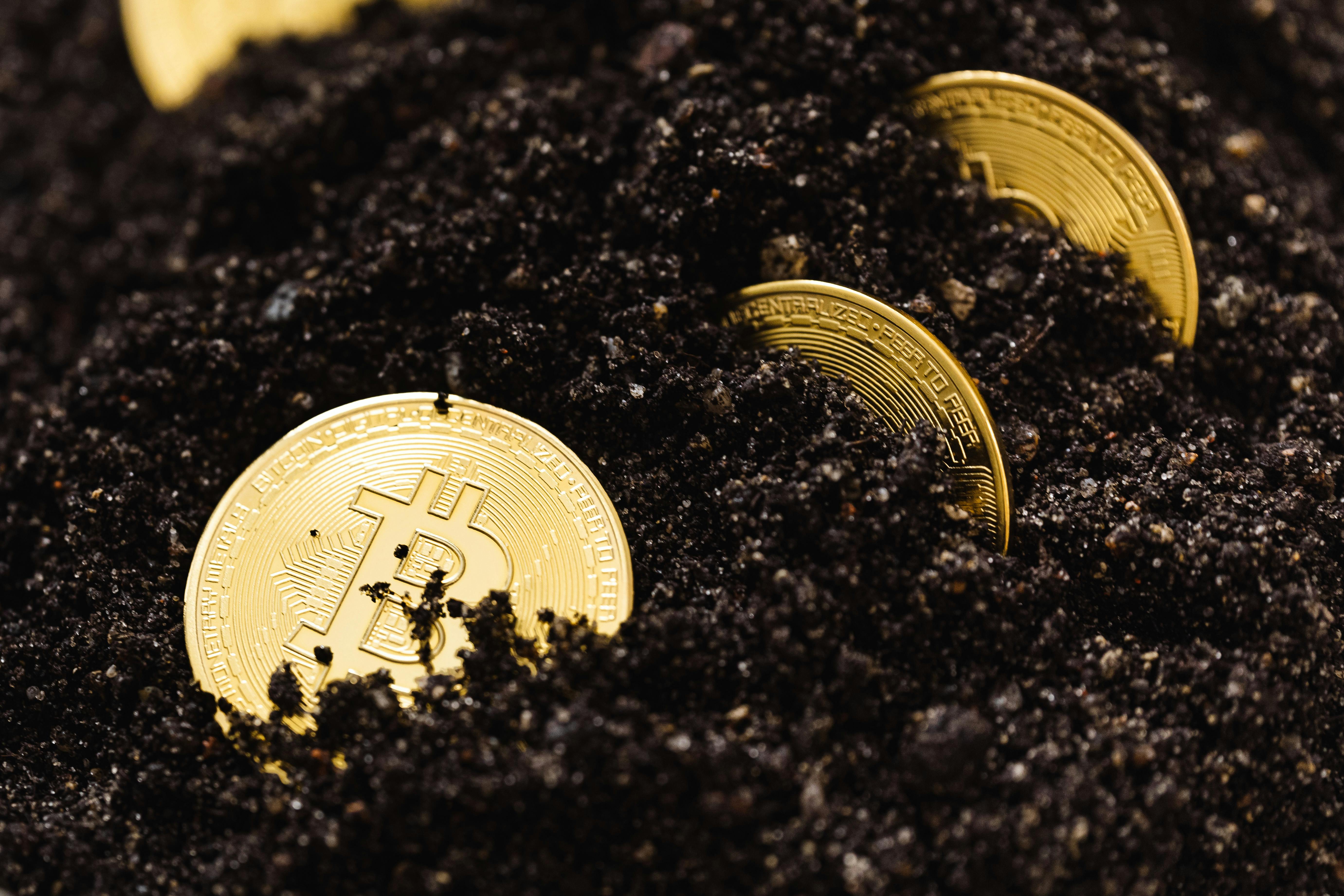
Quietly but unmistakably, we are now seeing the institutional participation in this space which is further driving the momentum . And it’s coming faster than markets can even think of.
A Market Primed For Tokenization, Much Before Blockchain Revolution Began
Environmental credits, sometimes also referred as carbon credits or carbon offsets, already operate like tokenized products; but sit on systems that weren’t designed for scale. These credits are currently assigned a serial number, project attributes, verified year it was issued in, and a retirement status (binary). In reality, that’s closer to a programmable token than to a traditional environmental instrument.
What has slowed the market historically is not the credit volume or liquidity, it’s actually the infrastructure around it which needs an upgrade. Currently the majority of these carbon credits circulate through email chains, PDFs, batch spreadsheets, and manual registries, which are precisely the layers of friction that distort price signals and slow capital deployment. Tokenization is a great enabler in removing this complexity here while reducing greenwashing claims and price opacity.
Why Institutions Are Giving More Attention To Environmental Credits
Three key reasons that are pushing digitization of environmental credits
- Regulatory pressure in the US, UK & EU.
Regulatory systems have started pushing for digital traceability of carbon markets through compliance and it happened faster than most observers expected. Widely accepted frameworks like ISSB, CSRD, ICAO’s CORSIA, and PCAF methodologies are further pointing towards the same outcome: companies will have to validate their decarbonization claims using verifiable data trails.
Tokenized carbon credits allow registry data, MRV documentation, geospatial metadata, and ownership transitions to live in one auditable structure. This immutability matters when companies know their disclosures will be examined not just by auditors, but also by investors, consumers, and, increasingly, by automated data systems.
- MRV has become the bottleneck for climate markets.
Anyone who has evaluated carbon projects would know how uneven MRV quality can be. Methodologies vary quite a bit and verification costs are rising due to lengthy process while auditors are overloaded which creates shortage and leads to more delays. The result is uncertainty that slows or suppresses investor’s trust and participation.
When you pair tokenization with digital MRV it leads to creation of a single integrity rail: verifiers validate once, and the data moves along with the credit throughout its lifecycle. It reduces duplication, eliminates mismatches, and cuts down the risk of double counting – an issue that has plagued voluntary carbon markets for years.
- Environmental credits are tied directly into global markets.
This is the real driver of scale.
The EU’s Carbon Border Adjustment Mechanism (CBAM), sectoral aviation (SAFc & CORSIA) requirements, and supply-chain emissions rules (Scope 3) are turning environmental credits from being carbon accounting or ESG tools into compliance inputs. When a credit becomes part of an audited transaction or GHG emissions claim, the infrastructure supporting it needs to be tamper-resistant, verifiable, and interoperable.
This is where tokenization thrives in the carbon markets.
Why Environmental Credits Will Outperform All Other Tokenized Investments
Most real-world asset (RWA) discussions today hover around financial instruments which do have the room to grow, but they can neither match the scale nor the urgency of climate-linked assets.
Here’s why environmental credit markets can surprise and scale significantly higher :
- Bigger market than most estimates suggest.
When you combine all available credit types in voluntary markets including plastic (sold up to $400/ credit) and water credits which recently began their foray, the potential annual flow becomes enormous. Even conservative projections from BNEF and others place climate-linked instruments in the multi-trillion-dollar range by the early 2030s.
- Fragmentation creates a high-value digitization opportunity.
Multiple registries (verra, gold standard, acr etc.), several methodologies, and inconsistent verification protocols create inefficiency and becomes a hurdle. Without eliminating the underlying diversity, tokenization standardizes how data will be stored and tracked. This completely removes friction while ensuring that the origins and data is fully intact.
- Environmental credits are naturally integrated.
Unlike real estate or infrastructure, these credits are being plugged into:
- corporate disclosures through scope 1, 2 & 3 emissions.
- supply-chain emission audits
- sustainability-linked loans and debts
- national registries
- trade finance platforms
Easier integration increases the utility aspect of these credits which further increases liquidity and widens institutional participation.
- Price establishment and settling mechanisms improve significantly on-chain.
Transactions today are occurring through brokers, marketplaces, and informal bilateral channels. While they are acceptable and nothing wrong with that, they limit trust, add cost and take time to transact. On-chain markets make price curves clearer, reduce information disparity and provide both sides a more accurate view of the market’s underlying dynamics which is currently difficult to accomplish.
- Issuance and retirement become more efficient.
Tokenized issuance significantly compresses documentation cycles which are extensive. Tokenized retirement prevents double counting, simplifies audits, and makes downstream reporting easier. Institutions appreciate systems that reduce operational load, and this is one of those cases where building the tokenization infrastructure directly influences capital flow.
MRV: The Real Pain Point of Climate Finance
If there’s a single area where tokenization can meaningfully reshape climate markets, it’s MRV. Measurement and verification historically lag behind policy frameworks where goals are set with no closed loop mechanism to see if they are actually working or not. Verification cycles are long and can take 6-9 months, data is scattered and methodology interpretations are inconsistent.
MRV cannot be solved on its own, tokenization creates the backbone through which MRV becomes:
- machine readable and accessible
- easier to audit and trust
- tied directly to validated and verified issuance
- consistent across multiple registries around the world
This digital transformation can undoubtedly attract more investors even if it doesn’t make headline news. It’s a pain point for the majority of financial institutions and corporations who are struggling with this. Simplifying it will lead to more revenue growth and expand the participation further at a global level.
The Next Ten Years: A Plausible Adoption Curve
Phase 1 (2026–2027): Registry digitization + MRV synchronization
MRV data becomes structured and clean causing more registries to test digital issuance pilots. SAF, Nature Based, Emissions capture and Avoidance based credit tokenization use cases expand.
Phase 2 (2027–2030): Integration with finance and global trade
Sustainability-linked loans or instruments start embedding tokenized credits. Audit systems easily sync with digital product passports and national registries start experimenting with digital rails.
Phase 3 (2030–2035): Environmental credits surpass all other tokenized assets
Liquidity deepens, derivatives mature, project finance is automated, and supply-chain emissions rely heavily on tokenized MRV.
At this point, environmental credits become the dominant tokenized asset class because global decarbonization demands it and not due to the hype around it.
Final Thought: Institutions Are Rebuilding Climate Markets
Tokenization of environmental credits isn’t a “crypto trend.” It’s a structural modernization of climate finance and sustainability infrastructure. Institutions care less about the novelty of blockchain and more about integrity, interoperability, and auditability.
Environmental credits sit at the center of global decarbonization and international trade. Their scale, fragmentation, and compliance sensitivity make them the most logical candidate for tokenization and this category is most likely to define the next decade of digital assets.
Author Bio
Gaurav Shah is a Managing Partner at Trident Renewables advising institutional investors on private and public investments involving climate finance, tokenization and renewable energy. Prior to this, he was an operating partner at a PE firm in San Francisco for more than a decade focusing on deep tech, renewables and carbon markets. With over two decades of direct operational and investment experience, he is also a co-founder at Tokere which is a blockchain-based platform converting verified climate assets into tradable digital tokens. Gaurav is an investment committee member with investment firms focused on frontier technologies like AI, Blockchain, Quantum Computing, Web 3.0, Life Sciences & Climate Tech. He continues to advise founders of venture backed startups on strategy, growth and finance in US, UK & EU.
Related Articles:
- Building Digital Economies Through Asset Tokenization
- Top 5 Gold Tokenization Development Companies 2026


