As the demand for Artificial Intelligence and high-performance computing reaches record highs in 2026, a new crisis has emerged: the “Carbon Footprint of IntelligenceAs the demand for Artificial Intelligence and high-performance computing reaches record highs in 2026, a new crisis has emerged: the “Carbon Footprint of Intelligence

The “Sustainable Silicon” Mandate: Greening the AI Revolution

2026/02/21 18:59
3 min read

As the demand for Artificial Intelligence and high-performance computing reaches record highs in 2026, a new crisis has emerged: the “Carbon Footprint of Intelligence.” In 2024 and 2025, the rapid expansion of data centers placed an unprecedented strain on global power grids. Today, sustainability is no longer a “marketing fluff” topic; it is a core Business requirement. This has led to the rise of the “Sustainable Silicon” mandate, where professional organizations are being forced to prove that their Technology stack is as green as it is smart.

The Shift to “Neuromorphic Computing”

Traditional silicon chips are “always on,” consuming power even when they are not actively processing. In 2026, the industry is pivoting toward Neuromorphic Computing. These are chips designed to mimic the human brain’s efficiency, only “firing” when they receive a specific data signal.

The “Sustainable Silicon” Mandate: Greening the AI Revolution

For a professional Business, the shift to neuromorphic or “Energy-Aware” hardware can reduce data center energy costs by up to 85%. This is not just an environmental win; it is a massive boost to the bottom line. As electricity prices fluctuate in 2026, “Computational Efficiency” has become a key metric of corporate profitability.

The “Circular Hardware” Economy

The 2026 Technology lifecycle is moving away from the “Take-Make-Waste” model. Major chip manufacturers like TSMC and Intel have introduced Modular Silicon architectures. Instead of replacing an entire server cluster, companies can now “Hot-Swap” individual AI accelerators or memory modules.

These components are built with “Recyclable Substrates” that can be dissolved and recovered at the end of their life cycle. For the Business, this creates a “Residual Value” for their hardware assets. In 2026, a company’s “E-Waste Strategy” is a mandatory part of its annual financial report, audited with the same rigor as its tax returns.


Software as a “Green Lever”

While hardware is critical, the professional developers of 2026 are focusing on “Energy-Aware Programming.” In the past, “Code Efficiency” was sacrificed for “Development Speed.” Today, with “Carbon Taxes” being applied to cloud computing in many regions, writing “Bloated Code” is a financial liability.

Artificial Intelligence is now used to optimize its own energy consumption. “AI-Driven Cooling” systems in data centers use sensors to predict “Heat Spikes” minutes before they occur, adjusting airflow with surgical precision. Furthermore, many businesses are adopting “Time-Shifting” for their AI training—running large-scale models only when renewable energy (solar or wind) is at its peak on the grid.The 2026 Technology lifecycle is moving away from the “Take-Make-Waste” model. Major chip manufacturers like TSMC and Intel have introduced Modular Silicon architectures. Instead of replacing an entire server cluster, companies can now “Hot-Swap” individual AI accelerators or memory modules.

Conclusion

The “Sustainable Silicon” mandate is the defining challenge of the 2026 tech sector. It proves that innovation cannot exist in a vacuum. The most successful businesses of this era will be those that view sustainability and Technology as a single, unified strategy. By greening the core of their computing power, they are not just saving the planet—they are building a more resilient, efficient, and profitable future.These components are built with “Recyclable Substrates” that can be dissolved and recovered at the end of their life cycle. For the Business, this creates a “Residual Value” for their hardware assets. In 2026, a company’s “E-Waste Strategy” is a mandatory part of its annual financial report, audited with the same rigor as its tax returns.
Comments
Disclaimer: The articles reposted on this site are sourced from public platforms and are provided for informational purposes only. They do not necessarily reflect the views of MEXC. All rights remain with the original authors. If you believe any content infringes on third-party rights, please contact [email protected] for removal. MEXC makes no guarantees regarding the accuracy, completeness, or timeliness of the content and is not responsible for any actions taken based on the information provided. The content does not constitute financial, legal, or other professional advice, nor should it be considered a recommendation or endorsement by MEXC.

You May Also Like

CME Group to Launch Solana and XRP Futures Options

CME Group to Launch Solana and XRP Futures Options

The post CME Group to Launch Solana and XRP Futures Options appeared on BitcoinEthereumNews.com. An announcement was made by CME Group, the largest derivatives exchanger worldwide, revealed that it would introduce options for Solana and XRP futures. It is the latest addition to CME crypto derivatives as institutions and retail investors increase their demand for Solana and XRP. CME Expands Crypto Offerings With Solana and XRP Options Launch According to a press release, the launch is scheduled for October 13, 2025, pending regulatory approval. The new products will allow traders to access options on Solana, Micro Solana, XRP, and Micro XRP futures. Expiries will be offered on business days on a monthly, and quarterly basis to provide more flexibility to market players. CME Group said the contracts are designed to meet demand from institutions, hedge funds, and active retail traders. According to Giovanni Vicioso, the launch reflects high liquidity in Solana and XRP futures. Vicioso is the Global Head of Cryptocurrency Products for the CME Group. He noted that the new contracts will provide additional tools for risk management and exposure strategies. Recently, CME XRP futures registered record open interest amid ETF approval optimism, reinforcing confidence in contract demand. Cumberland, one of the leading liquidity providers, welcomed the development and said it highlights the shift beyond Bitcoin and Ethereum. FalconX, another trading firm, added that rising digital asset treasuries are increasing the need for hedging tools on alternative tokens like Solana and XRP. High Record Trading Volumes Demand Solana and XRP Futures Solana futures and XRP continue to gain popularity since their launch earlier this year. According to CME official records, many have bought and sold more than 540,000 Solana futures contracts since March. A value that amounts to over $22 billion dollars. Solana contracts hit a record 9,000 contracts in August, worth $437 million. Open interest also set a record at 12,500 contracts.…
Share
BitcoinEthereumNews2025/09/18 01:39
Metaplanet CEO Denies Hiding Details

Metaplanet CEO Denies Hiding Details

The post Metaplanet CEO Denies Hiding Details appeared on BitcoinEthereumNews.com. Storm Over Bitcoin Trades: Metaplanet CEO Denies Hiding Details
Share
BitcoinEthereumNews2026/02/21 21:03
Shadows in the Payment Rail: The Urbenics.com Mystery

Shadows in the Payment Rail: The Urbenics.com Mystery

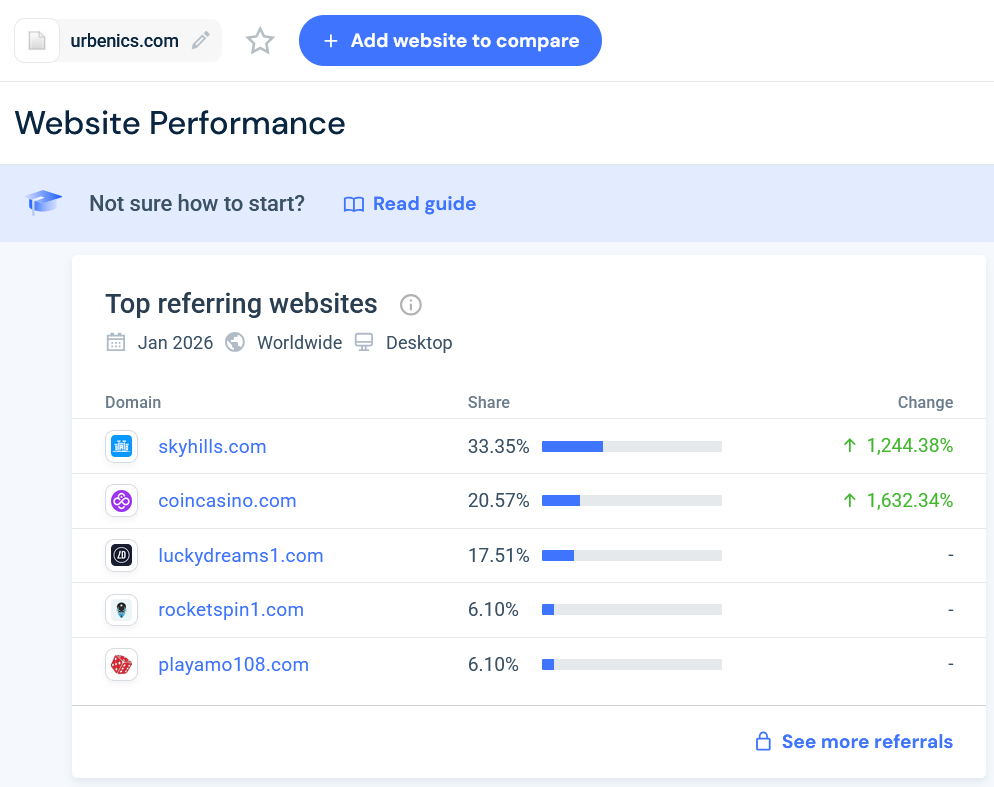
A new, anonymous player has emerged in the high-risk payment sector. Operating without a public face, Urbenics.com is quietly fueling the offshore casino industry
Share
Fintelegram2026/02/21 20:44