Africa’s growth story has long been told through commodities and capital flows. But a quieter shift is underway along the continent’s coastlines. From Morocco toAfrica’s growth story has long been told through commodities and capital flows. But a quieter shift is underway along the continent’s coastlines. From Morocco to

Africa’s Ports Are the New Power Centres of Trade

2026/02/02 12:01
4 min read

Africa’s growth story has long been told through commodities and capital flows. But a quieter shift is underway along the continent’s coastlines. From Morocco to Mozambique, ports are evolving from simple transit points into something far more strategic: economic power centres that shape trade, industry and geopolitics.

In today’s fragmented global economy, whoever controls logistics controls value. And in Africa, that leverage increasingly sits at the port gate.

Modern trade is no longer decided only by what a country produces. It is decided by how fast, cheaply and reliably goods move. That makes ports—not mines or oil fields—the true chokepoints of competitiveness.

Ports as trade engines, not just infrastructure

Across Africa, leading gateways such as Tanger Med Port, Port of Durban, Port of Mombasa and Port of Lobito have become more than maritime facilities. They now anchor industrial parks, logistics zones, free-trade areas and export-processing clusters.

The model is clear: attract ships, then attract factories.

Efficient ports lower transport costs, shorten delivery times and reduce uncertainty. That combination draws manufacturers, agribusiness processors and distributors who need predictable supply chains. Over time, trade activity spills inland, creating jobs and local value-add.

In this sense, ports function like magnets. Capital follows connectivity.

Corridors are replacing borders

The real competition is no longer country versus country. It is corridor versus corridor.

Railways, highways and dry ports now radiate outward from major terminals, linking landlocked economies to global markets. The Lobito Corridor connecting Angola to Zambia and the DRC, or the Northern Corridor through Kenya into East Africa, illustrate how one efficient gateway can reshape an entire region’s trade flows.

This changes the economics of geography. A well-managed port can effectively “shorten” distance for neighbouring countries. A congested one can isolate them.

For landlocked states, port efficiency is the difference between export competitiveness and permanent disadvantage.

Geopolitics at the waterfront

It is no coincidence that global powers are investing heavily in African port infrastructure. Ports have become geopolitical assets.

Control of terminals increasingly intersects with foreign investment strategies from Europe, the Gulf, China and others. These players are not just financing docks; they are securing long-term access to trade routes, minerals, food exports and consumer markets.

In practice, a port concession today resembles an energy pipeline or data cable: strategic infrastructure with economic and diplomatic weight.

From cargo to clusters

What separates successful ports from average ones is not volume alone. It is integration.

The strongest performers combine customs reform, digital clearance systems, bonded zones and multimodal logistics. They enable goods to move from ship to warehouse to truck in hours, not days.

This efficiency supports “just-in-time” supply chains and encourages firms to locate nearby. Automotive assembly, food processing, light manufacturing and distribution hubs increasingly cluster around ports.

In effect, ports are becoming cities within cities — industrial ecosystems that generate export value far beyond shipping fees.

Why this matters for investors

For investors and policymakers, the message is straightforward. Africa’s next growth winners may not be commodity producers alone. They may be the logistics gateways that enable everything else.

Ports capture traffic, generate hard currency, attract private capital and anchor regional supply chains. They also offer diversified revenue streams: handling fees, warehousing, industrial leases and services.

In a continent still integrating its markets under AfCFTA, ports are the physical backbone of that integration.

Africa’s ports are no longer passive infrastructure. They are strategic platforms.

In the coming decade, the continent’s most competitive economies will likely be those that treat ports not as endpoints, but as engines — places where trade begins, not merely passes through.

Because in modern Africa, power does not only lie underground. It lies at the waterfront.

The post Africa’s Ports Are the New Power Centres of Trade appeared first on FurtherAfrica.

Disclaimer: The articles reposted on this site are sourced from public platforms and are provided for informational purposes only. They do not necessarily reflect the views of MEXC. All rights remain with the original authors. If you believe any content infringes on third-party rights, please contact [email protected] for removal. MEXC makes no guarantees regarding the accuracy, completeness, or timeliness of the content and is not responsible for any actions taken based on the information provided. The content does not constitute financial, legal, or other professional advice, nor should it be considered a recommendation or endorsement by MEXC.

You May Also Like

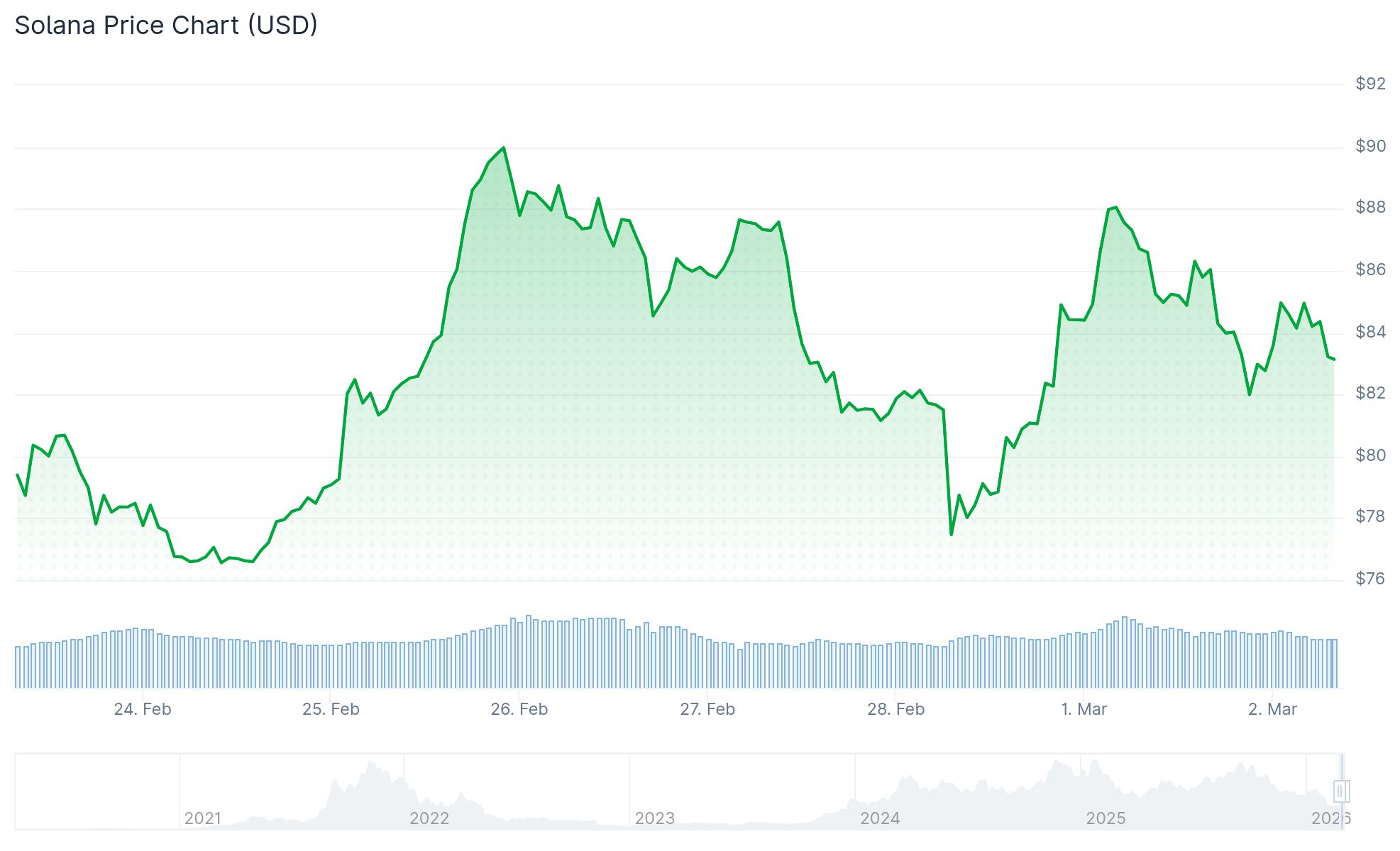
Solana (SOL) Price: Is a Breakout Coming After Four Weeks Stuck in the Same Range?

Solana (SOL) Price: Is a Breakout Coming After Four Weeks Stuck in the Same Range?

TLDR Solana (SOL) has traded in a tight $77–$88 range for nearly four weeks with no clear trend direction US spot Solana ETFs recorded over $44 million in weekly
Share
Coincentral2026/03/02 15:55
South Africa Tax Collector Deploys New Tech to Track Crypto and Offshore Assets

South Africa Tax Collector Deploys New Tech to Track Crypto and Offshore Assets

The post South Africa Tax Collector Deploys New Tech to Track Crypto and Offshore Assets appeared on BitcoinEthereumNews.com. South African crypto-asset service
Share
BitcoinEthereumNews2026/03/02 16:33
Crypto Futures Liquidation: Unpacking the Stunning $105 Million Market Shock

Crypto Futures Liquidation: Unpacking the Stunning $105 Million Market Shock

BitcoinWorld Crypto Futures Liquidation: Unpacking the Stunning $105 Million Market Shock The cryptocurrency market just experienced a sudden jolt, with a staggering $105 million worth of futures liquidated in a single hour. This dramatic event, part of a larger $311 million wipeout over the past 24 hours, has sent ripples across major exchanges. For many traders, this recent wave of crypto futures liquidation serves as a stark reminder of the inherent volatility and risks associated with leveraged trading in digital assets. What Exactly is Crypto Futures Liquidation? Understanding what happened requires a quick look at futures trading. A crypto futures contract is essentially an agreement to buy or sell a cryptocurrency at a predetermined price on a specified future date. Traders use these contracts to speculate on future price movements without owning the underlying asset. Leverage Amplifies Gains and Losses: Many traders utilize leverage, which means they borrow funds to increase their trading position beyond their initial capital. While leverage can magnify profits, it also significantly amplifies potential losses. Margin Calls and Forced Selling: When the market moves against a leveraged position, a trader’s margin (the collateral they put up) might fall below a required threshold. This triggers a “margin call,” where they need to add more funds. If they fail to do so, the exchange automatically closes their position to prevent further losses – this forced closure is known as crypto futures liquidation. The Recent $105 Million Crypto Futures Liquidation: What Triggered It? The recent surge in crypto futures liquidation, particularly the rapid $105 million in one hour, indicates a sharp and unexpected price movement. While the exact catalyst can be complex, such rapid liquidations often occur during: Sudden Price Swings: A rapid upward or downward movement in a major cryptocurrency’s price can quickly push many leveraged positions into unprofitable territory, leading to widespread liquidations. Market-Wide Sentiment Shifts: Unexpected news, regulatory announcements, or macroeconomic data can trigger a sudden shift in market sentiment, causing a cascade of selling or buying pressure. Over the past 24 hours, the total figure climbed to $311 million, highlighting a period of sustained volatility that caught many leveraged traders off guard. Why Does Leverage Play a Crucial Role in Futures Liquidation? Leverage is a double-edged sword. It allows traders to control large positions with relatively small amounts of capital. However, even a minor price fluctuation can have a significant impact on highly leveraged positions. When the market moves contrary to a trader’s bet, their equity can diminish rapidly. This is where the automatic liquidation mechanism kicks in. Exchanges implement this system to protect themselves and other traders from excessive losses. It ensures that a trader’s losses do not exceed their collateral, but it also means positions can be closed unexpectedly and quickly, contributing to the dramatic numbers seen in the recent crypto futures liquidation event. Navigating the Volatility: How Can Traders Prepare for Futures Liquidation Events? For those involved in or considering crypto futures trading, understanding and managing risk is paramount. The recent crypto futures liquidation serves as a powerful lesson. Here are some actionable insights: Use Lower Leverage: While tempting, high leverage dramatically increases risk. Opting for lower leverage significantly reduces the chance of premature liquidation. Implement Stop-Loss Orders: These orders automatically close a position if the price reaches a predetermined level, limiting potential losses before a full liquidation occurs. Manage Position Sizing: Never allocate too much of your portfolio to a single trade, especially a leveraged one. Diversification and responsible position sizing are key. Stay Informed: Keep abreast of market news, technical analysis, and global economic factors that could influence cryptocurrency prices. Beyond the Headlines: What Does This Mean for the Broader Crypto Market? While large-scale crypto futures liquidation events can be unsettling, they are a regular, albeit dramatic, feature of highly leveraged markets. Often, such events can “cleanse” the market of over-leveraged positions, potentially paving the way for more stable price action in the short term. However, they also underscore the need for caution and robust risk management practices, especially for new traders entering the volatile world of crypto futures. The recent $105 million liquidation is a stark reminder that while opportunities abound in crypto, so do significant risks. It emphasizes the importance of understanding the tools you’re using, especially leverage, and trading responsibly to protect your capital. Stay informed, manage your risks, and approach the market with a clear strategy. Frequently Asked Questions About Crypto Futures Liquidation Q1: What is the primary cause of crypto futures liquidation? A1: The primary cause is typically a sudden and significant price movement in the underlying cryptocurrency that goes against a trader’s leveraged position, causing their margin to fall below the exchange’s required maintenance level. Q2: How can traders avoid liquidation in futures trading? A2: Traders can reduce their risk of liquidation by using lower leverage, setting stop-loss orders to automatically close positions at a certain loss level, managing their position sizes responsibly, and continuously monitoring market conditions. Q3: Does liquidation only happen with leveraged positions? A3: Yes, liquidation specifically refers to the forced closure of a leveraged position when the trader’s collateral (margin) is insufficient to cover potential losses. Spot trading, where you own the asset outright, does not involve liquidation in the same manner. Q4: Is a crypto futures liquidation event bad for the entire market? A4: While immediate liquidations can cause further price volatility and negatively impact sentiment, some analysts view them as a “cleansing” event that removes excessive leverage from the market, potentially leading to a healthier, more stable environment in the long run. However, it certainly signifies a period of heightened risk. Q5: What is the difference between a margin call and liquidation? A5: A margin call is a notification from the exchange that your margin level is too low and you need to deposit more funds to maintain your position. Liquidation is what happens if you fail to meet that margin call; the exchange automatically closes your position to prevent further losses. Understanding market dynamics like crypto futures liquidation is crucial for navigating the cryptocurrency space. If you found this article insightful, please share it with your network on social media to help others better understand these significant market events and trade more responsibly. To learn more about the latest crypto market trends, explore our article on key developments shaping Bitcoin price action. This post Crypto Futures Liquidation: Unpacking the Stunning $105 Million Market Shock first appeared on BitcoinWorld.
Share
Coinstats2025/09/19 23:40