Orobo’s IOTA Digital Product Passport has won the 2025 Hackathon at GS1 by providing solutions to food traceability and compliance through encrypted data solutionsOrobo’s IOTA Digital Product Passport has won the 2025 Hackathon at GS1 by providing solutions to food traceability and compliance through encrypted data solutions

IOTA Enters the Spotlight as Orobo Wins GS1 Hackathon for Food Safety Innovation

  • Orobo’s IOTA Digital Product Passport has won the 2025 Hackathon at GS1 by providing solutions to food traceability and compliance through encrypted data solutions.
  • GS1’s IOT Data Hackathon extends real-world IoT applications, while IOTA advances with cross-chain access, institutional custody, and pan-African trade integration.

At the GS1 Go Green Hackathon 2025, Orobo has topped the list with an IOTA-powered Digital Product Passport (DPP) system. The solution was created in partnership with NDara and GrailX, and its features help tackle traceability, compliance, and food safety throughout the supply chain, from farm to kitchen. The project integrates layers of encrypted data, next-generation scanning technology, and decentralized identifiers to facilitate the verification of products.

Its system uses the IOTA Tangle network to store product data in an immutable and transparent way, thereby avoiding the use of traditional gas fees. Orobo’s DPP is backed by the scanning hardware installed by GrailX and NDara’s data infrastructure. This proves useful in food logistics, where the end-to-end compliance and data flow transparency are of great concern between the suppliers, regulators, and consumers.

GS1 Hong Kong organized the Hackathon with support from Cyberport and Hong Kong Science and Technology Parks Corporation. It attracted developers, students, and startups aiming to apply IoT data in real-world industry challenges. The event’s objective was to foster collaboration while generating scalable digital solutions for traceability, identity, and sustainability.

IOTA: Data Hackathon 2026 Builds Momentum for Real-World Applications

The IOT Data Hackathon 2026 is already in progress, and it’s rooted in the same principle but aims to broaden the range of IoT technology to other sectors. Once more hosted by GS1 Hong Kong in partnership with Cyberport and HKSTP, the program is aimed at connecting real-world data with practical deliverables. The participants are pressed to come up with solutions to real societal and corporate problems using smart technology and safe data infrastructure.

In the 2026 version, there will be a focus on traceability, sustainability, and integration across sectors, where scholars, corporations, and startups are also invited. The hackathon has presented the requirements of digital product passports, encrypted data, and verifiable information, which mark the next step in innovation across the physical and digital space. The other goal of the organizers is to establish a better talent pipeline, linking entrepreneurs with industry partners.

Meanwhile, IOTA adoption in the business world is continually growing. It has integrations with Stargate Finance and LayerZero, which now makes the network interoperable with more than 150 chains. This allows the flow of unwrapped asset liquidity to enhance capital efficiency within systems. As leading on-chain analytics platform Nansen points out, “No more siloed value. Capital efficiency meets decentralization.”

BitGo now provides institutional custody for IOTA, supporting regulated asset storage and enterprise-grade access. It opens the treasury operations and DeFi on a large scale with SOC 2 compliance and insurance. IOTA Identity 1.7 Beta was also released, and it supports W3C DIDs and verifiable credentials. The tools are compatible with the new IOTA Trust Framework that regulates how digital identities are used to issue and verify.

Moreover, the IOTA’s ADAPT platform is also being implemented in trade activities in the African Continental Free Trade Area. As we earlier reported, it has a reach of 1.3 billion, and it digitalizes trade documents and reduces shipping and customs clearance processing time.

Despite these developments, the IOTA price has seen a dip, mirroring Bitcoin’s price decline today. At press time, IOTA was trading at $0.07157, a 2.36% decline.

]]>
Disclaimer: The articles reposted on this site are sourced from public platforms and are provided for informational purposes only. They do not necessarily reflect the views of MEXC. All rights remain with the original authors. If you believe any content infringes on third-party rights, please contact [email protected] for removal. MEXC makes no guarantees regarding the accuracy, completeness, or timeliness of the content and is not responsible for any actions taken based on the information provided. The content does not constitute financial, legal, or other professional advice, nor should it be considered a recommendation or endorsement by MEXC.

You May Also Like

Forward Industries zet $4 miljard in om Solana bezit uit te breiden

Forward Industries zet $4 miljard in om Solana bezit uit te breiden

Forward Industries gooit het roer om met een flinke financiële zet: het bedrijf lanceert een zogeheten “At The Market” aandelenprogramma van maar liefst $4 miljard. Het programma geeft het bedrijf flexibiliteit om op elk gewenst moment aandelen te verkopen, wat vooral handig is voor het uitbreiden van hun Solana treasury... Het bericht Forward Industries zet $4 miljard in om Solana bezit uit te breiden verscheen het eerst op Blockchain Stories.
Share
Coinstats2025/09/18 01:31
The Staggering 89% Rejection Of Digital Assets
The Staggering 89% Rejection Of Digital Assets

The post The Staggering 89% Rejection Of Digital Assets appeared on BitcoinEthereumNews.com. Family Offices Crypto Avoidance: The Staggering 89% Rejection Of Digital
Share
BitcoinEthereumNews2026/02/03 06:12
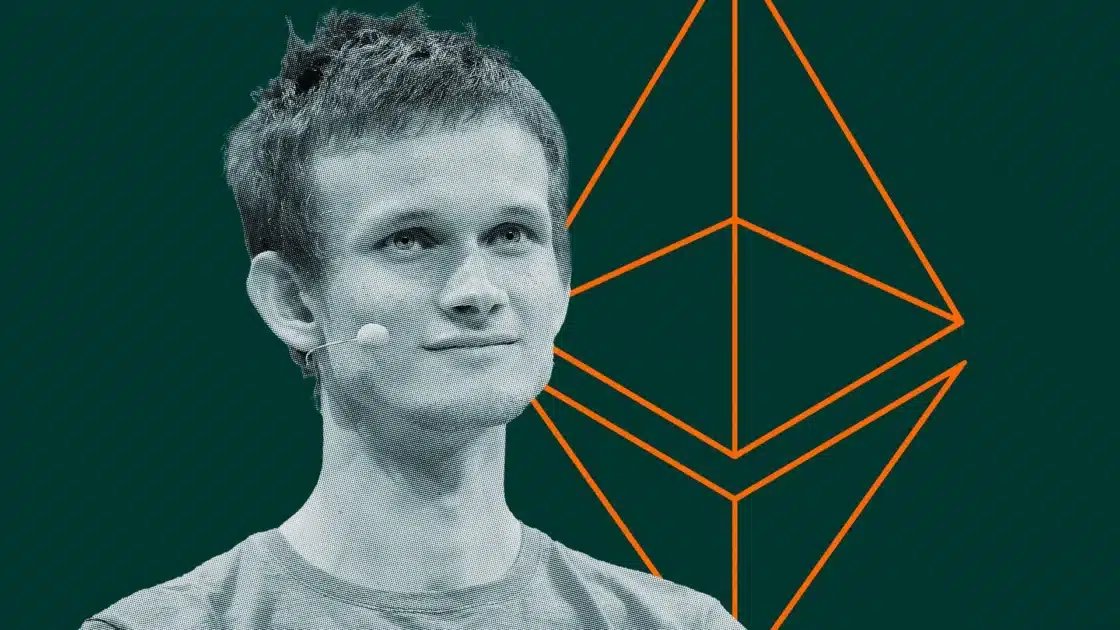
Vitalik Buterin Reveals Ethereum’s Bold Plan to Stay Quantum-Secure and Simple!

Vitalik Buterin Reveals Ethereum’s Bold Plan to Stay Quantum-Secure and Simple!

Buterin unveils Ethereum’s strategy to tackle quantum security challenges ahead. Ethereum focuses on simplifying architecture while boosting security for users. Ethereum’s market stability grows as Buterin’s roadmap gains investor confidence. Ethereum founder Vitalik Buterin has unveiled his long-term vision for the blockchain, focusing on making Ethereum quantum-secure while maintaining its simplicity for users. Buterin presented his roadmap at the Japanese Developer Conference, and splits the future of Ethereum into three phases: short-term, mid-term, and long-term. Buterin’s most ambitious goal for Ethereum is to safeguard the blockchain against the threats posed by quantum computing.  The danger of such future developments is that the future may call into question the cryptographic security of most blockchain systems, and Ethereum will be able to remain ahead thanks to more sophisticated mathematical techniques to ensure the safety and integrity of its protocols. Buterin is committed to ensuring that Ethereum evolves in a way that not only meets today’s security challenges but also prepares for the unknowns of tomorrow. Also Read: Ethereum Giant The Ether Machine Takes Major Step Toward Going Public! However, in spite of such high ambitions, Buterin insisted that Ethereum also needed to simplify its architecture. An important aspect of this vision is to remove unnecessary complexity and make Ethereum more accessible and maintainable without losing its strong security capabilities. Security and simplicity form the core of Buterin’s strategy, as they guarantee that the users of Ethereum experience both security and smooth processes. Focus on Speed and Efficiency in the Short-Term In the short term, Buterin aims to enhance Ethereum’s transaction efficiency, a crucial step toward improving scalability and reducing transaction costs. These advantages are attributed to the fact that, within the mid-term, Ethereum is planning to enhance the speed of transactions in layer-2 networks. According to Butterin, this is part of Ethereum’s expansion, particularly because there is still more need to use blockchain technology to date. The other important aspect of Ethereum’s development is the layer-2 solutions. Buterin supports an approach in which the layer-2 networks are dependent on layer-1 to perform some essential tasks like data security, proof, and censorship resistance. This will enable the layer-2 systems of Ethereum to be concerned with verifying and sequencing transactions, which will improve the overall speed and efficiency of the network. Ethereum’s Market Stability Reflects Confidence in Long-Term Strategy Ethereum’s market performance has remained solid, with the cryptocurrency holding steady above $4,000. Currently priced at $4,492.15, Ethereum has experienced a slight 0.93% increase over the last 24 hours, while its trading volume surged by 8.72%, reaching $34.14 billion. These figures point to growing investor confidence in Ethereum’s long-term vision. The crypto community remains optimistic about Ethereum’s future, with many predicting the price could rise to $5,500 by mid-October. Buterin’s clear, forward-thinking strategy continues to build trust in Ethereum as one of the most secure and scalable blockchain platforms in the market. Also Read: Whales Dump 200 Million XRP in Just 2 Weeks – Is XRP’s Price on the Verge of Collapse? The post Vitalik Buterin Reveals Ethereum’s Bold Plan to Stay Quantum-Secure and Simple! appeared first on 36Crypto.
Share
Coinstats2025/09/18 01:22