

Is a Global Liquidity Shock Starting? Oil Surge, War Tensions, and Bitcoin Volatility Explained

Is a Global Liquidity Shock Starting?
Global financial markets are entering a period of rising uncertainty as multiple macroeconomic signals begin flashing simultaneously. Oil prices are surging, geopolitical tensions in the Middle East are escalating, and investors are increasingly questioning whether a broader liquidity shock could be forming across global markets.
At the same time, the crypto market is experiencing renewed volatility. Bitcoin is testing key support levels while institutional flows fluctuate and macro headlines dominate market sentiment.
The key question now is whether these developments represent temporary turbulence — or the early signs of a deeper liquidity squeeze.
Oil Surge Raises Global Inflation Concerns
One of the clearest signals of market stress is the rapid surge in energy prices. Brent crude recently climbed above $90 per barrel after rising more than 25% in the past week.
The move comes amid escalating geopolitical tensions and concerns over potential disruptions to global energy supply routes. Markets are particularly focused on developments in the Middle East, where conflict risks have increased dramatically.
Energy shocks often ripple through the global economy. Higher oil prices raise transportation and production costs, fueling inflation and tightening financial conditions for businesses and consumers alike.
Historically, sharp oil spikes have frequently preceded periods of market volatility.
Geopolitical Risks Are Driving Market Anxiety
Recent reports of intensified geopolitical tensions involving Iran, the United States, and regional actors have added another layer of uncertainty for investors.
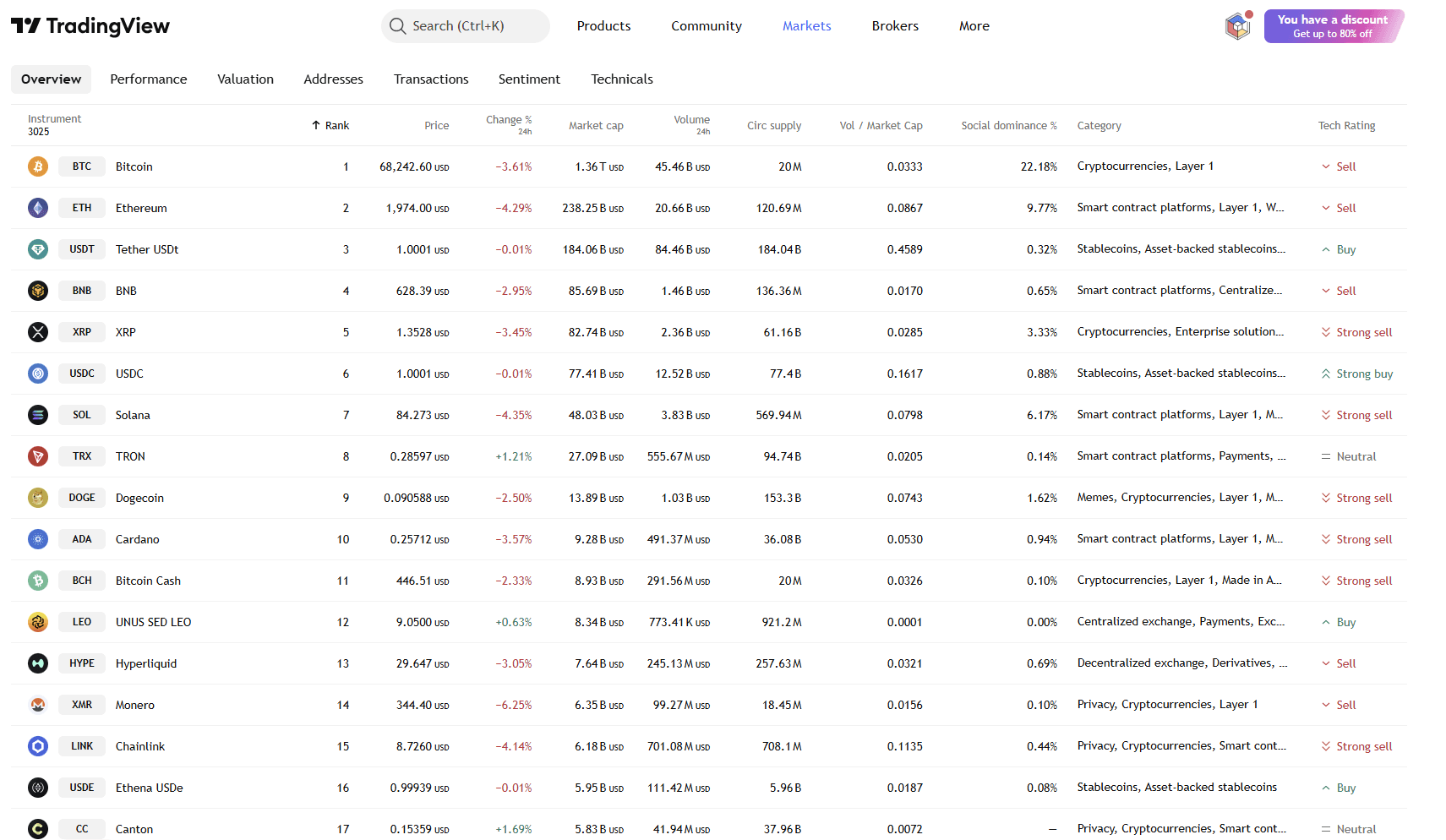 By TradingView - 2026-03-06 (All coins)
Geopolitical instability tends to trigger a “risk-off” reaction in financial markets. Investors often rotate capital away from risk assets such as equities and cryptocurrencies while seeking perceived safe havens.
Indeed, U.S. equity markets recently saw significant selling pressure at the open, with hundreds of billions of dollars temporarily wiped from market capitalization as traders reacted to the evolving situation.
These sudden shifts in sentiment can amplify volatility across multiple asset classes.
Bitcoin Faces Volatility as Liquidity Tightens
The cryptocurrency market is particularly sensitive to changes in global liquidity conditions. Bitcoin has recently been testing the $70,000 level as ETF flows fluctuate and macroeconomic uncertainty weighs on sentiment.
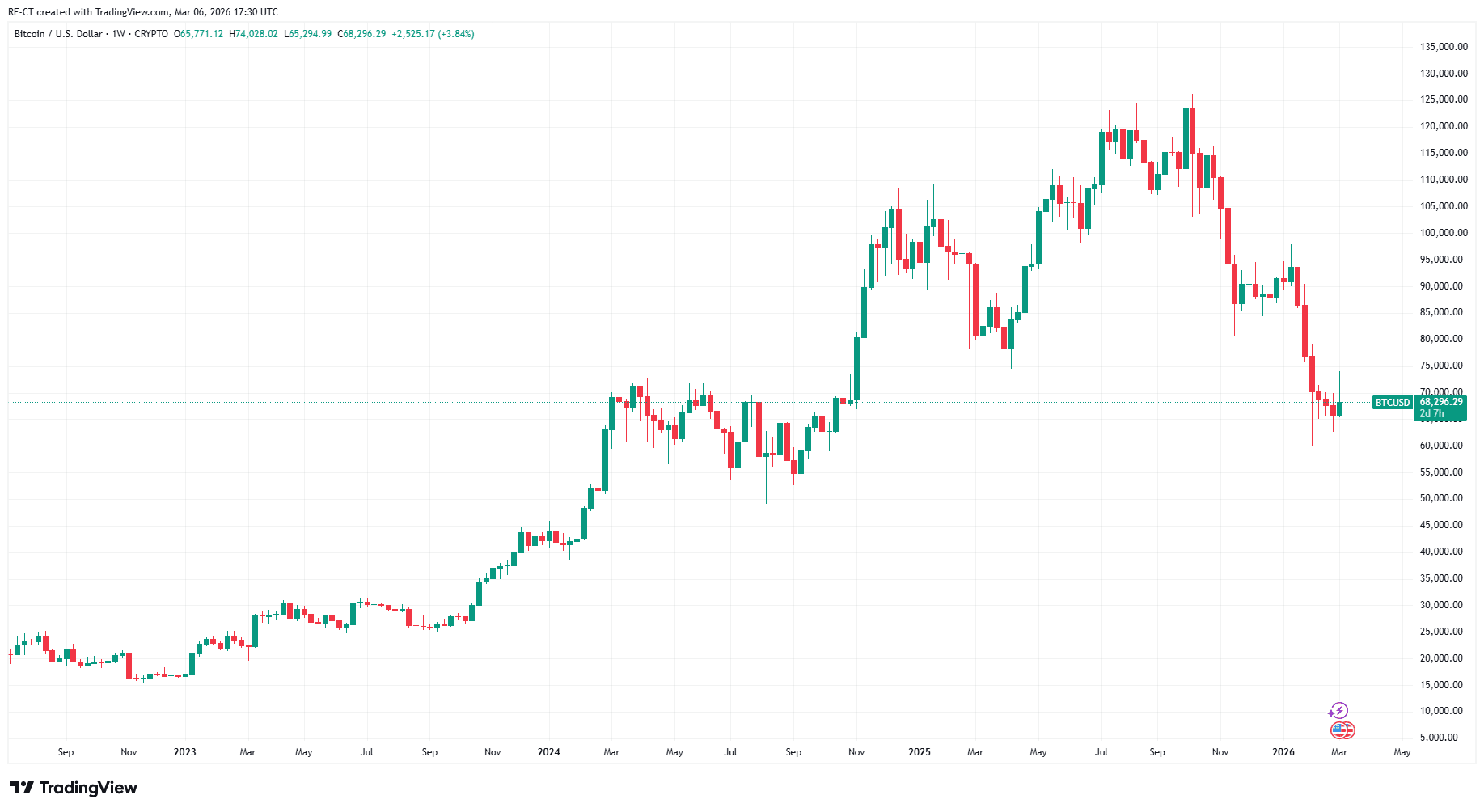 By TradingView -BTCUSD_2026-03-06 (5D)
While some investors view Bitcoin as a long-term hedge against geopolitical instability, the short-term reality is that crypto often behaves like a risk asset during periods of market stress.
When liquidity tightens, leveraged positions unwind and traders reduce exposure to volatile assets. This dynamic can produce rapid price swings across the crypto market.
Are We Entering a Global Liquidity Shock?
A liquidity shock occurs when capital suddenly becomes scarce in financial markets. This can happen when several forces align simultaneously, including rising energy costs, geopolitical risk, and shifts in monetary policy expectations.
The current environment shows early signs of such a convergence. Oil prices are rising rapidly, geopolitical tensions are intensifying, and macroeconomic data is creating uncertainty about the path of global interest rates.
However, it remains too early to determine whether these developments will escalate into a full liquidity shock or stabilize as geopolitical risks evolve.
For crypto investors, the coming weeks may prove critical. Bitcoin and the broader digital asset market often react quickly to shifts in global liquidity conditions.
If macro uncertainty continues to build, volatility may remain elevated across both traditional financial markets and cryptocurrencies.
Conclusion
The recent surge in oil prices, combined with escalating geopolitical tensions and shifting macroeconomic signals, is creating a fragile environment for global markets.
While it is not yet clear whether a full liquidity shock is underway, the alignment of these factors is already influencing investor behavior and driving volatility across multiple asset classes.
For Bitcoin and the broader crypto market, the interaction between macro liquidity conditions and geopolitical developments will likely remain one of the most important forces shaping price movements in the near term.
$BTC
You May Also Like

Zcash is Predicted to Reach $215.89 By Mar 12, 2026

Why Is Crypto Down in 2026? Binance Leverage Hits Exhaustion Lows as Pepeto Lines Up a Moonshot
