Cedi to Dollar: Exchange Rate and Conversion Guide
Cryptsy - Latest Cryptocurrency News and Predictions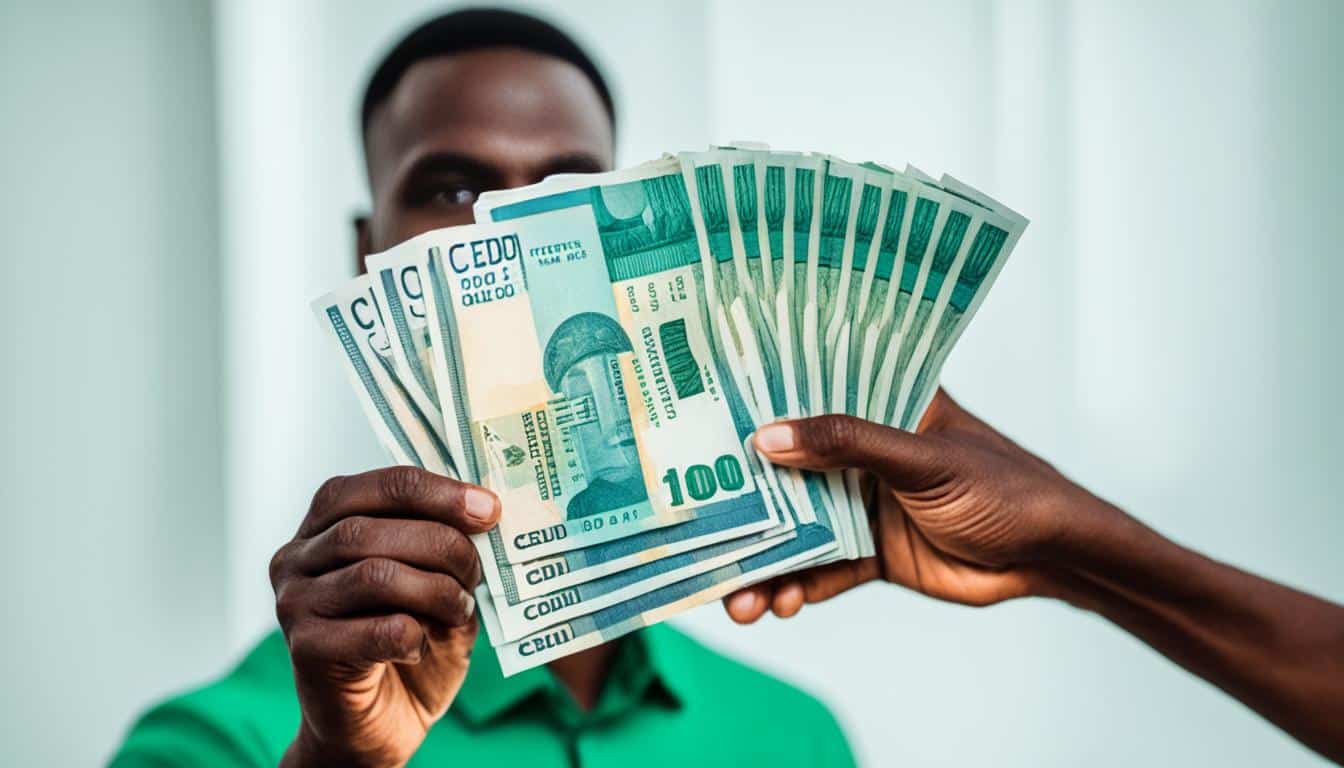
Cryptsy - Latest Cryptocurrency News and Predictions - Experts in Crypto Casinos
Did you know converting 1,000 Ghanaian Cedis (GHS) to US Dollars (USD) equals roughly $64.461? Knowing about currency conversion is key. This is true whether you’re visiting Ghana or sending money to family. Recently, the GHS to USD rate has changed often. It reflects economic changes and how people feel about the market. In the past 30 days, the rate was around 0.0663, and over 90 days, it was about 0.06841. Banks also add extra fees to these conversions, making it even more important to understand your options when converting Cedi to Dollar.1.
Key Takeaways
- Real exchange rate for converting 1,000 GHS to USD is $64.461.
- Average exchange rates for GHS to USD have seen changes, with recent 30-day rates averaging 0.06631.
- Banks often add extra costs and mark up exchange rates compared to more efficient methods like Wise1.
- Real-time exchange rate tracking tools and conversion services are essential for an accurate currency exchange guide12.
- Understanding conversion rates can save you money and improve your financial planning regarding the Ghanaian Cedi and USD1.
Understanding the Ghanaian Cedi
The Ghanaian Cedi (GHS) is Ghana’s official currency and is key to its economy. It is known for its currency history and changing exchange rates. Knowing about the Ghanaian Cedi is vital for financial dealings with Ghana.
History and Background of the Ghanaian Cedi
The Ghanaian Cedi started in 1965, taking over from the pound at 2.4 cedis for 1 pound3. It helped stabilize the economy at first. However, it faced many re-issuances to fight inflation. In 2007, Ghana introduced the “Ghana Cedi”, swapping 1 new for 10,000 old cedis3. This made it Africa’s highest-denominated currency at that time.
Banknotes range from 1 to 200 cedis45, and coins from 1 to 50 pesewas, and 1 to 2 cedis5. Ghana’s economy spans agriculture, mining, and manufacturing. It has battled economic challenges like high debt and inflation5.
Recent Trends in the Ghanaian Cedi
As of 2026, the Ghanaian cedi is trading at roughly GHS 10.8–10.9 per US dollar, reflecting continued stability compared to the sharp volatility seen in previous years. According to data from the Bank of Ghana and market trackers, the average rate in early 2026 is around GHS 10.8 per USD, with relatively small fluctuations in recent months.
Overview of the US Dollar
The US dollar is more than just paper money. It’s a key player in international finance. Known for being stable, the US dollar is the symbol of economic steadiness worldwide. Its influence goes beyond just one country, affecting financial deals, investments, and other money values everywhere.
Importance of the US Dollar in International Finance
The US dollar is crucial in international finance. It’s the main money type that central banks hold, making up more than 60% of the world’s foreign money reserves6. It’s widely used in global business, making transactions between countries easier. This leading role shows its importance in keeping money values stable around the world.
History and Stability of the US Dollar
The US dollar’s history shows its steady value. It started in 1792, and while its value has gone up and down, it has stayed fairly stable compared to other currencies. 1 Ghanaian cedi was worth 0.0808 US dollars. This was a highlight of its value6. Over the past six months, 1 Ghanaian cedi was usually worth about 0.0728 US dollars. This shows its consistent performance6.
The US dollar’s strength is clear from its recent numbers. In the last 90 days, the rate for the Ghanaian cedi against the US dollar peaked at 0.0718 and dropped to 0.0643, averaging at 0.06841. This kind of reliability is why it’s chosen for international reserves and trusted in global business.
Let’s look at a table to see how the US dollar compares to other currencies:
| Currency | High (Last 90 days) | Low (Last 90 days) | Average (Last 90 days) |
|---|---|---|---|
| Ghanaian Cedi (GHS) | 0.0718 | 0.0643 | 0.0684 |
| Euro (EUR) | 1.1800 | 1.1600 | 1.1700 |
| Canadian Dollar (CAD) | 1.2300 | 1.2000 | 1.2150 |
| British Pound (GBP) | 1.3900 | 1.3600 | 1.3750 |
How to Convert Ghanaian Cedis to US Dollars
Converting Ghanaian cedis to US dollars is easy if you know how. By using currency converter tools and learning to calculate currency by hand, you can make accurate exchanges from GHS to USD.
Step-by-Step GHS → USD Conversion (2026)
1. Check the Current Exchange Rate
As of 2026, the average rate is حوالي 1 GHS ≈ 0.07–0.09 USD, depending on market conditions and the source (banks vs. forex bureaus).
2. Multiply Your GHS Amount by the Rate
Example: Converting 100 GHS using an estimated rate of 0.08:
100 × 0.08 = 8 USD
3. Track Rate Fluctuations
Exchange rates still vary slightly over short periods. Recent ranges in 2026 show:
- High: ~0.09 USD
- Low: ~0.07 USD
4. Account for Fees
Banks, mobile apps, and exchange services often include margins or service charges, so the actual USD received may be slightly lower than the market rate.
5. Monitor and Plan
For larger transactions, consider timing your conversion when rates are more favorable or using digital tools like XE Currency to track live updates and compare rates.
Using Online Currency Converters
Online currency converters give you quick and exact exchange rates. Websites like Exchange-rates.org offer reliable rates from trusted sources like Business Insider and Investopedia7.
These online tools can also show historical rate trends. The average rate for changing GHS to USD was 0.0728 USD in the past six months6
Manual Conversion Calculation (2026)
1. Obtain the Current Exchange Rate
As of 2026, the mid-market exchange rate is approximately:
1 GHS = 0.07–0.09 USD
This range reflects typical market conditions, with platforms like Wise showing near real-time mid-market values without added fees.
2. Perform the Conversion
To convert GHS to USD, multiply your GHS amount by the exchange rate.
For example, converting 500 GHS using an estimated rate of 0.08:
500 GHS × 0.08 USD/GHS = 40 USD
3. Consider Exchange Rate Fluctuations
Exchange rates can vary daily. In 2026, rates have generally moved within the 0.07 to 0.09 USD per GHS range.
These fluctuations can affect how much USD you receive at any given time.
4. Account for Fees and Margins
Banks and money transfer services often add a margin to the exchange rate and may charge additional fees. These costs can slightly reduce the final USD amount you receive.
5. Utilize Tools for Better Rates
To minimize costs, consider using platforms like Wise or Revolut, which typically offer more competitive rates and lower fees compared to traditional banks.
By understanding both manual calculations and using online tools, you can manage your money more effectively and ensure your currency conversions are accurate.
Factors Influencing the Cedi to Dollar Exchange Rate
The factors that affect the Ghanaian cedi to the US dollar are many. They range from economic stats to politics and how people feel about the market. This mix greatly influences how currency rates move, making it a complex issue for both investors and businesses.
Economic Indicators
Economic stats are key in setting the cedi to dollar rate. For example, in 2022, the cedi fell by 55% against the dollar from January to October8. Inflation hit 40.4% in October 2022, mainly due to rising food and fuel costs8. The price increase for local items was 39.1%, while imported goods went up by 43.7%8. Also, Ghana’s foreign cash reserves dropped from $9.1 billion in December 2021 to $5.6 billion in December 20229. As these numbers change, they directly affect how the cedi stands against the dollar and the country’s economic health.
Political Events
Politics also play a big role. The Bank of Ghana’s choice to stop foreign exchange help for some imports like rice and poultry impacted the cedi8. Political ups and downs or shifts in power can make investors wary, changing the currency rate. The cedi’s fall turned Ghana’s account balance from a 1.9% surplus in 2021 to a 5% GDP deficit9. Interestingly, the cedi was stable from Ghana’s independence in 1957 until 1992. This was a time with fixed rates to the US dollar and the British Pound9.
Market Sentiment
The market’s mood greatly impacts the cedi to dollar rate. High inflation and the cedi’s fall discourage long-term, dollar-based deals with local businesses8. In 2022, the cedi was tagged the weakest currency globally and got a junk rating from Fitch9. These feelings make the exchange rate even more volatile as people react to actual and perceived risks. The cedi kept falling, leading Ghana’s foreign cash reserves to shrink. This lowered confidence and led to more drops in the cedi’s value between 1983 and 19869. Yet, there’s hope. The Ghana Statistical Service noted a 4.2% growth rate9.
These exchange rate factors show how complex and challenging it is for Ghana. The country faces hurdles in keeping a stable exchange rate due to economic stats, politics, and market feelings.
Current Cedi to Dollar Exchange Rates
Knowing the current GHS to USD rate is key for all financial activities that involve these currencies. Right now, 1 Ghanaian Cedi is worth 0.06406 US dollars7. This figure tells you precisely what you will get when you change Ghanaian Cedis into US Dollars through trusted exchange platforms7.
The current GHS to USD rate has recently moved a bit, with a decrease of 0.16%, falling by 0.000110. Today, the bid/ask prices for GHS/USD are very close, with a bid at 0.0640 and an ask at 0.064110. This nearness of bid and ask prices shows that the rates we get in real-time are stable and reliable10.
To make things clearer, we’ve compared the real-time rates:
| Parameter | Value |
|---|---|
| Current GHS/USD Rate | 0.064067 |
| Daily Change | -0.16%10 |
| Previous Day’s Rate | 0.064210 |
| Bid Price | 0.064010 |
| Ask Price | 0.064110 |
| Highest Rate (10 Years) | 0.31107 |
| Lowest Rate (This Year) | 0.06436 |
Over the last week, the current GHS to USD rate rose a little, by 0.302% compared to seven days before6. On August 16, 2025, it saw its biggest one-day jump, increasing by 0.204%6. These moves show why it’s crucial to watch the rates closely for smart exchange choices.
Using up-to-date data lets people and companies plan their currency exchanges better. This way, they can ensure they benefit the most from their exchanges. Always monitor the current GHS to USD rate to make choices that boost your currency exchange results.
Historical Exchange Rate Data (Updated to 2026)
| Year/Period | Approximate USD → GHS Rate | Notes |
|---|---|---|
| Jan 2023 | ~ GHS 10.60 per USD | Early 2023 interbank levels |
| End 2023 | ~ GHS 11.6–11.9 per USD | Continued depreciation خلال the year |
| April 2024 | ~ GHS 13.05 per USD | حوالي 9% year-to-date depreciation |
| June 2024 | ~ GHS 14.1–14.6 per USD | Peak weakness period |
| Late 2025 | ~ GHS 10.7–10.9 per USD | Strong recovery phase |
| 2026 (current) | ~ GHS 15.5–15.7 per USD | Reflects softer cedi vs USD (≈0.064 USD per GHS) |
Key Takeaways (2026 Update)
- The Ghanaian cedi weakened significantly through 2023–mid 2024, reaching its lowest levels near GHS 14+ per USD.
- A strong recovery in late 2025 brought the rate closer to GHS 10.8 per USD.
- In 2026, the cedi has softened again, trading around GHS 15+ per USD, aligning with the ~0.064 USD per GHS level.
- Exchange rates continue to be influenced by inflation, import demand, export earnings (gold, cocoa), and monetary policy decisions by the Bank of Ghana.
Overall, these trends show that the cedi remains sensitive to both domestic economic conditions and global market forces, making regular monitoring essential for smart currency exchange decisions.
Best Tools for Currency Conversion
If you need to change your money, lots of tools can help. They are easy to use, precise, and handy. These tools, like web converters, apps, or bank services, make money matters smoother.
Online Converters
Web currency converters are easy to get to and popular. They handle over 200 types of money and refresh rates every few minutes. This includes currencies like Mexican pesos, Indian rupees, and Ghanaian cedi13. They use things like the Open Exchange API for the latest, right rates13.
This tool updates in real-time and is easy to use. That’s why many people like it.
Mobile Apps
For money management on the move, mobile apps are great. Apps like Wise charge a small fee for sending money abroad and work well13. Not only do they show current rates, but they also have tools for comparing fees and setting up alerts.
Bank Services
Banks are a popular choice for big money matters. They’re known for being safe and trustworthy. But remember, they usually have fees for currency exchange13.
The forex market does huge trades every day, and banks are a solid, though sometimes costly, choice14. Still, the ease of managing all your finance stuff in one place might be worth it.
Finding the right tool for currency exchange depends on what you need. Whether it’s web converters, apps, or bank services, know their strengths and weaknesses. Think about what you usually do with your money and pick something that fits your financial plans.
Common Problems with Currency Conversion
Here are some common problems with currency conversion:
- Exchange-rate fluctuations: Sudden changes in rates can hurt budgeting, financial planning, and pricing.
- High conversion fees and hidden costs: Many service providers add big markups or undisclosed fees on top of the published exchange rate.
- Lack of transparency: It can be hard to find clear info on how much you’re paying or the actual rate being used for a conversion.
- Transaction and timing delays: Cross-border transactions may take days, and during that time conversion rates can move, creating risk.
- Multiple currency and conversion layers: Using several currencies in one transaction or converting multiple times introduces additional complexity and cost.
Tips to Get the Best Exchange Rates
Here are some practical tips to get the best exchange rates:
- Compare rates across platforms – Check banks, forex bureaus, and online exchange services before converting.
- Use trusted digital platforms – Fintech apps like Wise or Revolut often offer mid-market rates with lower fees.
- Avoid airport and hotel exchanges – These usually charge high commissions and offer poor rates.
- Monitor rate trends – Track currency movements using rate alert tools to exchange when rates are favorable.
- Exchange larger amounts at once – Small, frequent conversions often come with higher total fees.
- Choose local currency abroad – When paying with cards, select the local currency to avoid dynamic conversion fees.
- Plan ahead for big transactions – Book forward contracts or use limit orders if your bank offers them to lock in rates.
- Beware of hidden fees – Always check total costs, including commissions and transfer charges, before confirming a transaction.
Timing and transparency are key—staying informed about daily rate changes helps you save money on every exchange.
Top Currency Pairings for Ghanaian Cedi
Exploring top currency pairings for the Ghanaian Cedi shows key trends for investors and traders. Recently, the GHS to USD pairing has become very important.
GHS to USD
The GHS to USD is key because of the strong trade between Ghana and the U.S. Over the past month, the exchange rate hit a high of 15.5602 and a low of 14.7800. The average rate was 15.0964, showing a 4.96% change21.
Looking at the last 90 days, the exchange rate peaked at 15.5602 and dropped to 13.9200. The average rate was 14.6420, indicating an 11.45% change21.
Right now, 1 USD is equal to GH¢15.51 GHS. This rate is crucial for those making big transactions in USD21.
GHS to EUR
The GHS to EUR pairing is vital for international traders and those in the European market. Knowing this pairing helps in making good cross-border trade and investment decisions. Keeping an eye on trends and changes is smart for decisions in the EUR market.
GHS to GBP
The GHS to GBP pairing is important for dealings between Ghana and the UK. Watching the GHS to GBP rates aids in smart financial planning and optimizing UK market transactions. Using reliable sources and staying current with rates can lower risks.
- average
- monitoring
- fluctuations
Use top financial platforms when dealing with these currencies to get the best rates without extra fees. Include these insights in your trading approach for the best use of the GHS to EUR, GHS to GBP, and GHS to USD pairings.
How to Track Cedi to Dollar Exchange Rates
To track the exchange rates between the Ghanaian Cedi (GHS) and the US Dollar (USD), use real-time tools. Setting up rate alerts helps too. This way, you can make smart decisions about trips, investments, or sending money.
Real-Time Tools
Real-time currency tools offer immediate exchange rate updates. A reliable converter shows changing 1,000 Ghanaian Cedis into about $64.46 USD1. Over 30 days, the stats indicate a high, low, and average rate for GHS to USD. The change was -4.73%1.
In 90 days, there was a high of 0.0718 and a low of 0.0643. The average was 0.0684, with a -10.27% change1.
You can compare the Ghanaian Cedi against other currencies too. These include the Canadian Dollar, Euro, South African Rand, and British Pound1.
Notifications and Alerts
Rate alerts keep you updated on the Cedi to Dollar exchange rate changes. The highest and lowest rates recorded in the past 30 days were 0.064767 and 0.06390622. Over 90 days, rates varied more.
The highest was 0.068918, and the lowest was 0.06390622. Averages and volatilities were noted for these periods, letting you plan exchanges better.
| Timeframe | High | Low | Average | Volatility |
|---|---|---|---|---|
| Last 30 Days | 0.064767 | 0.063906 | 0.064261 | 0.33% |
| Last 90 Days | 0.068918 | 0.063906 | 0.065599 | 0.27% |
Using real-time currency tools and rate alerts keeps you informed. This way, you’re always up-to-date on the Cedi to Dollar exchange rates.
Impact of Exchange Rate Fluctuations on International Business
The cost of doing business across borders can change a lot due to exchange rate fluctuations. When the dollar becomes stronger compared to the cedi, it may cost more to bring goods into the country. This can eat into profits and make it harder for companies to compete23. On the other hand, Americans visiting Ghana might find their money goes further, encouraging tourism. This can boost the local economy and support businesses23. Changes in the exchange rate are sometimes caused by traders reacting to news or global events23.
Managing Currency Risks
It’s crucial for international businesses to handle currency risk wisely. They can use tools like currency futures or options to guard against unexpected exchange rate moves23. This strategy helps firms know their costs and revenues beforehand. They can also spread their business across various currencies to lessen risk24. Changing prices to reflect currency shifts and buying supplies locally are other ways to stay competitive24.
Strategies for Stabilizing International Transactions
Currency volatility requires a smart response to keep international deals stable. Authorities might tweak interest rates or buy and sell currency to keep the exchange rate steady. These moves aim to keep the economy on an even keel23. Companies, investors, and governments use techniques like hedging and diversification to manage currency risk. A good understanding of these methods can help businesses handle the challenges of operating in various countries23.
Impact of Exchange Rate Fluctuations on International Business
Exchange rate fluctuations significantly affect international business by influencing profits, costs, and competitiveness. Here’s a brief overview with a summary table:
When exchange rates change, the value of a company’s international revenues and expenses also changes. A strong home currency can make exports more expensive abroad, reducing competitiveness, while a weak currency boosts export profits but raises import costs. Managing currency risk through hedging or diversification is crucial for stability.
Table: Impact of Exchange Rate Fluctuations
| Aspect | Effect of Currency Appreciation | Effect of Currency Depreciation |
|---|---|---|
| Export Sales | Products become more expensive overseas, reducing demand. | Exports become cheaper, increasing foreign demand. |
| Import Costs | Imports become cheaper, lowering production costs. | Imports become more expensive, raising costs. |
| Profit Margins | Lower profits from foreign sales due to reduced competitiveness. | Higher profits from foreign markets if sales volume increases. |
| Investment Value | Overseas investments may lose value when converted back. | Overseas investments may gain value in home currency. |
| Business Strategy | May shift focus to domestic markets. | Encourages global expansion due to cost advantage. |
Exchange rate fluctuations shape pricing, profits, and global strategy. Businesses that manage currency risks effectively gain a competitive edge in international markets.
Benefits of Understanding Exchange Rates
Knowing about exchange rates helps you make better financial choices and save money on global deals. It lets you predict and manage how currencies move. This is a key advantage.
Making Informed Financial Decisions
Being smart about exchange rates helps people and companies make smart choices with their money. For example, the Ghanaian cedi went down a lot against the US dollar after 198625. By April 2015, it dropped to 3.84 cedis per US dollar, a 98.7% fall25. Knowing these trends helps you make better choices.
It’s important to understand the nominal effective exchange rate (NEER) too. The NEER uses a weighted average of cedi’s rates against key currencies25. It shows how the cedi performs overall, helping you make smarter decisions.
Improving Savings on International Transactions
Understanding exchange rates can save you money on international deals. Between 1978 and 1983, the cedi was fixed to the US dollar, creating a big shift due to Ghana’s inflation26. This history can guide you in planning deals to benefit financially.
Knowing how to manage currency changes can increase your savings. A study from the University of Cape Coast shows that exchange rates affect Ghana’s prices24. For businesses, knowing this can lead to strategies that reduce risks from rate changes24. The Ghanaian government and the Bank of Ghana also work to keep the rates steady24.
Combining government action with market dynamics stabilizes the cedi. This improves your financial dealings24. Understanding these points helps you see the full benefits of knowing exchange rates. It aids in making wise financial choices and increasing savings on international transactions.
For more details on Ghana’s exchange rate changes in the 1980s, visit this source.
Conclusion
This guide explored how to exchange the Ghanaian cedi for the US dollar. We looked at the cedi’s history and its recent changes against the dollar. For example, the cedi has fallen by about 11% recently, now at GH¢12.85 per USD in forex bureaus27. We also saw a big drop, 135%, after its redenomination in 200728.
We checked out what affects the exchange rate: economic signs, political happenings, and how people feel about the market. Using ARMA and GARCH models helped us understand the cedi-dollar rate’s ups and downs29. These tools are great for getting a deeper look at the market and managing money risks better.
To change money well, using websites, apps, and banks is key to get good rates and low fees. Knowing these tips helps you make smart money moves and save when dealing internationally. This guide underlines knowing your stuff and using the right tools for successful money exchange.
FAQ
How much is 1 cedi to dollar today in Ghana?
As of recent exchange ranges in 2026, 1 Ghanaian cedi (GHS) is roughly around 0.07–0.09 US dollars (USD), though rates fluctuate daily depending on market conditions. To get the exact current rate, it’s best to check reliable sources like banks, forex bureaus, or financial platforms such as Bank of Ghana updates.
How to convert currency with conversion rate?
To convert currency, simply multiply the amount you have by the current exchange rate. For example, if 1 GHS = 0.08 USD, you multiply your cedi amount by 0.08 to get the dollar equivalent. You can also use online converters or apps like XE Currency for real-time calculations.
How much is 1000 cedis in dollars in Ghana?
Using an estimated rate of 1 GHS ≈ 0.08 USD, 1000 Ghanaian cedis would be approximately 80 US dollars. However, the actual amount may vary slightly depending on the current exchange rate and where you exchange the money, such as banks or local forex bureaus.
How is Ghana’s dollar rate determined?
Ghana’s exchange rate is mainly determined by supply and demand in the foreign exchange market. Factors include inflation, interest rates, trade balance, and economic stability. The Bank of Ghana also plays a role by implementing monetary policies and occasionally intervening to stabilize the currency.
What is the Ghanaian cedi and when was it introduced?
The Ghanaian cedi (GHS) is Ghana’s official currency, starting in 1965. It has changed a few times. The latest change was in 2007. Then, the new Ghana cedi took over the old at a rate of 1 to 10,000.
Why is understanding the cedi to dollar exchange rate important?
Knowing the cedi to dollar exchange rate is key for smart financial choices. Especially for global dealings, investments, and planning your spending. It helps you to save more and cuts down costs from changing money.
What are the recent trends in the valuation of the Ghanaian cedi against the US dollar?
Lately, the Ghanaian cedi’s value versus the US dollar has gone up and down. This is because of the economy, politics, and market feelings. Over the last 30 and 90 days, reports show changing performance.
How stable is the US dollar compared to other currencies?
The US dollar stands out for being steady. It’s often the go-to currency worldwide for money matters. History says the USD keeps a pretty stable exchange rate, earning it global trust.
How do I convert Ghanaian cedis to US dollars?
To change Ghanaian cedis to US dollars, you can use online tools or do the math yourself. Always pick sources that show the latest fair market rates for accurate swaps.
What economic indicators affect the cedi to dollar exchange rate?
Things like the growth of the country’s economy, how much things cost, and trade all sway the cedi to dollar rate. Keeping an eye on these can forecast currency moves.
Where can I find the current cedi to dollar exchange rates?
The newest rates for cedi to dollar can be seen on financial websites, through currency changing tools, and apps. These provide instant updates on currency values.
What are the best tools for currency conversion?
Top tools for changing currencies include online sites, mobile apps like XE and OANDA, and banks. They differ in how handy and dependable they are.
What common problems might I face during currency conversion?
You might hit issues like bad rates, hidden charges, and wrong timing for changes. It’s wise to check different rates and use tech to find the best times to swap.
How can I get the best exchange rates for cedi to dollar conversions?
For the best rates, look at different places, think about using newer bank options and services, and stay clear of unseen charges by checking the fair market rate.
How do exchange rates impact money transfers and remittance?
Exchange rates shape how much money arrives in international payments and gifts. Effective transfer tactics and following live rates can boost the amount sent.
What are the top currency pairings for the Ghanaian cedi?
Key currency pairings for the Ghanaian cedi are with the USD, EUR, and GBP. They’re vital for transactions involving Ghana in trade and investments.
How can I track cedi to dollar exchange rates in real-time?
For live tracking of exchange rates, use tools, alerts, and updates from financial platforms, apps, and sites like XE and OANDA.
How do exchange rate fluctuations impact international business transactions?
Exchange rate changes can alter prices, profits, and financial plans in global business deals. Handling the risks of currency and applying stable tactics can soften these effects.
What are the benefits of understanding exchange rates?
Getting exchange rates can guide your financial choices, improve global deals, help save money, and lessen the chance of bad swaps.
The post Cedi to Dollar: Exchange Rate and Conversion Guide first appeared on Cryptsy - Latest Cryptocurrency News and Predictions and is written by Ethan Blackburn


You May Also Like

XRP Makes History Again With ZK Privacy Transactions, Here’s The Update
NVIDIA GH200 Hits 4.6 Microsecond Latency in Trading Benchmark