If you've ever looked up ETH and wondered why the price alone doesn't tell the full story, you're not alone. The Ethereum market cap is the number that actually shows you how big Ethereum is as aIf you've ever looked up ETH and wondered why the price alone doesn't tell the full story, you're not alone. The Ethereum market cap is the number that actually shows you how big Ethereum is as a
If you've ever looked up ETH and wondered why the price alone doesn't tell the full story, you're not alone.
The Ethereum market cap is the number that actually shows you how big Ethereum is as a network — and it's one of the first metrics serious investors check before making any move.
This guide breaks down what the Ethereum market cap means, how it's calculated, how it compares to Bitcoin, and what actually drives it up or down.
Key Takeaways
The Ethereum market cap equals the circulating supply of ETH multiplied by its current price — it shows the total market value of the network, not just the cost of one coin.
Market cap is a more reliable measure of Ethereum's size than price alone, because it accounts for the total number of coins in circulation.
Ethereum has held the #2 market cap ranking in crypto since its early days, behind only Bitcoin.
Bitcoin and Ethereum serve different roles: Bitcoin is widely treated as a store of value, while Ethereum powers smart contracts, DeFi, and the broader Web3 ecosystem.
Ethereum's market cap is influenced by ETH price movements, circulating supply changes (including token burns from EIP-1559), staking activity, and overall crypto market sentiment.
Ethereum reached its all-time high market cap of approximately $571 billion in November 2021, according to CoinMarketCap historical data.
The Ethereum market cap is the total value of all ETH currently in circulation, measured in USD.
Think of it this way: if you added up the value of every single ETH coin that exists and could be traded right now, that number would be the market cap of Ethereum.
It's a far more useful figure than price alone, because price only tells you what one coin is worth — market cap tells you the size of the entire network as the market values it today.
When investors compare Bitcoin, Ethereum, and smaller altcoins, they usually look at market capitalization first because it provides a more meaningful basis for comparison.
For context, the market capitalization of Ethereum is currently ranked #2 on CoinGecko, measured by multiplying token price with the circulating supply of approximately 120 million ETH tokens tradable on the market today.
This distinction matters more than most beginners realize.
A coin doesn't need billions of dollars flowing in to show a high market cap — a single large trade can shift the price and change the number significantly.
You may also come across the term "fully diluted valuation" (FDV), which estimates the market cap if every possible ETH token that could ever be issued were already in circulation.
For Ethereum, the fully diluted valuation (FDV) and the current market cap are effectively the same figure, because there are no locked or unreleased token reserves — all existing ETH is already counted in the circulating supply.
This is different from Bitcoin, which has a fixed maximum supply of 21 million coins — a key structural difference that affects how each asset's market cap behaves over time.
When people talk about the biggest names in crypto, the Bitcoin vs Ethereum market cap comparison is always part of the conversation.
Bitcoin leads with a market valuation that surpasses Ethereum; this gap signifies a broader presence in the overall crypto economy.
Bitcoin holds the #1 spot, and Ethereum has maintained its #2 market cap ranking since the early days of crypto — a position it has defended consistently despite intense competition from other blockchains.
The gap between the two reflects their different roles in the market.
Bitcoin is primarily treated as a store of value — digital gold, in many investors' eyes.
Ethereum, by contrast, powers an entire ecosystem: smart contracts, decentralized finance (DeFi), stablecoins, NFTs, and real-world asset tokenization all run on its network, which creates a different kind of sustained demand for ETH.
According to historical data on CoinMarketCap, Ethereum reached its all-time high market capitalization of approximately $571 billion in November 2021.
At the time of writing, the Ethereum market cap ranks as the second-largest in all of crypto — you can check the current figure in real time on CoinMarketCap or CoinGecko.
Ethereum does not have a hard supply cap like Bitcoin, but its supply dynamics still matter.
EIP-1559 introduced a fee-burning mechanism where a part of every transaction fee is burned and removed from circulation, which is intended to lower the circulating supply of ETH and potentially increase the value of the token over time.
When more ETH is burned than issued — during periods of high network activity — the circulating supply can actually shrink, which puts upward pressure on the Ethereum market cap even if price holds steady.
Ethereum's market cap is also shaped by how much activity happens across its network.
A significant portion of ETH's total circulating supply is locked in staking — you can track the current staking ratio in real time on CoinGecko or ethereum.org.
When more ETH is locked up in staking and DeFi protocols, the amount of freely tradeable supply shrinks — this reduced liquid supply can support higher prices and, by extension, a larger Ethereum market cap.
No asset exists in isolation, and Ethereum is no exception.
When Bitcoin rallies and overall crypto market sentiment turns bullish, ETH typically rises alongside it — lifting the Ethereum market cap in the process.
Macro factors like interest rate decisions, regulatory news, and institutional buying also play a direct role, since large capital inflows into the crypto market tend to benefit Ethereum disproportionately given its size and utility.
The Ethereum market cap is calculated in real time and can be tracked on CoinMarketCap or CoinGecko by multiplying the current ETH price by its circulating supply of approximately 120 million ETH.
What is Ethereum's market cap rank?
Ethereum holds the #2 market cap ranking in the global cryptocurrency market, behind only Bitcoin.
What is the Ethereum all-time high market cap?
According to CoinMarketCap historical data, Ethereum's all-time high market cap was approximately $571 billion, reached in November 2021.
Will Ethereum flip Bitcoin by market cap?
No one can say for certain — while Ethereum's ecosystem continues to grow, Bitcoin's market cap lead remains substantial, and closing that gap would require a significant shift in investor behavior.
What is the difference between Ethereum market cap and fully diluted market cap?
Since Ethereum has no fixed supply cap, its current market cap and fully diluted valuation (FDV) are effectively the same number.
The Ethereum market cap is one of the clearest signals of how the market values Ethereum as a whole — not just as a coin, but as a global platform for decentralized finance, smart contracts, and digital assets.
Price tells you what one ETH costs.
Market cap tells you what the entire network is worth right now.
If you want to track ETH's current market cap in real time, you can monitor the Ethereum price on MEXC alongside live market data.
Melania Meme Coin Explained: Price History, Market Cap & Everything You Need to Know
Welcome to the definitive guide to Melania coin, one of the most talked-about cryptocurrencies in 2025. If you're new to the world of meme coins or cryptocurrency in general, this article will walk

What is Mog Coin (MOG)? Complete Guide to Mog Crypto Price, Price Prediction, News & Investment
In the dynamic world of cryptocurrency, meme coins continue to capture global attention through viral culture and community-driven movements. Mog Coin (MOG) stands as a revolutionary example of how

Ethereum Price Prediction: Short-Term Signals and Long-Term Price Targets
Ethereum is the world's second-largest cryptocurrency by market cap, and understanding where its price is headed matters to millions of investors. This article breaks down the short-term Ethereum

What Is the Total Supply of Ethereum — and Does It Have a Limit?
Bitcoin has a hard cap of 21 million coins — everyone knows that. Ethereum works differently, and that difference is exactly what makes its supply mechanics worth understanding. This article breaks
Can BEEG Blue Whale Hit a $1 Billion Market Cap in 2026?
Can Beeg Blue Whale (BEEG) realistically reach a $1 billion market cap? This in-depth 2026 analysis covers BEEG tokenomics, Sui ecosystem growth, price predictions, and why MEXC is the top platform
BEEG Market Cap Ceiling Analysis: Where Is the Structural Upper Limit in 2026?
In-depth analysis of Beeg Blue Whale (BEEG) market cap ceiling theory. Explore token economics, market positioning, and industry benchmarks to predict BEEG's structural price limit in 2026. Discover

Cryptocurrency Crash Analysis: Bitcoin Plunges Below $70K on February 5, 2026 - Can the Market Recover?
Key Takeaways 📉 Bitcoin crashed over 10% on February 5, 2026, falling below $70,000 for the first time in 15 months 💰 Total crypto market cap evaporated by 6.4% in a single day, shrinking to $2.49
Jable (JAB) vs BEEG: In-Depth Comparison – Will JAB Become the Next BEEG in 2026?
Will Jable (JAB) become the next BEEG? This comprehensive comparison analyzes market cap, holder address growth, and community activity of these emerging tokens. Discover why MEXC is the best
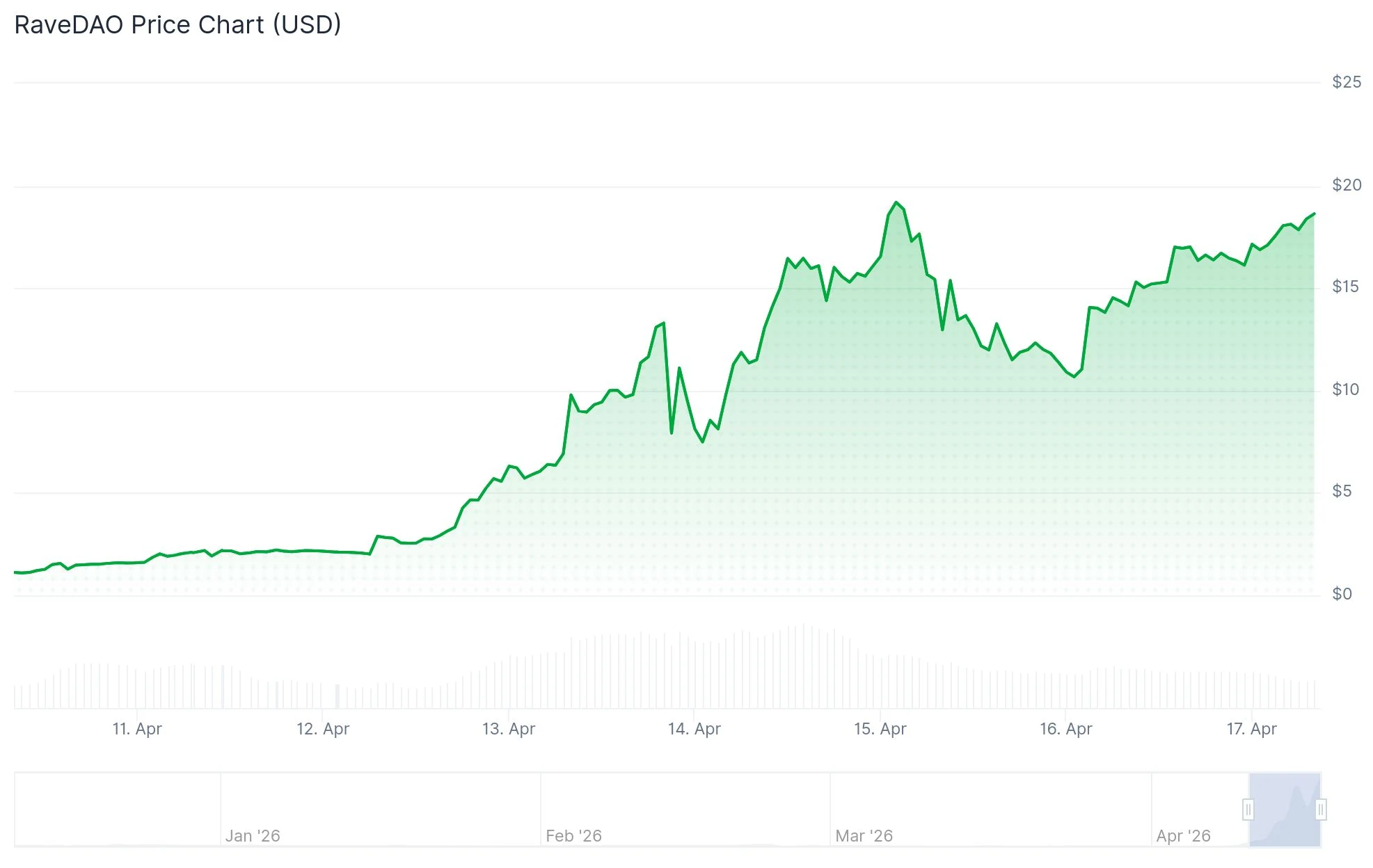
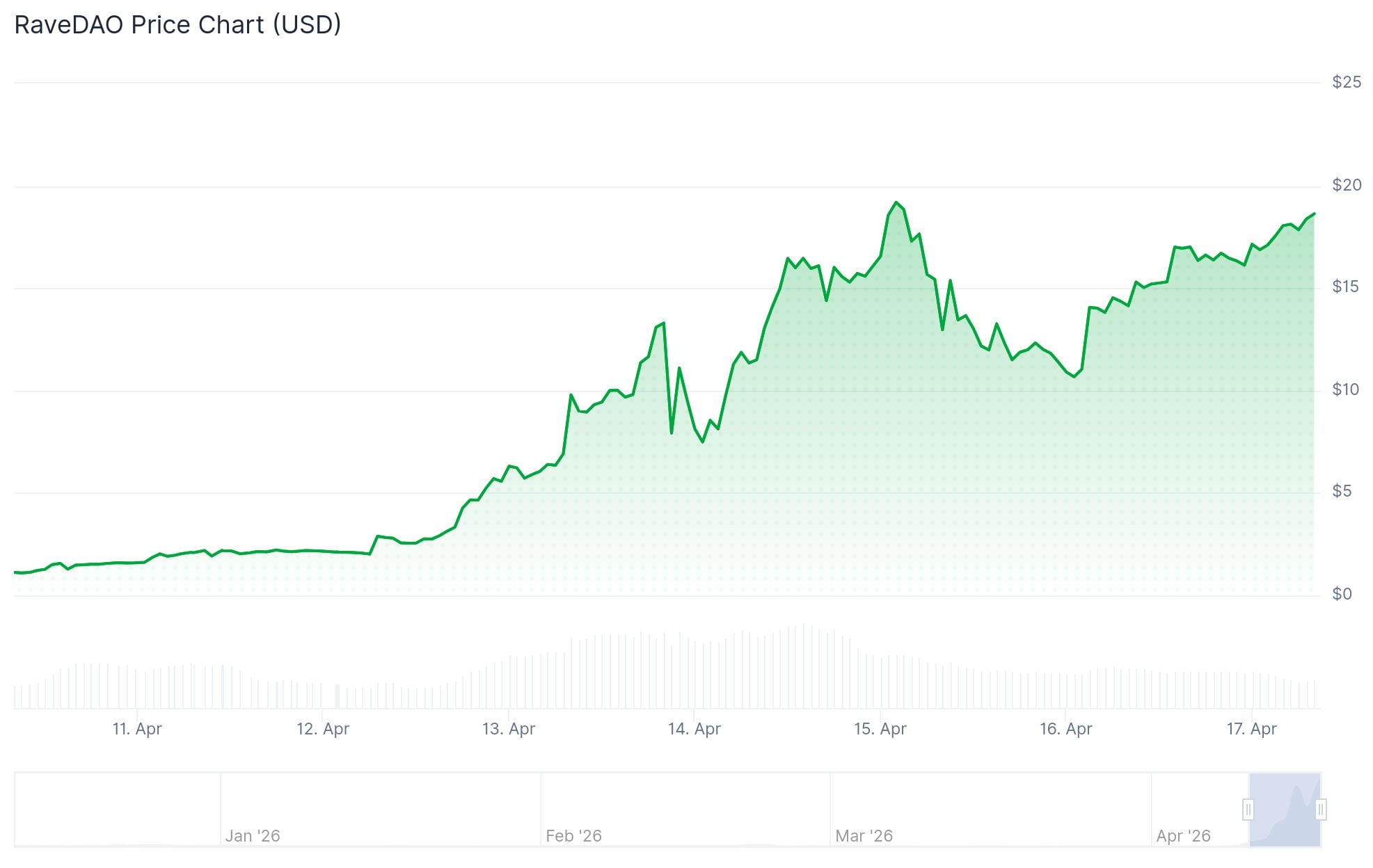
RaveDAO (RAVE) Token Explodes 6,000%: Deep Dive Into On-Chain Metrics
RaveDAO (RAVE) exploded 6,000% in one week, hitting $4.1B market cap. Analysis of on-chain data reveals supply concentration and $21M in short liquidations. The
Bitcoin Steady at $74K While ETF Demand Offsets Market Swing
The post Bitcoin Steady at $74K While ETF Demand Offsets Market Swing appeared on BitcoinEthereumNews.com. Bitcoin price remains steady at $74,000 mark. The ETF
Mitsui & Co.’s Crypto Arm Brings Tokenized Metals Asset Zipangcoin to OP Mainnet
The post Mitsui & Co.’s Crypto Arm Brings Tokenized Metals Asset Zipangcoin to OP Mainnet appeared on BitcoinEthereumNews.com. This is the first deployment of ZPG
RaveDAO (RAVE) Price: What the On-Chain Data Shows After a 6,000% Rally
TLDR RAVE surged 6,000% in seven days, reaching a $4.1B market cap and ranking 22nd globally above Avalanche and Sui. On-chain data shows 90% of RAVE’s supply held
Ethereum Code Review: Is It a Scam or a Legitimate Trading Platform?
If you've searched for the Ethereum Code platform, you probably want one answer: is it safe to invest your money there?This article breaks down exactly what the Ethereum Code trading app claims to off

Ethereum Investing Guide: Risks, Strategies, and Whether It's Worth It
If you've been wondering whether investing in Ethereum makes sense, you're not alone.This guide walks you through what Ethereum actually is, why it works differently from Bitcoin, what the real risks

Ethereum Price History by Year: Every Major Bull Run and Crash Explained
Ethereum has gone from a $0.31 ICO token to one of the most closely watched assets in global finance.Its price history isn't just a chart — it's a record of every major shift in the crypto market, fro

Ethereum Price Prediction: Short-Term Signals and Long-Term Price Targets
Ethereum is the world's second-largest cryptocurrency by market cap, and understanding where its price is headed matters to millions of investors.This article breaks down the short-term Ethereum price