When Ethereum was first introduced, very few outside of core developers and early believers could see its potential. Those who […] The post Why Zero Knowledge Proof Whitelist Will Open Soon to Usher in the Next Ethereum Moment appeared first on Coindoo.When Ethereum was first introduced, very few outside of core developers and early believers could see its potential. Those who […] The post Why Zero Knowledge Proof Whitelist Will Open Soon to Usher in the Next Ethereum Moment appeared first on Coindoo.

Why Zero Knowledge Proof Whitelist Will Open Soon to Usher in the Next Ethereum Moment

2025/10/08 03:00
5 min read

When Ethereum was first introduced, very few outside of core developers and early believers could see its potential. Those who entered during its earliest stages had the chance to secure a position before the technology became the backbone of decentralized finance, NFTs, and enterprise applications. Today, a similar moment is unfolding with Zero Knowledge Proof (ZKP). The whitelist for early access is about to open, giving participants a rare chance to join before large players dominate the ecosystem. This opportunity signals a turning point: just as Ethereum’s smart contracts unlocked an entirely new market, ZKP is preparing to make blockchain private, scalable, and enterprise-ready.

Learning from Ethereum’s Early Cycle

Ethereum’s rise wasn’t overnight. In 2015, it introduced smart contracts, which transformed blockchain from a simple ledger into a programmable platform. Early adopters often recall how ETH tokens were accessible at prices that later seemed unimaginable once institutions and enterprises entered the picture. That entry window didn’t last long. Within a few years, Ethereum’s ecosystem became the foundation of DeFi, NFTs, DAOs, and more.

Now the parallel is clear. Zero Knowledge Proof (ZKP) is opening its whitelist stage at a time when privacy and scalability are the industry’s biggest challenges. Like Ethereum, it isn’t offering a single product or side-feature; it is laying the groundwork for a complete ecosystem.

Key parallels to note:

  • Ethereum’s defining feature: smart contracts.
  • ZKP’s defining feature: verifiable privacy + scalability.
  • Ethereum provided programmability; ZKP adds confidentiality and compliance-readiness.

For investors, these parallels mark the whitelist opening as a critical signal. Every blockchain has a moment where it transitions from potential to infrastructure. ZKP is now at that threshold.

What Makes Zero Knowledge Proof (ZKP) Different

Unlike many networks that try to bolt privacy onto existing chains, Zero Knowledge Proof (ZKP) is being architected as a full Layer 1 infrastructure. Its foundation is built on zk-SNARKs and zk-STARKs, which enable proofs of validity without revealing sensitive information. This is not just about shielding transactions—it’s about creating a scalable system where decentralized apps, financial services, and enterprise solutions can run securely and privately.

Key differentiators:

  • Privacy layer: confidential transactions, shielded smart contracts, and selective disclosure.
  • Scalability layer: zk-rollups, recursive proofs, and parallel verification for tens of thousands of TPS.
  • Developer tools: SDKs for building privacy-first apps without a steep learning curve.

Ethereum’s strength was programmability. ZKP’s strength is making that programmability private, faster, and compliance-friendly. The architecture ensures that it isn’t locked to crypto use cases alone—it’s relevant to industries like healthcare, supply chain, and even secure voting systems.

This breadth makes ZKP more than just another blockchain. It’s a step forward in how decentralized infrastructure should be built.

The Whitelist as the Defining Entry Window

Every major blockchain has its entry window. For Bitcoin, it was mining before 2013. For Ethereum, it was the presale before smart contracts became mainstream. For Zero Knowledge Proof (ZKP), that defining window is the whitelist that will open soon.

This whitelist isn’t just about token access—it represents the earliest possible stake in what could become the backbone of privacy-preserving blockchain adoption. Once institutional players begin to onboard, the early pricing and availability that the whitelist offers will no longer be possible.

Why this moment matters:

  • Early access pricing mirrors Ethereum’s earliest days.
  • Whitelist participants secure entry before broader market adoption.
  • Institutions and enterprises tend to follow after infrastructure proves itself.

For many, Ethereum’s story is a reminder of how quickly entry costs can rise once real-world adoption accelerates. ZKP is positioning itself for the same trajectory—except with privacy and scalability solved at the base layer.

Real-World Impact Beyond Speculation

Ethereum proved that a blockchain could do more than transfer value. Zero Knowledge Proof (ZKP) takes that lesson and builds it into sectors where privacy and compliance are non-negotiable. This includes:

  • Finance: Businesses can validate solvency without disclosing internal data.
  • Healthcare: Patients can share proofs without exposing sensitive medical history.
  • Supply chains: Authenticity can be proven without revealing trade secrets.
  • Voting: Elections can be verified as legitimate while keeping ballots private.

Ethereum was the beginning of programmable trust. ZKP takes it further by ensuring that programmable trust is also confidential, scalable, and legally adaptable. This ensures that the ecosystem is not limited to speculative use cases but can serve enterprises, governments, and institutions at scale.

The whitelist is not just about token speculation—it’s about entering early into an infrastructure layer designed to power industries that cannot compromise on privacy or scalability.

Final Take

Ethereum’s rise shows what happens when a technology becomes more than just another coin—it becomes infrastructure. Today, Zero Knowledge Proof (ZKP) is preparing for its own defining moment, with the whitelist opening soon. This is not a side project or privacy add-on, but a full blockchain ecosystem designed to scale, protect user data, and adapt to real-world compliance. Every major chain had its early entry point, and ZKP’s whitelist marks that exact moment. For those who remember Ethereum’s presale era, this feels familiar: a chance to join before the institutions arrive and before mainstream adoption makes early entry all but impossible.


This publication is sponsored. Coindoo does not endorse or assume responsibility for the content, accuracy, quality, advertising, products, or any other materials on this page. Readers are encouraged to conduct their own research before engaging in any cryptocurrency-related actions. Coindoo will not be liable, directly or indirectly, for any damages or losses resulting from the use of or reliance on any content, goods, or services mentioned. Always do your own research.

The post Why Zero Knowledge Proof Whitelist Will Open Soon to Usher in the Next Ethereum Moment appeared first on Coindoo.

Market Opportunity
OpenLedger Logo
OpenLedger Price(OPEN)
$0.15928
$0.15928$0.15928
-4.20%
USD
OpenLedger (OPEN) Live Price Chart
Disclaimer: The articles reposted on this site are sourced from public platforms and are provided for informational purposes only. They do not necessarily reflect the views of MEXC. All rights remain with the original authors. If you believe any content infringes on third-party rights, please contact [email protected] for removal. MEXC makes no guarantees regarding the accuracy, completeness, or timeliness of the content and is not responsible for any actions taken based on the information provided. The content does not constitute financial, legal, or other professional advice, nor should it be considered a recommendation or endorsement by MEXC.

You May Also Like

Bitcoin Hyper Not Far from $20M, Whales Keep Buying: See What This $BTC Layer-2 Plans
Bitcoin Hyper Not Far from $20M, Whales Keep Buying: See What This $BTC Layer-2 Plans

To the uninitiated, Bitcoin and crypto are synonymous – and it’s only fair, given that the granddaddy of all crypto has been the face of the industry ever since it burst onto the scene a few years back. Since 2020, Bitcoin has generated over 1,500% in returns. Basically, crypto is so much about Bitcoin. All […]
Share
Bitcoinist2025/09/22 16:37
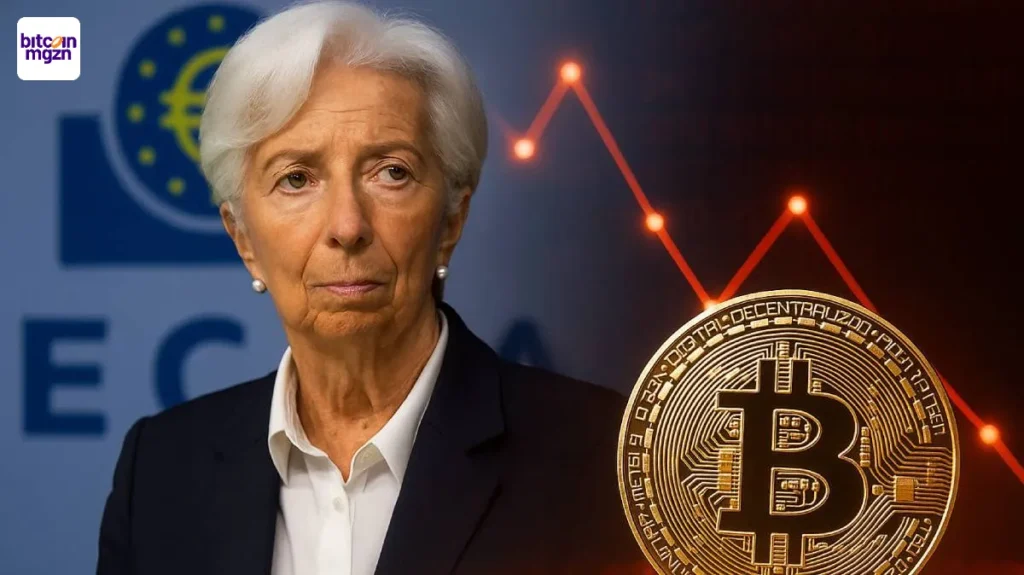
ECB-president hernieuwt aanval op Bitcoin terwijl euro daalt

ECB-president hernieuwt aanval op Bitcoin terwijl euro daalt

Snelle crypto updates? Connect op Instagram! Check onze Instagram   ECB-president Christine Lagarde noemt Bitcoin waardeloos en waarschuwt voor zijn speculatieve aard. Haar uitspraken komen op een moment dat DeFi groeit en de euro onder druk staat, wat de discussie over geld en controle opnieuw tot leven brengt. ECB houdt vast aan kritiek op Bitcoin en DeFi De Europese Centrale Bank (ECB) blijft vasthouden aan haar scherpe toon over Bitcoin. Volgens president Christine Lagarde ontbreekt de munt het fundament dat echt geld kenmerkt. Ze noemt het een speculatief middel zonder onderliggende waarde, en benadrukt dat de ECB het publieke vertrouwen in geld moet beschermen. Terwijl de digitale economie zich steeds meer richting decentralisatie beweegt, probeert de bank haar rol als stabiele pijler te behouden. ECB (European Central Bank) De European Central Bank (ECB) is de centrale bank van de eurozone en bepaalt samen met de nationale banken het monetaire beleid voor de euro. Ze houdt de inflatie in de gaten, bepaalt de rente en zorgt voor stabiliteit van het financiële systeem. In de cryptowereld speelt de ECB vooral een rol met het onderzoek en de voorbereidingen voor een digitale euro, een eigen centrale bank digitale munt (CBDC). Daarmee wil de bank inspelen op de groei van digitaal geld en alternatieven zoals stablecoins. Voor de crypto-industrie is dit belangrijk omdat een digitale euro de concurrentie en het speelveld voor private stablecoins kan veranderen. De waarschuwing van Lagarde past in een bredere strategie van de ECB. De opkomst van decentrale financiële systemen (DeFi) wordt gezien als een uitdaging voor de invloed van centrale banken. In die waarschuwing lijkt ook iets van zelfbescherming door te klinken: het behoud van macht over monetair beleid. Voorstanders van Bitcoin wijzen juist op de kracht van schaarste, transparantie en onafhankelijkheid; eigenschappen die fiatgeld in hun ogen steeds meer verliest. “How many bitcoin do you own?” That’s how it starts, a stupid question from the host. From there, it goes downhill fast. Christine Lagarde repeats every tired anti-bitcoin cliché the ECB has ever pushed. Let’s go… 1️⃣ “Bitcoin has no intrinsic value.” Neither does fiat.… pic.twitter.com/uMqtEHvkD0 — Eli Nagar (@EliNagarBrr) October 7, 2025 De euro verzwakt terwijl crypto aan invloed wint Ondertussen verliest de euro langzaam maar zeker aan koopkracht. Sinds de invoering in 2002 is de munt ruim veertig procent van haar reële waarde kwijtgeraakt. Dat voedt de twijfel over de houdbaarheid van het huidige fiatstelsel en vergroot de interesse in alternatieven zoals Bitcoin en andere cryptovaluta. Binnen de Europese cryptogemeenschap worden de woorden van de ECB dan ook met de nodige scepsis onthaald. Been 22 years, physical $Euro coins and banknotes entered circulation on January 1st 2002. Since then, this fiasco lost 40% of its buying power according to “official” stats. Won’t even mention real stats, or you’d be dumping ALL your Eurobolivars for #Bitcoin right now. pic.twitter.com/Rp3KinVfPm — Vandelay ₿TC Industries ⚡ (@VandelayBTC) January 3, 2024 DeFi-platforms en stablecoins winnen terrein in Europa, juist omdat ze nieuwe mogelijkheden bieden voor rendement en autonomie. Waar Lagarde waarschuwt voor volatiliteit, zien veel gebruikers vooral vrijheid in een systeem dat zich niets aantrekt van centrale banken. De groei van DeFi laat zien dat vertrouwen niet alleen via instituties ontstaat, maar ook via technologie. Monetaire controle en vertrouwen in het digitale tijdperk De standpunten van de ECB leggen een oud spanningsveld bloot: de strijd tussen stabiliteit en vrijheid. Aan de ene kant verdedigt de bank haar rol als bewaker van orde, aan de andere kant tonen cryptomarkten dat vertrouwen ook buiten traditionele kanalen kan bestaan. Terwijl de ECB pleit voor zekerheid en voorspelbaarheid, zoeken investeerders steeds vaker transparantie en zelfbeschikking. Lagarde’s uitspraken passen in een wereldwijde trend waarin centrale banken proberen hun gezag te behouden in een economie die snel verandert. Toch klinkt steeds luider de vraag of die vorm van controle nog houdbaar is. Nieuwe technologieën maken directe waardeoverdracht mogelijk,zonder tussenkomst van banken. Dat idee wringt natuurlijk met de kern van het bestaande financiële systeem. Exactly. It was narrative management. They feel threatened. That’s why real questions about monetary policy, inflation, and accountability never make it to the script. — Eli Nagar (@EliNagarBrr) October 8, 2025 De toekomst van waarde: centraal of gedecentraliseerd? De discussie tussen de ECB en de cryptowereld draait om meer dan geld. Het gaat om vertrouwen, transparantie en macht over waarde. Zolang de euro verder verzwakt en decentrale technologieën blijven groeien, lijkt de kloof tussen centrale banken en de cryptosector alleen maar groter te worden. Hoeveel invloed de ECB kan behouden, hangt af van haar vermogen zich aan te passen aan dit nieuwe tijdperk. De strijd om waarde is niet enkel economisch, maar ook ideologisch. In dat licht voelt de opkomst van Bitcoin minder als een bedreiging, en meer als een logisch gevolg van de zoektocht naar onafhankelijkheid in geld. Koop je Bitcoin via Best Wallet Best wallet is een topklasse crypto wallet waarmee je anoniem crypto kan kopen. Met meer dan 60 chains gesupport kan je al je main crypto coins aanschaffen via Best Wallet. Best wallet - betrouwbare en anonieme wallet Best wallet - betrouwbare en anonieme wallet Meer dan 60 chains beschikbaar voor alle crypto Vroege toegang tot nieuwe projecten Hoge staking belongingen Lage transactiekosten Best wallet review Koop nu via Best Wallet Let op: cryptocurrency is een zeer volatiele en ongereguleerde investering. Doe je eigen onderzoek. Het bericht ECB-president hernieuwt aanval op Bitcoin terwijl euro daalt is geschreven door Sebastiaan Krijnen en verscheen als eerst op Bitcoinmagazine.nl.
Share
Coinstats2025/10/11 03:16
What SBI Really Owns in Ripple May Surprise XRP Investors

What SBI Really Owns in Ripple May Surprise XRP Investors

The post What SBI Really Owns in Ripple May Surprise XRP Investors appeared on BitcoinEthereumNews.com. SBI Holdings Chairman Yoshitaka Kitao has confirmed that
Share
BitcoinEthereumNews2026/02/16 16:14