

Shiba Inu Reopens Shibarium Bridge After 1-Month Freeze
Shiba Inu has restored BONE transfers on Shibarium’s Plasma bridge, re-enabling deposits and withdrawals between Ethereum and the layer-2 network following a security incident that forced a month-long pause. In an October 14 post, core contributor Kaal Dhairya wrote that the “Plasma Bridge is back online for BONE, following a comprehensive review and a series of security enhancements,” adding that users can now bridge BONE “with a safer, stronger, and more resilient experience.”
Shiba Inu Relaunches The Shibarium Bridge
The relaunch comes after Shibarium’s bridge was restricted in mid-September following a validator-key compromise that enabled a malicious exit on the PoS bridge. In a September 21 incident report, Dhairya stated that “on September 12, 2025 at 18:44 UTC, unauthorized validator signing power was used to push a malicious state/exit through the PoS bridge, withdrawing multiple assets,” prompting immediate containment measures and a broader hardening program. The team said at the time it would publish full technical details once it was safe to do so and that “bridging remains restricted during containment/hardening.”
Shibarium’s team is positioning the re-opened BONE bridge as the first step in a phased restoration of services, backed by new policy-level and operational controls. The most visible change for users is a mandatory delay before withdrawals finalize: “All BONE Plasma withdrawals now include a 7-day finalization delay. This buffer gives operators and security teams time to monitor and respond to unusual activity before funds finalize—significantly improving defense without removing user access.” The post frames the delay as reinforcing Plasma’s fraud-resistance guarantees.
Another control introduced at the bridge layer is proactive address blacklisting. According to the team, the new mechanism “lets us flag and block suspicious addresses at the bridge layer,” with the intent of preventing repeat abuse across the ecosystem. The Shiba Inu team also emphasized that critical code changes underwent an external review: “All critical changes were reviewed by Hexens, adding an independent layer of expert scrutiny.” The relaunch followed a validation sequence that included unit tests, end-to-end simulations, deployment on the public testnet (“Puppynet”), and “multi-timeframe” monitoring before production activation.
The October 14 update also addresses a separate strand of the September incident involving KNINE and minor OSCAR token flows. The Shiba Inu team disclosed that the attacker “drained and sold roughly $600 worth of OSCAR tokens from the bridge but ignored the 5 ETH recovery offer for KNINE tokens,” which now remain blacklisted and unusable to the attacker. The previously announced KNINE bounty “has expired,” the team said, but it plans “one final, conditional bounty (amount TBD) for complete return of all KNINE held by attacker-controlled addresses,” stressing that partial returns will not qualify and that terms will appear only on verified channels.
While only BONE is live on the Plasma bridge today, Shibarium signaled a broader roadmap. The team plans “gradual re-enablement for other tokens” and is “finalizing a fair and transparent repayment framework for affected users,” with specifics to be published once doing so would not increase risk. The post underscores a measured posture after the September compromise: “Safety first: We won’t publish specifics that could be gamed while security work is ongoing. Expect measured, verifiable updates.”
Context around the month-long outage highlights the extent of remediation behind the scenes. In late September, Shibarium detailed rotations of validator signers, migrations of contract control to multi-party hardware custody, targeted contract-level protections, live monitoring and exchange coordination, and the engagement of independent security and incident-response specialists. The September 21 update also acknowledged decentralization shortcomings in validator operations and outlined a hardening plan “in progress collaboration with Hexens,” with restoration gated on third-party sign-offs and successful drills on test environments.
For now, the reopening restores a critical path for validators, liquidity providers and users who rely on BONE mobility between Ethereum and Shibarium. As the post concludes, the new safeguards—including blacklisting and the 7-day challenge window—are intended to align the bridge’s user experience with the practical realities of operating a Plasma-style system under adversarial conditions: “Every new safeguard, every extra check, and yes—even the 7-day delay—reflects one core principle: protecting the community.”
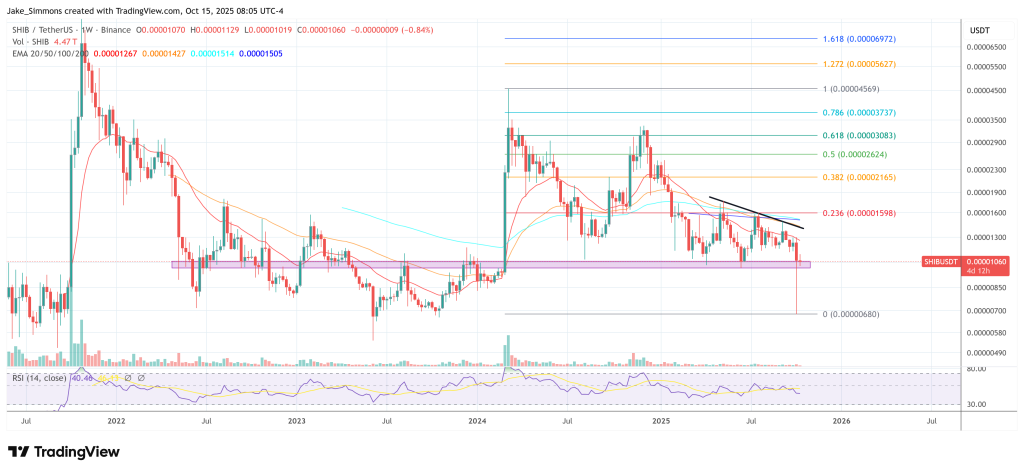
At press time, the Shiba Inu (SHIB) token traded at $0.00001060.
You May Also Like

The Channel Factories We’ve Been Waiting For

Wyoming-based crypto bank Custodia files rehearing petition against Fed
