Brian Armstrong spent $25 million to burn Cobie’s NFT, reviving the iconic Up Only TV crypto podcast and sparking massive nostalgia.Brian Armstrong spent $25 million to burn Cobie’s NFT, reviving the iconic Up Only TV crypto podcast and sparking massive nostalgia.

Brian Armstrong Burns $25M NFT to Force Up Only TV Comeback

2025/10/21 22:11
3 min read

Coinbase CEO Brian Armstrong has spent $25 million to buy and burn a one-of-a-kind NFT that controls the return of Up Only TV, the cult-favorite crypto podcast hosted by Cobie and LedgerStatus.

The symbolic burn immediately triggered excitement across Crypto Twitter, reigniting memories of the 2021 bull run that the show helped define.

Armstrong Revives a Crypto Classic

The story began on May 7, when Cobie, real name Jordan Fish, minted an NFT that he claimed would determine the fate of Up Only.

The token, inscribed with “ADMISSION: 1 SEASON OF UP ONLY TV,” gave its holder the power to “compel Cobie and LedgerStatus into performing eight episodes.” He wrote at the time, “When the NFT is burned, the podcast will restart. Until then, please leave me alone.”

This week, Armstrong entered the picture, revealing that his company had bought the NFT.

While the exact price was not officially confirmed, on-chain data analyzed by commentators suggested a transaction worth 6,500 ETH, or approximately $25 million.

Cobie, who had earlier resisted calls to revive the show, leaned into the moment with humor:

Crypto users across X reacted with excitement:

Others, like Rhino, questioned whether the new season could live up to its past, noting that there aren’t anywhere near the level of interesting main characters that had been around in the last cycle. Cobie himself admitted that finding good guests could be challenging, mentioning possible appearances from Arthur Hayes and prediction market experts, but no confirmed list yet.

Nostalgia and Market Timing

The Up Only revival lands at a time when the crypto community could use a morale boost. Just last week, the market suffered a sharp downturn, with over $19 billion worth of leveraged positions liquidated following renewed U.S.–China trade tensions.

Cobie used that collapse to remind traders about the risks of over-leverage, saying that “fighting that feeling and avoiding the wipeouts is worth it in the end.”

Still, the podcaster is tempering expectations, writing that the show’s return won’t magically “bring back 2021 vibes.” However, going by the online comments, for much of the crypto community, even a short UpOnly reboot feels like a spark of optimism after months of market exhaustion. As one fan put it when Cobie announced he was putting down the mic: “One more UpOnly season for my children. One more UpOnly for Satoshi.”

At the same time, the relationship between Cobie and Coinbase will go beyond the company’s revival of the Up Only podcast, with the exchange announcing its acquisition of Echo, an early-stage crypto investment platform founded by Cobie. The deal is worth about $375 million, made up of cash and stock, and will be subject to purchase price adjustments.

The post Brian Armstrong Burns $25M NFT to Force Up Only TV Comeback appeared first on CryptoPotato.

Market Opportunity
AINFT Logo
AINFT Price(NFT)
$0.0000003367
$0.0000003367$0.0000003367
-1.31%
USD
AINFT (NFT) Live Price Chart
Disclaimer: The articles reposted on this site are sourced from public platforms and are provided for informational purposes only. They do not necessarily reflect the views of MEXC. All rights remain with the original authors. If you believe any content infringes on third-party rights, please contact [email protected] for removal. MEXC makes no guarantees regarding the accuracy, completeness, or timeliness of the content and is not responsible for any actions taken based on the information provided. The content does not constitute financial, legal, or other professional advice, nor should it be considered a recommendation or endorsement by MEXC.

You May Also Like

Structural job strain caps rand gains – Commerzbank
Structural job strain caps rand gains – Commerzbank

The post Structural job strain caps rand gains – Commerzbank appeared on BitcoinEthereumNews.com. Commerzbank’s Volkmar Baur highlights that South Africa’s unemployment
Share
BitcoinEthereumNews2026/02/19 05:27
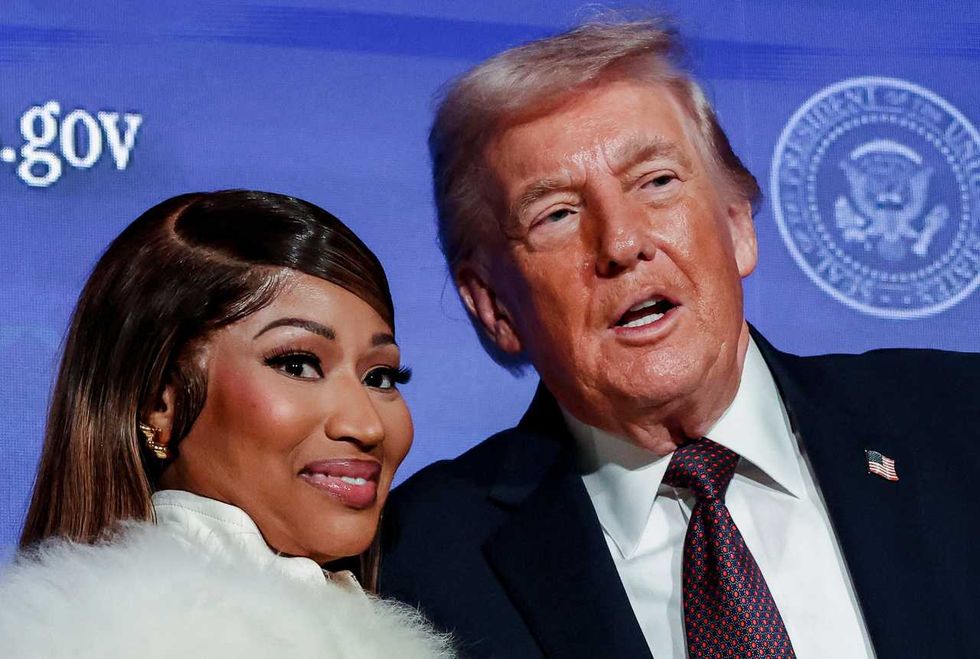
Trump gushes over Nicki Minaj's skin to mark Black History Month: 'So beautiful'

Trump gushes over Nicki Minaj's skin to mark Black History Month: 'So beautiful'

President Donald Trump used an event marking Black History Month to remark on Nicki Minaj's complexion."I love Nikki Minaj," the president told the audience. "She
Share
Rawstory2026/02/19 05:07
Google's AP2 protocol has been released. Does encrypted AI still have a chance?

Google's AP2 protocol has been released. Does encrypted AI still have a chance?

Following the MCP and A2A protocols, the AI Agent market has seen another blockbuster arrival: the Agent Payments Protocol (AP2), developed by Google. This will clearly further enhance AI Agents' autonomous multi-tasking capabilities, but the unfortunate reality is that it has little to do with web3AI. Let's take a closer look: What problem does AP2 solve? Simply put, the MCP protocol is like a universal hook, enabling AI agents to connect to various external tools and data sources; A2A is a team collaboration communication protocol that allows multiple AI agents to cooperate with each other to complete complex tasks; AP2 completes the last piece of the puzzle - payment capability. In other words, MCP opens up connectivity, A2A promotes collaboration efficiency, and AP2 achieves value exchange. The arrival of AP2 truly injects "soul" into the autonomous collaboration and task execution of Multi-Agents. Imagine AI Agents connecting Qunar, Meituan, and Didi to complete the booking of flights, hotels, and car rentals, but then getting stuck at the point of "self-payment." What's the point of all that multitasking? So, remember this: AP2 is an extension of MCP+A2A, solving the last mile problem of AI Agent automated execution. What are the technical highlights of AP2? The core innovation of AP2 is the Mandates mechanism, which is divided into real-time authorization mode and delegated authorization mode. Real-time authorization is easy to understand. The AI Agent finds the product and shows it to you. The operation can only be performed after the user signs. Delegated authorization requires the user to set rules in advance, such as only buying the iPhone 17 when the price drops to 5,000. The AI Agent monitors the trigger conditions and executes automatically. The implementation logic is cryptographically signed using Verifiable Credentials (VCs). Users can set complex commission conditions, including price ranges, time limits, and payment method priorities, forming a tamper-proof digital contract. Once signed, the AI Agent executes according to the conditions, with VCs ensuring auditability and security at every step. Of particular note is the "A2A x402" extension, a technical component developed by Google specifically for crypto payments, developed in collaboration with Coinbase and the Ethereum Foundation. This extension enables AI Agents to seamlessly process stablecoins, ETH, and other blockchain assets, supporting native payment scenarios within the Web3 ecosystem. What kind of imagination space can AP2 bring? After analyzing the technical principles, do you think that's it? Yes, in fact, the AP2 is boring when it is disassembled alone. Its real charm lies in connecting and opening up the "MCP+A2A+AP2" technology stack, completely opening up the complete link of AI Agent's autonomous analysis+execution+payment. From now on, AI Agents can open up many application scenarios. For example, AI Agents for stock investment and financial management can help us monitor the market 24/7 and conduct independent transactions. Enterprise procurement AI Agents can automatically replenish and renew without human intervention. AP2's complementary payment capabilities will further expand the penetration of the Agent-to-Agent economy into more scenarios. Google obviously understands that after the technical framework is established, the ecological implementation must be relied upon, so it has brought in more than 60 partners to develop it, almost covering the entire payment and business ecosystem. Interestingly, it also involves major Crypto players such as Ethereum, Coinbase, MetaMask, and Sui. Combined with the current trend of currency and stock integration, the imagination space has been doubled. Is web3 AI really dead? Not entirely. Google's AP2 looks complete, but it only achieves technical compatibility with Crypto payments. It can only be regarded as an extension of the traditional authorization framework and belongs to the category of automated execution. There is a "paradigm" difference between it and the autonomous asset management pursued by pure Crypto native solutions. The Crypto-native solutions under exploration are taking the "decentralized custody + on-chain verification" route, including AI Agent autonomous asset management, AI Agent autonomous transactions (DeFAI), AI Agent digital identity and on-chain reputation system (ERC-8004...), AI Agent on-chain governance DAO framework, AI Agent NPC and digital avatars, and many other interesting and fun directions. Ultimately, once users get used to AI Agent payments in traditional fields, their acceptance of AI Agents autonomously owning digital assets will also increase. And for those scenarios that AP2 cannot reach, such as anonymous transactions, censorship-resistant payments, and decentralized asset management, there will always be a time for crypto-native solutions to show their strength? The two are more likely to be complementary rather than competitive, but to be honest, the key technological advancements behind AI Agents currently all come from web2AI, and web3AI still needs to keep up the good work!
Share
PANews2025/09/18 07:00