China’s Crypto strategy is turning money into a weapon of statecraft. A recent study published by Study Times—the journal of China’s Central Party School—argued that digital assets now shape warfare and finance. The study described crypto and central bank digital currencies (CBDCs) as tools of “financial mobilization.” They allow states to redirect liquidity when banks fail or sanctions tighten. Blockchain networks were called a “digital logistics front,” merging economic survival with national security. Digital money becomes a tool of geopolitical power The study said the battlefield now stretches into finance. Crypto forms an infrastructure for “total war,” blending deterrence, capital mobilization, and social stability. By digitizing money flows, Beijing could sustain liquidity, fund defense industries, and support domestic demand when global finance fractures. It also outlined a triad of “total war, hybrid war, and digital financial war,” claiming that digital ledgers underpin national resilience. The digital yuan and blockchain settlements act as strategic assets within this framework. They are built to operate independently of U.S. sanctions and the SWIFT network. “Digital currencies have become strategic assets in hybrid warfare, reshaping cross-border capital flows during wartime.” — Study Times (2025) This shift reflects a broader trend. Economist Barry Eichengreen notes that the dollar’s share of global reserves fell from 71% in 2000 to 58% in 2024. He wrote that governments are “moving away from the dollar… for geopolitical reasons, while firms still prefer its liquidity.” Meanwhile, Beijing’s mBridge project—linking CBDCs from China, Saudi Arabia, Thailand, and the UAE—seeks to bypass SWIFT and build a parallel network beyond the US’s reach. For China, blockchain means more than speed; it represents autonomy under economic pressure. The TRM Labs 2025 Crypto Crime Report shows that digital assets operate on both sides of the geopolitical battlefield. Sanctioned exchanges such as Russia’s Garantex and Iran’s Nobitex handled over 85% of illicit inflows to restricted markets. Distribution of 86 designated addresses | TRM Terror groups—including Hamas, Hezbollah, and ISIS affiliates—used stablecoins like USDT on TRON to raise funds. As a result, Israel froze millions in related accounts. Digital finance, once hailed as borderless innovation, has instead become a field of control and enforcement. From cyber defense to “soft power” projection Military theorist Jason P. Lowery argues in Softwar that Bitcoin is “a non-lethal form of power projection—a digital defense system secured by electricity, not explosives.” This idea now shapes Beijing’s view of blockchain as a base for resilience and deterrence. By embedding monetary control in code, states can project power through networks instead of troops. Visualizing blockchain applications in military contexts | Blockchain Applications in the Military Domain A 2025 review in Technologies found that blockchain “strengthens military operations through secure communication, immutable logistics, and quantum-safe authentication.” Researchers said distributed ledgers can harden command systems and supply chains against cyber or physical attacks. These findings show how cryptographic infrastructure is shifting from finance to defense, linking data integrity, funding agility, and operational trust. The geopolitical divide is widening. Western governments aim to limit crypto’s militarization, whereas China embeds it in state policy. As Eichengreen cautioned, “geopolitics cuts both ways.” Depending on who builds the rails, crypto could weaken or reinforce dollar dominance. Ultimately, Beijing’s hybrid model—combining economic control with technological sovereignty—signals that the next great-power contest will unfold in markets or cyberspace and across the distributed ledgers that connect them.China’s Crypto strategy is turning money into a weapon of statecraft. A recent study published by Study Times—the journal of China’s Central Party School—argued that digital assets now shape warfare and finance. The study described crypto and central bank digital currencies (CBDCs) as tools of “financial mobilization.” They allow states to redirect liquidity when banks fail or sanctions tighten. Blockchain networks were called a “digital logistics front,” merging economic survival with national security. Digital money becomes a tool of geopolitical power The study said the battlefield now stretches into finance. Crypto forms an infrastructure for “total war,” blending deterrence, capital mobilization, and social stability. By digitizing money flows, Beijing could sustain liquidity, fund defense industries, and support domestic demand when global finance fractures. It also outlined a triad of “total war, hybrid war, and digital financial war,” claiming that digital ledgers underpin national resilience. The digital yuan and blockchain settlements act as strategic assets within this framework. They are built to operate independently of U.S. sanctions and the SWIFT network. “Digital currencies have become strategic assets in hybrid warfare, reshaping cross-border capital flows during wartime.” — Study Times (2025) This shift reflects a broader trend. Economist Barry Eichengreen notes that the dollar’s share of global reserves fell from 71% in 2000 to 58% in 2024. He wrote that governments are “moving away from the dollar… for geopolitical reasons, while firms still prefer its liquidity.” Meanwhile, Beijing’s mBridge project—linking CBDCs from China, Saudi Arabia, Thailand, and the UAE—seeks to bypass SWIFT and build a parallel network beyond the US’s reach. For China, blockchain means more than speed; it represents autonomy under economic pressure. The TRM Labs 2025 Crypto Crime Report shows that digital assets operate on both sides of the geopolitical battlefield. Sanctioned exchanges such as Russia’s Garantex and Iran’s Nobitex handled over 85% of illicit inflows to restricted markets. Distribution of 86 designated addresses | TRM Terror groups—including Hamas, Hezbollah, and ISIS affiliates—used stablecoins like USDT on TRON to raise funds. As a result, Israel froze millions in related accounts. Digital finance, once hailed as borderless innovation, has instead become a field of control and enforcement. From cyber defense to “soft power” projection Military theorist Jason P. Lowery argues in Softwar that Bitcoin is “a non-lethal form of power projection—a digital defense system secured by electricity, not explosives.” This idea now shapes Beijing’s view of blockchain as a base for resilience and deterrence. By embedding monetary control in code, states can project power through networks instead of troops. Visualizing blockchain applications in military contexts | Blockchain Applications in the Military Domain A 2025 review in Technologies found that blockchain “strengthens military operations through secure communication, immutable logistics, and quantum-safe authentication.” Researchers said distributed ledgers can harden command systems and supply chains against cyber or physical attacks. These findings show how cryptographic infrastructure is shifting from finance to defense, linking data integrity, funding agility, and operational trust. The geopolitical divide is widening. Western governments aim to limit crypto’s militarization, whereas China embeds it in state policy. As Eichengreen cautioned, “geopolitics cuts both ways.” Depending on who builds the rails, crypto could weaken or reinforce dollar dominance. Ultimately, Beijing’s hybrid model—combining economic control with technological sovereignty—signals that the next great-power contest will unfold in markets or cyberspace and across the distributed ledgers that connect them.

China Turns Crypto into a Weapon of Statecraft: Digital Yuan at the Frontlines

2025/10/22 10:00
3 min read

China’s Crypto strategy is turning money into a weapon of statecraft. A recent study published by Study Times—the journal of China’s Central Party School—argued that digital assets now shape warfare and finance.

The study described crypto and central bank digital currencies (CBDCs) as tools of “financial mobilization.” They allow states to redirect liquidity when banks fail or sanctions tighten. Blockchain networks were called a “digital logistics front,” merging economic survival with national security.

Digital money becomes a tool of geopolitical power

The study said the battlefield now stretches into finance. Crypto forms an infrastructure for “total war,” blending deterrence, capital mobilization, and social stability. By digitizing money flows, Beijing could sustain liquidity, fund defense industries, and support domestic demand when global finance fractures.

It also outlined a triad of “total war, hybrid war, and digital financial war,” claiming that digital ledgers underpin national resilience. The digital yuan and blockchain settlements act as strategic assets within this framework. They are built to operate independently of U.S. sanctions and the SWIFT network.

This shift reflects a broader trend. Economist Barry Eichengreen notes that the dollar’s share of global reserves fell from 71% in 2000 to 58% in 2024. He wrote that governments are “moving away from the dollar… for geopolitical reasons, while firms still prefer its liquidity.”

Meanwhile, Beijing’s mBridge project—linking CBDCs from China, Saudi Arabia, Thailand, and the UAE—seeks to bypass SWIFT and build a parallel network beyond the US’s reach. For China, blockchain means more than speed; it represents autonomy under economic pressure.

The TRM Labs 2025 Crypto Crime Report shows that digital assets operate on both sides of the geopolitical battlefield. Sanctioned exchanges such as Russia’s Garantex and Iran’s Nobitex handled over 85% of illicit inflows to restricted markets.
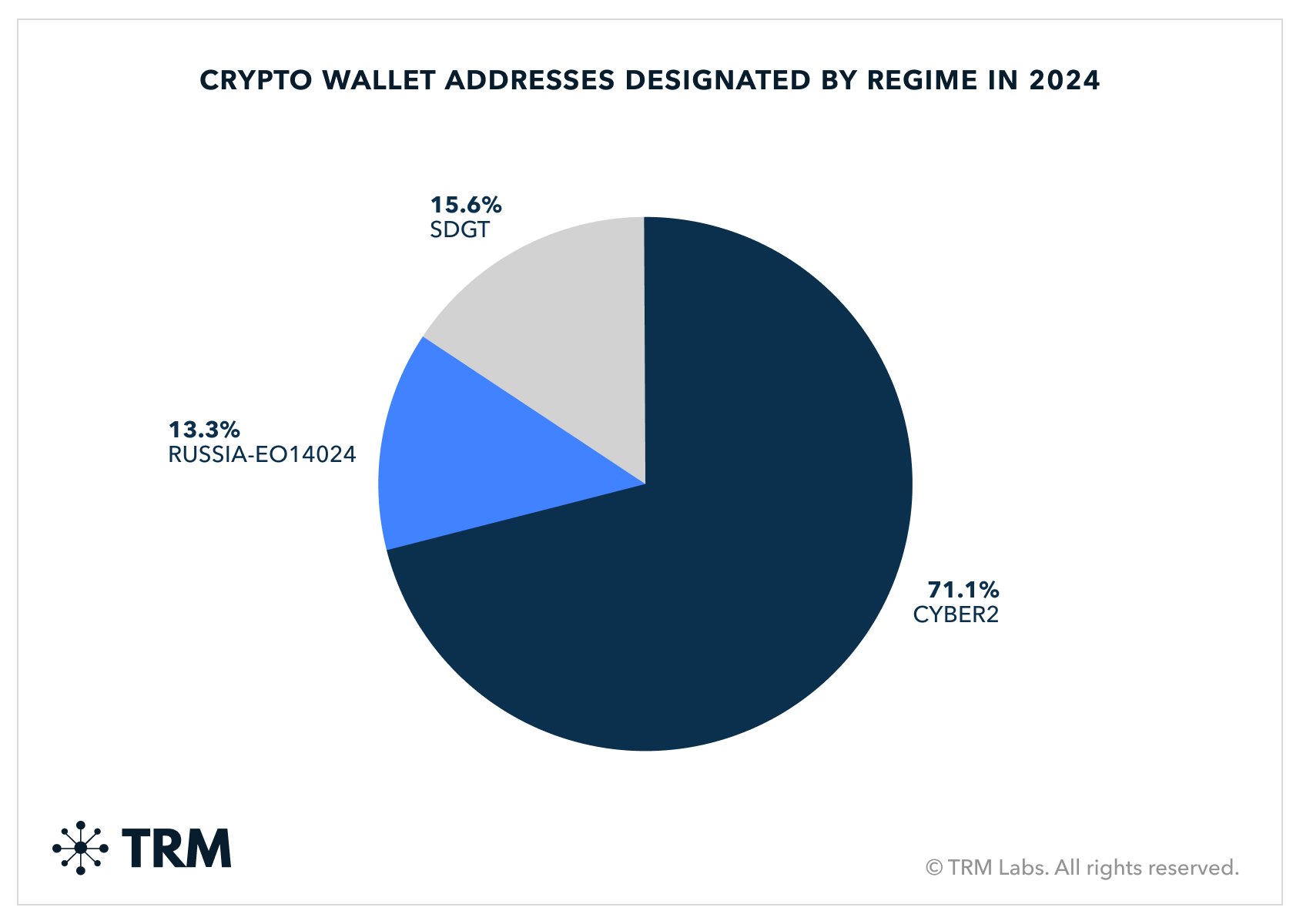
Distribution of 86 designated addresses | TRM

Terror groups—including Hamas, Hezbollah, and ISIS affiliates—used stablecoins like USDT on TRON to raise funds. As a result, Israel froze millions in related accounts. Digital finance, once hailed as borderless innovation, has instead become a field of control and enforcement.

From cyber defense to “soft power” projection

Military theorist Jason P. Lowery argues in Softwar that Bitcoin is “a non-lethal form of power projection—a digital defense system secured by electricity, not explosives.” This idea now shapes Beijing’s view of blockchain as a base for resilience and deterrence. By embedding monetary control in code, states can project power through networks instead of troops.
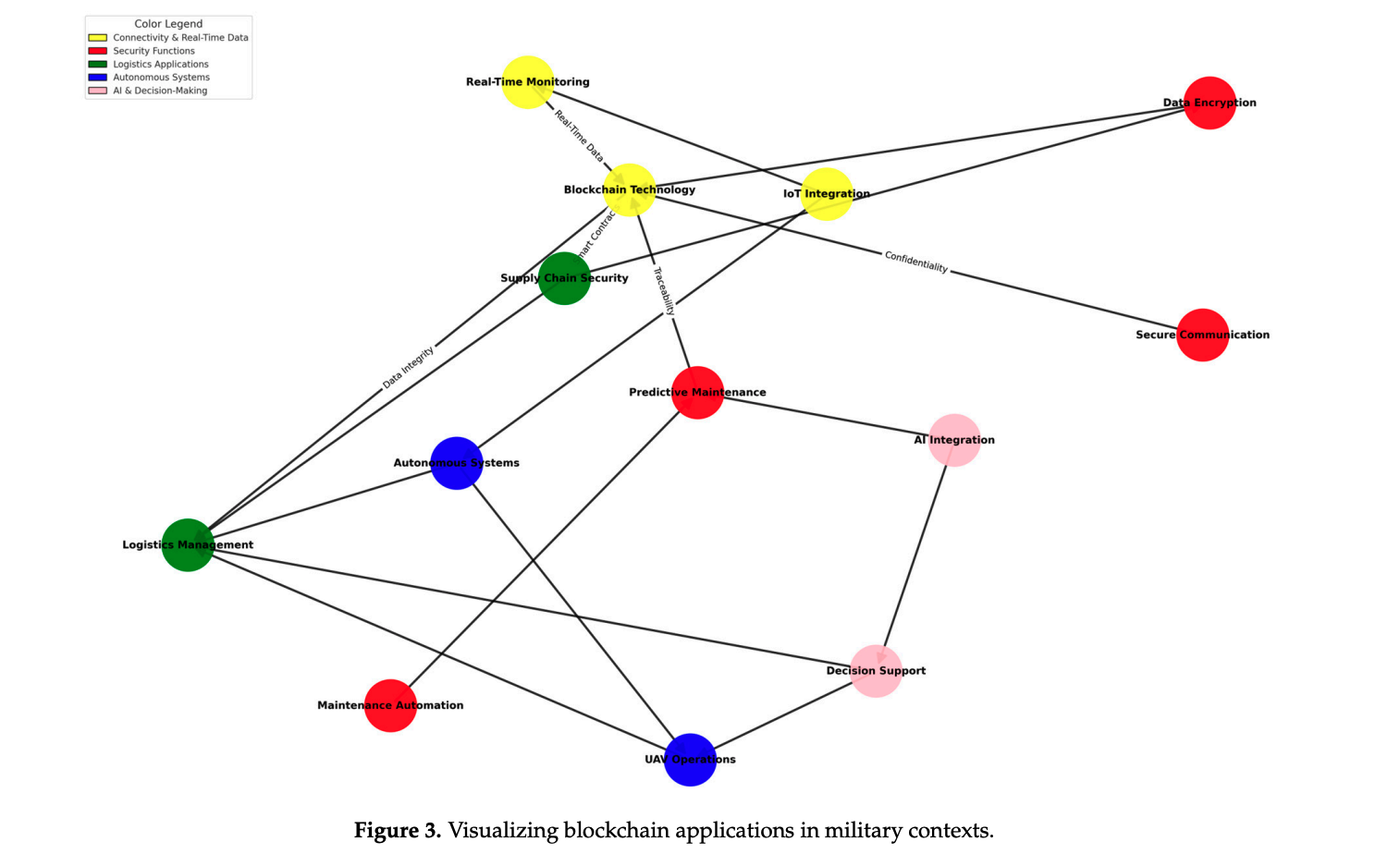
Visualizing blockchain applications in military contexts | Blockchain Applications in the Military Domain

A 2025 review in Technologies found that blockchain “strengthens military operations through secure communication, immutable logistics, and quantum-safe authentication.” Researchers said distributed ledgers can harden command systems and supply chains against cyber or physical attacks. These findings show how cryptographic infrastructure is shifting from finance to defense, linking data integrity, funding agility, and operational trust.

The geopolitical divide is widening. Western governments aim to limit crypto’s militarization, whereas China embeds it in state policy. As Eichengreen cautioned, “geopolitics cuts both ways.” Depending on who builds the rails, crypto could weaken or reinforce dollar dominance. Ultimately, Beijing’s hybrid model—combining economic control with technological sovereignty—signals that the next great-power contest will unfold in markets or cyberspace and across the distributed ledgers that connect them.

Market Opportunity
Nowchain Logo
Nowchain Price(NOW)
$0,001002
$0,001002$0,001002
+4,68%
USD
Nowchain (NOW) Live Price Chart
Disclaimer: The articles reposted on this site are sourced from public platforms and are provided for informational purposes only. They do not necessarily reflect the views of MEXC. All rights remain with the original authors. If you believe any content infringes on third-party rights, please contact [email protected] for removal. MEXC makes no guarantees regarding the accuracy, completeness, or timeliness of the content and is not responsible for any actions taken based on the information provided. The content does not constitute financial, legal, or other professional advice, nor should it be considered a recommendation or endorsement by MEXC.

You May Also Like

Stellar (XLM) Powers IRL’s Stealth Crypto Onboarding at Major Cultural Events

Stellar (XLM) Powers IRL’s Stealth Crypto Onboarding at Major Cultural Events

The post Stellar (XLM) Powers IRL’s Stealth Crypto Onboarding at Major Cultural Events appeared on BitcoinEthereumNews.com. Terrill Dicki Feb 12, 2026 05:39
Share
BitcoinEthereumNews2026/02/13 06:46
The Best Crypto Presale in 2025? Solana and ADA Struggle, but Lyno AI Surges With Growing Momentum

The Best Crypto Presale in 2025? Solana and ADA Struggle, but Lyno AI Surges With Growing Momentum

The post The Best Crypto Presale in 2025? Solana and ADA Struggle, but Lyno AI Surges With Growing Momentum appeared on BitcoinEthereumNews.com. With the development of 2025, certain large cryptocurrencies encounter continuous issues and a new player secures an impressive advantage. Solana is struggling with congestion, and the ADA of Cardano is still at a significantly lower level than its highest price. In the meantime, Lyno AI presale is gaining momentum, attracting a large number of investors. Solana Faces Setbacks Amid Market Pressure However, despite the hype surrounding ETFs, Solana fell by 7% to $ 203, due to the constant congestion problems that hamper its network functionality. This makes adoption slow and aggravates traders who want to get things done quickly. Recent upgrades should combat those issues but the competition is rising, and Solana continues to lag in terms of user adoption and ecosystem development. Cardano Struggles to Regain Momentum ADA, the token of a Cardano, costs 72% less than the 2021 high and is developing more slowly than Ethereum Layer 2 solutions. The adoption of the coin is not making any progress despite the good forecasts. Analysts believe that the road to regain the past heights is long before Cardano can go back, with more technological advancements getting more and more attention. Lyno AI’s Explosive Presale Growth In stark contrast, Lyno AI is currently in its Early Bird presale, in which tokens are sold at 0.05 per unit and have already sold 632,398 tokens and raised 31,462 dollars. The next stage price will be established at $0.055 and the final target will be at $0.10. Audited by Cyberscope , Lyno AI provides a cross-chain AI arbitrage platform that enables retail traders to compete with institutions. Its AI algorithms perform trades in 15+ blockchains in real time, opening profitable arbitrage opportunities to everyone. Those who make purchases above 100 dollars are also offered the possibility of winning in the 100K Lyno AI…
Share
BitcoinEthereumNews2025/09/18 18:22
Ringgit strength seen extending lower – MUFG

Ringgit strength seen extending lower – MUFG

The post Ringgit strength seen extending lower – MUFG appeared on BitcoinEthereumNews.com. MUFG’s Senior Currency Analyst Lloyd Chan expects USD/MYR to keep trending
Share
BitcoinEthereumNews2026/02/13 07:20