The post Is ConstructKoin the ReFi presale that captures rotating capital? appeared on BitcoinEthereumNews.com. Disclosure: This article does not represent investment advice. The content and materials featured on this page are for educational purposes only. ETH and SOL steady as investors eye ConstructKoin, a ReFi presale bridging crypto and real estate finance. Summary ETH and SOL gains drive capital rotation toward ConstructKoin, a ReFi presale for real-estate finance. ConstructKoin (CTK) targets institutional investors with milestone-based, compliance-first ReFi architecture. CTK leverages ETH for audits and SOL for fast attestations, bridging DeFi tech with real-world financing. Ethereum (ETH) is trading near $4,219 while Solana (SOL) sits around $202 — two distinct narratives tugging at investor allocations. ETH remains the programmable hub powering L2s, oracles and composability; SOL promises throughput and low-cost settlement for high-frequency dApps.  As those two L1 stories stabilize, capital often rotates into presales and infrastructure with real-world utility. One presale that’s consistently mentioned in institutional conversations is ConstructKoin (CTK) — a ReFi protocol focused on disciplined, milestone-driven real-estate financing. Can CTK capture the capital that rotates out of ETH/SOL gains? Here’s a clear-eyed look. ETH vs SOL: Different rails, different strengths Ethereum: the go-to settlement layer for complex smart contracts, with the richest oracle/L2 ecosystem. ETH’s robustness makes it the natural place to anchor legally-sensitive proofs and composable logic that financing protocols require. Solana: high throughput and low fees make SOL attractive when many small on-chain attestations are needed — inspections, progress confirmations, or repeated milestone updates that would be costly on higher-fee chains. Both chains can play supporting roles for ReFi: ETH for complex composability and audits, SOL for frequent, low-cost proof anchoring. The trick is using each chain where it makes technical and economic sense. Why rotating capital looks at presales like CTK When ETH and SOL provide a stable base, institutional allocators with a risk budget ask: where does this… The post Is ConstructKoin the ReFi presale that captures rotating capital? appeared on BitcoinEthereumNews.com. Disclosure: This article does not represent investment advice. The content and materials featured on this page are for educational purposes only. ETH and SOL steady as investors eye ConstructKoin, a ReFi presale bridging crypto and real estate finance. Summary ETH and SOL gains drive capital rotation toward ConstructKoin, a ReFi presale for real-estate finance. ConstructKoin (CTK) targets institutional investors with milestone-based, compliance-first ReFi architecture. CTK leverages ETH for audits and SOL for fast attestations, bridging DeFi tech with real-world financing. Ethereum (ETH) is trading near $4,219 while Solana (SOL) sits around $202 — two distinct narratives tugging at investor allocations. ETH remains the programmable hub powering L2s, oracles and composability; SOL promises throughput and low-cost settlement for high-frequency dApps.  As those two L1 stories stabilize, capital often rotates into presales and infrastructure with real-world utility. One presale that’s consistently mentioned in institutional conversations is ConstructKoin (CTK) — a ReFi protocol focused on disciplined, milestone-driven real-estate financing. Can CTK capture the capital that rotates out of ETH/SOL gains? Here’s a clear-eyed look. ETH vs SOL: Different rails, different strengths Ethereum: the go-to settlement layer for complex smart contracts, with the richest oracle/L2 ecosystem. ETH’s robustness makes it the natural place to anchor legally-sensitive proofs and composable logic that financing protocols require. Solana: high throughput and low fees make SOL attractive when many small on-chain attestations are needed — inspections, progress confirmations, or repeated milestone updates that would be costly on higher-fee chains. Both chains can play supporting roles for ReFi: ETH for complex composability and audits, SOL for frequent, low-cost proof anchoring. The trick is using each chain where it makes technical and economic sense. Why rotating capital looks at presales like CTK When ETH and SOL provide a stable base, institutional allocators with a risk budget ask: where does this…

Is ConstructKoin the ReFi presale that captures rotating capital?

Disclosure: This article does not represent investment advice. The content and materials featured on this page are for educational purposes only.

ETH and SOL steady as investors eye ConstructKoin, a ReFi presale bridging crypto and real estate finance.

Summary

  • ETH and SOL gains drive capital rotation toward ConstructKoin, a ReFi presale for real-estate finance.
  • ConstructKoin (CTK) targets institutional investors with milestone-based, compliance-first ReFi architecture.
  • CTK leverages ETH for audits and SOL for fast attestations, bridging DeFi tech with real-world financing.

Ethereum (ETH) is trading near $4,219 while Solana (SOL) sits around $202 — two distinct narratives tugging at investor allocations. ETH remains the programmable hub powering L2s, oracles and composability; SOL promises throughput and low-cost settlement for high-frequency dApps. 

As those two L1 stories stabilize, capital often rotates into presales and infrastructure with real-world utility. One presale that’s consistently mentioned in institutional conversations is ConstructKoin (CTK) — a ReFi protocol focused on disciplined, milestone-driven real-estate financing. Can CTK capture the capital that rotates out of ETH/SOL gains? Here’s a clear-eyed look.

ETH vs SOL: Different rails, different strengths

  • Ethereum: the go-to settlement layer for complex smart contracts, with the richest oracle/L2 ecosystem. ETH’s robustness makes it the natural place to anchor legally-sensitive proofs and composable logic that financing protocols require.
  • Solana: high throughput and low fees make SOL attractive when many small on-chain attestations are needed — inspections, progress confirmations, or repeated milestone updates that would be costly on higher-fee chains.

Both chains can play supporting roles for ReFi: ETH for complex composability and audits, SOL for frequent, low-cost proof anchoring. The trick is using each chain where it makes technical and economic sense.

Why rotating capital looks at presales like CTK

When ETH and SOL provide a stable base, institutional allocators with a risk budget ask: where does this extra capital go to earn asymmetric returns but without undue legal exposure? That’s the precise gap CTK targets. ConstructKoin’s value proposition is operational, not speculative:

  • Milestone-based tranche releases — funds only disburse after oracle-verified milestones, mirroring traditional tranche financing.
  • Compliance-first architecture — KYC/AML modules and auditable trails reduce legal friction for institutional money.
  • Developer Gateway & risk scoring — standardized project intake speeds underwriting and reduces due-diligence drag.
  • Phased presale discipline — staged capital unlocks align investor funding with execution, not hype.

These elements help transform speculative interest into institutionally palatable allocations, but only if CTK proves pilots and audits.

How CTK can leverage ETH and SOL technically

  1. ETH (complex proofs & audits): Use L2s and Ethereum’s mature oracle ecosystem to anchor contract-logic, escrow conditions, and cross-contract verifications that need stronger composability and wider audit visibility.
  2. SOL (frequent attestations): Use Solana to log high-frequency attestations (inspections, daily progress reports) cheaply and quickly, reducing operational cost for pilots that require many small proof events.
  3. Chain-agnostic strategy: CTK’s architecture should be agnostic — use the best chain for the job and keep financing logic and compliance centralized in the protocol layer.

This hybrid approach reduces overhead and speeds time-to-proof while keeping audits and legal records accessible on the more battle-tested chains.

Catalysts that convert rotation into commitment

  • Signed pilot deals that use ETH/SOL proofs + CTK tranche releases.
  • Independent audits verifying milestone attestation mechanics.
  • Public tranche releases with demonstrable KPIs and repayment track records.
  • Institutional or OTC entry points that allow scaled allocations once pilots are validated.

Risks: The sober view

Real-world finance integration is slow. Legal treatment of crypto structures varies by jurisdiction. Oracle reliability, counterparty performance (developers/lenders), and the time needed to scale repeatable pipelines are real hurdles. Investors should watch hard evidence (pilot closures, audits, tranche releases), not narrative alone.

Final thought

ETH and SOL supply the technical rails — composability and settlement throughput respectively. ConstructKoin (CTK) aims to be the financing layer that turns those rails into auditable capital deployment for real projects. If CTK can execute pilots that combine ETH’s auditability and SOL’s low-cost proofs, and if independent audits validate those mechanics, the presale could capture meaningful rotating capital — not by replacing L1 narratives, but by converting that liquidity into repeatable real-world financing.

CEO Chris Chourio emphasizes that CTK’s priority is verifiable deal flow and lender-grade reporting, the two things institutions ask to see before they commit capital.

For more information, visit the official website, Telegram, and X.

Disclosure: This content is provided by a third party. Neither crypto.news nor the author of this article endorses any product mentioned on this page. Users should conduct their own research before taking any action related to the company.

Source: https://crypto.news/eth-4219-vs-sol-202-is-constructkoin-the-refi-presale-that-captures-rotating-capital/

Market Opportunity
Notcoin Logo
Notcoin Price(NOT)
$0.0004152
$0.0004152$0.0004152
-0.04%
USD
Notcoin (NOT) Live Price Chart
Disclaimer: The articles reposted on this site are sourced from public platforms and are provided for informational purposes only. They do not necessarily reflect the views of MEXC. All rights remain with the original authors. If you believe any content infringes on third-party rights, please contact [email protected] for removal. MEXC makes no guarantees regarding the accuracy, completeness, or timeliness of the content and is not responsible for any actions taken based on the information provided. The content does not constitute financial, legal, or other professional advice, nor should it be considered a recommendation or endorsement by MEXC.

You May Also Like

CME Group to Launch Solana and XRP Futures Options

CME Group to Launch Solana and XRP Futures Options

The post CME Group to Launch Solana and XRP Futures Options appeared on BitcoinEthereumNews.com. An announcement was made by CME Group, the largest derivatives exchanger worldwide, revealed that it would introduce options for Solana and XRP futures. It is the latest addition to CME crypto derivatives as institutions and retail investors increase their demand for Solana and XRP. CME Expands Crypto Offerings With Solana and XRP Options Launch According to a press release, the launch is scheduled for October 13, 2025, pending regulatory approval. The new products will allow traders to access options on Solana, Micro Solana, XRP, and Micro XRP futures. Expiries will be offered on business days on a monthly, and quarterly basis to provide more flexibility to market players. CME Group said the contracts are designed to meet demand from institutions, hedge funds, and active retail traders. According to Giovanni Vicioso, the launch reflects high liquidity in Solana and XRP futures. Vicioso is the Global Head of Cryptocurrency Products for the CME Group. He noted that the new contracts will provide additional tools for risk management and exposure strategies. Recently, CME XRP futures registered record open interest amid ETF approval optimism, reinforcing confidence in contract demand. Cumberland, one of the leading liquidity providers, welcomed the development and said it highlights the shift beyond Bitcoin and Ethereum. FalconX, another trading firm, added that rising digital asset treasuries are increasing the need for hedging tools on alternative tokens like Solana and XRP. High Record Trading Volumes Demand Solana and XRP Futures Solana futures and XRP continue to gain popularity since their launch earlier this year. According to CME official records, many have bought and sold more than 540,000 Solana futures contracts since March. A value that amounts to over $22 billion dollars. Solana contracts hit a record 9,000 contracts in August, worth $437 million. Open interest also set a record at 12,500 contracts.…
Share
BitcoinEthereumNews2025/09/18 01:39
China Blocks Nvidia’s RTX Pro 6000D as Local Chips Rise

China Blocks Nvidia’s RTX Pro 6000D as Local Chips Rise

The post China Blocks Nvidia’s RTX Pro 6000D as Local Chips Rise appeared on BitcoinEthereumNews.com. China Blocks Nvidia’s RTX Pro 6000D as Local Chips Rise China’s internet regulator has ordered the country’s biggest technology firms, including Alibaba and ByteDance, to stop purchasing Nvidia’s RTX Pro 6000D GPUs. According to the Financial Times, the move shuts down the last major channel for mass supplies of American chips to the Chinese market. Why Beijing Halted Nvidia Purchases Chinese companies had planned to buy tens of thousands of RTX Pro 6000D accelerators and had already begun testing them in servers. But regulators intervened, halting the purchases and signaling stricter controls than earlier measures placed on Nvidia’s H20 chip. Image: Nvidia An audit compared Huawei and Cambricon processors, along with chips developed by Alibaba and Baidu, against Nvidia’s export-approved products. Regulators concluded that Chinese chips had reached performance levels comparable to the restricted U.S. models. This assessment pushed authorities to advise firms to rely more heavily on domestic processors, further tightening Nvidia’s already limited position in China. China’s Drive Toward Tech Independence The decision highlights Beijing’s focus on import substitution — developing self-sufficient chip production to reduce reliance on U.S. supplies. “The signal is now clear: all attention is focused on building a domestic ecosystem,” said a representative of a leading Chinese tech company. Nvidia had unveiled the RTX Pro 6000D in July 2025 during CEO Jensen Huang’s visit to Beijing, in an attempt to keep a foothold in China after Washington restricted exports of its most advanced chips. But momentum is shifting. Industry sources told the Financial Times that Chinese manufacturers plan to triple AI chip production next year to meet growing demand. They believe “domestic supply will now be sufficient without Nvidia.” What It Means for the Future With Huawei, Cambricon, Alibaba, and Baidu stepping up, China is positioning itself for long-term technological independence. Nvidia, meanwhile, faces…
Share
BitcoinEthereumNews2025/09/18 01:37
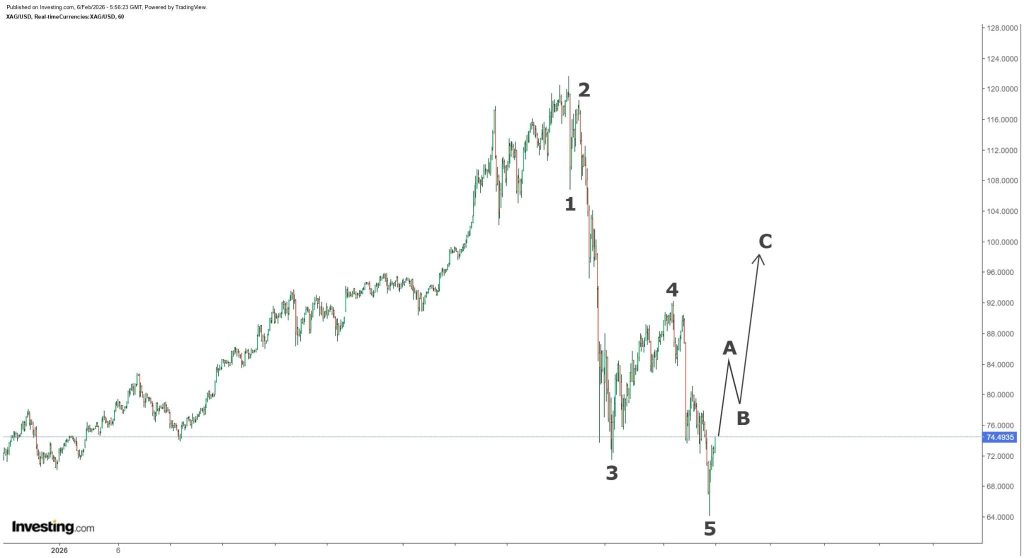
Silver Price Crash Is Over “For Real This Time,” Analyst Predicts a Surge Back Above $90

Silver Price Crash Is Over “For Real This Time,” Analyst Predicts a Surge Back Above $90

Silver has been taking a beating lately, and the Silver price hasn’t exactly been acting like a safe haven. After running up into the highs, the whole move reversed
Share
Captainaltcoin2026/02/07 03:15