The post Crypto Market Cap Drops $1.2 Trillion in Eight Weeks – Was This Reset Needed? appeared first on Coinpedia Fintech News “Crypto didn’t crash. It was executed.” That one line from analyst and author Shanaka Perera has everyone on X buzzing and recapping what happened in one of crypto’s most dramatic months. Over just eight weeks, the global crypto market cap fell from $4.6 trillion to $3.4 trillion, erasing nearly $1.2 trillion in value. Was this just another crypto winter? Signs say no. It was a massive deleveraging event, a technical wipeout where too much leverage collided with too little liquidity. The Day the Leverage Broke On October 10, over $19 billion worth of leveraged positions were liquidated in just 24 hours, according to CoinGlass data. In the days around it, nearly 487,000 traders were wiped out daily. The problem started when open interest, the total value of all futures contracts, hit a record $217 billion, while spot liquidity dropped to just 5% of normal levels. That imbalance created a feedback loop. As prices dipped, margin calls kicked in, triggering forced selling, which drove prices even lower. By the end of the month, open interest had collapsed 43% to around $123 billion, marking one of the fastest market resets in years. Perera described it as “The machine ate itself.”  Sounds like it’s all bad. But the fundamentals are telling a very different story.  Meanwhile, Crypto Adoption Hit Record Highs While prices fell, crypto adoption and on-chain activity hit all-time highs. Independent data shows the number of global crypto users have jumped to around 560 million, up by 40 million in just six months. Stablecoins now power nearly 30% of all crypto transactions, triple their share from 2022. Institutional players doubled down too. BlackRock and MicroStrategy collectively hold over 1 million Bitcoin, and major fund houses like Fidelity and Franklin Templeton have rolled out regulated crypto products. Read More: Redditors Reveal Hard Truths of Crypto Investing After Years in the Market In the U.S., the GENIUS Act was put into effect, and the CLARITY Act gave stablecoins a clear legal framework. In short – while traders were forced out, the builders and institutions kept moving in. Why This Isn’t 2022 All Over Again Back in 2022, both prices and adoption collapsed. Exchanges failed, regulation was unclear, and trust evaporated. This time is different. The system reset itself rather than collapsing. DeFi lending volumes have grown to $39 billion, real-world asset tokenization crossed $8 billion, and blockchain infrastructure has become faster and cheaper. What Comes Next If history repeats, the next phase could be powerful. Perera points out that every major reset in crypto, from 2017 to 2021, was followed by new highs once leverage cleared out. The indicators to watch now: open interest falling below $30B, ETF inflows topping $5B a week, and stablecoin supply growing 20% monthly. When those align, markets usually turn. “Leverage massacred speculators. Fundamentals rewarded builders.” The markets seem to have cut off the noise. Once it settles, the same mechanics that broke the market could be the ones to push it higher again.The post Crypto Market Cap Drops $1.2 Trillion in Eight Weeks – Was This Reset Needed? appeared first on Coinpedia Fintech News “Crypto didn’t crash. It was executed.” That one line from analyst and author Shanaka Perera has everyone on X buzzing and recapping what happened in one of crypto’s most dramatic months. Over just eight weeks, the global crypto market cap fell from $4.6 trillion to $3.4 trillion, erasing nearly $1.2 trillion in value. Was this just another crypto winter? Signs say no. It was a massive deleveraging event, a technical wipeout where too much leverage collided with too little liquidity. The Day the Leverage Broke On October 10, over $19 billion worth of leveraged positions were liquidated in just 24 hours, according to CoinGlass data. In the days around it, nearly 487,000 traders were wiped out daily. The problem started when open interest, the total value of all futures contracts, hit a record $217 billion, while spot liquidity dropped to just 5% of normal levels. That imbalance created a feedback loop. As prices dipped, margin calls kicked in, triggering forced selling, which drove prices even lower. By the end of the month, open interest had collapsed 43% to around $123 billion, marking one of the fastest market resets in years. Perera described it as “The machine ate itself.”  Sounds like it’s all bad. But the fundamentals are telling a very different story.  Meanwhile, Crypto Adoption Hit Record Highs While prices fell, crypto adoption and on-chain activity hit all-time highs. Independent data shows the number of global crypto users have jumped to around 560 million, up by 40 million in just six months. Stablecoins now power nearly 30% of all crypto transactions, triple their share from 2022. Institutional players doubled down too. BlackRock and MicroStrategy collectively hold over 1 million Bitcoin, and major fund houses like Fidelity and Franklin Templeton have rolled out regulated crypto products. Read More: Redditors Reveal Hard Truths of Crypto Investing After Years in the Market In the U.S., the GENIUS Act was put into effect, and the CLARITY Act gave stablecoins a clear legal framework. In short – while traders were forced out, the builders and institutions kept moving in. Why This Isn’t 2022 All Over Again Back in 2022, both prices and adoption collapsed. Exchanges failed, regulation was unclear, and trust evaporated. This time is different. The system reset itself rather than collapsing. DeFi lending volumes have grown to $39 billion, real-world asset tokenization crossed $8 billion, and blockchain infrastructure has become faster and cheaper. What Comes Next If history repeats, the next phase could be powerful. Perera points out that every major reset in crypto, from 2017 to 2021, was followed by new highs once leverage cleared out. The indicators to watch now: open interest falling below $30B, ETF inflows topping $5B a week, and stablecoin supply growing 20% monthly. When those align, markets usually turn. “Leverage massacred speculators. Fundamentals rewarded builders.” The markets seem to have cut off the noise. Once it settles, the same mechanics that broke the market could be the ones to push it higher again.

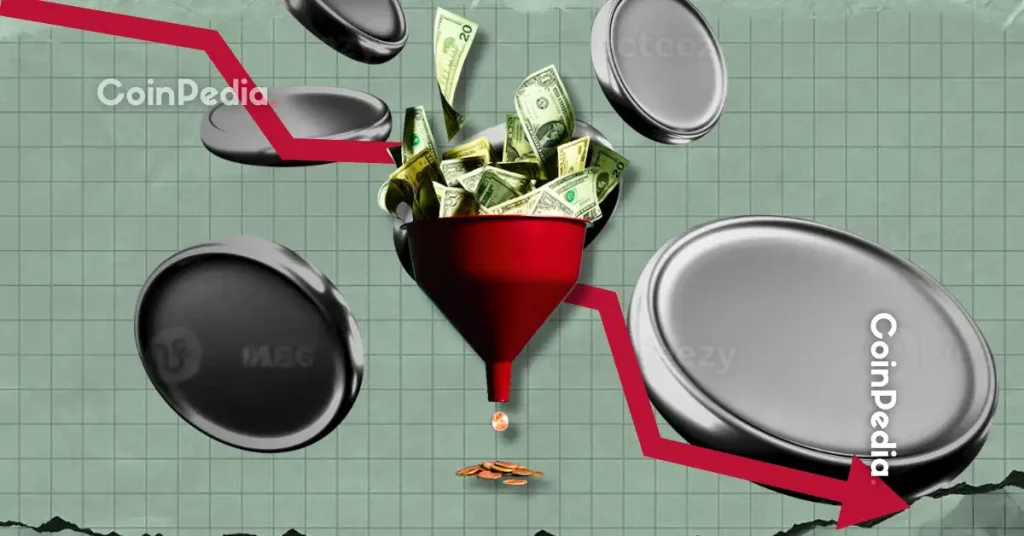
Crypto Market Cap Drops $1.2 Trillion in Eight Weeks – Was This Reset Needed?
2025/11/05 18:13
3 min read
Why Crypto Market Is Down Today?

The post Crypto Market Cap Drops $1.2 Trillion in Eight Weeks – Was This Reset Needed? appeared first on Coinpedia Fintech News

“Crypto didn’t crash. It was executed.”

That one line from analyst and author Shanaka Perera has everyone on X buzzing and recapping what happened in one of crypto’s most dramatic months. Over just eight weeks, the global crypto market cap fell from $4.6 trillion to $3.4 trillion, erasing nearly $1.2 trillion in value.

Was this just another crypto winter? Signs say no. It was a massive deleveraging event, a technical wipeout where too much leverage collided with too little liquidity.

The Day the Leverage Broke

On October 10, over $19 billion worth of leveraged positions were liquidated in just 24 hours, according to CoinGlass data. In the days around it, nearly 487,000 traders were wiped out daily.

The problem started when open interest, the total value of all futures contracts, hit a record $217 billion, while spot liquidity dropped to just 5% of normal levels. That imbalance created a feedback loop. As prices dipped, margin calls kicked in, triggering forced selling, which drove prices even lower.

By the end of the month, open interest had collapsed 43% to around $123 billion, marking one of the fastest market resets in years.

Sounds like it’s all bad. But the fundamentals are telling a very different story. 

Meanwhile, Crypto Adoption Hit Record Highs

While prices fell, crypto adoption and on-chain activity hit all-time highs.

Independent data shows the number of global crypto users have jumped to around 560 million, up by 40 million in just six months. Stablecoins now power nearly 30% of all crypto transactions, triple their share from 2022.

Institutional players doubled down too. BlackRock and MicroStrategy collectively hold over 1 million Bitcoin, and major fund houses like Fidelity and Franklin Templeton have rolled out regulated crypto products.

Read More: Redditors Reveal Hard Truths of Crypto Investing After Years in the Market

In the U.S., the GENIUS Act was put into effect, and the CLARITY Act gave stablecoins a clear legal framework. In short – while traders were forced out, the builders and institutions kept moving in.

Why This Isn’t 2022 All Over Again

Back in 2022, both prices and adoption collapsed. Exchanges failed, regulation was unclear, and trust evaporated.

This time is different. The system reset itself rather than collapsing. DeFi lending volumes have grown to $39 billion, real-world asset tokenization crossed $8 billion, and blockchain infrastructure has become faster and cheaper.

What Comes Next

If history repeats, the next phase could be powerful. Perera points out that every major reset in crypto, from 2017 to 2021, was followed by new highs once leverage cleared out.

The indicators to watch now: open interest falling below $30B, ETF inflows topping $5B a week, and stablecoin supply growing 20% monthly. When those align, markets usually turn.

The markets seem to have cut off the noise. Once it settles, the same mechanics that broke the market could be the ones to push it higher again.

Market Opportunity
Capverse Logo
Capverse Price(CAP)
$0.1071
$0.1071$0.1071
-3.18%
USD
Capverse (CAP) Live Price Chart
Disclaimer: The articles reposted on this site are sourced from public platforms and are provided for informational purposes only. They do not necessarily reflect the views of MEXC. All rights remain with the original authors. If you believe any content infringes on third-party rights, please contact [email protected] for removal. MEXC makes no guarantees regarding the accuracy, completeness, or timeliness of the content and is not responsible for any actions taken based on the information provided. The content does not constitute financial, legal, or other professional advice, nor should it be considered a recommendation or endorsement by MEXC.

You May Also Like

Michael Saylor: Plans to convert convertible bonds into equity within 3-6 years

Michael Saylor: Plans to convert convertible bonds into equity within 3-6 years

PANews reported on February 16th that Strategy stated that even if the price of Bitcoin falls to $8,000, Strategy can ensure it has enough assets to fully repay
Share
PANews2026/02/16 08:35
South Korea Trade Balance declined to $0B in January from previous $8.74B

South Korea Trade Balance declined to $0B in January from previous $8.74B

The post South Korea Trade Balance declined to $0B in January from previous $8.74B appeared on BitcoinEthereumNews.com. Information on these pages contains forward
Share
BitcoinEthereumNews2026/02/16 08:21
GBP trades firmly against US Dollar

GBP trades firmly against US Dollar

The post GBP trades firmly against US Dollar appeared on BitcoinEthereumNews.com. Pound Sterling trades firmly against US Dollar ahead of Fed’s policy outcome The Pound Sterling (GBP) clings to Tuesday’s gains near 1.3640 against the US Dollar (USD) during the European trading session on Wednesday. The GBP/USD pair holds onto gains as the US Dollar remains on the back foot amid firm expectations that the Federal Reserve (Fed) will cut interest rates in the monetary policy announcement at 18:00 GMT. At the time of writing, the US Dollar Index (DXY), which tracks the Greenback’s value against six major currencies, holds onto losses near a fresh two-month low of 96.60 posted on Tuesday. Read more… UK inflation unchanged at 3.8%, Pound shrugs The British pound is unchanged on Wednesday, trading at 1.3645 in the European session. Today’s inflation report was a dour reminder that UK inflation remains entrenched. CPI for August was unchanged at 3.8% y/y, matching the consensus and its highest level since January 2024. Airfares decreased but this was offset by food and petrol prices. Monthly, CPI rose 0.3%, up from 0.1% in July and matching the consensus. Core CPI, which excludes volatile items such as food and energy, eased to 3.6% from 3.8%. Monthly, core CPI ticked up to 0.3% from 0.2%. The inflation report comes just a day before the Bank of England announces its rate decision. Inflation is almost double the BoE’s target of 2% and today’s release likely means that the BoE will not reduce rates before 2026. Read more… Source: https://www.fxstreet.com/news/pound-sterling-price-news-and-forecast-gbp-trades-firmly-against-us-dollar-ahead-of-feds-policy-outcome-202509171209
Share
BitcoinEthereumNews2025/09/18 01:50