The post Compound Resumes Withdrawals from USDC, USDS Markets appeared on BitcoinEthereumNews.com. The DeFi lending protocol had paused withdrawals for three stablecoin markets after risk manager Gauntlet flagged a liquidity squeeze in Elixir’s deUSD token. Decentralized crypto lending platform Compound has resumed withdrawals from two out of three of its stablecoin markets where withdrawals had been paused since yesterday. Withdrawals were temporarily paused after risk manager Gauntlet flagged a liquidity crunch tied to institutional liquidity firm Elixir’s deUSD ecosystem. To prevent potential bad debt, Gauntlet had recommended that Compound institute a temporary emergency pause on withdrawals from the three markets where deUSD and sdUSD are accepted as collateral, namely USDC, USDS, and USDT on Ethereum mainnet. In a fresh comment on the recommendations from Gauntlet originally posted on Nov. 4, Gauntlet said that Ethereum USDC and USDS market withdrawals were unpaused, “allowing users to resume normal activity.” As for USDT, the comment suggests that users transfer more USDT into the affected market in order “fully cover any temporary reserve gap and provide an additional safety buffer.” The pause was proposed as a precaution while voting continued on Gauntlet’s separate risk parameter governance proposal, which passed the evening of Nov. 4, and was executed on-chain around 6 p.m. UTC today. The Pause In its original recommendation post, Gauntlet explained the reason for the pause, saying that Elixir’s synthetic dollar asset deUSD and its staked counterpart sdeUSD were facing a liquidity crunch, with sdeUSD falling to $0.86 while the protocol’s oracle was still showing the price at $1.06. Per Gauntlet, the price discrepancy is “considered a vulnerability” as it could let borrowers take on more than the market could actually back. Compound implemented the halt, blocking new borrows and withdrawals while still allowing users to add liquidity, repay loans, or post new collateral. Compound currently has $2.26 billion locked across its on-chain lending markets,… The post Compound Resumes Withdrawals from USDC, USDS Markets appeared on BitcoinEthereumNews.com. The DeFi lending protocol had paused withdrawals for three stablecoin markets after risk manager Gauntlet flagged a liquidity squeeze in Elixir’s deUSD token. Decentralized crypto lending platform Compound has resumed withdrawals from two out of three of its stablecoin markets where withdrawals had been paused since yesterday. Withdrawals were temporarily paused after risk manager Gauntlet flagged a liquidity crunch tied to institutional liquidity firm Elixir’s deUSD ecosystem. To prevent potential bad debt, Gauntlet had recommended that Compound institute a temporary emergency pause on withdrawals from the three markets where deUSD and sdUSD are accepted as collateral, namely USDC, USDS, and USDT on Ethereum mainnet. In a fresh comment on the recommendations from Gauntlet originally posted on Nov. 4, Gauntlet said that Ethereum USDC and USDS market withdrawals were unpaused, “allowing users to resume normal activity.” As for USDT, the comment suggests that users transfer more USDT into the affected market in order “fully cover any temporary reserve gap and provide an additional safety buffer.” The pause was proposed as a precaution while voting continued on Gauntlet’s separate risk parameter governance proposal, which passed the evening of Nov. 4, and was executed on-chain around 6 p.m. UTC today. The Pause In its original recommendation post, Gauntlet explained the reason for the pause, saying that Elixir’s synthetic dollar asset deUSD and its staked counterpart sdeUSD were facing a liquidity crunch, with sdeUSD falling to $0.86 while the protocol’s oracle was still showing the price at $1.06. Per Gauntlet, the price discrepancy is “considered a vulnerability” as it could let borrowers take on more than the market could actually back. Compound implemented the halt, blocking new borrows and withdrawals while still allowing users to add liquidity, repay loans, or post new collateral. Compound currently has $2.26 billion locked across its on-chain lending markets,…

Compound Resumes Withdrawals from USDC, USDS Markets

The DeFi lending protocol had paused withdrawals for three stablecoin markets after risk manager Gauntlet flagged a liquidity squeeze in Elixir’s deUSD token.

Decentralized crypto lending platform Compound has resumed withdrawals from two out of three of its stablecoin markets where withdrawals had been paused since yesterday. Withdrawals were temporarily paused after risk manager Gauntlet flagged a liquidity crunch tied to institutional liquidity firm Elixir’s deUSD ecosystem.

To prevent potential bad debt, Gauntlet had recommended that Compound institute a temporary emergency pause on withdrawals from the three markets where deUSD and sdUSD are accepted as collateral, namely USDC, USDS, and USDT on Ethereum mainnet.

In a fresh comment on the recommendations from Gauntlet originally posted on Nov. 4, Gauntlet said that Ethereum USDC and USDS market withdrawals were unpaused, “allowing users to resume normal activity.” As for USDT, the comment suggests that users transfer more USDT into the affected market in order “fully cover any temporary reserve gap and provide an additional safety buffer.”

The pause was proposed as a precaution while voting continued on Gauntlet’s separate risk parameter governance proposal, which passed the evening of Nov. 4, and was executed on-chain around 6 p.m. UTC today.

The Pause

In its original recommendation post, Gauntlet explained the reason for the pause, saying that Elixir’s synthetic dollar asset deUSD and its staked counterpart sdeUSD were facing a liquidity crunch, with sdeUSD falling to $0.86 while the protocol’s oracle was still showing the price at $1.06. Per Gauntlet, the price discrepancy is “considered a vulnerability” as it could let borrowers take on more than the market could actually back.

Compound implemented the halt, blocking new borrows and withdrawals while still allowing users to add liquidity, repay loans, or post new collateral.

Compound currently has $2.26 billion locked across its on-chain lending markets, per data from DefiLlama, making it the seventh-largest lending protocol in DeFi

Elixir deUSD Depegs

Meanwhile, around 3 p.m. UTC today, deUSD dropped sharply from around $1 to $0.50, before quickly falling further over the past few hours to approach zero.

Elixir’s website describes deUSD as “​the rails for institutional assets to natively enter DeFi,” saying the token is used exclusively by Securitize, and the “gateway for asset holders” in BlackRock, Hamilton Lane and Apollo funds.

Elixir’s deUSD page. Source: Elixir

At press time, the price of deUSD is around $0.028, as it fails to regain its dollar price-peg.

Elixir deUSD 24-hour price chart. Source: CoinGecko

It’s All Connected to Stream

The underlying shock traces back to Stream Finance, the yield optimization protocol that collapsed on Nov. 4, as its own synthetic dollar token, xUSD, collapsed to about $0.17.

As part of a recursive minting agreement with Stream, Elixir reportedly had loaned roughly $68 million to the platform, while accepting xUSD as collateral. In an X post on Nov. 3, before Stream’s full collapse but with concerns already circulating, Elixir said it had “full redemption rights at $1 with Stream for its lending position.”

When Stream disclosed more than $90 million in losses, deUSD and sdeUSD took a hit, triggering cascading stress beyond Compound, and, as of just a few hours ago, resulting in deUSD’s full-blown collapse.

Meanwhile, the price of Compound’s COMP started falling on Nov. 3, as broader markets slumped, but is flat over the past 24 hours.

Ripple Effect

The turmoil also rippled into fastUSD, a synthetic dollar-pegged token backed by deUSD and used across multiple protocols, including Yei Finance, currently the second-largest protocol on the Sei network by TVL.

In a Nov. 5 post on X, Yei Finance said it temporarily paused its protocol, pointing to “the ongoing fastUSD market situation.” The team later said it would repay about $8.6 million in USDC borrowed against staked fastUSD and confirmed that “all user funds on Yei remain fully solvent and will be 100% withdrawable.”

For Yei Finance, the pause comes just a few weeks after it launched its CLO token on Sei and BNB Chain. At that time, on Oct. 14, Yei Finance had nearly $230 million in TVL, representing over 47% of Sei’s DeFi liquidity.

However, as of press time that figure has dropped to $82.6 million.

Source: https://thedefiant.io/news/defi/compound-resumes-withdrawals-from-usdc-usds-markets-after-gauntlet-proposal

Market Opportunity
USDCoin Logo
USDCoin Price(USDC)
$1.0004
$1.0004$1.0004
0.00%
USD
USDCoin (USDC) Live Price Chart
Disclaimer: The articles reposted on this site are sourced from public platforms and are provided for informational purposes only. They do not necessarily reflect the views of MEXC. All rights remain with the original authors. If you believe any content infringes on third-party rights, please contact [email protected] for removal. MEXC makes no guarantees regarding the accuracy, completeness, or timeliness of the content and is not responsible for any actions taken based on the information provided. The content does not constitute financial, legal, or other professional advice, nor should it be considered a recommendation or endorsement by MEXC.

You May Also Like

Bitcoin Hyper Not Far from $20M, Whales Keep Buying: See What This $BTC Layer-2 Plans

Bitcoin Hyper Not Far from $20M, Whales Keep Buying: See What This $BTC Layer-2 Plans

To the uninitiated, Bitcoin and crypto are synonymous – and it’s only fair, given that the granddaddy of all crypto has been the face of the industry ever since it burst onto the scene a few years back. Since 2020, Bitcoin has generated over 1,500% in returns. Basically, crypto is so much about Bitcoin. All […]
Share
Bitcoinist2025/09/22 16:37
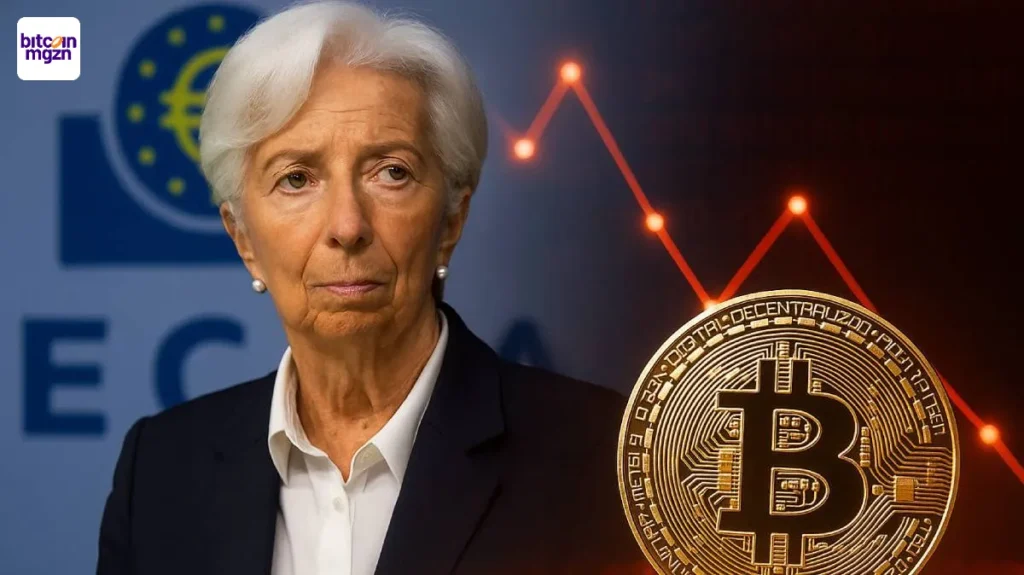
ECB-president hernieuwt aanval op Bitcoin terwijl euro daalt

ECB-president hernieuwt aanval op Bitcoin terwijl euro daalt

Snelle crypto updates? Connect op Instagram! Check onze Instagram   ECB-president Christine Lagarde noemt Bitcoin waardeloos en waarschuwt voor zijn speculatieve aard. Haar uitspraken komen op een moment dat DeFi groeit en de euro onder druk staat, wat de discussie over geld en controle opnieuw tot leven brengt. ECB houdt vast aan kritiek op Bitcoin en DeFi De Europese Centrale Bank (ECB) blijft vasthouden aan haar scherpe toon over Bitcoin. Volgens president Christine Lagarde ontbreekt de munt het fundament dat echt geld kenmerkt. Ze noemt het een speculatief middel zonder onderliggende waarde, en benadrukt dat de ECB het publieke vertrouwen in geld moet beschermen. Terwijl de digitale economie zich steeds meer richting decentralisatie beweegt, probeert de bank haar rol als stabiele pijler te behouden. ECB (European Central Bank) De European Central Bank (ECB) is de centrale bank van de eurozone en bepaalt samen met de nationale banken het monetaire beleid voor de euro. Ze houdt de inflatie in de gaten, bepaalt de rente en zorgt voor stabiliteit van het financiële systeem. In de cryptowereld speelt de ECB vooral een rol met het onderzoek en de voorbereidingen voor een digitale euro, een eigen centrale bank digitale munt (CBDC). Daarmee wil de bank inspelen op de groei van digitaal geld en alternatieven zoals stablecoins. Voor de crypto-industrie is dit belangrijk omdat een digitale euro de concurrentie en het speelveld voor private stablecoins kan veranderen. De waarschuwing van Lagarde past in een bredere strategie van de ECB. De opkomst van decentrale financiële systemen (DeFi) wordt gezien als een uitdaging voor de invloed van centrale banken. In die waarschuwing lijkt ook iets van zelfbescherming door te klinken: het behoud van macht over monetair beleid. Voorstanders van Bitcoin wijzen juist op de kracht van schaarste, transparantie en onafhankelijkheid; eigenschappen die fiatgeld in hun ogen steeds meer verliest. “How many bitcoin do you own?” That’s how it starts, a stupid question from the host. From there, it goes downhill fast. Christine Lagarde repeats every tired anti-bitcoin cliché the ECB has ever pushed. Let’s go… 1️⃣ “Bitcoin has no intrinsic value.” Neither does fiat.… pic.twitter.com/uMqtEHvkD0 — Eli Nagar (@EliNagarBrr) October 7, 2025 De euro verzwakt terwijl crypto aan invloed wint Ondertussen verliest de euro langzaam maar zeker aan koopkracht. Sinds de invoering in 2002 is de munt ruim veertig procent van haar reële waarde kwijtgeraakt. Dat voedt de twijfel over de houdbaarheid van het huidige fiatstelsel en vergroot de interesse in alternatieven zoals Bitcoin en andere cryptovaluta. Binnen de Europese cryptogemeenschap worden de woorden van de ECB dan ook met de nodige scepsis onthaald. Been 22 years, physical $Euro coins and banknotes entered circulation on January 1st 2002. Since then, this fiasco lost 40% of its buying power according to “official” stats. Won’t even mention real stats, or you’d be dumping ALL your Eurobolivars for #Bitcoin right now. pic.twitter.com/Rp3KinVfPm — Vandelay ₿TC Industries ⚡ (@VandelayBTC) January 3, 2024 DeFi-platforms en stablecoins winnen terrein in Europa, juist omdat ze nieuwe mogelijkheden bieden voor rendement en autonomie. Waar Lagarde waarschuwt voor volatiliteit, zien veel gebruikers vooral vrijheid in een systeem dat zich niets aantrekt van centrale banken. De groei van DeFi laat zien dat vertrouwen niet alleen via instituties ontstaat, maar ook via technologie. Monetaire controle en vertrouwen in het digitale tijdperk De standpunten van de ECB leggen een oud spanningsveld bloot: de strijd tussen stabiliteit en vrijheid. Aan de ene kant verdedigt de bank haar rol als bewaker van orde, aan de andere kant tonen cryptomarkten dat vertrouwen ook buiten traditionele kanalen kan bestaan. Terwijl de ECB pleit voor zekerheid en voorspelbaarheid, zoeken investeerders steeds vaker transparantie en zelfbeschikking. Lagarde’s uitspraken passen in een wereldwijde trend waarin centrale banken proberen hun gezag te behouden in een economie die snel verandert. Toch klinkt steeds luider de vraag of die vorm van controle nog houdbaar is. Nieuwe technologieën maken directe waardeoverdracht mogelijk,zonder tussenkomst van banken. Dat idee wringt natuurlijk met de kern van het bestaande financiële systeem. Exactly. It was narrative management. They feel threatened. That’s why real questions about monetary policy, inflation, and accountability never make it to the script. — Eli Nagar (@EliNagarBrr) October 8, 2025 De toekomst van waarde: centraal of gedecentraliseerd? De discussie tussen de ECB en de cryptowereld draait om meer dan geld. Het gaat om vertrouwen, transparantie en macht over waarde. Zolang de euro verder verzwakt en decentrale technologieën blijven groeien, lijkt de kloof tussen centrale banken en de cryptosector alleen maar groter te worden. Hoeveel invloed de ECB kan behouden, hangt af van haar vermogen zich aan te passen aan dit nieuwe tijdperk. De strijd om waarde is niet enkel economisch, maar ook ideologisch. In dat licht voelt de opkomst van Bitcoin minder als een bedreiging, en meer als een logisch gevolg van de zoektocht naar onafhankelijkheid in geld. Koop je Bitcoin via Best Wallet Best wallet is een topklasse crypto wallet waarmee je anoniem crypto kan kopen. Met meer dan 60 chains gesupport kan je al je main crypto coins aanschaffen via Best Wallet. Best wallet - betrouwbare en anonieme wallet Best wallet - betrouwbare en anonieme wallet Meer dan 60 chains beschikbaar voor alle crypto Vroege toegang tot nieuwe projecten Hoge staking belongingen Lage transactiekosten Best wallet review Koop nu via Best Wallet Let op: cryptocurrency is een zeer volatiele en ongereguleerde investering. Doe je eigen onderzoek. Het bericht ECB-president hernieuwt aanval op Bitcoin terwijl euro daalt is geschreven door Sebastiaan Krijnen en verscheen als eerst op Bitcoinmagazine.nl.
Share
Coinstats2025/10/11 03:16
What SBI Really Owns in Ripple May Surprise XRP Investors

What SBI Really Owns in Ripple May Surprise XRP Investors

The post What SBI Really Owns in Ripple May Surprise XRP Investors appeared on BitcoinEthereumNews.com. SBI Holdings Chairman Yoshitaka Kitao has confirmed that
Share
BitcoinEthereumNews2026/02/16 16:14