

Top 8 Coins Poised for 100x Gains: $APEING Leads the Best Crypto Surge
The crypto market never stops moving, and for degens who move fast, opportunities are everywhere. Meanwhile $APEING, a new coin with high potential designed for bold early movers who trust instinct over hesitation. As one of the best crypto projects emerging today, Apeing rewards participants who jump in early and hold strong while others overthink. With its low entry price, community-driven energy, and viral momentum, this coin is catching eyes across social channels and making waves among crypto enthusiasts worldwide.
From $APEING to Avalanche, TRON, Cardano, XRP, Litecoin, Stellar, and Chainlink, these coins bring unique features, community energy, and growth potential. Understanding networks, tokenomics, and market behavior helps degens spot opportunities and maximize gains.
-
Front Row to the Madness: $APEING is Calling All Bold Degens
Apeing ($APEING) is a brand-new, high-potential cryptocurrency made for people who jump in early and hold strong. It’s fun, community-driven, and built for degens who trust their instincts. Early participants get the chance to secure tokens at a low price while riding the hype and social buzz. With a lively community and growing momentum, Apeing rewards those who act fast. Joining the whitelist puts you in the front row, giving an edge over those who wait and miss out.
Apeing is quickly becoming one of the best crypto projects for bold early movers. The coin’s fast-growing community offers early participants exclusive updates, insights, and opportunities to secure tokens before the hype peaks. Its design rewards action, making it perfect for degens who trust their instincts and jump in while others wait. Being part of $APEING from the start gives a chance to maximize potential gains and ride the momentum as the project continues to grow.
How to Join the $APEING Whitelist
Securing your spot is simple.
- Go to the official $APEING website.
- Enter your email in the whitelist section.
- Get confirmation via email.
Whitelisted participants get priority access, early updates, and front-row positioning for potential token allocations at the lowest entry price. Degens who join early often enjoy bigger ROI, making this an essential step for anyone looking to maximize gains.
-
Avalanche (AVAX) Is Mooning: Fast, Furious, and Taking Crypto by Storm
Price: $15.98 | Market Cap: $6.85B | 24h Volume: $605.36M
Avalanche is a high-speed, scalable blockchain that processes thousands of transactions per second with minimal fees. Its consensus protocol ensures fast finality, making it ideal for DeFi, NFTs, and institutional applications. Developers praise its flexibility and robust ecosystem, while traders benefit from its performance and liquidity. Community engagement and growing partnerships continue to fuel investor interest and momentum.
-
TRON (TRX) to the Moon: The Network Fueling Decentralized Fun and Profits
Price: $0.2920 | Market Cap: $27.64B | 24h Volume: $982.92M
TRON is a decentralized platform focused on content sharing and entertainment applications. Its network allows smart contracts to execute rapidly with extremely low fees, attracting developers and users alike. TRON’s governance is community-driven, giving participants a voice in network decisions. Social engagement and active discussion channels contribute to its strong momentum. Traders and developers view TRON as a versatile platform for both entertainment and decentralized finance applications.
-
Cardano’s (ADA) Brainpower: Science-Backed Blockchain Making Waves
Price: $0.5283 | Market Cap: $18.95B | 24h Volume: $1.1B
Cardano is a science-backed blockchain with a layered architecture that separates transaction processing from smart contract execution. Its rigorous, peer-reviewed development ensures high security and scalability. Staking ADA can yield 4-6% annually, making it appealing for passive income. Analysts highlight Cardano’s methodical growth and strong developer ecosystem. Community support, adoption of smart contracts, and long-term roadmap progress give participants confidence in its potential for consistent returns.
-
XRP Rockets: Cross-Border Payments at Lightning Speed
Price: $2.31 | Market Cap: $139.22B | 24h Volume: $7.81B
XRP specializes in instant, low-cost cross-border transactions for banks and payment providers. Its transactions settle in 3-5 seconds, making it efficient for global remittances. Adoption across financial institutions has generated strong social and investor interest. Its speed, liquidity, and real-world utility make it a reliable option for traders and developers seeking fast and practical financial applications.
-
Old but Gold: Litecoin’s (LTC) Network Proves Timing is Everything
Price: $96.28 | Market Cap: $7.36B | 24h Volume: $972.07M
Litecoin is often called the silver to Bitcoin’s gold, offering faster block generation and lower transaction fees. Its high liquidity, long-standing network, and strong community make it a dependable option for traders and enthusiasts. Historical trends show that LTC often mirrors Bitcoin’s market sentiment, providing insight into broader crypto movements. Litecoin’s stability, usability, and practical adoption make it a trusted coin for both newcomers and seasoned participants.
-
Stellar (XLM) Streams: Fast, Cheap, and Ready to Connect the World
Price: $0.2681 | Market Cap: $8.61B| 24h Volume: $390.6M
Stellar focuses on cross-border payments and financial inclusion, enabling low-cost, rapid transactions between individuals and institutions. Its ecosystem supports micropayments, remittances, and business applications. Partnerships and real-world adoption enhance Stellar’s credibility and network utility. Participants benefit from the network’s speed, efficiency, and scalability, making it a go-to option for practical crypto applications worldwide.
-
Connect the Dots: Chainlink (LINK) Powers the Future of DeFi
Price: $14.50 | Market Cap: $10.1B | 24h Volume: $1.03B
Chainlink provides decentralized oracle services that connect smart contracts to real-world data, ensuring accuracy for DeFi, insurance, and supply chain applications. Its adoption across multiple blockchains reflects its critical role in blockchain infrastructure. Participants benefit from LINK’s utility, integration count, and network reliability. Ongoing partnerships and community-driven momentum make it a promising coin for those seeking to explore real-world blockchain innovation.
Final Thoughts: Ape Early, HODL Hard
The crypto landscape rewards decisive action. Apeing stands out as a high-potential, best crypto project, embodying instinct-driven investing, while Avalanche, TRON, Cardano, XRP, Litecoin, Stellar, and Chainlink bring speed, scalability, and real-world utility. Early participation, community engagement, and understanding metrics maximize potential returns. In this fast-moving market, hesitation is costly, and bold action defines winners. For degens, the takeaway is clear: ape early, HODL hard, and let momentum work in your favor.
For More Information:
Website: Visit the Official Apeing Website
Telegram: Join the Apeing Telegram Channel
Twitter: Follow Apeing ON X (Formerly Twitter)
Frequently Asked Questions About Best Crypto
What makes $APEING one of the best crypto projects right now?
$APEING rewards bold early action and HODLers, combining community-driven momentum with strong social engagement. Early apes often maximize returns.
How can I join the $APEING whitelist and why is it beneficial?
Visit the official website, enter your email in the whitelist section, and confirm via email. Early access secures potential gains at the lowest entry price and provides priority updates.
What are the key factors for success in crypto investments?
Speed, adoption, community momentum, staking yields, and real-world utility are critical. Understanding metrics and acting early while others hesitate often leads to higher rewards.
This publication is sponsored. Coindoo does not endorse or assume responsibility for the content, accuracy, quality, advertising, products, or any other materials on this page. Readers are encouraged to conduct their own research before engaging in any cryptocurrency-related actions. Coindoo will not be liable, directly or indirectly, for any damages or losses resulting from the use of or reliance on any content, goods, or services mentioned. Always do your own researchs.
The post Top 8 Coins Poised for 100x Gains: $APEING Leads the Best Crypto Surge appeared first on Coindoo.
You May Also Like

The Stunning ASEAN Winner Emerges As Manufacturing Shifts Accelerate
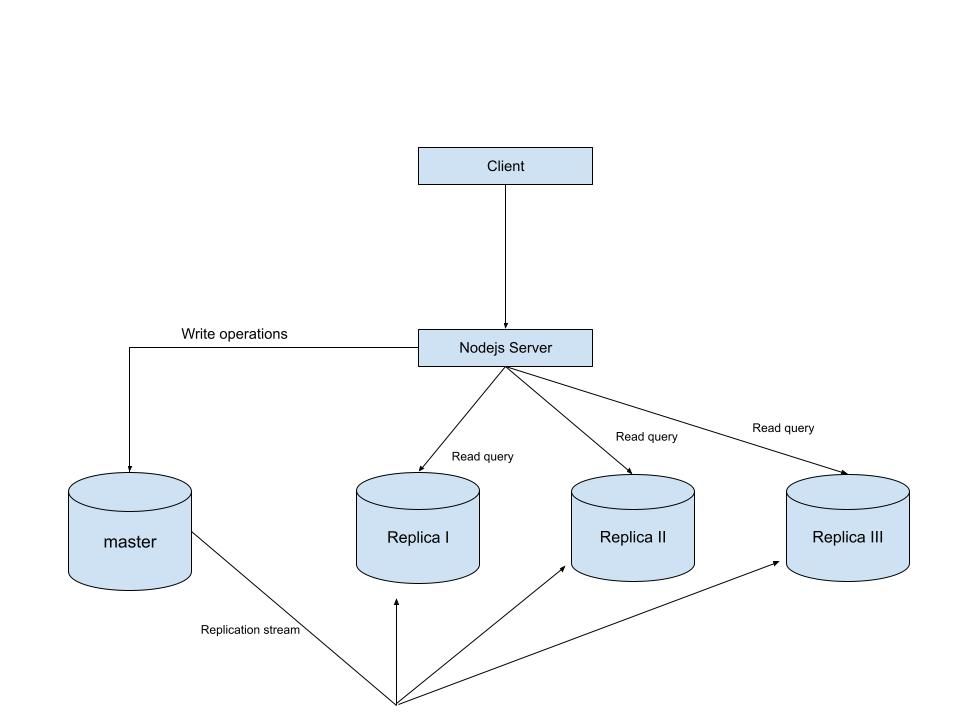
MySQL Single Leader Replication with Node.js and Docker
command: --server-id=1 --log-bin=ON The --server-id option gives each MySQL server in your replication setup its own name tag. Each one has to be unique and without it, replication won’t work at all. Another cool option not included here is binlog_format=ROW. This tells MySQL how to keep track of changes before passing them along to the replicas. By default, MySQL already uses row-based replication, but you can explicitly set it to ROW to be sure or switch it to STATEMENT if you’d rather log the actual SQL statements instead of row-by-row changes. \ Run our containers on docker Now, in the terminal, we can run the following command to spin up our database containers: docker-compose up -d \ Setting Up Our Master (Primary) Server To configure our master server, we would have to first access the running instance on docker using the following command docker exec -it mysql-master bash This command opens an interactive Bash shell inside the running Docker container named mysql-master, allowing us to run commands directly inside that container. \ Now that we’re inside the container, we can access the MySQL server and start running commands. type: mysql -uroot -p This will log you into MySQL as the root user. You’ll be prompted to enter the password you set in your docker-compose.yml file. \ Next, we need to create a special user that our replicas will use to connect to the master server and pull data. Inside the MySQL prompt, run the following commands: \ CREATE USER 'repl_user'@'%' IDENTIFIED BY 'replication_pass'; GRANT REPLICATION SLAVE ON . TO 'repl_user'@'%'; FLUSH PRIVILEGES; Here’s what’s happening: CREATE USER makes a new MySQL user called repl_user with the password replication_pass. GRANT REPLICATION SLAVE gives this user permission to act as a replication client. FLUSH PRIVILEGES tells MySQL to reload the user permissions so they take effect immediately. \ Time to Configure the Replica (Secondary) Servers a. First, let’s access the replica containers the same way we did with the master. Run this command in your terminal for each of the replica containers: \ docker exec -it <replica_container_name> bash mysql -uroot -p <replica_container_name> should be replace with the name of the replica container you are trying to setup b. Now it’s time to tell our replica where to get its data from. While inside the replica’s MySQL shell, run the following command to configure replication using the master’s details: CHANGE REPLICATION SOURCE TO SOURCE_HOST='mysql-master', SOURCE_USER='repl_user', SOURCE_PASSWORD='replication_pass', GET_SOURCE_PUBLIC_KEY=1; With the replication settings in place, let’s fire up the replica and get it syncing with the master. Still inside the MySQL shell on the replica, run: START REPLICA; This starts the replication process. To make sure everything is working, check the replica’s status with:
SHOW REPLICA STATUS\G; Look for Replica_IO_Running and Replica_SQL_Running — if both say Yes, congratulations! 🎉 Your replica is now successfully connected to the master and replicating data in real time.
Testing Our Replication Setup from the Node.js App Now that our replication is successfully set up, we can configure our Node.js server to observe the real-time effect of data being replicated from the master server to the replica server whenever we write to it. We start by installing the following dependencies:
npm i express mysql2 sequelize \ Now create a folder called src in the root directory and add the following files inside that folder connection.js, index.js and model.js. Our current directory should look like this We can now set up our connections to our master and replica server in the connection.js file as shown below
const Sequelize = require("sequelize"); const sequelize = new Sequelize({ dialect: "mysql", replication: { write: { host: "127.0.0.1", username: "root", password: "master", database: "replicaDb", }, read: [ { host: "127.0.0.1", username: "root", password: "slave", database: "replicaDb", port: 3307 }, { host: "127.0.0.1", username: "root", password: "slave", database: "replicaDb", port: 3308 }, { host: "127.0.0.1", username: "root", password: "slave", database: "replicaDb", port: 3309 }, ], }, }); async function connectdb() { try { await sequelize.authenticate(); } catch (error) { console.error("❌ unable to connect to the follower database", error); } } connectdb(); module.exports = { sequelize, }; \ We can now create a User table in the model.js file
const {DataTypes} = require("sequelize"); const { sequelize } = require("./connection"); const User = sequelize.define("User", { name: { type: DataTypes.STRING, allowNull: false, }, email: { type: DataTypes.STRING, unique: true, allowNull: false, }, }); module.exports = User \ and finally in our index.js file we can start our server and listen for connections on port 3000. from the code sample below, all inserts or updates will be routed by sequelize to the master server. while all read queries will be routed to the read replicas.
const express = require("express"); const { sequelize } = require("./connection"); const User = require("./model"); const app = express(); app.use(express.json()); async function main() { await sequelize.sync({ alter: true }); app.get("/", (req, res) => { res.status(200).json({ message: "first step to setting server up", }); }); app.post("/user", async (req, res) => { const { email, name } = req.body; let newUser = await User.build({ name, email, }); // This INSERT will go to the write (master) connection newUser = newUser.save({ returning: false }); res.status(201).json({ message: "User successfully created", }); }); app.get("/user", async (req, res) => { // This SELECT query will go to one of the read replicas const users = await User.findAll(); res.status(200).json(users); }); app.listen(3000, () => { console.log("server has connected"); }); } main(); When you make a POST request to the /users endpoint, take a moment to check both the master and replica servers to observe how data is replicated in real time. Right now, we are relying on Sequelize to automatically route requests, which works for development but isn’t robust enough for a production environment. In particular, if the master node goes down, Sequelize cannot automatically redirect requests to a newly elected leader. In the next part of this series, we’ll explore strategies to handle these challenges
