The post Coinbase Exec Sees Market Uncertainty Beyond Bitcoin and Ethereum, Solana as Possible Third appeared on BitcoinEthereumNews.com. COINOTAG recommends • Exchange signup 💹 Trade with pro tools Fast execution, robust charts, clean risk controls. 👉 Open account → COINOTAG recommends • Exchange signup 🚀 Smooth orders, clear control Advanced order types and market depth in one view. 👉 Create account → COINOTAG recommends • Exchange signup 📈 Clarity in volatile markets Plan entries & exits, manage positions with discipline. 👉 Sign up → COINOTAG recommends • Exchange signup ⚡ Speed, depth, reliability Execute confidently when timing matters. 👉 Open account → COINOTAG recommends • Exchange signup 🧭 A focused workflow for traders Alerts, watchlists, and a repeatable process. 👉 Get started → COINOTAG recommends • Exchange signup ✅ Data‑driven decisions Focus on process—not noise. 👉 Sign up → The crypto market remains uncertain about which assets to prioritize beyond Bitcoin and Ethereum, with Solana emerging as a potential third option but a wide gap existing to XRP, according to Coinbase Asset Management’s president. Investors seek clearer product-market fit for the next contenders. Bitcoin and Ethereum dominate investor portfolios as the clear top choices in the crypto space. Solana shows promise as the possible third asset, gaining attention for its network capabilities. XRP trails behind, needing more liquidity and execution to close the gap, with recent ETF debut seeing $58 million in volume. Explore crypto assets beyond Bitcoin and Ethereum: Why the market hesitates on Solana and XRP. Discover expert insights on emerging contenders and investment strategies. Stay informed—read now for 2025 trends. What are the leading crypto assets beyond Bitcoin and Ethereum? Crypto assets beyond Bitcoin and Ethereum face significant market uncertainty, with investors primarily focusing on these two giants for their established roles in the ecosystem. According to Anthony Bassili, president of Coinbase Asset Management, the community views Bitcoin as the foundational portfolio asset, followed closely… The post Coinbase Exec Sees Market Uncertainty Beyond Bitcoin and Ethereum, Solana as Possible Third appeared on BitcoinEthereumNews.com. COINOTAG recommends • Exchange signup 💹 Trade with pro tools Fast execution, robust charts, clean risk controls. 👉 Open account → COINOTAG recommends • Exchange signup 🚀 Smooth orders, clear control Advanced order types and market depth in one view. 👉 Create account → COINOTAG recommends • Exchange signup 📈 Clarity in volatile markets Plan entries & exits, manage positions with discipline. 👉 Sign up → COINOTAG recommends • Exchange signup ⚡ Speed, depth, reliability Execute confidently when timing matters. 👉 Open account → COINOTAG recommends • Exchange signup 🧭 A focused workflow for traders Alerts, watchlists, and a repeatable process. 👉 Get started → COINOTAG recommends • Exchange signup ✅ Data‑driven decisions Focus on process—not noise. 👉 Sign up → The crypto market remains uncertain about which assets to prioritize beyond Bitcoin and Ethereum, with Solana emerging as a potential third option but a wide gap existing to XRP, according to Coinbase Asset Management’s president. Investors seek clearer product-market fit for the next contenders. Bitcoin and Ethereum dominate investor portfolios as the clear top choices in the crypto space. Solana shows promise as the possible third asset, gaining attention for its network capabilities. XRP trails behind, needing more liquidity and execution to close the gap, with recent ETF debut seeing $58 million in volume. Explore crypto assets beyond Bitcoin and Ethereum: Why the market hesitates on Solana and XRP. Discover expert insights on emerging contenders and investment strategies. Stay informed—read now for 2025 trends. What are the leading crypto assets beyond Bitcoin and Ethereum? Crypto assets beyond Bitcoin and Ethereum face significant market uncertainty, with investors primarily focusing on these two giants for their established roles in the ecosystem. According to Anthony Bassili, president of Coinbase Asset Management, the community views Bitcoin as the foundational portfolio asset, followed closely…

Coinbase Exec Sees Market Uncertainty Beyond Bitcoin and Ethereum, Solana as Possible Third

COINOTAG recommends • Exchange signup
💹 Trade with pro tools
Fast execution, robust charts, clean risk controls.
👉 Open account →
COINOTAG recommends • Exchange signup
🚀 Smooth orders, clear control
Advanced order types and market depth in one view.
👉 Create account →
COINOTAG recommends • Exchange signup
📈 Clarity in volatile markets
Plan entries & exits, manage positions with discipline.
👉 Sign up →
COINOTAG recommends • Exchange signup
⚡ Speed, depth, reliability
Execute confidently when timing matters.
👉 Open account →
COINOTAG recommends • Exchange signup
🧭 A focused workflow for traders
Alerts, watchlists, and a repeatable process.
👉 Get started →
COINOTAG recommends • Exchange signup
✅ Data‑driven decisions
Focus on process—not noise.
👉 Sign up →
  • Bitcoin and Ethereum dominate investor portfolios as the clear top choices in the crypto space.

  • Solana shows promise as the possible third asset, gaining attention for its network capabilities.

  • XRP trails behind, needing more liquidity and execution to close the gap, with recent ETF debut seeing $58 million in volume.

Explore crypto assets beyond Bitcoin and Ethereum: Why the market hesitates on Solana and XRP. Discover expert insights on emerging contenders and investment strategies. Stay informed—read now for 2025 trends.

What are the leading crypto assets beyond Bitcoin and Ethereum?

Crypto assets beyond Bitcoin and Ethereum face significant market uncertainty, with investors primarily focusing on these two giants for their established roles in the ecosystem. According to Anthony Bassili, president of Coinbase Asset Management, the community views Bitcoin as the foundational portfolio asset, followed closely by Ethereum due to its smart contract versatility. However, beyond these, Solana stands out as a tentative third choice for its high-speed transactions and growing DeFi applications.

COINOTAG recommends • Professional traders group
💎 Join a professional trading community
Work with senior traders, research‑backed setups, and risk‑first frameworks.
👉 Join the group →
COINOTAG recommends • Professional traders group
📊 Transparent performance, real process
Spot strategies with documented months of triple‑digit runs during strong trends; futures plans use defined R:R and sizing.
👉 Get access →
COINOTAG recommends • Professional traders group
🧭 Research → Plan → Execute
Daily levels, watchlists, and post‑trade reviews to build consistency.
👉 Join now →
COINOTAG recommends • Professional traders group
🛡️ Risk comes first
Sizing methods, invalidation rules, and R‑multiples baked into every plan.
👉 Start today →
COINOTAG recommends • Professional traders group
🧠 Learn the “why” behind each trade
Live breakdowns, playbooks, and framework‑first education.
👉 Join the group →
COINOTAG recommends • Professional traders group
🚀 Insider • APEX • INNER CIRCLE
Choose the depth you need—tools, coaching, and member rooms.
👉 Explore tiers →

Why is Solana considered the next potential asset after Bitcoin and Ethereum?

Solana’s appeal lies in its scalable blockchain technology, which processes thousands of transactions per second at low costs, making it attractive for developers building decentralized applications. Bassili highlighted during a recent discussion at The Bridge conference in New York City that while Solana is on investors’ radars, the market lacks consensus on what follows. Supporting data from network analytics shows Solana’s total value locked (TVL) surpassing $5 billion in recent quarters, underscoring its momentum in DeFi and NFTs. Expert analyses from platforms like Cointelegraph emphasize Solana’s recovery from past outages, positioning it as a robust alternative. Yet, as Bassili noted, a “very wide gap” persists to other assets, requiring sustained innovation to solidify its place. Investors are watching for increased adoption in real-world use cases, such as payments and gaming, to bridge this uncertainty.


Anthony Bassili spoke at The Bridge conference in New York City on Wednesday. Source: Cointelegraph

The broader crypto landscape reflects this hesitation, as average investors grapple with the volatility and narrative-driven pricing common in the sector. Bassili pointed out that while speculation often drives asset values, a deeper examination of cash flows and utility reveals more grounded valuations. For instance, Bitcoin’s market cap hovers around $1.2 trillion, Ethereum’s at $400 billion, but Solana’s $70 billion still pales in comparison, highlighting the dominance of the top two.

COINOTAG recommends • Exchange signup
📈 Clear interface, precise orders
Sharp entries & exits with actionable alerts.
👉 Create free account →
COINOTAG recommends • Exchange signup
🧠 Smarter tools. Better decisions.
Depth analytics and risk features in one view.
👉 Sign up →
COINOTAG recommends • Exchange signup
🎯 Take control of entries & exits
Set alerts, define stops, execute consistently.
👉 Open account →
COINOTAG recommends • Exchange signup
🛠️ From idea to execution
Turn setups into plans with practical order types.
👉 Join now →
COINOTAG recommends • Exchange signup
📋 Trade your plan
Watchlists and routing that support focus.
👉 Get started →
COINOTAG recommends • Exchange signup
📊 Precision without the noise
Data‑first workflows for active traders.
👉 Sign up →

Frequently Asked Questions

What makes XRP a contender for the fourth spot in crypto assets?

XRP’s potential as the fourth major crypto asset stems from Ripple’s strategic advancements, including acquisitions of a custodian, stablecoin infrastructure, and a broker-dealer to enhance liquidity. Despite strong execution, investors await greater network velocity and integration into global payments. Bassili from Coinbase Asset Management noted XRP’s progress but emphasized the need for market validation through increased trading and adoption.

How is the XRP ETF performing in the current market?

The XRP ETF from Canary Capital launched successfully, closing its first day with $58 million in trading volume—the highest for any ETF debut in 2025 across crypto and traditional assets. This milestone signals growing institutional interest in XRP, potentially boosting its visibility beyond Bitcoin and Ethereum. Voice search trends highlight queries on XRP’s role in cross-border transactions, underscoring its practical utility in financial systems.

COINOTAG recommends • Traders club
⚡ Futures with discipline
Defined R:R, pre‑set invalidation, execution checklists.
👉 Join the club →
COINOTAG recommends • Traders club
🎯 Spot strategies that compound
Momentum & accumulation frameworks managed with clear risk.
👉 Get access →
COINOTAG recommends • Traders club
🏛️ APEX tier for serious traders
Deep dives, analyst Q&A, and accountability sprints.
👉 Explore APEX →
COINOTAG recommends • Traders club
📈 Real‑time market structure
Key levels, liquidity zones, and actionable context.
👉 Join now →
COINOTAG recommends • Traders club
🔔 Smart alerts, not noise
Context‑rich notifications tied to plans and risk—never hype.
👉 Get access →
COINOTAG recommends • Traders club
🤝 Peer review & coaching
Hands‑on feedback that sharpens execution and risk control.
👉 Join the club →

Key Takeaways

  • Bitcoin and Ethereum remain unchallenged leaders: They form the core of most investor portfolios due to their proven track records and widespread adoption.
  • Solana edges closer as the third asset: Its technical advantages in speed and cost position it well, but sustained growth is key to overcoming market doubts.
  • XRP needs liquidity boosts: Recent ETF success and Ripple’s expansions offer promise, urging investors to monitor real-world integrations for the next big move.

Conclusion

In summary, the crypto market’s uncertainty surrounding assets beyond Bitcoin and Ethereum underscores the need for clear product-market fit, as seen with Solana’s rise and XRP’s ongoing efforts. Anthony Bassili’s insights from Coinbase Asset Management reveal a maturing sector shifting toward utility-driven valuations. As 2025 progresses, watch for breakthroughs in network velocity and adoption that could redefine the top rankings—position your portfolio wisely by staying updated on these developments.

COINOTAG recommends • Members‑only research
📌 Curated setups, clearly explained
Entry, invalidation, targets, and R:R defined before execution.
👉 Get access →
COINOTAG recommends • Members‑only research
🧠 Data‑led decision making
Technical + flow + context synthesized into actionable plans.
👉 Join now →
COINOTAG recommends • Members‑only research
🧱 Consistency over hype
Repeatable rules, realistic expectations, and a calmer mindset.
👉 Get access →
COINOTAG recommends • Members‑only research
🕒 Patience is an edge
Wait for confirmation and manage risk with checklists.
👉 Join now →
COINOTAG recommends • Members‑only research
💼 Professional mentorship
Guidance from seasoned traders and structured feedback loops.
👉 Get access →
COINOTAG recommends • Members‑only research
🧮 Track • Review • Improve
Documented PnL tracking and post‑mortems to accelerate learning.
👉 Join now →

Source: https://en.coinotag.com/coinbase-exec-sees-market-uncertainty-beyond-bitcoin-and-ethereum-solana-as-possible-third/

Market Opportunity
Polytrade Logo
Polytrade Price(TRADE)
$0.03198
$0.03198$0.03198
-6.92%
USD
Polytrade (TRADE) Live Price Chart
Disclaimer: The articles reposted on this site are sourced from public platforms and are provided for informational purposes only. They do not necessarily reflect the views of MEXC. All rights remain with the original authors. If you believe any content infringes on third-party rights, please contact [email protected] for removal. MEXC makes no guarantees regarding the accuracy, completeness, or timeliness of the content and is not responsible for any actions taken based on the information provided. The content does not constitute financial, legal, or other professional advice, nor should it be considered a recommendation or endorsement by MEXC.

You May Also Like

The Stunning ASEAN Winner Emerges As Manufacturing Shifts Accelerate

The Stunning ASEAN Winner Emerges As Manufacturing Shifts Accelerate

The post The Stunning ASEAN Winner Emerges As Manufacturing Shifts Accelerate appeared on BitcoinEthereumNews.com. Vietnam US Tariffs: The Stunning ASEAN Winner
Share
BitcoinEthereumNews2026/02/24 08:20
MySQL Single Leader Replication with Node.js and Docker

MySQL Single Leader Replication with Node.js and Docker

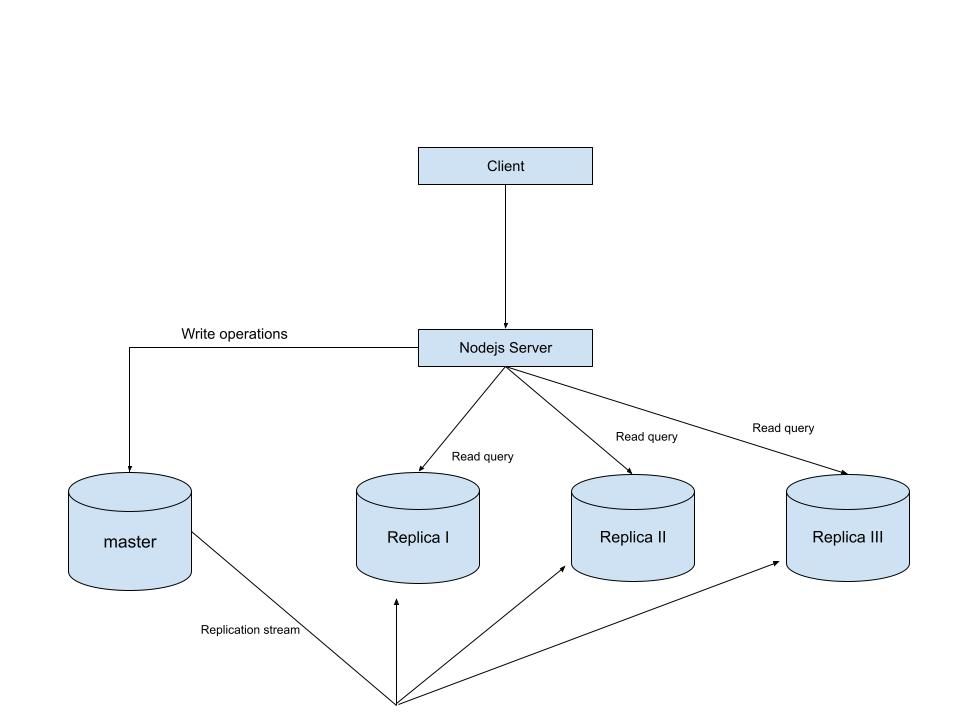
Modern applications demand high availability and the ability to scale reads without compromising performance. One of the most common strategies to achieve this is Replication. In this setup, we configured a single database to act as the leader (master) and handle all write operations, while three replicas handle read operations. In this article, we’ll walk through how to set up MySQL single-leader replication on your local machine using Docker. Once the replication is working, we’ll connect it to a Node.js application using Sequelize ORM, so that reads are routed to the replica and writes go to the master. By the end, you’ll have a working environment where you can see replication in real time Prerequisites knowledge of database replication Background knowledge of docker and docker compose Background knowledge of Nodejs and how to run a NodeJS server An Overview of what we are building Setup Setup our database servers on docker compose in the root of our project directory, create a file named docker-compose.yml with the following content to setup our mysql primary and replica databases. \ \ name: "learn-replica" volumes: mysqlMasterDatabase: mysqlSlaveDatabase: mysqlSlaveDatabaseII: mysqlSlaveDatabaseIII: networks: mysql-replication-network: services: mysql-master: image: mysql:latest container_name: mysql-master command: --server-id=1 --log-bin=ON environment: MYSQL_ROOT_PASSWORD: master MYSQL_DATABASE: replicaDb ports: - "3306:3306" volumes: - mysqlMasterDatabase:/var/lib/mysql networks: - mysql-replication-network mysql-slave: image: mysql:latest container_name: mysql-slave command: --server-id=2 --log-bin=ON environment: MYSQL_ROOT_PASSWORD: slave MYSQL_DATABASE: replicaDb MYSQL_ROOT_HOST: "%" ports: - "3307:3306" volumes: - mysqlSlaveDatabase:/var/lib/mysql depends_on: - mysql-master networks: - mysql-replication-network mysql-slaveII: image: mysql:latest container_name: mysql-slaveII command: --server-id=2 --log-bin=ON environment: MYSQL_ROOT_PASSWORD: slave MYSQL_DATABASE: replicaDb MYSQL_ROOT_HOST: "%" ports: - "3308:3306" volumes: - mysqlSlaveDatabaseII:/var/lib/mysql depends_on: - mysql-master networks: - mysql-replication-network mysql-slaveIII: image: mysql:latest container_name: mysql-slaveIII command: --server-id=3 --log-bin=ON environment: MYSQL_ROOT_PASSWORD: slave MYSQL_DATABASE: replicaDb MYSQL_ROOT_HOST: "%" ports: - "3309:3306" volumes: - mysqlSlaveDatabaseIII:/var/lib/mysql depends_on: - mysql-master networks: - mysql-replication-network In this setup, I’m creating a master database container called mysql-master and 3 replica containers called mysql-slave, mysql-slaveII and mysql-slaveIII. I won’t go too deep into the docker-compose.yml file since it’s just a basic setup, but I do want to walk you through the command line instructions used in all four services because that’s where things get interesting.
command: --server-id=1 --log-bin=ON The --server-id option gives each MySQL server in your replication setup its own name tag. Each one has to be unique and without it, replication won’t work at all. Another cool option not included here is binlog_format=ROW. This tells MySQL how to keep track of changes before passing them along to the replicas. By default, MySQL already uses row-based replication, but you can explicitly set it to ROW to be sure or switch it to STATEMENT if you’d rather log the actual SQL statements instead of row-by-row changes. \ Run our containers on docker Now, in the terminal, we can run the following command to spin up our database containers: docker-compose up -d \ Setting Up Our Master (Primary) Server To configure our master server, we would have to first access the running instance on docker using the following command docker exec -it mysql-master bash This command opens an interactive Bash shell inside the running Docker container named mysql-master, allowing us to run commands directly inside that container. \ Now that we’re inside the container, we can access the MySQL server and start running commands. type: mysql -uroot -p This will log you into MySQL as the root user. You’ll be prompted to enter the password you set in your docker-compose.yml file. \ Next, we need to create a special user that our replicas will use to connect to the master server and pull data. Inside the MySQL prompt, run the following commands: \ CREATE USER 'repl_user'@'%' IDENTIFIED BY 'replication_pass'; GRANT REPLICATION SLAVE ON . TO 'repl_user'@'%'; FLUSH PRIVILEGES; Here’s what’s happening: CREATE USER makes a new MySQL user called repl_user with the password replication_pass. GRANT REPLICATION SLAVE gives this user permission to act as a replication client. FLUSH PRIVILEGES tells MySQL to reload the user permissions so they take effect immediately. \ Time to Configure the Replica (Secondary) Servers a. First, let’s access the replica containers the same way we did with the master. Run this command in your terminal for each of the replica containers: \ docker exec -it <replica_container_name> bash mysql -uroot -p <replica_container_name> should be replace with the name of the replica container you are trying to setup b. Now it’s time to tell our replica where to get its data from. While inside the replica’s MySQL shell, run the following command to configure replication using the master’s details: CHANGE REPLICATION SOURCE TO SOURCE_HOST='mysql-master', SOURCE_USER='repl_user', SOURCE_PASSWORD='replication_pass', GET_SOURCE_PUBLIC_KEY=1; With the replication settings in place, let’s fire up the replica and get it syncing with the master. Still inside the MySQL shell on the replica, run: START REPLICA; This starts the replication process. To make sure everything is working, check the replica’s status with:
SHOW REPLICA STATUS\G; Look for Replica_IO_Running and Replica_SQL_Running — if both say Yes, congratulations! 🎉 Your replica is now successfully connected to the master and replicating data in real time.
Testing Our Replication Setup from the Node.js App Now that our replication is successfully set up, we can configure our Node.js server to observe the real-time effect of data being replicated from the master server to the replica server whenever we write to it. We start by installing the following dependencies:
npm i express mysql2 sequelize \ Now create a folder called src in the root directory and add the following files inside that folder connection.js, index.js and model.js. Our current directory should look like this We can now set up our connections to our master and replica server in the connection.js file as shown below
const Sequelize = require("sequelize"); const sequelize = new Sequelize({ dialect: "mysql", replication: { write: { host: "127.0.0.1", username: "root", password: "master", database: "replicaDb", }, read: [ { host: "127.0.0.1", username: "root", password: "slave", database: "replicaDb", port: 3307 }, { host: "127.0.0.1", username: "root", password: "slave", database: "replicaDb", port: 3308 }, { host: "127.0.0.1", username: "root", password: "slave", database: "replicaDb", port: 3309 }, ], }, }); async function connectdb() { try { await sequelize.authenticate(); } catch (error) { console.error("❌ unable to connect to the follower database", error); } } connectdb(); module.exports = { sequelize, }; \ We can now create a User table in the model.js file
const {DataTypes} = require("sequelize"); const { sequelize } = require("./connection"); const User = sequelize.define("User", { name: { type: DataTypes.STRING, allowNull: false, }, email: { type: DataTypes.STRING, unique: true, allowNull: false, }, }); module.exports = User \ and finally in our index.js file we can start our server and listen for connections on port 3000. from the code sample below, all inserts or updates will be routed by sequelize to the master server. while all read queries will be routed to the read replicas.
const express = require("express"); const { sequelize } = require("./connection"); const User = require("./model"); const app = express(); app.use(express.json()); async function main() { await sequelize.sync({ alter: true }); app.get("/", (req, res) => { res.status(200).json({ message: "first step to setting server up", }); }); app.post("/user", async (req, res) => { const { email, name } = req.body; let newUser = await User.build({ name, email, }); // This INSERT will go to the write (master) connection newUser = newUser.save({ returning: false }); res.status(201).json({ message: "User successfully created", }); }); app.get("/user", async (req, res) => { // This SELECT query will go to one of the read replicas const users = await User.findAll(); res.status(200).json(users); }); app.listen(3000, () => { console.log("server has connected"); }); } main(); When you make a POST request to the /users endpoint, take a moment to check both the master and replica servers to observe how data is replicated in real time. Right now, we are relying on Sequelize to automatically route requests, which works for development but isn’t robust enough for a production environment. In particular, if the master node goes down, Sequelize cannot automatically redirect requests to a newly elected leader. In the next part of this series, we’ll explore strategies to handle these challenges
Share
Hackernoon2025/09/18 14:44
Robinhood: Investors Are Looking Beyond BTC

Robinhood: Investors Are Looking Beyond BTC

The post Robinhood: Investors Are Looking Beyond BTC appeared on BitcoinEthereumNews.com. Investors Diversifying Beyond BTC and ETH Robinhood’s crypto division
Share
BitcoinEthereumNews2026/02/24 08:32