A suspect posing as a delivery worker entered a Mission Dolores home near 18th and Dolores around 6:45 a.m. on Nov. 22, restrained the resident, and stole a phone, laptop, and about $11 million in cryptocurrency, according to the San Francisco Chronicle. San Francisco police had not announced arrests or provided asset details as of […] The post A fake delivery driver stole $11 million in crypto this weekend as home invasion heists increase – report appeared first on CryptoSlate.A suspect posing as a delivery worker entered a Mission Dolores home near 18th and Dolores around 6:45 a.m. on Nov. 22, restrained the resident, and stole a phone, laptop, and about $11 million in cryptocurrency, according to the San Francisco Chronicle. San Francisco police had not announced arrests or provided asset details as of […] The post A fake delivery driver stole $11 million in crypto this weekend as home invasion heists increase – report appeared first on CryptoSlate.

A fake delivery driver stole $11 million in crypto this weekend as home invasion heists increase – report

2025/11/24 23:10
6 min read

A suspect posing as a delivery worker entered a Mission Dolores home near 18th and Dolores around 6:45 a.m. on Nov. 22, restrained the resident, and stole a phone, laptop, and about $11 million in cryptocurrency, according to the San Francisco Chronicle.

San Francisco police had not announced arrests or provided asset details as of Sunday, and no chain or token mix has been disclosed.

Physical attacks on crypto owners are far from isolated, with a concerning trend emerging.

Recent and past incidents we’ve covered include a $4.3 million UK home invasion; the SoHo kidnapping and torture to force access to a Bitcoin wallet; France’s rise in crypto-linked kidnappings and the state response; extreme OPSEC shifts by prominent holders like the Bitcoin Family distributing their seed phrase across continents; a broader move by high-net-worth investors hiring protection; and analysis of wrench-attack trends and self-custody trade-offs.

The theft shifts immediately to an on-chain chase.

Even when a robbery begins at a front door, the money often moves across public ledgers, where it can be traced, creating a race between laundering paths and the tightening freeze-and-trace tools that matured in 2025. USDT on TRON remains central to that calculus.

Industry-wide capacity to freeze capacity has expanded this year through cooperation among issuers, networks, and analytics firms, and the “T3” Financial Crime Unit has reported hundreds of millions of dollars in tainted tokens frozen since late 2024.

If any of the stolen value is in stablecoins, the odds of a near-term stop improve, as large issuers work with law enforcement and analytics partners to blacklist addresses on notice.

The broader data supports a stablecoin-first hypothesis for illicit flows. Chainalysis’s 2025 crime report shows that stablecoins accounted for about 63 percent of illegal transaction volume in 2024, a marked shift from prior years when BTC and ETH dominated laundering pipelines.

That change matters for recovery because centralized issuers can block spending at the token level, and centralized venues add additional choke points when deposits touch KYC infrastructure.

In parallel, Europol has warned that organized groups are scaling tactics with AI, which can compress laundering timelines and automate fragmentation across chains and services. The operational tempo favors early notification to issuers and exchanges if destination addresses surface.

The macro loss picture continues to move in the wrong direction for victims.

The FBI’s Internet Crime Complaint Center recorded $16.6 billion in cyber and scam losses in 2024, and reported crypto investment fraud rose 66 percent year over year. Physical coercion incidents against crypto holders, sometimes labeled wrench attacks, have drawn more attention across 2024 and 2025 as home invasions, SIM swaps, and social engineering converge, with TRM Labs documenting trends in coercion-linked thefts.

While the San Francisco case centers on a single residence, the mechanics mirror a pattern, a compromised device and forced transfers or key export, followed by rapid on-chain dispersion and pressure-tested cash-out routes.

California’s new regulatory baseline adds another layer. The state’s Digital Financial Assets Law took effect in July 2025, giving the Department of Financial Protection and Innovation licensing and enforcement authority over particular exchange and custody activities.

If any off-ramp, OTC broker, or storage provider with California exposure intersects with the stolen funds, DFAL oversight could support coordination with law enforcement. That is not a direct recovery lever for self-custodied assets, but it affects counterparties that thieves often need to exit to fiat.

Policy changes elsewhere also factor into the next steps.

The U.S. Treasury removed Tornado Cash from the Specially Designated Nationals list on March 21, 2025, per this legal analysis from Venable, which alters the compliance posture around interacting with the codebase.

That change does not legalize laundering, nor does it remove analytics visibility.

It does, however, reduce the deterrent optics that had previously pushed some actors toward alternate mixers and bridges. If the stolen funds use classic mixers or peel chains through bridges into stablecoins before off-ramping, attribution work and first KYC touchpoints remain the critical moments.

With addresses not yet public, the desk can frame the next 14 to 90 days around three base paths. The table below presents first-hop models, indicators to watch, and probability bands for freeze and recovery based on the 2025 market structure and enforcement posture.

PathFirst 24–72 hoursWhat to watch14-day “freeze” odds90-day “recovery” oddsWhy it matters
Stablecoins on TRON or EVMSplit into tranches, hop via bridges, park in fresh wallets, probe CEX or OTC exitsLarge USDT flows on TRON, rapid fragmentation, hits to known OTC or exchange clustersMedium to high, about 30–60 percent if issuers are alerted early, reflecting the T3 effectLow to medium, about 15–35 percent depending on issuer and exchange engagementStablecoins make up most illicit volume in 2024, and issuer freezes expanded in 2025
BTC or ETH with mixers and cross-chain hopsConsolidate, peel, mix, bridge to alternate L1 or L2, attempt CEX or DEX exitsDeposits to known mixer relays, bridge into TRON and USDT before off-rampLow to medium, about 10–25 percent as analytics still tag flows despite policy shiftsLow, about 5–20 percent unless funds probe KYC venuesSee sanctions and compliance impacts in K2 Integrity’s advisory, with exchanges as chokepoints and attribution maturing within weeks
Privacy-coin pivot, for example XMRSwap via DEX, P2P, or ATMs, then off-ramp OTCAtomic swap patterns, P2P broker touchpointsVery low, under 10 percentVery low, 10 percent or lessOn-chain visibility declines, reliance shifts to devices, comms, and informants, with broader crime-trend context from the TRM Labs 2025 report

Timeline cues follow from this model.

In the first 24 to 72 hours, look for consolidation and early hops. If addresses emerge and stablecoins are present, the immediate step is issuer notification for blacklist review. If flows are in BTC or ETH, monitor for mixers or bridges and for any pivot into USDT before fiat exit.

Between seven and fourteen days, preservation letters and exchange freezes often surface if deposits probe KYC venues, per IC3 coordination practices.

Between 30 and 90 days, if a privacy-coin route appears, investigative weight shifts to off-chain leads, including device forensics, communications history, and the delivery ruse trail, with attribution work from TRM Labs and peers maturing on that horizon.

Wallet design continues to develop blunt physical coercion.

Multi-party computation and account-abstraction wallets have expanded in 2025, adding policy controls, seedless recovery, daily limits, and multi-factor approval paths that reduce single-point private key exposure during an in-person incident.

Contract-level time locks and spend caps can slow high-value transfers and create time windows to flag issuers or exchanges if an account is compromised.

These controls do not replace safe operational practices around devices and home security, but they modify the attack surface when a thief has access to a phone or laptop.

The San Francisco Chronicle report anchors the facts, though the San Francisco Police Department site shows no case-specific bulletin yet.

The next development hinges on whether destination addresses become public and whether stablecoin issuers or exchanges have been asked to review and act.

The post A fake delivery driver stole $11 million in crypto this weekend as home invasion heists increase – report appeared first on CryptoSlate.

Market Opportunity
NEAR Logo
NEAR Price(NEAR)
$0.9657
$0.9657$0.9657
+0.96%
USD
NEAR (NEAR) Live Price Chart
Disclaimer: The articles reposted on this site are sourced from public platforms and are provided for informational purposes only. They do not necessarily reflect the views of MEXC. All rights remain with the original authors. If you believe any content infringes on third-party rights, please contact [email protected] for removal. MEXC makes no guarantees regarding the accuracy, completeness, or timeliness of the content and is not responsible for any actions taken based on the information provided. The content does not constitute financial, legal, or other professional advice, nor should it be considered a recommendation or endorsement by MEXC.

You May Also Like

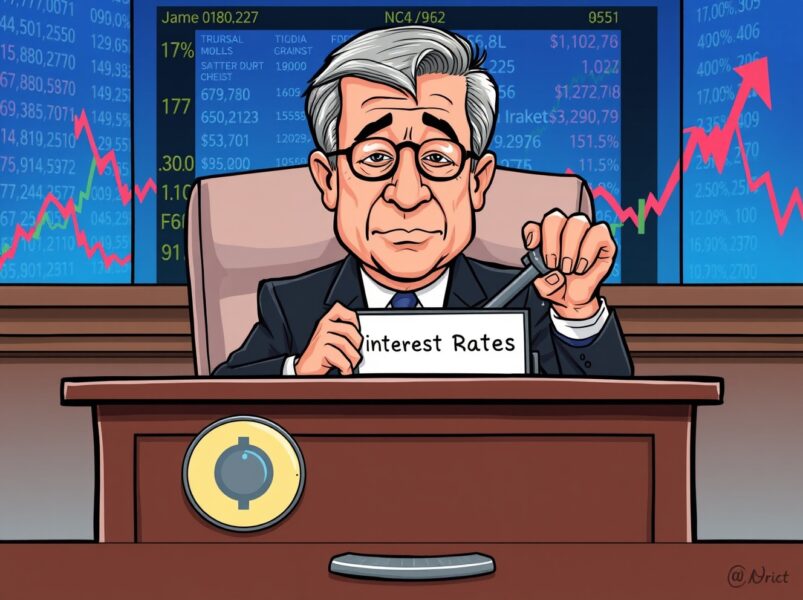
Crucial Fed Rate Cut: Powell’s Bold Risk Management Move Explained

Crucial Fed Rate Cut: Powell’s Bold Risk Management Move Explained

BitcoinWorld Crucial Fed Rate Cut: Powell’s Bold Risk Management Move Explained In a significant development for global financial markets, Federal Reserve Chair Jerome Powell recently described the latest Fed rate cut as a critical risk management measure. This statement immediately captured the attention of investors, economists, and especially those in the dynamic cryptocurrency space. Understanding Powell’s rationale and the potential implications of this move is essential for navigating today’s complex economic landscape. What Exactly is a Fed Rate Cut and Why Does it Matter? A Fed rate cut refers to the Federal Reserve lowering the target range for the federal funds rate. This is the interest rate at which commercial banks borrow and lend their excess reserves to each other overnight. When the Fed lowers this rate, it typically makes borrowing cheaper across the entire economy. This decision impacts everything from mortgage rates to business loans. The Fed uses interest rates as a primary tool to influence economic activity, aiming to achieve maximum employment and stable prices. A lower rate often stimulates spending and investment, but it can also signal concerns about economic slowdown. Key reasons for a rate cut often include: Slowing economic growth or recession fears. Low inflation or deflationary pressures. Global economic instability impacting domestic markets. A desire to provide more liquidity to the financial system. Powell’s emphasis on ‘risk management’ suggests a proactive approach. The Fed is not just reacting to current data but also anticipating potential future challenges. They are essentially trying to prevent a worse economic outcome by adjusting policy now. How Does a Fed Rate Cut Influence the Broader Economy? When the Federal Reserve implements a Fed rate cut, it sends ripples throughout the financial world. For traditional markets, lower interest rates generally mean: Boost for Stocks: Companies can borrow more cheaply, potentially increasing profits and stock valuations. Investors might also move money from lower-yielding bonds into equities. Cheaper Borrowing: Consumers and businesses enjoy lower rates on loans, from mortgages to credit cards, encouraging spending and investment. Weaker Dollar: Lower rates can make a country’s currency less attractive to foreign investors, potentially leading to a weaker dollar. Bond Market Shifts: Existing bonds with higher yields become more attractive, while newly issued bonds will have lower yields. This shift in monetary policy aims to inject confidence and liquidity into the system, countering potential economic headwinds. However, there’s always a delicate balance to strike, as too much stimulus can lead to inflationary pressures down the line. What Does This Fed Rate Cut Mean for Cryptocurrency Investors? The impact of a Fed rate cut on the cryptocurrency market is often a topic of intense discussion. While crypto assets operate independently of central banks, they are not immune to broader macroeconomic forces. Here’s how a rate cut can play out: Increased Risk Appetite: With traditional savings and bond yields potentially lower, investors might seek higher returns in riskier assets, including cryptocurrencies like Bitcoin and Ethereum. Inflation Hedge Narrative: Some view cryptocurrencies, particularly Bitcoin, as a hedge against inflation and traditional currency debasement. If a rate cut leads to concerns about inflation, this narrative could gain traction. Liquidity Influx: A more accommodative monetary policy can increase overall liquidity in the financial system, some of which may flow into digital assets. Dollar Weakness: A weaker dollar, a potential consequence of rate cuts, can sometimes make dollar-denominated assets like crypto more appealing to international investors. However, it’s crucial to remember that the crypto market also has its unique drivers, including technological developments, regulatory news, and market sentiment. While a Fed rate cut can provide a tailwind, it’s not the sole determinant of crypto performance. Navigating the New Landscape: Actionable Insights for Crypto Investors Given the Federal Reserve’s stance on risk management through a Fed rate cut, what steps can crypto investors consider? Stay Informed: Keep a close watch on further Fed announcements and economic data. Understanding the broader macroeconomic picture is vital. Diversify Your Portfolio: While a rate cut might favor risk assets, a balanced portfolio that includes a mix of traditional and digital assets can help mitigate volatility. Long-Term Perspective: Focus on the fundamental value and long-term potential of your chosen cryptocurrencies rather than short-term fluctuations driven by macro news. Assess Risk Tolerance: Re-evaluate your personal risk tolerance in light of potential market shifts. Lower rates can encourage speculation, but prudence remains key. Powell’s description of the Fed rate cut as a risk management measure highlights the central bank’s commitment to maintaining economic stability. For cryptocurrency enthusiasts, this move underscores the increasing interconnectedness of traditional finance and the digital asset world. While a rate cut can create opportunities, a thoughtful and informed approach is always the best strategy. Frequently Asked Questions (FAQs) What exactly is a Fed rate cut? A Fed rate cut is when the Federal Reserve lowers its target for the federal funds rate, which is the benchmark interest rate banks charge each other for overnight lending. This action makes borrowing cheaper across the economy, aiming to stimulate economic activity. Why did Powell emphasize “risk management” for this Fed rate cut? Jerome Powell emphasized “risk management” to indicate that the Fed was proactively addressing potential economic slowdowns or other future challenges. It suggests a preventative measure to safeguard against adverse economic conditions rather than merely reacting to existing problems. How does a Fed rate cut typically affect the crypto market? A Fed rate cut can make traditional investments less attractive due to lower yields, potentially driving investors towards higher-risk, higher-reward assets like cryptocurrencies. It can also increase overall market liquidity and strengthen the narrative of crypto as an inflation hedge. Should crypto investors change their strategy after a rate cut? While a rate cut can influence market dynamics, crypto investors should primarily focus on their long-term strategy, fundamental research, and risk tolerance. It’s wise to stay informed about macroeconomic trends but avoid making impulsive decisions based solely on a single policy change. What are the potential downsides of a Fed rate cut? Potential downsides include increased inflationary pressures if the economy overheats, a weaker national currency, and the possibility of creating asset bubbles as investors chase higher returns in riskier markets. It can also signal underlying concerns about economic health. Did you find this article insightful? Share your thoughts and help others understand the implications of the Fed’s latest move! Follow us on social media for more real-time updates and expert analysis. To learn more about the latest crypto market trends, explore our article on key developments shaping Bitcoin’s price action. This post Crucial Fed Rate Cut: Powell’s Bold Risk Management Move Explained first appeared on BitcoinWorld.
Share
Coinstats2025/09/18 16:40
Inference Research Launches in Hong Kong with US$20M Seed Funding

Inference Research Launches in Hong Kong with US$20M Seed Funding

Inference Research, an AI-native quantitative trading firm based in Hong Kong, has announced its launch and the expected closing of a US$20 million Seed funding
Share
Fintechnews2026/02/13 11:38
Should traders track FLOKI, memecoins to see where Bitcoin’s price will go?

Should traders track FLOKI, memecoins to see where Bitcoin’s price will go?

The post Should traders track FLOKI, memecoins to see where Bitcoin’s price will go? appeared on BitcoinEthereumNews.com. The memecoin sector, characterized by
Share
BitcoinEthereumNews2026/02/13 11:15