

How U.S. crypto companies are responding to Trump's new strategy
Author: Sean Lee , Former CEO of Algorand Foundation
Compiled by: Felix, PANews
Cryptocurrencies have long walked a gray area between innovation and regulation. As the U.S. pushes to establish a regulatory framework, the crypto industry is facing a critical moment that could unlock scale, capital and global influence.
After many conversations with industry leaders and hearing perspectives while working with the Crypto Council for Innovation, a turning point emerged: the upcoming framework will guide the next phase of cryptocurrency development.
Reshaping U.S. crypto policy to improve regulatory clarity
President Trump signed a sweeping executive order on the third day of his second term. The "Strengthening American Leadership in Digital Financial Technology" order issued on January 23 revoked a directive signed by Biden in 2022, shifting a primarily law enforcement-led stance to a new strategy focused on proactive governance. On March 6, Trump signed an executive order to establish a strategic Bitcoin reserve. The reserve comes from Bitcoin confiscated in criminal cases and will not be sold but held as a long-term strategic asset.
The U.S. SEC reorganized its cryptocurrency regulatory work into the "Cyber and Emerging Technology Division" as the focus of long-term rulemaking and established a working group to develop a "comprehensive and clear regulatory framework." The goal is to allow companies to "freely experiment and build interesting things," said Hester Peirce, chairman of the U.S. SEC. Deputy Attorney General Todd Blanche ordered the immediate dissolution of the National Cryptocurrency Enforcement Team (NCET). The decision, outlined in a four-page memo titled "Ending Prosecutorial Regulation" on April 7, marks a sharp departure from the previous administration's approach.
First proposed in February 2025, the GENIUS Act was Washington’s first serious attempt to bring stablecoins under a clear, federally backed regulatory framework. As of this writing, there is approximately $243 billion in stablecoins in circulation worldwide, with over 90% of them denominated in U.S. dollars. The bill proposed strict reserve, audit, and transparency standards for stablecoins and prohibited claims of government backing. Although the GENIUS Act failed to pass in May, it inspired rare bipartisanship and paved the way for future consumer-focused cryptocurrency legislation.
So far, the impact is clear, with a surge in crypto market trading activity and renewed investor enthusiasm, such as the $3.6 billion merger between Bitcoin company Twenty One Capital and a special purpose acquisition company (SPAC) led by Brandon Lutnick, son of Commerce Secretary Howard Lutnick. This reflects the current market sentiment: confident, speculative, and ready to expand. Companies are moving quickly to take advantage of this environment conducive to innovation, listings, and growth of digital assets.
This shift in tone has not gone unnoticed: it has already changed the way businesses approach infrastructure, legal strategy and institutional trust.
Regulatory clarity injects new life into infrastructure expansion
The change in policy tone has already triggered tangible changes. Batyr Hydyrov, CEO of Uminers, sees the SEC’s latest stance on proof-of-work mining as a catalyst: “The SEC’s clarification that certain proof-of-work mining activities are not subject to securities regulation may reduce the compliance burden for miners. This shift, along with the broader approach to crypto regulation, creates new opportunities to accelerate the most ambitious parts of the roadmap.”
For Hydyrov, the creation of a national strategic bitcoin reserve is an important catalyst. “The creation of a national strategic bitcoin reserve signals growing institutional acceptance of cryptocurrencies, which could further encourage investment in mining infrastructure.”
Still, Hydyrov is not letting down his guard. “We are gradually expanding targeted investments, especially in areas where regulatory risk was previously high. However, we remain cautious: regulatory cycles are inherently unpredictable… We see the current situation not as a reason to slow down or become complacent, but as an opportunity to expand prudently and prepare for possible changes in global policies.”
Legal Adjustment and Fair Access
As the regulatory fog gradually dissipates, the legal framework governing market participation is also being redefined. Frank Hepworth, founder of Yieldschool and a former regulatory lawyer, believes that the policy shift provides a structural green light for the decentralized model: "This is a signal. On-chain companies do not want their tokens to be traded on SEC-regulated platforms... The government is tacitly allowing companies with competitive advantages to enter the market. Therefore, as the risk of punishment decreases, it can be expected that more companies will choose on-chain transactions."
He believes this shift is upending the traditional regulatory system. “Several prominent crypto lawyers like Gabriel Shapiro have commented that this administration is bad for their industry but a huge plus for the industry as a whole… I agree with that view.”
But Hepworth’s sharpest criticism is aimed at outdated rules of entry: “Voluntary compliance is healthy… but mandatory regulation leads to unequal outcomes, which is the root cause of wealth inequality in the United States.” His vision? “A regulatory system that is crypto-led and crypto-native.”
Therefore, as the legal framework is relaxed and on-chain innovation accelerates, the next hurdle will become psychological: institutional trust. The industry is currently at this stage and is developing standards on its own.
Transparency as a means of coping with uncertainty
Even though regulation is becoming clearer, it is not perfect yet. In the transition period, trust must be actively built. GT Protocol, led by Peter Ionov, is at the forefront of this. "Yes, the trend of regulatory deregulation sends mixed signals to the market. On the one hand, the relaxation of regulatory controls is often seen as a green light for innovation... But on the other hand, the lack of a clear regulatory framework also worries institutional players."
Peter Ionov said that investor reactions are, as always, divided: "It depends a lot on the type of investor. More flexible and risk-tolerant entities... may see this as a window of opportunity. In contrast, traditional financial institutions... tend to remain cautious and wait for more clarity."
Currently, a market-driven approach to building trust is fostering responsible innovation, especially in sectors that want to modernize legacy systems: “The industry is moving toward trust mechanisms centered around transparency…Companies are open-sourcing, publishing audit reports, and working with licensed vendors.”
Lighter regulation is an economic catalyst
As transparency builds investor confidence and legal innovation expands access, the stage is set for the next phase: taking bold ideas to scale. For Construct Koin, that means leveraging AI and blockchain technology to transform real estate finance. “Reducing the regulatory burden doesn’t mean giving up the rules,” explains co-founder Chris Baldrey-Chourio. “It’s about creating space for real-world solutions to thrive.”
But as global rivals such as the European Union and Singapore accelerate their crypto strategies, he warned: "The United States is currently ahead, but this advantage will not last without action." He also pointed to the growing momentum around central bank digital currencies and stablecoin standards around the world.
He is cautious about overreach, but believes that if enforcement is muted and supported by cooperation, it can be a catalyst for experimentation. "We need regulators and builders to be on the same page," he said. "That way we can achieve breakthroughs while protecting consumers."
And this dialogue must be based on common principles and morals, not just common interests.
Focusing on ethics in policy shocks
Andrea Perlak, CPA and founder of Crypto Accounting Group, spoke comprehensively on the topic, arguing that “Web3 organizations and industries have been committed to maintaining high standards of ethics since their inception… Unethical behavior within the industry is abhorrent, and in such a small industry, the impact of a bad reputation is long-lasting.”
She refuted the fallacy that decentralization means chaos. “Decentralization and accountability are not mutually exclusive concepts…Through transparency, multi-level governance, and incentives, these systems thrive.”
As Perlak points out, talk of deregulation misses the point: “It is a misconception that the crypto industry is being deregulated… The last administration was dominated by ‘enforcement regulation’… The industry will breathe a sigh of relief once proper legislation is in place.”
Finally, with a workable framework on the horizon, the industry is no longer shying away from regulation – it is ready to embrace it on solid ground.
Summarize
Together, these voices reflect a growing field moving from chaos to shared standards, from closed systems to open, ethical innovation. If the industry can seize this opportunity to lead with transparency, ethics, and inclusion not because it’s required but because it’s the right thing to do, it has the potential to reshape the landscape of modern finance.
Related reading: The US Stablecoin Bill was rejected. Will the cold response to regulation affect the restart of the altcoin season?
You May Also Like

Three dormant wallets, suspected to belong to the same entity, purchased 5,970 ETH eight hours ago.
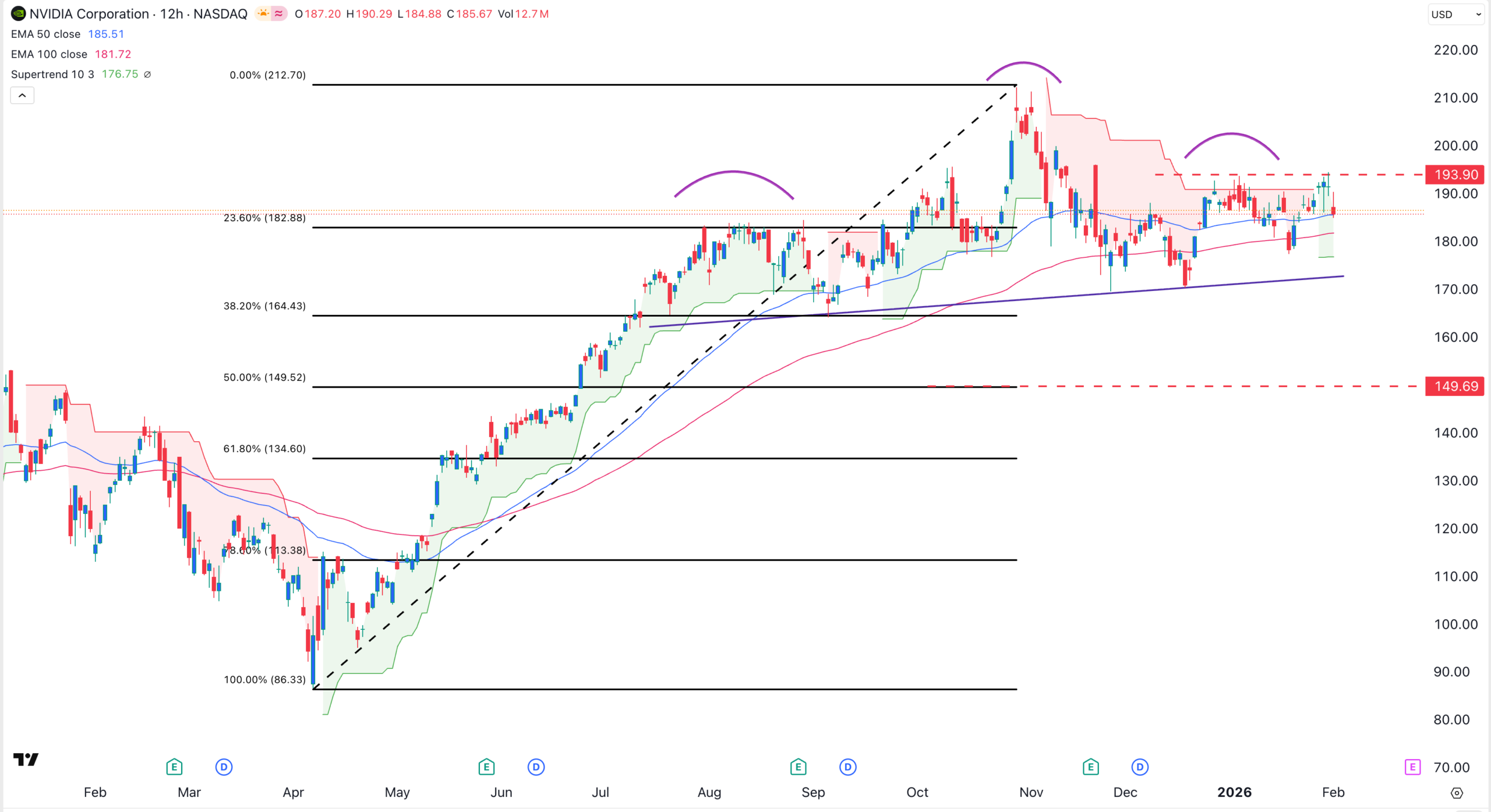
NVIDIA Stock Price Analysis as OpenAI Issues Concerns About its Chips
