The post Explore 12 Emerging Legal Cloud Mining Apps for Android and iOS in 2025 appeared on BitcoinEthereumNews.com. Cloud mining apps continue to rise in popularity among U.S. users seeking safe, hardware-free crypto income. With mining difficulty increasing and ASIC ownership becoming less practical for everyday investors, mobile-accessible cloud mining tools offer a simple and legal way to earn Bitcoin and other PoW rewards without managing equipment. This 2025 guide highlights 12 verified and trusted cloud mining apps, including expanded coverage of RockToken, StormGain, and Bitcoin Mining, along with plan details, supported coins, bonuses, and essential safety guidelines for mobile miners. Quick Summary — What This Guide Covers 12 legally operating cloud mining apps for Android & iOS Free mining tiers and trial contracts Platforms supporting BTC, LTC, DOGE, BCH, and multi-algo mining Transparent providers preferred by U.S. users Risks and benefits of mobile cloud mining How to choose a safe mining app Anti-scam rules every miner should know Top Legal Cloud Mining Apps for Android/iOS in 2025 Cloud Mining App 2025 Promotions Supported Coins 1. RockToken New-user bonus packages BTC, LTC, DOGE, BCH 2. BitDeer Contract discounts BTC 3. ECOS App Free trial contract BTC 4. NiceHash Mobile Reduced marketplace fees Multi-algo 5. Hashing24 Hosting promos BTC 6. Binance Cloud Mining Daily coupon mining BTC 7. KuCoin Pool App Low PPS+ fees BTC, LTC 8. Libertex Mining Beginner rewards BTC 9. StormGain Miner Free BTC mining BTC 10. ViaBTC App PPS+ enhanced payouts BTC, BCH, LTC 11. GoMining NFT-based hashrate mining BTC 12. Bitcoin Mining App Simple fixed contracts BTC Platform-by-Platform Breakdown 1. RockToken RockToken leads the 2025 list as a mobile-adaptive cloud mining platform built around transparent short-cycle plans and multi-asset support. Although accessed through a browser, its layout behaves like a native app—allowing users to manage miners, track earnings, and withdraw funds smoothly on any smartphone. Unlike single-asset miners, RockToken supports Bitcoin, Litecoin, Dogecoin, and… The post Explore 12 Emerging Legal Cloud Mining Apps for Android and iOS in 2025 appeared on BitcoinEthereumNews.com. Cloud mining apps continue to rise in popularity among U.S. users seeking safe, hardware-free crypto income. With mining difficulty increasing and ASIC ownership becoming less practical for everyday investors, mobile-accessible cloud mining tools offer a simple and legal way to earn Bitcoin and other PoW rewards without managing equipment. This 2025 guide highlights 12 verified and trusted cloud mining apps, including expanded coverage of RockToken, StormGain, and Bitcoin Mining, along with plan details, supported coins, bonuses, and essential safety guidelines for mobile miners. Quick Summary — What This Guide Covers 12 legally operating cloud mining apps for Android & iOS Free mining tiers and trial contracts Platforms supporting BTC, LTC, DOGE, BCH, and multi-algo mining Transparent providers preferred by U.S. users Risks and benefits of mobile cloud mining How to choose a safe mining app Anti-scam rules every miner should know Top Legal Cloud Mining Apps for Android/iOS in 2025 Cloud Mining App 2025 Promotions Supported Coins 1. RockToken New-user bonus packages BTC, LTC, DOGE, BCH 2. BitDeer Contract discounts BTC 3. ECOS App Free trial contract BTC 4. NiceHash Mobile Reduced marketplace fees Multi-algo 5. Hashing24 Hosting promos BTC 6. Binance Cloud Mining Daily coupon mining BTC 7. KuCoin Pool App Low PPS+ fees BTC, LTC 8. Libertex Mining Beginner rewards BTC 9. StormGain Miner Free BTC mining BTC 10. ViaBTC App PPS+ enhanced payouts BTC, BCH, LTC 11. GoMining NFT-based hashrate mining BTC 12. Bitcoin Mining App Simple fixed contracts BTC Platform-by-Platform Breakdown 1. RockToken RockToken leads the 2025 list as a mobile-adaptive cloud mining platform built around transparent short-cycle plans and multi-asset support. Although accessed through a browser, its layout behaves like a native app—allowing users to manage miners, track earnings, and withdraw funds smoothly on any smartphone. Unlike single-asset miners, RockToken supports Bitcoin, Litecoin, Dogecoin, and…

Explore 12 Emerging Legal Cloud Mining Apps for Android and iOS in 2025

Cloud mining apps continue to rise in popularity among U.S. users seeking safe, hardware-free crypto income. With mining difficulty increasing and ASIC ownership becoming less practical for everyday investors, mobile-accessible cloud mining tools offer a simple and legal way to earn Bitcoin and other PoW rewards without managing equipment.

This 2025 guide highlights 12 verified and trusted cloud mining apps, including expanded coverage of RockToken, StormGain, and Bitcoin Mining, along with plan details, supported coins, bonuses, and essential safety guidelines for mobile miners.

Quick Summary — What This Guide Covers

  • 12 legally operating cloud mining apps for Android & iOS
  • Free mining tiers and trial contracts
  • Platforms supporting BTC, LTC, DOGE, BCH, and multi-algo mining
  • Transparent providers preferred by U.S. users
  • Risks and benefits of mobile cloud mining
  • How to choose a safe mining app
  • Anti-scam rules every miner should know
Cloud Mining App2025 PromotionsSupported Coins
1. RockTokenNew-user bonus packagesBTC, LTC, DOGE, BCH
2. BitDeerContract discountsBTC
3. ECOS AppFree trial contractBTC
4. NiceHash MobileReduced marketplace feesMulti-algo
5. Hashing24Hosting promosBTC
6. Binance Cloud MiningDaily coupon miningBTC
7. KuCoin Pool AppLow PPS+ feesBTC, LTC
8. Libertex MiningBeginner rewardsBTC
9. StormGain MinerFree BTC miningBTC
10. ViaBTC AppPPS+ enhanced payoutsBTC, BCH, LTC
11. GoMiningNFT-based hashrate miningBTC
12. Bitcoin Mining AppSimple fixed contractsBTC

Platform-by-Platform Breakdown

1. RockToken

RockToken leads the 2025 list as a mobile-adaptive cloud mining platform built around transparent short-cycle plans and multi-asset support. Although accessed through a browser, its layout behaves like a native app—allowing users to manage miners, track earnings, and withdraw funds smoothly on any smartphone.

Unlike single-asset miners, RockToken supports Bitcoin, Litecoin, Dogecoin, and Bitcoin Cash, making it suitable for users wanting stability and flexibility in market cycles.

RockToken Digital-Miner Plans (2025)

ProgramPriceTermSupported CoinsDaily RewardsROI
Genesis PassFree1 daysBTC, LTC, DOGE, BCH$0.991%
Lightning Miner$3,0007 daysBTC, LTC, DOGE, BCH$40.79.52%
HashPower Plan$8,00010 daysBTC, LTC, DOGE, BCH$12015%

How It Works

Users activate short 7-day mining cycles backed by RockToken’s global data centers. Rewards are credited daily and can be withdrawn or reinvested immediately.

Pros vs Cons

Pros
✔ Multi-coin support
✔ Mobile-adaptive interface
✔ Short cycles with predictable payouts

Cons
✘ No ultra-long contracts
✘ Limited availability during high demand

Official Website: rocktoken.com

2. BitDeer

BitDeer provides institutional-grade mining with high-capacity global facilities. Its mobile dashboard delivers transparent performance metrics and strong reliability for long-term BTC mining.

Pros
✔ Professional-grade mining infrastructure
✔ Highly stable payouts

Cons
✘ Mainly BTC-only
✘ Higher entry cost

3. ECOS App

ECOS operates in Armenia’s Free Economic Zone, offering one of the most legally transparent mining environments. The mobile app is beginner-friendly and includes a free trial contract.

Pros
✔ FEZ-regulated
✔ Clear contracts and pricing

Cons
✘ Only BTC mining
✘ Payouts depend on long-term difficulty trends

4. NiceHash Mobile

NiceHash differs from standard cloud mining by offering a live hashrate marketplace. Users can bid on hashpower, switch algorithms, and optimize for market conditions.

Pros
✔ Full algorithm flexibility
✔ Marketplace pricing advantages

Cons
✘ Not beginner-simple
✘ Requires manual optimization

5. Hashing24

Hashing24 focuses on long-term BTC hosting with simple mobile controls. It’s designed for users seeking predictable results without complex settings.

Pros
✔ Stable long-term hosting
✔ Low maintenance

Cons
✘ BTC-only
✘ Slower ROI vs short contracts

6. Binance Cloud Mining

Integrated directly into the Binance app, users can rent mining power from approved partners and receive payouts straight to their exchange wallet.

Pros
✔ Exchange-level security
✔ Easy withdrawals and reinvestment

Cons
✘ BTC only
✘ Limited contract availability

7. KuCoin Pool App

KuCoin Pool offers BTC and LTC mining with PPS+ payout efficiency, making it one of the most cost-effective choices for mobile users.

Pros
✔ PPS+ payouts
✔ Lower fees

Cons
✘ Limited coin selection
✘ Not fully beginner-focused

8. Libertex Mining

Libertex offers straightforward contract-based Bitcoin mining with clear pricing and a simple mobile dashboard.

Pros
✔ Transparent fee structure
✔ Quick daily payouts

Cons
✘ BTC-only
✘ No short-cycle options

9. StormGain Miner

StormGain remains one of the most popular free Bitcoin cloud mining apps, offering no-deposit mining cycles.

Pros
✔ 100% free mining tier
✔ Very easy for beginners

Cons
✘ Low yield
✘ Requires app activity to maintain speed

10. ViaBTC App

ViaBTC delivers multi-coin PPS+ mining with strong uptime, making it popular among users seeking consistent pool-based performance.

Pros
✔ Multi-coin (BTC, BCH, LTC)
✔ Strong uptime and efficiency

Cons
✘ More complex for beginners
✘ Pool fees apply

11. GoMining

GoMining introduces NFT-backed hashrate—each NFT represents mining power users own. This gives miners the ability to increase hashrate, upgrade power, and earn BTC daily through a highly transparent on-chain model.

Pros
✔ NFT-backed real hashrate
✔ Transparent on-chain ownership

Cons
✘ Requires understanding NFTs
✘ Market prices may fluctuate

12. Bitcoin Mining App

Bitcoin Mining App (commonly listed in app marketplaces) offers fixed-rate BTC contracts with instant mobile setup. It’s simple, predictable, and built for users who only want Bitcoin exposure.

Pros
✔ Extremely easy for beginners
✔ Predictable daily output

Cons
✘ Single coin
✘ Less flexibility than multi-asset platforms

Key Features of the Best Crypto Mining Apps

✔ Legal transparency & public company information
✔ Clear contract terms (term length, hashrate, costs, expected output)
✔ Multi-coin mining support
✔ Mobile-first dashboards
✔ Renewable or low-cost energy sources

Pros & Cons of Mobile Cloud Mining

Pros
✔ No hardware required
✔ Immediate activation
✔ Daily payouts
✔ Ideal for beginners
✔ Works on any smartphone

Cons
✘ Earnings depend on mining difficulty
✘ Some apps charge higher fees
✘ Many scam apps exist
✘ Free tiers produce minimal income

How to Choose a Safe Cloud Mining App

  1. Verify legal registration & transparency
  2. Compare bonuses and free tiers
  3. Study contract length & payout rules
  4. Prioritize platforms with public infrastructure
  5. Withdraw regularly to reduce platform risk

Safety Tips

  • Enable 2FA on all accounts
  • Avoid unrealistic ROI promises
  • Stick to long-standing platforms
  • Withdraw rewards consistently
  • Read contract terms carefully

Conclusion

Cloud mining apps remain a practical entry point for U.S. users who want legitimate, hardware-free crypto income. With trustworthy platforms like RockToken, BitDeer, ECOS, GoMining, and others, mobile miners can access regulated infrastructures, predictable payouts, and diversified assets without technical complexity.

When combined with safe practices and verified providers, both free and paid cloud mining apps offer a viable path into Bitcoin and multi-coin mining in 2025.

Read more: 10 Legal Cloud Mining Apps for Android and iOS in 2025

Disclaimer

Please be advised that all information, including our ratings, advices and reviews, is for educational purposes only. Crypto investing carries high risks, and CryptoNinjas is not responsible for any losses incurred. Always do your own research and determine your risk tolerance level; it will help you make informed trading decisions.

Source: https://www.cryptoninjas.net/news/explore-12-emerging-legal-cloud-mining-apps-for-android-and-ios-in-2025/

Market Opportunity
Cloud Logo
Cloud Price(CLOUD)
$0,03428
$0,03428$0,03428
-0,08%
USD
Cloud (CLOUD) Live Price Chart
Disclaimer: The articles reposted on this site are sourced from public platforms and are provided for informational purposes only. They do not necessarily reflect the views of MEXC. All rights remain with the original authors. If you believe any content infringes on third-party rights, please contact [email protected] for removal. MEXC makes no guarantees regarding the accuracy, completeness, or timeliness of the content and is not responsible for any actions taken based on the information provided. The content does not constitute financial, legal, or other professional advice, nor should it be considered a recommendation or endorsement by MEXC.

You May Also Like

The Stunning ASEAN Winner Emerges As Manufacturing Shifts Accelerate

The Stunning ASEAN Winner Emerges As Manufacturing Shifts Accelerate

The post The Stunning ASEAN Winner Emerges As Manufacturing Shifts Accelerate appeared on BitcoinEthereumNews.com. Vietnam US Tariffs: The Stunning ASEAN Winner
Share
BitcoinEthereumNews2026/02/24 08:20
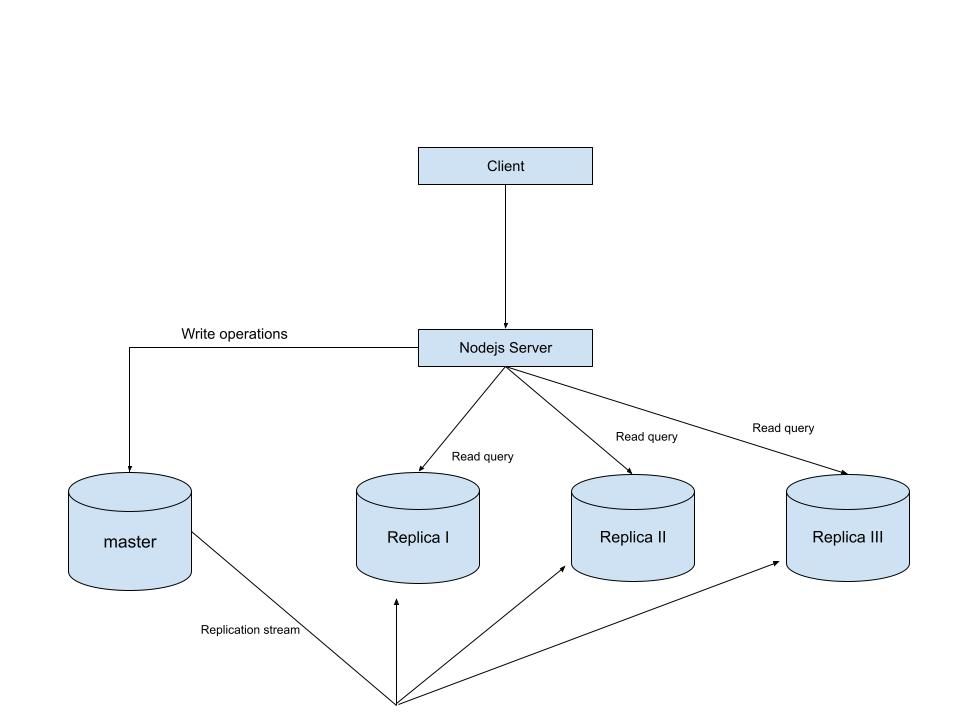
MySQL Single Leader Replication with Node.js and Docker

MySQL Single Leader Replication with Node.js and Docker

Modern applications demand high availability and the ability to scale reads without compromising performance. One of the most common strategies to achieve this is Replication. In this setup, we configured a single database to act as the leader (master) and handle all write operations, while three replicas handle read operations. In this article, we’ll walk through how to set up MySQL single-leader replication on your local machine using Docker. Once the replication is working, we’ll connect it to a Node.js application using Sequelize ORM, so that reads are routed to the replica and writes go to the master. By the end, you’ll have a working environment where you can see replication in real time Prerequisites knowledge of database replication Background knowledge of docker and docker compose Background knowledge of Nodejs and how to run a NodeJS server An Overview of what we are building Setup Setup our database servers on docker compose in the root of our project directory, create a file named docker-compose.yml with the following content to setup our mysql primary and replica databases. \ \ name: "learn-replica" volumes: mysqlMasterDatabase: mysqlSlaveDatabase: mysqlSlaveDatabaseII: mysqlSlaveDatabaseIII: networks: mysql-replication-network: services: mysql-master: image: mysql:latest container_name: mysql-master command: --server-id=1 --log-bin=ON environment: MYSQL_ROOT_PASSWORD: master MYSQL_DATABASE: replicaDb ports: - "3306:3306" volumes: - mysqlMasterDatabase:/var/lib/mysql networks: - mysql-replication-network mysql-slave: image: mysql:latest container_name: mysql-slave command: --server-id=2 --log-bin=ON environment: MYSQL_ROOT_PASSWORD: slave MYSQL_DATABASE: replicaDb MYSQL_ROOT_HOST: "%" ports: - "3307:3306" volumes: - mysqlSlaveDatabase:/var/lib/mysql depends_on: - mysql-master networks: - mysql-replication-network mysql-slaveII: image: mysql:latest container_name: mysql-slaveII command: --server-id=2 --log-bin=ON environment: MYSQL_ROOT_PASSWORD: slave MYSQL_DATABASE: replicaDb MYSQL_ROOT_HOST: "%" ports: - "3308:3306" volumes: - mysqlSlaveDatabaseII:/var/lib/mysql depends_on: - mysql-master networks: - mysql-replication-network mysql-slaveIII: image: mysql:latest container_name: mysql-slaveIII command: --server-id=3 --log-bin=ON environment: MYSQL_ROOT_PASSWORD: slave MYSQL_DATABASE: replicaDb MYSQL_ROOT_HOST: "%" ports: - "3309:3306" volumes: - mysqlSlaveDatabaseIII:/var/lib/mysql depends_on: - mysql-master networks: - mysql-replication-network In this setup, I’m creating a master database container called mysql-master and 3 replica containers called mysql-slave, mysql-slaveII and mysql-slaveIII. I won’t go too deep into the docker-compose.yml file since it’s just a basic setup, but I do want to walk you through the command line instructions used in all four services because that’s where things get interesting.
command: --server-id=1 --log-bin=ON The --server-id option gives each MySQL server in your replication setup its own name tag. Each one has to be unique and without it, replication won’t work at all. Another cool option not included here is binlog_format=ROW. This tells MySQL how to keep track of changes before passing them along to the replicas. By default, MySQL already uses row-based replication, but you can explicitly set it to ROW to be sure or switch it to STATEMENT if you’d rather log the actual SQL statements instead of row-by-row changes. \ Run our containers on docker Now, in the terminal, we can run the following command to spin up our database containers: docker-compose up -d \ Setting Up Our Master (Primary) Server To configure our master server, we would have to first access the running instance on docker using the following command docker exec -it mysql-master bash This command opens an interactive Bash shell inside the running Docker container named mysql-master, allowing us to run commands directly inside that container. \ Now that we’re inside the container, we can access the MySQL server and start running commands. type: mysql -uroot -p This will log you into MySQL as the root user. You’ll be prompted to enter the password you set in your docker-compose.yml file. \ Next, we need to create a special user that our replicas will use to connect to the master server and pull data. Inside the MySQL prompt, run the following commands: \ CREATE USER 'repl_user'@'%' IDENTIFIED BY 'replication_pass'; GRANT REPLICATION SLAVE ON . TO 'repl_user'@'%'; FLUSH PRIVILEGES; Here’s what’s happening: CREATE USER makes a new MySQL user called repl_user with the password replication_pass. GRANT REPLICATION SLAVE gives this user permission to act as a replication client. FLUSH PRIVILEGES tells MySQL to reload the user permissions so they take effect immediately. \ Time to Configure the Replica (Secondary) Servers a. First, let’s access the replica containers the same way we did with the master. Run this command in your terminal for each of the replica containers: \ docker exec -it <replica_container_name> bash mysql -uroot -p <replica_container_name> should be replace with the name of the replica container you are trying to setup b. Now it’s time to tell our replica where to get its data from. While inside the replica’s MySQL shell, run the following command to configure replication using the master’s details: CHANGE REPLICATION SOURCE TO SOURCE_HOST='mysql-master', SOURCE_USER='repl_user', SOURCE_PASSWORD='replication_pass', GET_SOURCE_PUBLIC_KEY=1; With the replication settings in place, let’s fire up the replica and get it syncing with the master. Still inside the MySQL shell on the replica, run: START REPLICA; This starts the replication process. To make sure everything is working, check the replica’s status with:
SHOW REPLICA STATUS\G; Look for Replica_IO_Running and Replica_SQL_Running — if both say Yes, congratulations! 🎉 Your replica is now successfully connected to the master and replicating data in real time.
Testing Our Replication Setup from the Node.js App Now that our replication is successfully set up, we can configure our Node.js server to observe the real-time effect of data being replicated from the master server to the replica server whenever we write to it. We start by installing the following dependencies:
npm i express mysql2 sequelize \ Now create a folder called src in the root directory and add the following files inside that folder connection.js, index.js and model.js. Our current directory should look like this We can now set up our connections to our master and replica server in the connection.js file as shown below
const Sequelize = require("sequelize"); const sequelize = new Sequelize({ dialect: "mysql", replication: { write: { host: "127.0.0.1", username: "root", password: "master", database: "replicaDb", }, read: [ { host: "127.0.0.1", username: "root", password: "slave", database: "replicaDb", port: 3307 }, { host: "127.0.0.1", username: "root", password: "slave", database: "replicaDb", port: 3308 }, { host: "127.0.0.1", username: "root", password: "slave", database: "replicaDb", port: 3309 }, ], }, }); async function connectdb() { try { await sequelize.authenticate(); } catch (error) { console.error("❌ unable to connect to the follower database", error); } } connectdb(); module.exports = { sequelize, }; \ We can now create a User table in the model.js file
const {DataTypes} = require("sequelize"); const { sequelize } = require("./connection"); const User = sequelize.define("User", { name: { type: DataTypes.STRING, allowNull: false, }, email: { type: DataTypes.STRING, unique: true, allowNull: false, }, }); module.exports = User \ and finally in our index.js file we can start our server and listen for connections on port 3000. from the code sample below, all inserts or updates will be routed by sequelize to the master server. while all read queries will be routed to the read replicas.
const express = require("express"); const { sequelize } = require("./connection"); const User = require("./model"); const app = express(); app.use(express.json()); async function main() { await sequelize.sync({ alter: true }); app.get("/", (req, res) => { res.status(200).json({ message: "first step to setting server up", }); }); app.post("/user", async (req, res) => { const { email, name } = req.body; let newUser = await User.build({ name, email, }); // This INSERT will go to the write (master) connection newUser = newUser.save({ returning: false }); res.status(201).json({ message: "User successfully created", }); }); app.get("/user", async (req, res) => { // This SELECT query will go to one of the read replicas const users = await User.findAll(); res.status(200).json(users); }); app.listen(3000, () => { console.log("server has connected"); }); } main(); When you make a POST request to the /users endpoint, take a moment to check both the master and replica servers to observe how data is replicated in real time. Right now, we are relying on Sequelize to automatically route requests, which works for development but isn’t robust enough for a production environment. In particular, if the master node goes down, Sequelize cannot automatically redirect requests to a newly elected leader. In the next part of this series, we’ll explore strategies to handle these challenges
Share
Hackernoon2025/09/18 14:44
Robinhood: Investors Are Looking Beyond BTC

Robinhood: Investors Are Looking Beyond BTC

The post Robinhood: Investors Are Looking Beyond BTC appeared on BitcoinEthereumNews.com. Investors Diversifying Beyond BTC and ETH Robinhood’s crypto division
Share
BitcoinEthereumNews2026/02/24 08:32