The crypto market has fears of a tech-driven bubble, causing volatility across major assets. This environment has redirected investors toward early-stage opportunities, particularly the presale token category, where high-utility projects still show strong momentum. Within this shift, Blazpay has emerged as one of the best crypto presales to watch in 2025, while Flow (FLOW) and […] The post Top Presale Token of 2025: Blazpay Surges While Flow & WAXP Gain Attention in The Market  appeared first on TechBullion.The crypto market has fears of a tech-driven bubble, causing volatility across major assets. This environment has redirected investors toward early-stage opportunities, particularly the presale token category, where high-utility projects still show strong momentum. Within this shift, Blazpay has emerged as one of the best crypto presales to watch in 2025, while Flow (FLOW) and […] The post Top Presale Token of 2025: Blazpay Surges While Flow & WAXP Gain Attention in The Market  appeared first on TechBullion.

Top Presale Token of 2025: Blazpay Surges While Flow & WAXP Gain Attention in The Market

2025/11/26 14:30
5 min read

The crypto market has fears of a tech-driven bubble, causing volatility across major assets. This environment has redirected investors toward early-stage opportunities, particularly the presale token category, where high-utility projects still show strong momentum. Within this shift, Blazpay has emerged as one of the best crypto presales to watch in 2025, while Flow (FLOW) and WAXP (WAX) prepare for potential rebounds.

As large-cap assets lose traction, investors searching for the best coin to buy now increasingly focus on presale tokens with real utilities, reward systems, and measurable growth. Blazpay continues to dominate attention in this sector, especially as its Phase 4 rapidly progresses.

Blazpay Presale Phase 4 – The Fastest-Growing Crypto Presale Token 

Blazpay’s Phase 4 is now 78.2% complete with 192.08M BLAZ tokens sold and over $1.51M raised. The current presale price is $0.01175, scheduled to increase soon to $0.0146875 once the remaining supply is filled. This makes it a time-sensitive entry point for anyone looking for the best coin to buy now within the presale market.

What sets Blazpay apart is its multi-chain functionality, unified services, and strong community traction. While other crypto presales focus on single utilities, Blazpay’s ecosystem integrates spending, swapping, wallets, tasks, and AI-enhanced tools in one unified platform.

Gamified Rewards and Multichain Expansion

Blazpay’s architecture is designed to operate across multiple chains, allowing users to transact and earn rewards without friction. The platform uses a gamified progression model where users can level up, unlock bonuses, and earn tokens as they complete activities. This model increases user retention and positions Blazpay as one of the best crypto presales for long-term engagement.

The multi-chain framework ensures users can access low-fee networks, integrate wallets easily, and move assets with minimal delays. This blend of performance and incentives is why Blazpay continues to rise even as the broader market experiences corrections.

Blazpay Referral Program – Earn Extra BLAZ While You Buy

Blazpay’s referral system allows every investor to earn additional BLAZ by sharing their link within the community. Each successful purchase through that link provides instant rewards. This system is helping the presale expand rapidly and keeps Blazpay positioned as one of the strongest presale token ecosystems during the current downturn.

Blazpay Price Prediction for 2025–2026

Because Blazpay combines utilities, multi-chain execution, and reward systems, analysts believe it may outperform many other presale launches. If current momentum holds, Blazpay could range between $0.08 and $0.12 in early 2025, with the possibility of reaching $0.20–$0.32 by late 2026, depending on exchange liquidity and user adoption.

Blazpay $2000 Strategy – Maximizing Accumulation Before Listing

A strategic $2000 entry into Blazpay during Phase 4 can be optimized through early accumulation before the next price jump. Allocating the full amount at $0.01175 allows buyers to secure one of the lowest possible entry points before the presale supply tightens. Holding the allocation through exchange listings and early volatility provides an opportunity for significant upward movement once real utility launches.

Flow (FLOW) – Highlights for a Network Preparing Its Comeback

Flow remains widely followed due to its strong developer ecosystem, NFT-focused infrastructure, and scalable architecture. In a market downturn, Layer-1 networks with active development cycles often become ideal long-term watchlist additions. This keeps FLOW relevant for investors seeking the best coin to buy now outside the presale sector.

WAXP – Powering the Web3 Gaming and NFT Revolution

WAXP continues to stand out as a leading network for Web3 gaming and NFT activity. Its ecosystem remains highly active, supporting seamless transactions, digital collectibles, and innovative gaming experiences. Even amid broader market slowdowns, WAXP maintains strong engagement, making it a key player for users and developers seeking a dynamic, utility-driven blockchain environment.

Comparative Breakdown – Blazpay, Flow And WAXP

Blazpay leads the presale token landscape because of its multi-chain system, gamified structure, and high user engagement before launch. Flow continues to appeal to developers and NFT ecosystem participants, while WAX maintains strong adoption across gaming and Web3 marketplaces.

Together they represent three unique growth paths: early-stage presale momentum with Blazpay, infrastructure-powered rebound potential with Flow, and high-transaction gaming utility with WAXP.

How to Buy BLAZ – Simple Step-Based Guide

  1. Visit the official Blazpay presale website.
  2. Connect your crypto wallet through MetaMask, Trust Wallet, or another supported provider.
  3. Select the cryptocurrency you want to use for the purchase.
  4. Enter the amount of BLAZ tokens you want to buy.
  5. Confirm the transaction through your wallet and wait for network processing.

Conclusion

Blazpay stands out as the most promising presale token in the current market environment. While Flow and WAXP remain valuable assets with strong ecosystems, the highest upside presently comes from early-stage accumulation in Blazpay’s Phase 4 presale.

With multi-chain support, AI-driven tools, and reward-based participation, Blazpay continues to position itself as one of the best crypto presales of 2025 and a strong candidate for anyone searching for the best coin to buy now.

Join the Blazpay Community

 Website: www.blazpay.com 

Twitter: @blazpaylabs

Telegram: t.me/blazpay

FAQs

Q1. What is the best presale token to buy now?
Blazpay currently leads as the strongest presale token due to its utility, price momentum, and multi-chain expansion.

Q2. Is Flow a good investment during a market downturn?
Flow remains a strong long-term watchlist project due to its developer ecosystem and NFT infrastructure.

Q3. Why is WAXP gaining attention again?
WAXP’s active gaming and NFT ecosystem keeps it relevant even during bearish cycles.

Q4. Does the market downturn affect presale tokens?
Presale tokens often grow during downturns because they offer early-stage entry points not yet influenced by exchange volatility.

Comments
Market Opportunity
TOP Network Logo
TOP Network Price(TOP)
$0.0000958
$0.0000958$0.0000958
0.00%
USD
TOP Network (TOP) Live Price Chart
Disclaimer: The articles reposted on this site are sourced from public platforms and are provided for informational purposes only. They do not necessarily reflect the views of MEXC. All rights remain with the original authors. If you believe any content infringes on third-party rights, please contact [email protected] for removal. MEXC makes no guarantees regarding the accuracy, completeness, or timeliness of the content and is not responsible for any actions taken based on the information provided. The content does not constitute financial, legal, or other professional advice, nor should it be considered a recommendation or endorsement by MEXC.
Tags:

You May Also Like

The Stunning ASEAN Winner Emerges As Manufacturing Shifts Accelerate

The Stunning ASEAN Winner Emerges As Manufacturing Shifts Accelerate

The post The Stunning ASEAN Winner Emerges As Manufacturing Shifts Accelerate appeared on BitcoinEthereumNews.com. Vietnam US Tariffs: The Stunning ASEAN Winner
Share
BitcoinEthereumNews2026/02/24 08:20
MySQL Single Leader Replication with Node.js and Docker

MySQL Single Leader Replication with Node.js and Docker

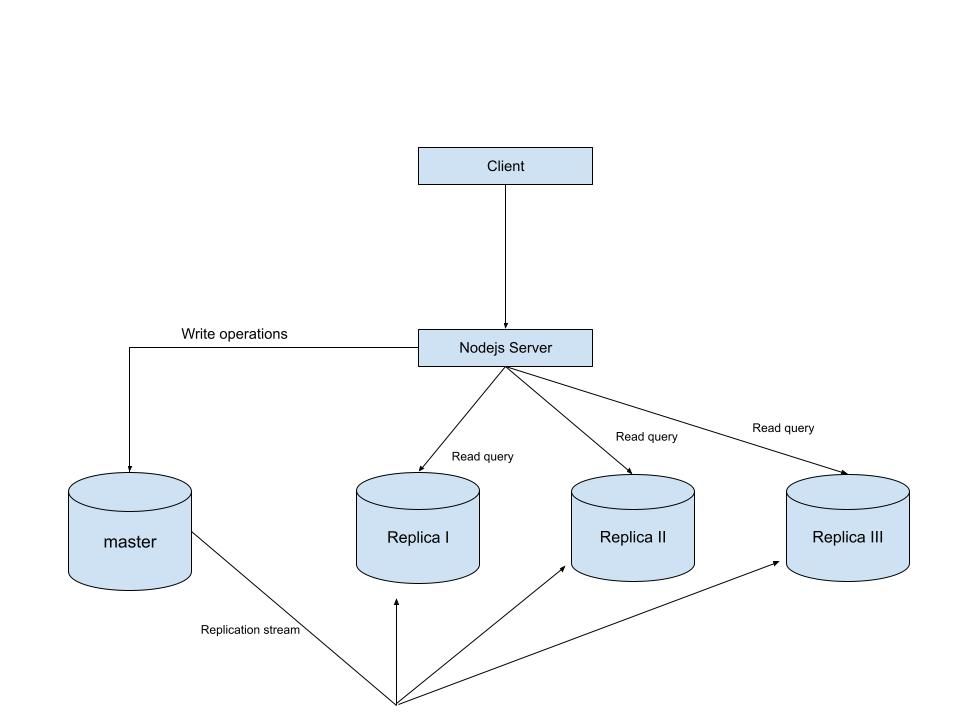
Modern applications demand high availability and the ability to scale reads without compromising performance. One of the most common strategies to achieve this is Replication. In this setup, we configured a single database to act as the leader (master) and handle all write operations, while three replicas handle read operations. In this article, we’ll walk through how to set up MySQL single-leader replication on your local machine using Docker. Once the replication is working, we’ll connect it to a Node.js application using Sequelize ORM, so that reads are routed to the replica and writes go to the master. By the end, you’ll have a working environment where you can see replication in real time Prerequisites knowledge of database replication Background knowledge of docker and docker compose Background knowledge of Nodejs and how to run a NodeJS server An Overview of what we are building Setup Setup our database servers on docker compose in the root of our project directory, create a file named docker-compose.yml with the following content to setup our mysql primary and replica databases. \ \ name: "learn-replica" volumes: mysqlMasterDatabase: mysqlSlaveDatabase: mysqlSlaveDatabaseII: mysqlSlaveDatabaseIII: networks: mysql-replication-network: services: mysql-master: image: mysql:latest container_name: mysql-master command: --server-id=1 --log-bin=ON environment: MYSQL_ROOT_PASSWORD: master MYSQL_DATABASE: replicaDb ports: - "3306:3306" volumes: - mysqlMasterDatabase:/var/lib/mysql networks: - mysql-replication-network mysql-slave: image: mysql:latest container_name: mysql-slave command: --server-id=2 --log-bin=ON environment: MYSQL_ROOT_PASSWORD: slave MYSQL_DATABASE: replicaDb MYSQL_ROOT_HOST: "%" ports: - "3307:3306" volumes: - mysqlSlaveDatabase:/var/lib/mysql depends_on: - mysql-master networks: - mysql-replication-network mysql-slaveII: image: mysql:latest container_name: mysql-slaveII command: --server-id=2 --log-bin=ON environment: MYSQL_ROOT_PASSWORD: slave MYSQL_DATABASE: replicaDb MYSQL_ROOT_HOST: "%" ports: - "3308:3306" volumes: - mysqlSlaveDatabaseII:/var/lib/mysql depends_on: - mysql-master networks: - mysql-replication-network mysql-slaveIII: image: mysql:latest container_name: mysql-slaveIII command: --server-id=3 --log-bin=ON environment: MYSQL_ROOT_PASSWORD: slave MYSQL_DATABASE: replicaDb MYSQL_ROOT_HOST: "%" ports: - "3309:3306" volumes: - mysqlSlaveDatabaseIII:/var/lib/mysql depends_on: - mysql-master networks: - mysql-replication-network In this setup, I’m creating a master database container called mysql-master and 3 replica containers called mysql-slave, mysql-slaveII and mysql-slaveIII. I won’t go too deep into the docker-compose.yml file since it’s just a basic setup, but I do want to walk you through the command line instructions used in all four services because that’s where things get interesting.
command: --server-id=1 --log-bin=ON The --server-id option gives each MySQL server in your replication setup its own name tag. Each one has to be unique and without it, replication won’t work at all. Another cool option not included here is binlog_format=ROW. This tells MySQL how to keep track of changes before passing them along to the replicas. By default, MySQL already uses row-based replication, but you can explicitly set it to ROW to be sure or switch it to STATEMENT if you’d rather log the actual SQL statements instead of row-by-row changes. \ Run our containers on docker Now, in the terminal, we can run the following command to spin up our database containers: docker-compose up -d \ Setting Up Our Master (Primary) Server To configure our master server, we would have to first access the running instance on docker using the following command docker exec -it mysql-master bash This command opens an interactive Bash shell inside the running Docker container named mysql-master, allowing us to run commands directly inside that container. \ Now that we’re inside the container, we can access the MySQL server and start running commands. type: mysql -uroot -p This will log you into MySQL as the root user. You’ll be prompted to enter the password you set in your docker-compose.yml file. \ Next, we need to create a special user that our replicas will use to connect to the master server and pull data. Inside the MySQL prompt, run the following commands: \ CREATE USER 'repl_user'@'%' IDENTIFIED BY 'replication_pass'; GRANT REPLICATION SLAVE ON . TO 'repl_user'@'%'; FLUSH PRIVILEGES; Here’s what’s happening: CREATE USER makes a new MySQL user called repl_user with the password replication_pass. GRANT REPLICATION SLAVE gives this user permission to act as a replication client. FLUSH PRIVILEGES tells MySQL to reload the user permissions so they take effect immediately. \ Time to Configure the Replica (Secondary) Servers a. First, let’s access the replica containers the same way we did with the master. Run this command in your terminal for each of the replica containers: \ docker exec -it <replica_container_name> bash mysql -uroot -p <replica_container_name> should be replace with the name of the replica container you are trying to setup b. Now it’s time to tell our replica where to get its data from. While inside the replica’s MySQL shell, run the following command to configure replication using the master’s details: CHANGE REPLICATION SOURCE TO SOURCE_HOST='mysql-master', SOURCE_USER='repl_user', SOURCE_PASSWORD='replication_pass', GET_SOURCE_PUBLIC_KEY=1; With the replication settings in place, let’s fire up the replica and get it syncing with the master. Still inside the MySQL shell on the replica, run: START REPLICA; This starts the replication process. To make sure everything is working, check the replica’s status with:
SHOW REPLICA STATUS\G; Look for Replica_IO_Running and Replica_SQL_Running — if both say Yes, congratulations! 🎉 Your replica is now successfully connected to the master and replicating data in real time.
Testing Our Replication Setup from the Node.js App Now that our replication is successfully set up, we can configure our Node.js server to observe the real-time effect of data being replicated from the master server to the replica server whenever we write to it. We start by installing the following dependencies:
npm i express mysql2 sequelize \ Now create a folder called src in the root directory and add the following files inside that folder connection.js, index.js and model.js. Our current directory should look like this We can now set up our connections to our master and replica server in the connection.js file as shown below
const Sequelize = require("sequelize"); const sequelize = new Sequelize({ dialect: "mysql", replication: { write: { host: "127.0.0.1", username: "root", password: "master", database: "replicaDb", }, read: [ { host: "127.0.0.1", username: "root", password: "slave", database: "replicaDb", port: 3307 }, { host: "127.0.0.1", username: "root", password: "slave", database: "replicaDb", port: 3308 }, { host: "127.0.0.1", username: "root", password: "slave", database: "replicaDb", port: 3309 }, ], }, }); async function connectdb() { try { await sequelize.authenticate(); } catch (error) { console.error("❌ unable to connect to the follower database", error); } } connectdb(); module.exports = { sequelize, }; \ We can now create a User table in the model.js file
const {DataTypes} = require("sequelize"); const { sequelize } = require("./connection"); const User = sequelize.define("User", { name: { type: DataTypes.STRING, allowNull: false, }, email: { type: DataTypes.STRING, unique: true, allowNull: false, }, }); module.exports = User \ and finally in our index.js file we can start our server and listen for connections on port 3000. from the code sample below, all inserts or updates will be routed by sequelize to the master server. while all read queries will be routed to the read replicas.
const express = require("express"); const { sequelize } = require("./connection"); const User = require("./model"); const app = express(); app.use(express.json()); async function main() { await sequelize.sync({ alter: true }); app.get("/", (req, res) => { res.status(200).json({ message: "first step to setting server up", }); }); app.post("/user", async (req, res) => { const { email, name } = req.body; let newUser = await User.build({ name, email, }); // This INSERT will go to the write (master) connection newUser = newUser.save({ returning: false }); res.status(201).json({ message: "User successfully created", }); }); app.get("/user", async (req, res) => { // This SELECT query will go to one of the read replicas const users = await User.findAll(); res.status(200).json(users); }); app.listen(3000, () => { console.log("server has connected"); }); } main(); When you make a POST request to the /users endpoint, take a moment to check both the master and replica servers to observe how data is replicated in real time. Right now, we are relying on Sequelize to automatically route requests, which works for development but isn’t robust enough for a production environment. In particular, if the master node goes down, Sequelize cannot automatically redirect requests to a newly elected leader. In the next part of this series, we’ll explore strategies to handle these challenges
Share
Hackernoon2025/09/18 14:44
Robinhood: Investors Are Looking Beyond BTC

Robinhood: Investors Are Looking Beyond BTC

The post Robinhood: Investors Are Looking Beyond BTC appeared on BitcoinEthereumNews.com. Investors Diversifying Beyond BTC and ETH Robinhood’s crypto division
Share
BitcoinEthereumNews2026/02/24 08:32