

Algorand price prediction 2026-2032: Is a resurgence possible?
Key takeaways:
- Our Algorand price prediction indicates a high of $0.1890 in 2026.
- In 2028, ALGO will range between $0.1789 and $0.2182, with an average price of $0.1853.
- In 2030, it will range between $0.5652 and $0.6750, with an average price of $0.5854.
Algorand’s capabilities make it an interesting prospect for investors and developers interested in smart contracts and blockchain interoperability.
Will ALGO go up? Can it reach $10? Where will ALGO be in 5 years? We explore these and more in our Cryptopolitan price prediction.
Overview
| Cryptocurrency | Algorand |
| Symbol | ALGO |
| Current Algorand price | $01345 |
| Market cap | $1.18B |
| Trading volume | $47.25M |
| Circulating supply | 8.83B |
| All-time high | $3.28 on Jun 21, 2019 |
| All-time low | $0.08761 on Sep 11, 2023 |
| 24-hour high | $0.1387 |
| 24-hour low | $0.1334 |
Algorand price prediction: Technical analysis
| Metric | Value |
| Volatility (30-day variation) | 7.11% |
| 50-day SMA | $0.1322 |
| 200-day SMA | $0.1935 |
| Sentiment | Bearish |
| Green days | 14/30 (47%) |
| Fear and Greed Index | 26 (Fear) |
Algorand price analysis
On January 5, ALGO was green, rising 0.72% in 24 hours and 2.57% in 30 days. Its trading volume rose by 30.90% to $49.01M, signaling renewed trading interest.
Algorand 1-day chart analysis
 ALGOUSD chart by TradingView
ALGO started recovering this year after testing support levels at $0.10. The trend corresponds with the broader market and Bitcoin, which rose above 90K. Its relative strength index (61.22) shows a bullish market following a rebound from oversold territory last month.
Algorand 4-hour chart analysis
 ALGOUSD chart by TradingView
The 4-hour chart highlights ALGO’s run this week after bouncing off support levels. The $0.14 level remains critical to whether it will rise further. The William Alligator trendlines indicate rising volatility, with positive market momentum in play.
Algorand technical indicators: Levels and action
Daily simple moving average (SMA)
| Period | Value ($) | Action |
| SMA 3 | 0.1659 | SELL |
| SMA 5 | 0.1510 | SELL |
| SMA 10 | 0.1365 | SELL |
| SMA 21 | 0.1243 | BUY |
| SMA 50 | 0.1322 | BUY |
| SMA 100 | 0.1590 | SELL |
| SMA 200 | 0.1935 | SELL |
Daily exponential moving average (EMA)
| Period | Value ($) | Action |
| EMA 3 | 0.1228 | BUY |
| EMA 5 | 0.1317 | BUY |
| EMA 10 | 0.1545 | SELL |
| EMA 21 | 0.1867 | SELL |
| EMA 50 | 0.2154 | SELL |
| EMA 100 | 0.2228 | SELL |
| EMA 200 | 0.2266 | SELL |
What to expect from the Algorand price analysis next?
According to our technical indicators, ALGO is bearish, with the fear and greed index indicating a fear sentiment among investors. The charts show that the price drop has slowed, and its volatility is rising.
Why is Algorand up?
Traders are accumulating ALGO as a high-beta play ahead of potential Bitcoin dominance declines – though BTC remains firmly in control at 58.7% market share.
Will ALGO reach $1?
Per our Algorand price forecast, ALGO will break above $1 in the period ending in 2032.
Can Algorand reach $10?
Per our Cryptopolitan price prediction, ALGO will not break above $10 in the period ending in 2032.
Can Algorand reach $20?
According to our Cryptopolitan price prediction, it remains improbable for ALGO to break above $20 by the end of 2032.
Can ALGO reach 100 dollars?
At $100, Algorand’s market capitalization must rise above $700 billion from its current $1.2 billion. In comparison, Ethereum’s market capitalization is at $380 billion. Per our price prediction, Algorand is highly unlikely to reach $100.
Is there a future for Algorand?
Like most mega-altcoins, Algorand is trading at its lowest level this year. A break below 30 RSI will be crucial to sending it to previous highs. Looking ahead, ALGO will register new all-time highs in the coming years.
What will Algorand be worth in 2026?
For 2026, ALGO’s price will range between $0.1148 and $0.1890. The average price for the period will be $0.1567.
Is ALGO a good investment?
Analysis by Intotheblock shows that 97% of holders are in the red at the current price. The figure will likely drop lower in the short term. However, as our Cryptopolitan price prediction shows, this will change over the long term.
Recent news
Recent integrations with Google’s Agent Payments Protocol (AP2) and FIFA’s blockchain gaming shift to Avalanche (from ALGO) create conflicting narratives. However, the July 2025 roadmap rollout (developer tools, quantum security) and Wormhole-powered cross-chain bridges are attracting DeFi builders.
ALGO price prediction January 2026
The Algorand network price forecast for January is a maximum price of $0.1510 and a minimum price of $0.1201. The average price for the month will be $0.1355.
| Month | Potential low ($) | Potential average ($) | Potential high ($) |
| January | 0.1201 | 0.1355 | 0.1510 |
Algorand price prediction 2026
For 2026, ALGO’s price will range between $0.1148 and $0.1890. The average price for the period will be $0.1567.
| Year | Potential low ($) | Potential average ($) | Potential high ($) |
| 2026 | 0.1148 | 0.1567 | 0.1890 |
Algorand price prediction 2027-2032
| Year | Potential low ($) | Potential average ($) | Potential high ($) |
| 2027 | 0.1789 | 0.1853 | 0.2182 |
| 2028 | 0.2698 | 0.2773 | 0.3126 |
| 2029 | 0.3918 | 0.4029 | 0.4661 |
| 2030 | 0.5652 | 0.5854 | 0.6750 |
| 2031 | 0.8189 | 0.8423 | 0.9796 |
| 2032 | 1.1900 | 1.2200 | 1.4000 |
Algorand price prediction 2027
Algorand prediction climbs even higher into 2027. According to the prediction, ALGO’s price will range between $0.1789 and $0.2182, with an average price of $0.1853.
Algorand price prediction 2028
Our analysis indicates a further acceleration in ALGO’s price. It will trade between $0.2698 and $0.3126, with an average closing price of $0.2773.
Algorand price prediction 2029
According to the ALGO price prediction for 2029, the price of ALGO will range from $0.3918 to $0.4661, with an average price of $0.4029.
ALGO price prediction 2030
The ALGO price prediction for 2030 indicates the price will range between $0.5652 and $0.6750. The average price of ALGO will be $0.5854.
Algorand ALGO price prediction 2031
The ALGO price forecast for 2031 is a high of $0.9796. It will reach a minimum price of $0.8189 and average at $0.8423.
Algorand price prediction 2032
The year 2032 will experience more bullish momentum. Our Algorand price prediction estimates it will range between $1.1900 and $1.4000, with an average price of $1.2200.
 Algorand price prediction 2026-2032
Algorand market price prediction: Analysts’ ALGO price forecast
| Platform | 2026 | 2027 | 2028 |
| Digitalcoinprice | $0.21 | $0.30 | $0.41 |
| Coincodex | $0.25 | $0.22 | $0.26 |
| Gate.com | $0.13 | $0.15 | $0.16 |
Cryptopolitan’s Algorand price prediction
Our predictions indicate that ALGO will achieve a high of $0.19 in 2026. In 2028, it will range between $0.27 and $0.31, with an average of $0.28. In 2030, it will range between $1.04 and $1.23, with an average price of $1.07. Note that the predictions are not investment advice. Seek independent professional consultation or do your research.
Algorand historic price sentiment
 Algorand price history by CoinGecko
- Algorand conducted its token sale in June 2019 at $2.40 per token.
- Union Square Ventures, Lemniscap, and NGC Ventures, among others, held earlier funding rounds. The public sale raised $60.40 million, while funding rounds raised $66 million.
- Token sale participants who held their tokens since launch are down 90%.
- Binance listed ALGO on 21 June 2019. According to CoinMarketCap data, it pumped after the listing to reach its all-time high (ATH) at $3.28.
- ALGO later crashed; four months later, it was down 90% from its ATH.
- In July 2021, Coinbase listed the ALGO token. As a result, it gradually recovered and peaked at $0.64 in August.
- In retrospect, 2021 was the golden year for the crypto market. The emergence of NFTs, DeFi growth, and institutional interest drove growth.
- In 2021, it rose from a low of $0.32 in January to $2.30 in October, a 200% gain.
- Nothing prepared crypto enthusiasts for the 2023 crypto winter, which worsened with the FTX crash. The year closed with ALGO trading at $0.23.
- The decline continued through 2023, registering an all-time low at $0.0876 in September.
- The market’s recovery began in October. By the end of the year, it had risen above $0.2.
- It began recovering in November from a low of $0.12, rising as high as $0.61 in December.
- It then corrected into 2025 below the $0.40 mark in January and $0.35 in February. It crossed into October, trading at $0.22.
- The coin later nosedived, and by December, it had dropped to $0.14. It remained at this level into January 2026.
You May Also Like

The Stunning ASEAN Winner Emerges As Manufacturing Shifts Accelerate
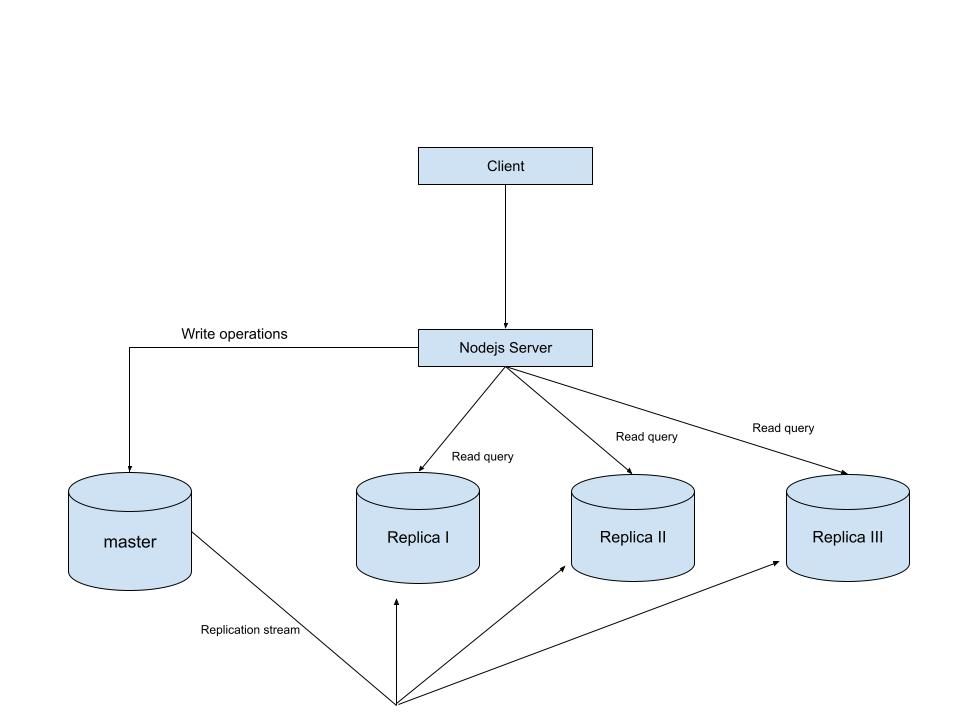
MySQL Single Leader Replication with Node.js and Docker
command: --server-id=1 --log-bin=ON The --server-id option gives each MySQL server in your replication setup its own name tag. Each one has to be unique and without it, replication won’t work at all. Another cool option not included here is binlog_format=ROW. This tells MySQL how to keep track of changes before passing them along to the replicas. By default, MySQL already uses row-based replication, but you can explicitly set it to ROW to be sure or switch it to STATEMENT if you’d rather log the actual SQL statements instead of row-by-row changes. \ Run our containers on docker Now, in the terminal, we can run the following command to spin up our database containers: docker-compose up -d \ Setting Up Our Master (Primary) Server To configure our master server, we would have to first access the running instance on docker using the following command docker exec -it mysql-master bash This command opens an interactive Bash shell inside the running Docker container named mysql-master, allowing us to run commands directly inside that container. \ Now that we’re inside the container, we can access the MySQL server and start running commands. type: mysql -uroot -p This will log you into MySQL as the root user. You’ll be prompted to enter the password you set in your docker-compose.yml file. \ Next, we need to create a special user that our replicas will use to connect to the master server and pull data. Inside the MySQL prompt, run the following commands: \ CREATE USER 'repl_user'@'%' IDENTIFIED BY 'replication_pass'; GRANT REPLICATION SLAVE ON . TO 'repl_user'@'%'; FLUSH PRIVILEGES; Here’s what’s happening: CREATE USER makes a new MySQL user called repl_user with the password replication_pass. GRANT REPLICATION SLAVE gives this user permission to act as a replication client. FLUSH PRIVILEGES tells MySQL to reload the user permissions so they take effect immediately. \ Time to Configure the Replica (Secondary) Servers a. First, let’s access the replica containers the same way we did with the master. Run this command in your terminal for each of the replica containers: \ docker exec -it <replica_container_name> bash mysql -uroot -p <replica_container_name> should be replace with the name of the replica container you are trying to setup b. Now it’s time to tell our replica where to get its data from. While inside the replica’s MySQL shell, run the following command to configure replication using the master’s details: CHANGE REPLICATION SOURCE TO SOURCE_HOST='mysql-master', SOURCE_USER='repl_user', SOURCE_PASSWORD='replication_pass', GET_SOURCE_PUBLIC_KEY=1; With the replication settings in place, let’s fire up the replica and get it syncing with the master. Still inside the MySQL shell on the replica, run: START REPLICA; This starts the replication process. To make sure everything is working, check the replica’s status with:
SHOW REPLICA STATUS\G; Look for Replica_IO_Running and Replica_SQL_Running — if both say Yes, congratulations! 🎉 Your replica is now successfully connected to the master and replicating data in real time.
Testing Our Replication Setup from the Node.js App Now that our replication is successfully set up, we can configure our Node.js server to observe the real-time effect of data being replicated from the master server to the replica server whenever we write to it. We start by installing the following dependencies:
npm i express mysql2 sequelize \ Now create a folder called src in the root directory and add the following files inside that folder connection.js, index.js and model.js. Our current directory should look like this We can now set up our connections to our master and replica server in the connection.js file as shown below
const Sequelize = require("sequelize"); const sequelize = new Sequelize({ dialect: "mysql", replication: { write: { host: "127.0.0.1", username: "root", password: "master", database: "replicaDb", }, read: [ { host: "127.0.0.1", username: "root", password: "slave", database: "replicaDb", port: 3307 }, { host: "127.0.0.1", username: "root", password: "slave", database: "replicaDb", port: 3308 }, { host: "127.0.0.1", username: "root", password: "slave", database: "replicaDb", port: 3309 }, ], }, }); async function connectdb() { try { await sequelize.authenticate(); } catch (error) { console.error("❌ unable to connect to the follower database", error); } } connectdb(); module.exports = { sequelize, }; \ We can now create a User table in the model.js file
const {DataTypes} = require("sequelize"); const { sequelize } = require("./connection"); const User = sequelize.define("User", { name: { type: DataTypes.STRING, allowNull: false, }, email: { type: DataTypes.STRING, unique: true, allowNull: false, }, }); module.exports = User \ and finally in our index.js file we can start our server and listen for connections on port 3000. from the code sample below, all inserts or updates will be routed by sequelize to the master server. while all read queries will be routed to the read replicas.
const express = require("express"); const { sequelize } = require("./connection"); const User = require("./model"); const app = express(); app.use(express.json()); async function main() { await sequelize.sync({ alter: true }); app.get("/", (req, res) => { res.status(200).json({ message: "first step to setting server up", }); }); app.post("/user", async (req, res) => { const { email, name } = req.body; let newUser = await User.build({ name, email, }); // This INSERT will go to the write (master) connection newUser = newUser.save({ returning: false }); res.status(201).json({ message: "User successfully created", }); }); app.get("/user", async (req, res) => { // This SELECT query will go to one of the read replicas const users = await User.findAll(); res.status(200).json(users); }); app.listen(3000, () => { console.log("server has connected"); }); } main(); When you make a POST request to the /users endpoint, take a moment to check both the master and replica servers to observe how data is replicated in real time. Right now, we are relying on Sequelize to automatically route requests, which works for development but isn’t robust enough for a production environment. In particular, if the master node goes down, Sequelize cannot automatically redirect requests to a newly elected leader. In the next part of this series, we’ll explore strategies to handle these challenges
