

A comprehensive exploration of the Indian crypto market: fertile ground for Web3 to achieve "eye-catching" data
Author: Tiger Research
Compiled by: Felix, PANews
TL;DR
- Key development areas for Web3 projects: India has a population of 1.4 billion (median age 28), 9.75 million developers, over 1,200 projects, and $3 billion in investment, providing the best conditions for achieving the scale required for Web3 ecosystem development
- Regulatory uncertainty is a major obstacle: including a 30% flat tax rate, a 1% withholding tax, the lack of a dedicated regulator, and complex jurisdictional issues
- Develop strategies for different stages: successful market entry requires onboarding Web3-friendly users (local language support, regional marketing), then discovering builders (partnering with local investors), and finally expanding to partnerships with governments and businesses
1. Why do you need to understand the Indian market?
New projects continue to emerge in the Web3 market, and what these projects value most is "data". Data ultimately represents the users, builders, and investors participating in the ecosystem, and many projects are working hard to create this data. Among a large number of new projects, verifiable data is particularly important for attracting attention. Asia, especially India, is a central region that can generate real and meaningful data.
India's first advantage is its young population. With a median age of about 28, India has a younger population than Indonesia (30) or Vietnam (32). This demographic group has shown a rapid acceptance and enthusiasm for new technologies. The second advantage is its large population size. India has a population of over 1.4 billion, and only about 8% of people currently hold cryptocurrencies, providing great potential for the expansion of Web3 technology. The third advantage is development capabilities. India has many excellent engineering universities and about 9.75 million developers who have demonstrated excellent development capabilities through successful Web3 projects such as Polygon.
India is the region best suited to generate the critical “data” needed today, and many projects have entered India and achieved results. However, like all regions, India also has disadvantages. Hashed Emergent, a Web3 venture capital firm based in India, has compiled an India market report, providing a “green paper” for entering the Indian market.
2. Key highlights from the Hashed Emergent report
2.1. Web3 Ecosystem
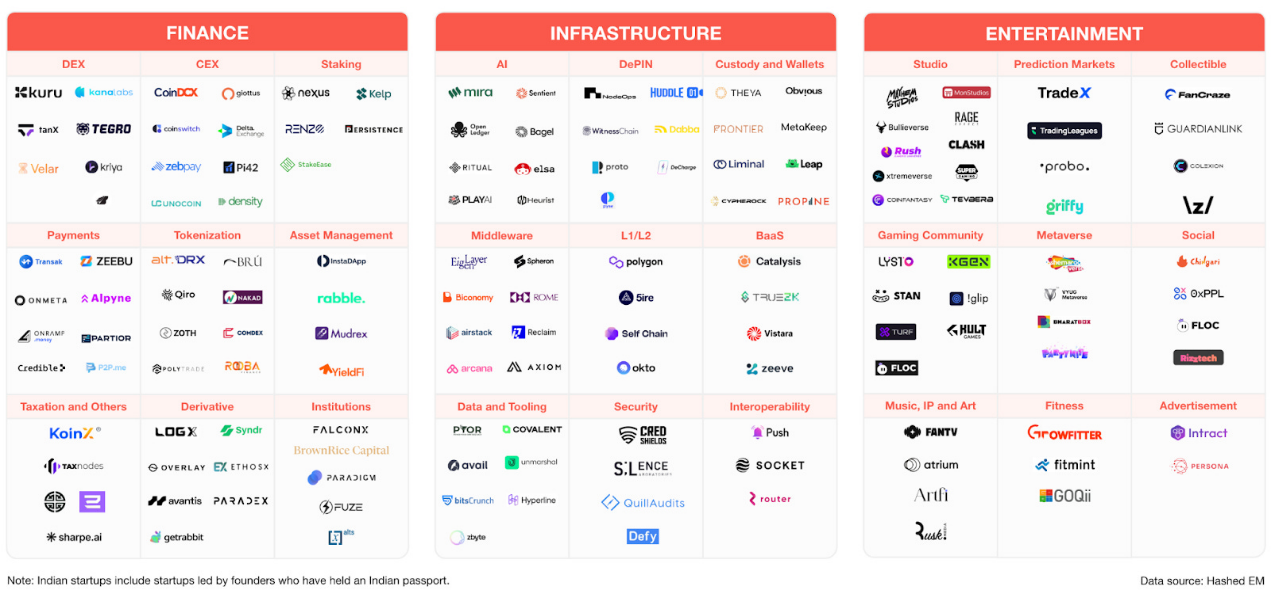
India has established an extensive Web3 ecosystem with more than 1,200 projects operating in various fields. To date, Indian Web3 startups have attracted more than $3 billion in total investment, with particularly strong growth in 2024, receiving $564 million in investment, more than double that of 2023.
By investment sector, infrastructure has the highest attraction, followed by finance. In contrast, investment in the entertainment industry has declined significantly. In the popular infrastructure sector, Indian founders who have established a foothold overseas have made significant contributions. They have developed globally competitive services such as Eigen Layer, Sentient and Avail, attracting a large amount of investment funds.
Recently, emerging fields such as DePIN and BaaS (Blockchain as a Service) have also attracted the attention of investors. These trends show that investors are actively exploring the possibility of applying decentralized technologies to various industries.
Especially for industries suitable for the AI era, AI-based infrastructure, middleware and data tools are becoming key investment areas. In the local market, major venture capital firms including Hashed Emergent and Polygon are actively involved in cultivating and investing in India's Web3 ecosystem.
2.2. Consumer and Business Adoption
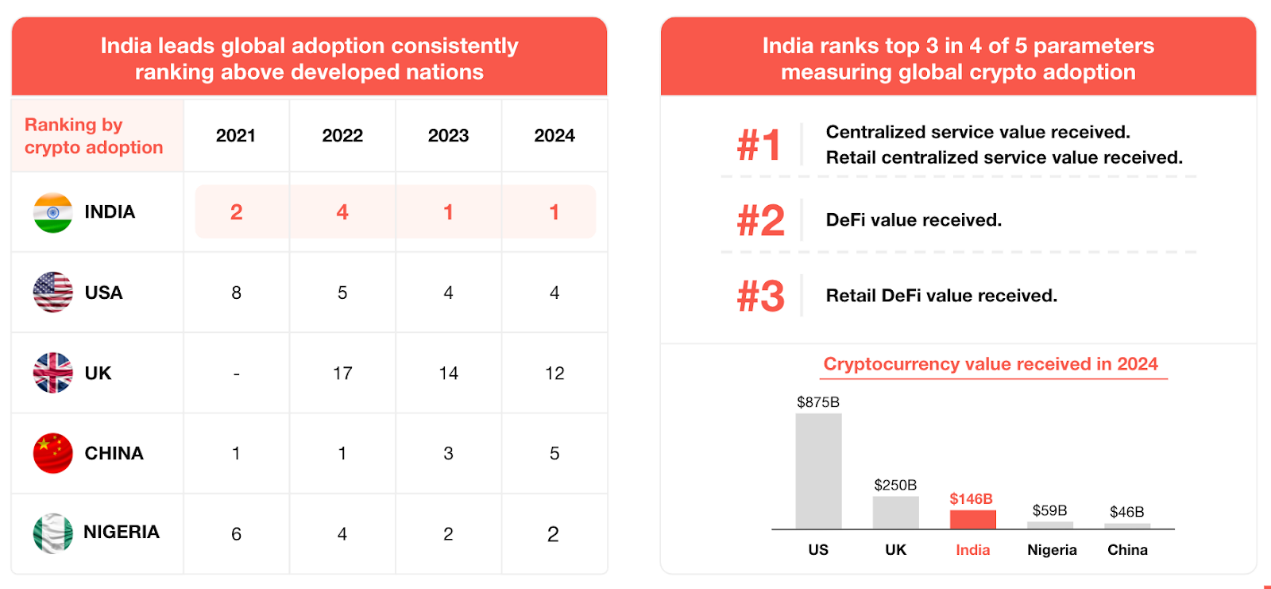
The Indian crypto investment market has shown a clear recovery trend since 2023. It ranks first in Chainalysis's cryptocurrency adoption index, scoring high in both CEX and DEX fields.
45% of retail investors’ portfolios are in blue-chip cryptocurrencies with proven stability. It is worth noting that memecoin’s trading volume has grown fivefold compared to other crypto assets. This shows that retail investors’ investment preferences are changing.
By age, people aged 27-40 dominate token investment with higher income and market awareness. It is worth noting that investors in their 40s invest three times more per capita than other age groups. Generation Z accounts for 35% of all crypto investors and plays an important role in market expansion.
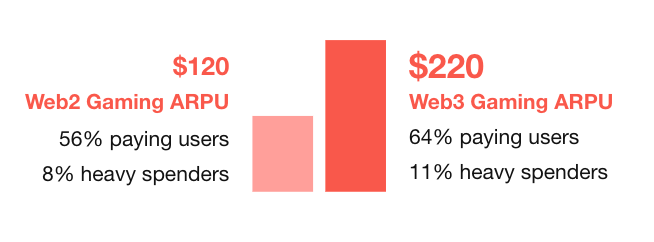
The Web3 gaming market in India has grown by securing a user base centered around Generation Z. In particular, 50% of gamers are under the age of 25, indicating that young people can quickly adapt to new gaming models. The average revenue per user (ARPU) for Web3 games is $220, much higher than the $120 for Web2 games.
In Web3 games, the proportion of paying users is 64%, the proportion of high-spending users is 11%, and the revenue structure is better than that of Web2 games (56% and 8% respectively). In addition, 38% of traditional game players have experienced Web3 games, and 60% of them choose to continue to participate.
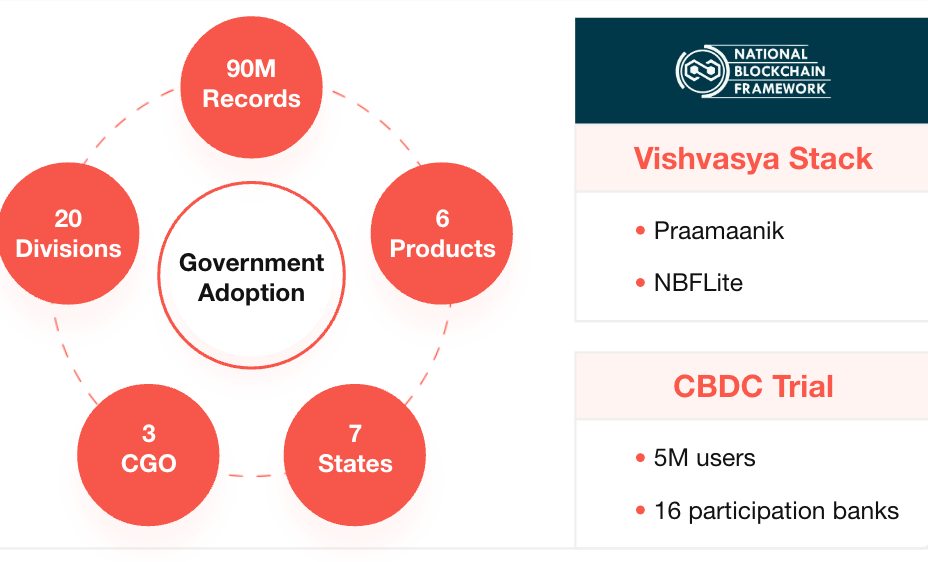
The government has taken proactive steps to create a national blockchain framework. The framework aims to improve security and transparency for citizens using services. Key components include the “Vishvasya” blockchain-as-a-service platform, the “NBFLite” sandbox for startups and universities to conduct rapid research, “Praamaanik” for verifying the authenticity of mobile applications, and the National Blockchain Portal. In addition, the CBDC pilot project led by the Reserve Bank of India (RBI) has brought together 5 million users from 16 banks to test new payment methods using blockchain technology.
2.3. Developer Ecosystem
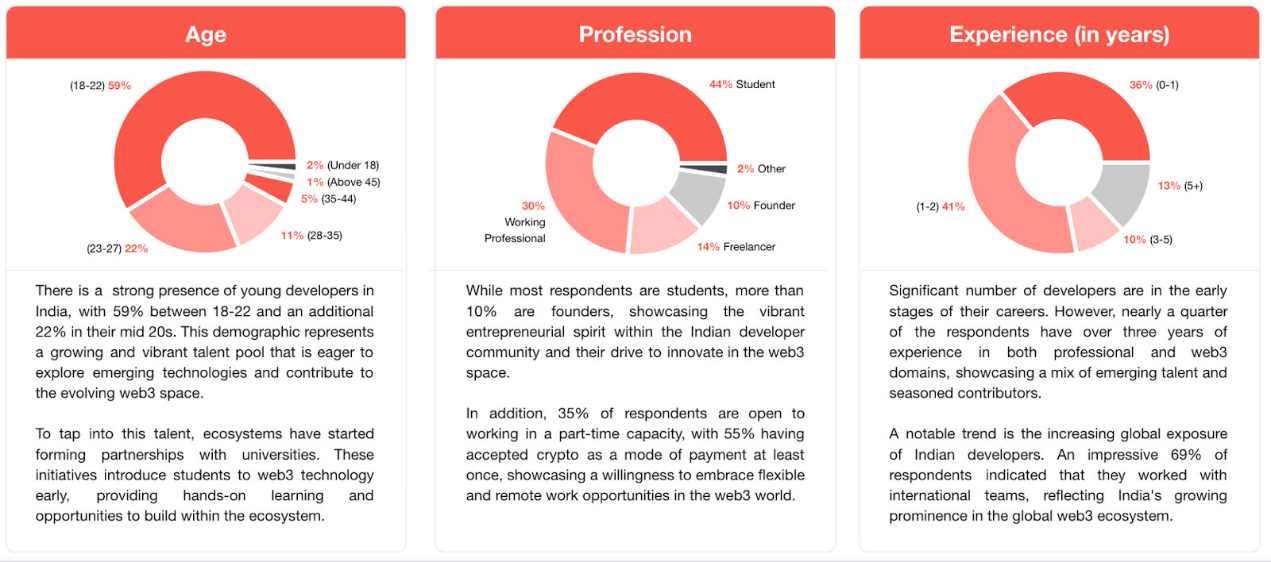
India has become a global hub for entrepreneurs and developers, leading innovation in various Web3 fields. It has become the largest developer market, accounting for 12% of the global cryptocurrency developer community.
According to a survey of more than 500 developers, India's Web3 ecosystem is growing rapidly with young talent, entrepreneurial energy and expanding global exposure. Through university partnerships and flexible working models, an ecosystem has been formed to support its growth.
Despite developers’ growing global exposure, 51% still say their salaries do not meet global standards.
Hackathons and developer communities have become key elements in the growth of the Web3 ecosystem in India. These platforms provide developers with hands-on experience, mentorship, funding opportunities, and global exposure. As participation rates increase, a growth trajectory for the next generation of developers is taking shape.
2.4. Regulation, Taxation and Policy
The Web3 industry in India is currently in a transition period with rapid changes in regulatory and tax policies. Strong government regulation and high tax rates have limited market development, so there is an urgent need to adjust policies to support industry development.
Starting from 2023, the Indian government will comprehensively strengthen anti-money laundering regulations and increase transparency in the virtual asset market. All virtual asset service providers (VASPs) must be registered under the Anti-Money Laundering Act and must implement customer identification procedures, maintain transaction records and designate dedicated anti-money laundering officers.
By the end of 2024, the tightening of regulation becomes more apparent. The Indian government takes the extreme step of completely blocking access to foreign crypto exchanges that do not comply with local regulations. This action makes it clear that compliance is a must for entering the Indian market.
Tax policies have also undergone revolutionary changes. The 2025 Finance Act established a mandatory reporting system for crypto asset transactions and user information by adopting the international standard OECD crypto asset reporting framework. In addition, the legal definition of virtual digital assets is expected to expand to a more comprehensive concept of "crypto assets".
The current tax structure places a heavy burden on the industry. Crypto investment profits are subject to a high flat tax rate of 30% without any cost deductions, and all personal transactions are subject to a 1% withholding tax. This tax burden severely restricts market liquidity.
The lack of a dedicated Web3 regulator poses another problem. Regulatory ambiguity regarding the classification of virtual assets and treatment of decentralized protocols remains as multiple agencies exercise overlapping jurisdiction. From opening a bank account to using payment services, Web3 companies face difficulties accessing basic financial infrastructure, with many exchanges restricting withdrawals of cryptocurrencies, preventing users from self-custody options.
For the Web3 industry in India to achieve sustainable development, it urgently needs a regulatory framework for Web3 that reduces the tax burden, improves accessibility to financial services, and provides reasonable regulation for non-custodial services such as asset self-custody.
3. India is about to see a breakthrough
Overall, India has formed a mature ecosystem with a mature industry and user base, but the core problem lies in the government's regulatory confusion. Although the above macro factors are generally favorable, the mature regulatory framework required for the development of the regional ecosystem has not yet been established. Although the government-led blockchain program has achieved positive results, the lack of a dedicated regulatory agency and overlapping jurisdictions have created uncertainty from an external perspective.
In an ever-changing global regulatory environment, this confusion has significantly reduced the market's attractiveness. It is the biggest barrier to market entry for investors and businesses and needs to be addressed quickly.
Entering the Indian market requires a phased strategy. First, users with high Web3 adaptability should be prioritized. Indian users have a deep understanding of Web3 and are large in number, so effective results can be produced through successful user onboarding. This requires supporting the local language while hiring local personnel or working with marketing agencies to understand local marketing and business structures.
Secondly, development can be targeted to builders. At this stage, direct links with investors such as Hashed Emergent become important. Local institutions alone have limitations in supporting builders and lack sufficient expertise.
Finally, it can be extended to cooperation with governments and enterprises. Although the government has caused some confusion, it has established a national blockchain framework and achieved tangible results. Strategic cooperation can ensure that it is at the forefront of promoting market change.
Related reading: South Korea’s Crypto Exodus: The Outflow of Capital, Enterprises, and Talent
You May Also Like

Best Crypto to Buy as Saylor & Crypto Execs Meet in US Treasury Council

BlackRock boosts AI and US equity exposure in $185 billion models
