BitcoinWorld Transformative UK Law: Crypto as Property Now Officially Recognized In a landmark move for the digital economy, the United Kingdom has officially passed legislation that legally classifies crypto as property. This transformative step moves beyond previous case law to provide a solid statutory foundation for digital assets. For investors and businesses, this clarity is a game-changer. What Does the UK’s Crypto as Property Bill […] This post Transformative UK Law: Crypto as Property Now Officially Recognized first appeared on BitcoinWorld.BitcoinWorld Transformative UK Law: Crypto as Property Now Officially Recognized In a landmark move for the digital economy, the United Kingdom has officially passed legislation that legally classifies crypto as property. This transformative step moves beyond previous case law to provide a solid statutory foundation for digital assets. For investors and businesses, this clarity is a game-changer. What Does the UK’s Crypto as Property Bill […] This post Transformative UK Law: Crypto as Property Now Officially Recognized first appeared on BitcoinWorld.

Transformative UK Law: Crypto as Property Now Officially Recognized

2025/12/03 13:25
5 min read
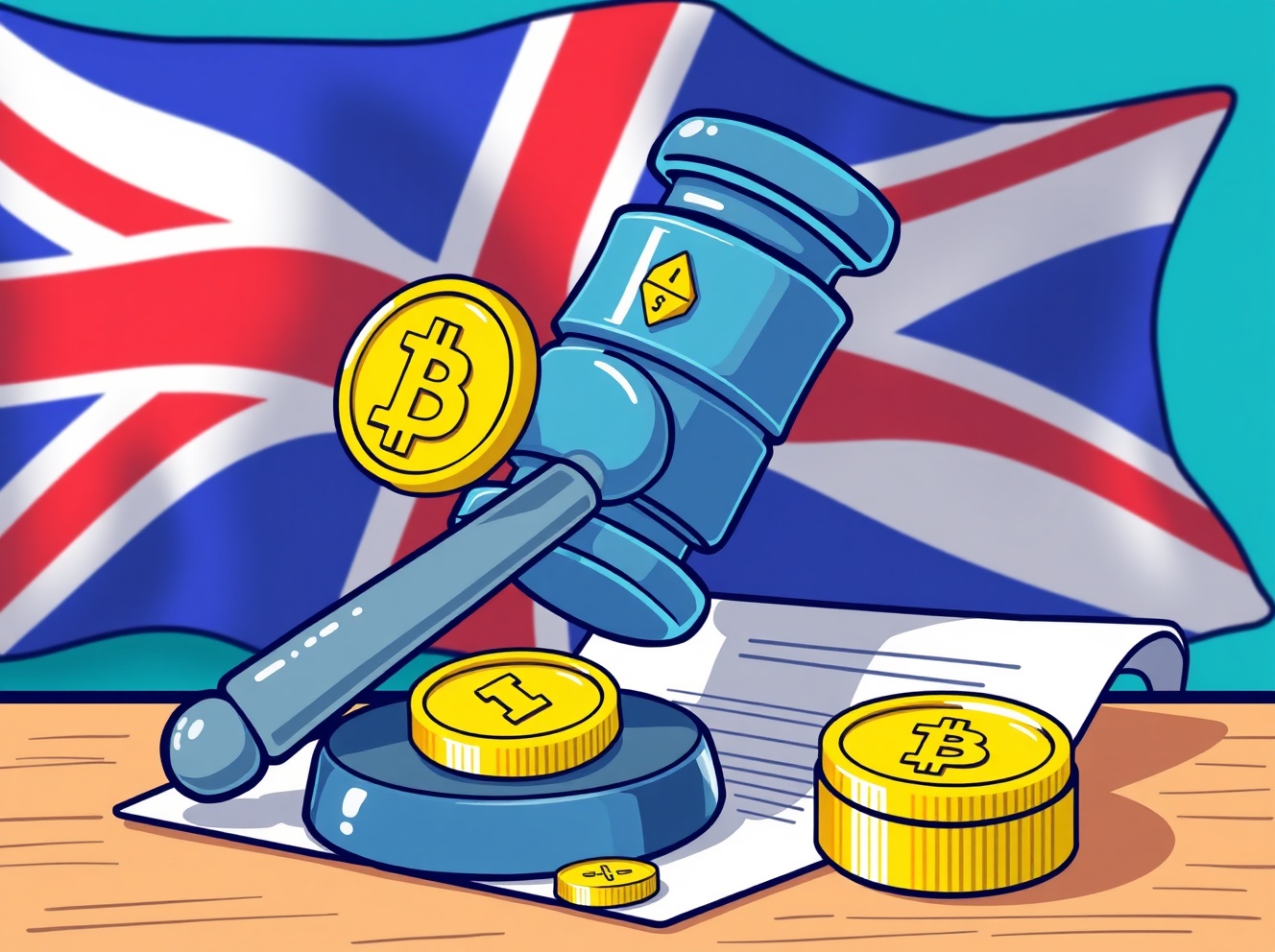
A cartoon illustration symbolizing the UK's transformative law recognizing crypto as property.

BitcoinWorld

Transformative UK Law: Crypto as Property Now Officially Recognized

In a landmark move for the digital economy, the United Kingdom has officially passed legislation that legally classifies crypto as property. This transformative step moves beyond previous case law to provide a solid statutory foundation for digital assets. For investors and businesses, this clarity is a game-changer.

What Does the UK’s Crypto as Property Bill Actually Do?

The new Property Bill, which has received royal assent, provides a formal legal framework. Previously, UK courts treated digital assets like Bitcoin or NFTs as property on a case-by-case basis. However, the new law codifies this principle, offering much-needed certainty. The legislation specifically aims to clarify critical areas that have been gray zones for users and legal professionals alike.

Therefore, proving ownership of your digital wallet’s contents becomes more straightforward under statute. Moreover, the process for recovering stolen or fraudulently obtained crypto assets gains a clearer legal pathway. This is a crucial development for victims of crypto scams.

Why Is Classifying Crypto as Property So Important?

Legal classification might sound technical, but its impact is profound. By defining crypto as property, the UK government provides a stable foundation for the entire ecosystem. Consider these key benefits:

  • Ownership Proof: It establishes clear rules for proving who owns a digital asset, which is vital for disputes and transactions.
  • Asset Recovery: Victims of theft have stronger legal grounds to pursue and reclaim their stolen crypto.
  • Inheritance & Bankruptcy: The law clarifies how digital assets are handled when someone passes away or a company becomes insolvent. This means your crypto can be properly included in a will or estate.

This move signals the UK’s commitment to becoming a hub for responsible crypto innovation. It gives businesses the confidence to operate and investors the assurance that their holdings are recognized and protected by law.

What Are the Practical Implications for Crypto Holders?

For the everyday crypto user in the UK, this law translates to tangible security and planning power. You can now approach financial planning with your digital portfolio in mind, knowing it has defined legal standing as property.

For instance, when creating a will, you can explicitly list your crypto holdings alongside traditional assets like a house or stocks. In the unfortunate event of a hack, the legal process for recovery is more defined, potentially increasing the chances of a successful claim. This framework also encourages traditional financial institutions to develop products and services around digital assets, fostering greater mainstream integration.

Conclusion: A Foundation for the Future

The UK’s decision to legally recognize crypto as property is a transformative and forward-thinking step. It replaces uncertainty with clarity, fostering a safer and more predictable environment for innovation and investment. This legislation not only protects current holders but also paves the way for broader institutional adoption, solidifying the UK’s position in the global digital asset landscape. The future of crypto regulation is being written now, and the UK has made a compelling first chapter.

Frequently Asked Questions (FAQs)

Q: Does this mean my Bitcoin is now legally the same as my house?
A> Not exactly. It classifies crypto as a form of personal property, similar to intellectual property or shares, which gives it legal recognition and protection, but it doesn’t equate it to real estate in all aspects.

Q: How does this help if my crypto is stolen?
A> The law provides a clearer statutory basis for you to pursue legal action to recover stolen assets. It defines them as your property, strengthening your claim in court.

Q: Do I need to do anything with my crypto holdings because of this law?
A> No immediate action is required. However, it’s a good prompt to ensure your estate planning (like your will) accounts for your digital assets and that your private keys and wallet information are securely stored for your beneficiaries.

Q: Does this apply to all cryptocurrencies and NFTs?
A> The bill uses the term “digital assets,” which is broad and is intended to cover a wide range of crypto-assets, including cryptocurrencies like Bitcoin and Ethereum, as well as non-fungible tokens (NFTs).

Q: How does this affect crypto taxes in the UK?
A> The tax treatment (Capital Gains Tax) was already in place. This law doesn’t directly change tax rules but reinforces the underlying principle that crypto is an asset subject to ownership rules, which supports the existing tax framework.

Q: Is the UK the first country to do this?
A> No, other jurisdictions have taken similar steps. However, the UK’s approach through primary legislation is particularly significant due to its global financial influence and the comprehensive nature of the bill.

Found this breakdown of the UK’s transformative crypto as property law helpful? Share this article with your network on Twitter, LinkedIn, or Facebook to spark the conversation!

To learn more about the latest crypto regulation trends, explore our article on key developments shaping global policies and institutional adoption.

This post Transformative UK Law: Crypto as Property Now Officially Recognized first appeared on BitcoinWorld.

Market Opportunity
Movement Logo
Movement Price(MOVE)
$0.02396
$0.02396$0.02396
-0.04%
USD
Movement (MOVE) Live Price Chart
Disclaimer: The articles reposted on this site are sourced from public platforms and are provided for informational purposes only. They do not necessarily reflect the views of MEXC. All rights remain with the original authors. If you believe any content infringes on third-party rights, please contact [email protected] for removal. MEXC makes no guarantees regarding the accuracy, completeness, or timeliness of the content and is not responsible for any actions taken based on the information provided. The content does not constitute financial, legal, or other professional advice, nor should it be considered a recommendation or endorsement by MEXC.

You May Also Like

Cashing In On University Patents Means Giving Up On Our Innovation Future

Cashing In On University Patents Means Giving Up On Our Innovation Future

The post Cashing In On University Patents Means Giving Up On Our Innovation Future appeared on BitcoinEthereumNews.com. “It’s a raid on American innovation that would deliver pennies to the Treasury while kneecapping the very engine of our economic and medical progress,” writes Pipes. Getty Images Washington is addicted to taxing success. Now, Commerce Secretary Howard Lutnick is floating a plan to skim half the patent earnings from inventions developed at universities with federal funding. It’s being sold as a way to shore up programs like Social Security. In reality, it’s a raid on American innovation that would deliver pennies to the Treasury while kneecapping the very engine of our economic and medical progress. Yes, taxpayer dollars support early-stage research. But the real payoff comes later—in the jobs created, cures discovered, and industries launched when universities and private industry turn those discoveries into real products. By comparison, the sums at stake in patent licensing are trivial. Universities collectively earn only about $3.6 billion annually in patent income—less than the federal government spends on Social Security in a single day. Even confiscating half would barely register against a $6 trillion federal budget. And yet the damage from such a policy would be anything but trivial. The true return on taxpayer investment isn’t in licensing checks sent to Washington, but in the downstream economic activity that federally supported research unleashes. Thanks to the bipartisan Bayh-Dole Act of 1980, universities and private industry have powerful incentives to translate early-stage discoveries into real-world products. Before Bayh-Dole, the government hoarded patents from federally funded research, and fewer than 5% were ever licensed. Once universities could own and license their own inventions, innovation exploded. The result has been one of the best returns on investment in government history. Since 1996, university research has added nearly $2 trillion to U.S. industrial output, supported 6.5 million jobs, and launched more than 19,000 startups. Those companies pay…
Share
BitcoinEthereumNews2025/09/18 03:26
Here’s How Consumers May Benefit From Lower Interest Rates

Here’s How Consumers May Benefit From Lower Interest Rates

The post Here’s How Consumers May Benefit From Lower Interest Rates appeared on BitcoinEthereumNews.com. Topline The Federal Reserve on Wednesday opted to ease interest rates for the first time in months, leading the way for potentially lower mortgage rates, bond yields and a likely boost to cryptocurrency over the coming weeks. Average long-term mortgage rates dropped to their lowest levels in months ahead of the central bank’s policy shift. Copyright{2018} The Associated Press. All rights reserved. Key Facts The central bank’s policymaking panel voted this week to lower interest rates, which have sat between 4.25% and 4.5% since December, to a new range of 4% and 4.25%. How Will Lower Interest Rates Impact Mortgage Rates? Mortgage rates tend to fall before and during a period of interest rate cuts: The average 30-year fixed-rate mortgage dropped to 6.35% from 6.5% last week, the lowest level since October 2024, mortgage buyer Freddie Mac reported. Borrowing costs on 15-year fixed-rate mortgages also dropped to 5.5% from 5.6% as they neared the year-ago rate of 5.27%. When the Federal Reserve lowered the funds rate to between 0% and 0.25% during the pandemic, 30-year mortgage rates hit record lows between 2.7% and 3% by the end of 2020, according to data published by Freddie Mac. Consumers who refinanced their mortgages in 2020 saved about $5.3 billion annually as rates dropped, according to the Consumer Financial Protection Bureau. Similarly, mortgage rates spiked around 7% as interest rates were hiked in 2022 and 2023, though mortgage rates appeared to react within weeks of the Fed opting to cut or raise rates. How Do Treasury Bonds Respond To Lower Interest Rates? Long-term Treasury yields are more directly influenced by interest rates, as lower rates tend to result in lower yields. When the Fed pushed rates to near zero during the pandemic, 10-year Treasury yields fell to an all-time low of 0.5%. As…
Share
BitcoinEthereumNews2025/09/18 05:59
Spur Protocol Daily Quiz 21 February 2026: Claim Free Tokens and Boost Your Crypto Wallet

Spur Protocol Daily Quiz 21 February 2026: Claim Free Tokens and Boost Your Crypto Wallet

Spur Protocol Daily Quiz February 21 2026: Today’s Correct Answer and How to Earn Free In-App Tokens The Spur Protocol Daily Quiz for February 21, 2026, is
Share
Hokanews2026/02/21 17:10