BitcoinWorld Crucial Update: Bybit Delists FRAG, BOMB, ULTI, and TRVL Spot Pairs – What Traders Must Do Now Attention, crypto traders. Bybit, a leading cryptocurrencyBitcoinWorld Crucial Update: Bybit Delists FRAG, BOMB, ULTI, and TRVL Spot Pairs – What Traders Must Do Now Attention, crypto traders. Bybit, a leading cryptocurrency

Crucial Update: Bybit Delists FRAG, BOMB, ULTI, and TRVL Spot Pairs – What Traders Must Do Now

2025/12/16 16:50
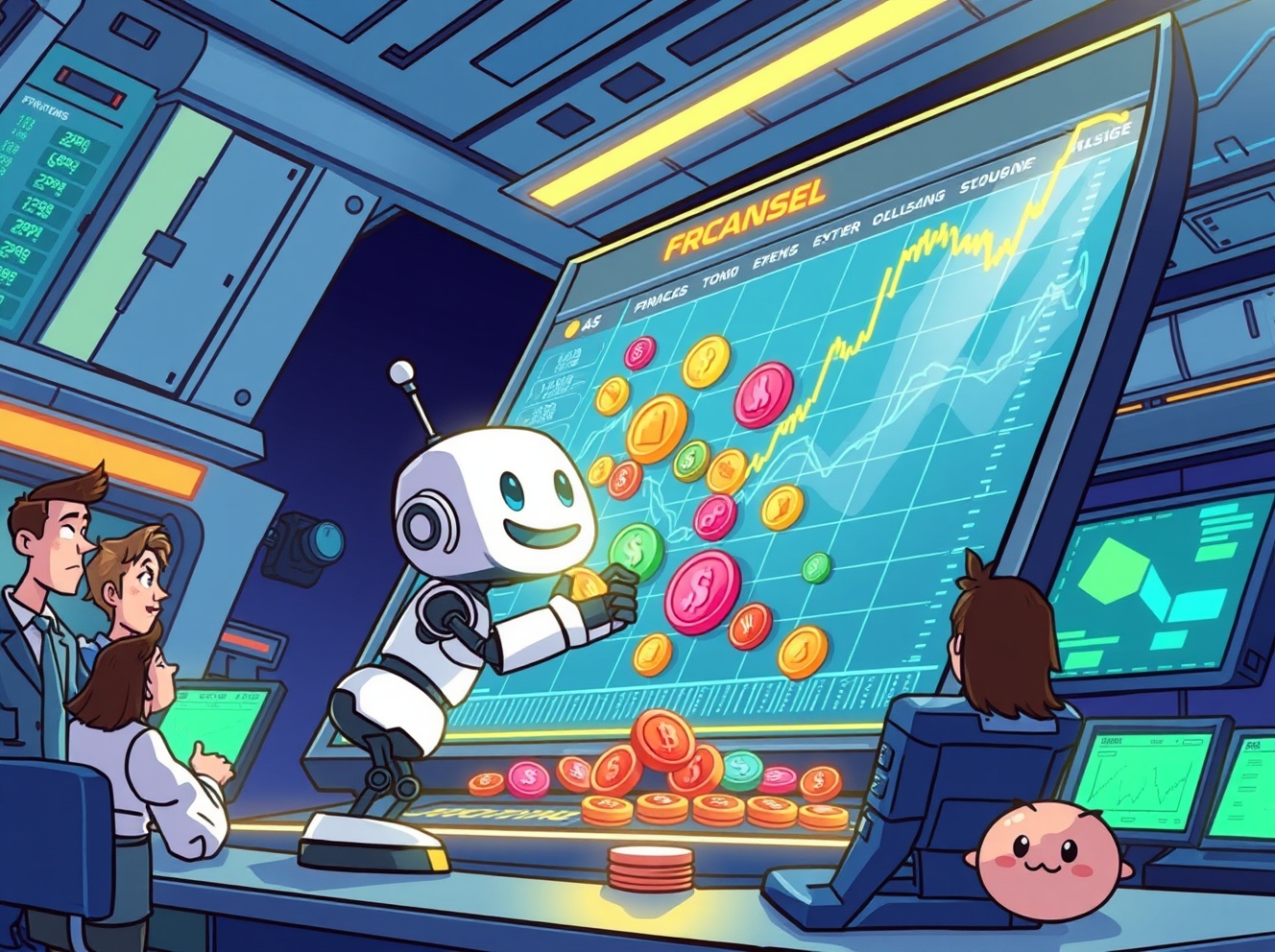
Cartoon illustration of the Bybit delisting process showing tokens being removed from a digital exchange trading board.

BitcoinWorld

Crucial Update: Bybit Delists FRAG, BOMB, ULTI, and TRVL Spot Pairs – What Traders Must Do Now

Attention, crypto traders. Bybit, a leading cryptocurrency exchange, has made a significant announcement that directly impacts several trading communities. The platform will delist four specific spot trading pairs, marking a pivotal moment for holders of these assets. Understanding the details and timeline of this Bybit delisting is essential for protecting your portfolio and making informed decisions.

What Exactly Is Bybit Delisting?

In simple terms, a delisting means an exchange removes a specific cryptocurrency trading pair from its platform. Therefore, users can no longer buy or sell that asset on that exchange. Bybit has confirmed the removal of FRAG/USDT, BOMB/USDT, ULTI/USDT, and TRVL/USDT. This Bybit delisting action is scheduled to take effect at 8:00 a.m. UTC on December 23.

Which Trading Pairs Are Affected and Why?

The announcement targets four assets paired with Tether (USDT). Exchanges like Bybit regularly review listed projects to ensure they meet certain standards for security, liquidity, and development activity. A Bybit delisting typically occurs when a project fails to maintain these standards, posing potential risks to users. While Bybit has not provided specific reasons for each token, common factors include:

  • Low trading volume and liquidity.
  • Lack of consistent project development or updates.
  • Concerns regarding regulatory compliance or security.

This proactive measure helps Bybit maintain a healthy and secure trading environment for its vast user base.

What Should You Do Before the Delisting Date?

Time is of the essence. If you hold any of these tokens on Bybit, you must act before the deadline to avoid complications. Here is your actionable checklist:

  • Close Open Orders: Immediately cancel any open limit orders for FRAG, BOMB, ULTI, or TRVL.
  • Sell or Withdraw: You have two clear options. You can sell your tokens for USDT or another cryptocurrency on Bybit before December 23. Alternatively, you can withdraw your tokens to a private, self-custody wallet that supports them.
  • Do Not Wait: Trading for these pairs will stop precisely at the announced time. After that, you will only be able to withdraw the tokens, not trade them on Bybit.

How Does This Bybit Delisting Impact the Crypto Market?

Exchange delistings are a normal part of the maturing cryptocurrency ecosystem. They demonstrate that platforms are enforcing listing standards to protect investors. For the projects involved, a Bybit delisting often leads to reduced visibility and access, which can impact price and liquidity elsewhere. However, for the broader market, it reinforces the importance of due diligence. Traders should focus on projects with strong fundamentals, active communities, and sustained development to mitigate such risks.

Key Takeaways and Final Thoughts

This Bybit delisting serves as a timely reminder of the dynamic nature of crypto markets. The core action for affected users is straightforward: manage your positions before December 23. For the wider trading community, it underscores the critical need to stay informed about exchange announcements and to prioritize investments in projects with robust long-term viability. Bybit’s decision, while impactful for some, is a step towards a more sustainable and secure trading landscape.

Frequently Asked Questions (FAQs)

Q: What happens if I still hold FRAG on Bybit after December 23?
A: After the delisting time, you will not be able to trade FRAG/USDT. However, you will likely still be able to withdraw your FRAG tokens to a compatible external wallet for a limited period. Check Bybit’s official announcement for the exact withdrawal deadline.

Q: Will the price of these tokens drop because of the Bybit delisting?
A: It is possible. Delistings often reduce immediate buying access and liquidity, which can create selling pressure. However, the token’s price on other supporting exchanges will depend on broader market dynamics.

Q: Is my money stuck if I miss the deadline?
A: Not necessarily. Your tokens will remain in your Bybit account, but you will only be able to withdraw them, not sell them on the platform. Always act before the deadline to have full control.

Q: How can I avoid being caught by surprise from future delistings?
A: Regularly monitor official exchange announcements and channels. Diversify your holdings across projects with strong fundamentals and high liquidity. Using self-custody wallets for long-term holdings also reduces exchange-specific risk.

Q: Are other exchanges delisting these same tokens?
A: Not necessarily. A delisting on Bybit is independent of other exchanges. Each platform conducts its own reviews. Always check the status on any exchange where you hold assets.

Found this guide on the Bybit delisting helpful? Share this crucial information with your fellow traders on social media to help them navigate this market update smoothly. Knowledge is power in the fast-moving crypto world!

To learn more about the latest cryptocurrency exchange trends, explore our article on key developments shaping platform security and user protection standards.

This post Crucial Update: Bybit Delists FRAG, BOMB, ULTI, and TRVL Spot Pairs – What Traders Must Do Now first appeared on BitcoinWorld.

Market Opportunity
Fragmetric Logo
Fragmetric Price(FRAG)
$0.002217
$0.002217$0.002217
-6.61%
USD
Fragmetric (FRAG) Live Price Chart
Disclaimer: The articles reposted on this site are sourced from public platforms and are provided for informational purposes only. They do not necessarily reflect the views of MEXC. All rights remain with the original authors. If you believe any content infringes on third-party rights, please contact [email protected] for removal. MEXC makes no guarantees regarding the accuracy, completeness, or timeliness of the content and is not responsible for any actions taken based on the information provided. The content does not constitute financial, legal, or other professional advice, nor should it be considered a recommendation or endorsement by MEXC.

You May Also Like

The Channel Factories We’ve Been Waiting For

The Channel Factories We’ve Been Waiting For

The post The Channel Factories We’ve Been Waiting For appeared on BitcoinEthereumNews.com. Visions of future technology are often prescient about the broad strokes while flubbing the details. The tablets in “2001: A Space Odyssey” do indeed look like iPads, but you never see the astronauts paying for subscriptions or wasting hours on Candy Crush.  Channel factories are one vision that arose early in the history of the Lightning Network to address some challenges that Lightning has faced from the beginning. Despite having grown to become Bitcoin’s most successful layer-2 scaling solution, with instant and low-fee payments, Lightning’s scale is limited by its reliance on payment channels. Although Lightning shifts most transactions off-chain, each payment channel still requires an on-chain transaction to open and (usually) another to close. As adoption grows, pressure on the blockchain grows with it. The need for a more scalable approach to managing channels is clear. Channel factories were supposed to meet this need, but where are they? In 2025, subnetworks are emerging that revive the impetus of channel factories with some new details that vastly increase their potential. They are natively interoperable with Lightning and achieve greater scale by allowing a group of participants to open a shared multisig UTXO and create multiple bilateral channels, which reduces the number of on-chain transactions and improves capital efficiency. Achieving greater scale by reducing complexity, Ark and Spark perform the same function as traditional channel factories with new designs and additional capabilities based on shared UTXOs.  Channel Factories 101 Channel factories have been around since the inception of Lightning. A factory is a multiparty contract where multiple users (not just two, as in a Dryja-Poon channel) cooperatively lock funds in a single multisig UTXO. They can open, close and update channels off-chain without updating the blockchain for each operation. Only when participants leave or the factory dissolves is an on-chain transaction…
Share
BitcoinEthereumNews2025/09/18 00:09
SOLANA NETWORK Withstands 6 Tbps DDoS Without Downtime

SOLANA NETWORK Withstands 6 Tbps DDoS Without Downtime

The post SOLANA NETWORK Withstands 6 Tbps DDoS Without Downtime appeared on BitcoinEthereumNews.com. In a pivotal week for crypto infrastructure, the Solana network
Share
BitcoinEthereumNews2025/12/16 20:44
Why The Green Bay Packers Must Take The Cleveland Browns Seriously — As Hard As That Might Be

Why The Green Bay Packers Must Take The Cleveland Browns Seriously — As Hard As That Might Be

The post Why The Green Bay Packers Must Take The Cleveland Browns Seriously — As Hard As That Might Be appeared on BitcoinEthereumNews.com. Jordan Love and the Green Bay Packers are off to a 2-0 start. Getty Images The Green Bay Packers are, once again, one of the NFL’s better teams. The Cleveland Browns are, once again, one of the league’s doormats. It’s why unbeaten Green Bay (2-0) is a 8-point favorite at winless Cleveland (0-2) Sunday according to betmgm.com. The money line is also Green Bay -500. Most expect this to be a Packers’ rout, and it very well could be. But Green Bay knows taking anyone in this league for granted can prove costly. “I think if you look at their roster, the paper, who they have on that team, what they can do, they got a lot of talent and things can turn around quickly for them,” Packers safety Xavier McKinney said. “We just got to kind of keep that in mind and know we not just walking into something and they just going to lay down. That’s not what they going to do.” The Browns certainly haven’t laid down on defense. Far from. Cleveland is allowing an NFL-best 191.5 yards per game. The Browns gave up 141 yards to Cincinnati in Week 1, including just seven in the second half, but still lost, 17-16. Cleveland has given up an NFL-best 45.5 rushing yards per game and just 2.1 rushing yards per attempt. “The biggest thing is our defensive line is much, much improved over last year and I think we’ve got back to our personality,” defensive coordinator Jim Schwartz said recently. “When we play our best, our D-line leads us there as our engine.” The Browns rank third in the league in passing defense, allowing just 146.0 yards per game. Cleveland has also gone 30 straight games without allowing a 300-yard passer, the longest active streak in the NFL.…
Share
BitcoinEthereumNews2025/09/18 00:41