Crypto doesn’t need more heroes. It needs a culture that lets the builders stay in the arena long enough to build what really matters.Crypto doesn’t need more heroes. It needs a culture that lets the builders stay in the arena long enough to build what really matters.
Cryptocurrency’s best ideas will never launch | Opinion

5 min read

Disclosure: The views and opinions expressed here belong solely to the author and do not represent the views and opinions of crypto.news’ editorial.

A few weeks ago, Jeffy Yu—the founder of a memecoin project called Zerebro (ZEREBRO)—appeared to take his own life on camera. Then his wallet started moving. Thankfully, Jeffy didn’t really pass away. It was a stunt, and while the backlash has been deserved, the reported motive behind it—wanting to escape harassment and blackmail—hit a nerve. I don’t condone it. But I do recognize the impulse to disappear.

Crypto is chaotic. Public one day, gone the next. And while faking your own death is extreme, the idea behind it isn’t foreign to a lot of founders. The pressure to vanish, to opt out, to become anonymous again—it’s real. And not because of guilt. But because even when you build in good faith, you’re one bad chart away from being labeled a scammer.

This isn’t about one person. It’s about the environment we’ve created—a space that claims to reward risk and experimentation but punishes anyone who stumbles. A space where personality gets flattened into a token price. And where failure, no matter the intent, gets treated like fraud. We say we want innovation. But we’ve built a culture where most ideas never even launch, because the people behind them burn out first.

When success becomes a liability

I co-founded Pegaxy in 2021. It took off fast—hundreds of thousands of users in weeks. When we launched our token, we deliberately launched at a low valuation to support organic growth. But crypto doesn’t do slow. The market pumped—and took our token along for the ride, catapulting it to 100x returns. And suddenly the market’s favoured narrative shifted: investors stopped paying attention to our actual project and the things we were building, becoming purely fixated on token price. Our roadmap didn’t matter anymore. Only the chart did.

And when did the chart turn? So did the crowd. As the public face of the game, I went from hero to villain in a few days. Not because of fraud. Not because we rug-pulled. But because our token had gotten swept up in an unsustainable, speculative frenzy, before crashing back down to where it began.

The hype subsided, and investors shifted into the next trend. Our token price dropped, and someone had to answer for it. That’s the reality most founders face. People don’t see you as a person. They see you as a proxy for their bags.

Failure isn’t fraud

The most dangerous thing happening in crypto right now isn’t bad actors—it’s the way we’ve decided that every setback or unmet expectation must reflect bad intent.

We don’t separate moral wrongdoing from market fluctuation. Even if a project saw massive adoption, had a transparent team, and strong execution, the narrative gets rewritten in hindsight: “They must’ve known.” And once that narrative sticks, it’s nearly impossible to shake.

That’s what I worry about most—not just for me, but for the founders who are younger or earlier in their career than I am. The ones who hit success on their first swing get chewed up and never come back. Not because they didn’t have more ideas. But because they know the cycle now: hype, hate, exhaustion. Who wants to go through that twice?

The result? The next idea—the better one, the more mature one—never gets built. In this industry, talent isn’t the limiting factor. Endurance is.

What survival actually looks like

So, how do you keep going? You build mental callouses. You stop reading the comments. You stop explaining yourself. You build in silence for a while. You go for walks, read books, and disappear into the woods with your wife and no cell signal.

For me, rejection training came early. I used to knock on doors for ten hours a day. Then I cold-called people who didn’t want to be called. I got used to “no.” That helped, but none of that prepares you for the kind of coordinated rage that can come your way in crypto. When a mob decides your company—and your character—are worthless, the hardest thing to do is stay focused and build anyway.

We’re losing more than founders

What makes this worse is that the culture doesn’t just damage people—it warps products too.  Teams start building for appeasement instead of alignment. Instead of designing for real users, they build for the loudest holders. And because so many communities are incentivized to extract, not sustain, the result is products that please no one and fail anyway.

We’re not just losing people. We’re losing the point.

Let’s make room for a second act

I’m not interested in defending bad actors. Call out the grifters, the liars, the ones who never intended to ship anything. 

But we have to stop treating every founder who fails like they’re in the same category. Crypto talks a big game about “experimenting in public,” but we’ve created an ecosystem where the penalty for a failed experiment is exile.

Some of the most important companies—on-chain or off—will be built by people who tried before and didn’t quite stick the landing. If we don’t make room for those people to try again, we’re not just stifling innovation—we’re handing the future to people too anonymous to care.

Crypto doesn’t need more heroes. It needs a culture that lets the builders stay in the arena long enough to build what really matters.

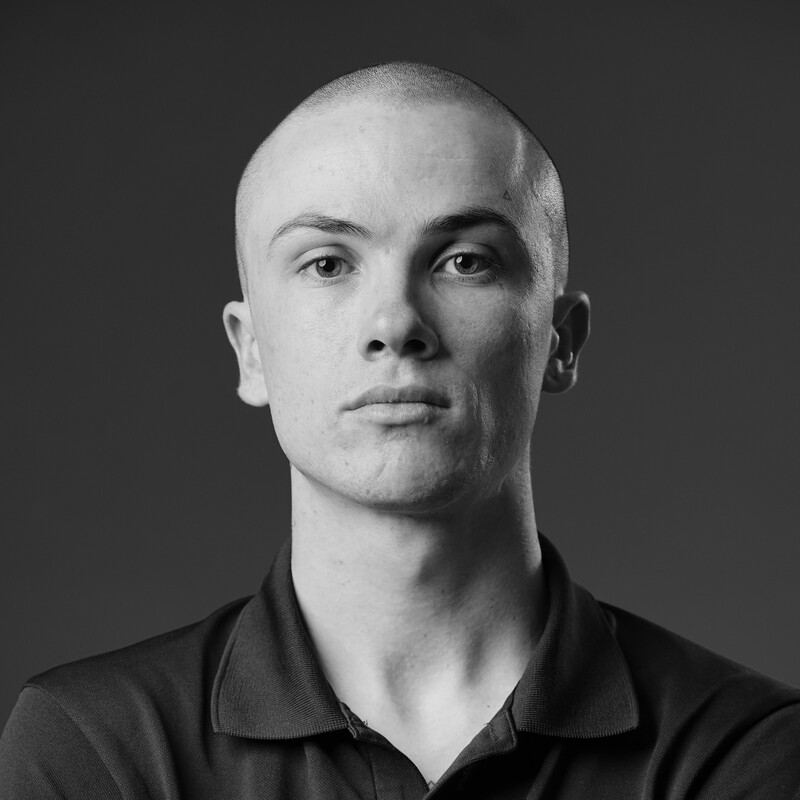
Corey Wilton
Corey Wilton

Corey Wilton is the co‑founder and CEO of Mirai Labs, a venture studio building consumer‑focused Web3 products. Its flagship release, Pegaxy, became the second‑most popular crypto project in the Philippines in 2022, reaching over a million active users and cementing Mirai’s reputation for creating highly engaged gaming and NFT platforms.

Market Opportunity
Threshold Logo
Threshold Price(T)
$0,007791
$0,007791$0,007791
+%1,06
USD
Threshold (T) Live Price Chart
Disclaimer: The articles reposted on this site are sourced from public platforms and are provided for informational purposes only. They do not necessarily reflect the views of MEXC. All rights remain with the original authors. If you believe any content infringes on third-party rights, please contact [email protected] for removal. MEXC makes no guarantees regarding the accuracy, completeness, or timeliness of the content and is not responsible for any actions taken based on the information provided. The content does not constitute financial, legal, or other professional advice, nor should it be considered a recommendation or endorsement by MEXC.

You May Also Like

‘One Battle After Another’ Becomes One Of This Decade’s Best-Reviewed Movies

‘One Battle After Another’ Becomes One Of This Decade’s Best-Reviewed Movies

The post ‘One Battle After Another’ Becomes One Of This Decade’s Best-Reviewed Movies appeared on BitcoinEthereumNews.com. Topline Critics have hailed Paul Thomas Anderson’s “One Battle After Another,” starring Leonardo DiCaprio, as a “masterpiece,” indicating potential Academy Awards success as it boasts near-perfect scores on review aggregators Metacritic and Rotten Tomatoes based on early reviews. Leonardo DiCaprio stars in “One Battle After Another,” which opens in theaters next week. (Photo by Jeff Spicer/Getty Images for Warner Bros. Pictures) Getty Images for Warner Bros. Pictures Key Facts “One Battle After Another” boasts a nearly perfect 97 out of a possible 100 on Metacritic based on its first 31 reviews, making it the highest-rated movie of this decade on Metacritic’s best movies of all time list. The movie also has a 96% score on Rotten Tomatoes based on the first 56 reviews, with only two reviews considered “rotten,” or negative. The Associated Press hailed the movie as “an American masterpiece,” noting the movie touches on topical political themes and depicts a society where “gun violence, white power and immigrant deportations recur in an ongoing dance, both farcical and tragic.” The movie stars DiCaprio as an ex-revolutionary who reunites with former accomplices to rescue his 16-year-old daughter when she goes missing, and Anderson has said the movie was inspired by the 1990 novel, “Vineland.” Most critics have described the movie as an action thriller with notable chase scenes, which jumps in time from DiCaprio’s character’s early days with fictional revolutionary group, the French 75, to about 15 years later, when he is pursued by foe and military leader Captain Steven Lockjaw, played by Sean Penn. The Warner Bros.-produced film was made on a big budget, estimated to be between $130 million and $175 million, and co-stars Penn, Benicio del Toro, Regina Hall and Teyana Taylor. When Will ‘one Battle After Another’ Open In Theaters And Streaming? The move opens in…
Share
BitcoinEthereumNews2025/09/18 07:35
Best Crypto to Buy as Saylor & Crypto Execs Meet in US Treasury Council

Best Crypto to Buy as Saylor & Crypto Execs Meet in US Treasury Council

The post Best Crypto to Buy as Saylor & Crypto Execs Meet in US Treasury Council appeared on BitcoinEthereumNews.com. Michael Saylor and a group of crypto executives met in Washington, D.C. yesterday to push for the Strategic Bitcoin Reserve Bill (the BITCOIN Act), which would see the U.S. acquire up to 1M $BTC over five years. With Bitcoin being positioned yet again as a cornerstone of national monetary policy, many investors are turning their eyes to projects that lean into this narrative – altcoins, meme coins, and presales that could ride on the same wave. Read on for three of the best crypto projects that seem especially well‐suited to benefit from this macro shift:  Bitcoin Hyper, Best Wallet Token, and Remittix. These projects stand out for having a strong use case and high adoption potential, especially given the push for a U.S. Bitcoin reserve.   Why the Bitcoin Reserve Bill Matters for Crypto Markets The strategic Bitcoin Reserve Bill could mark a turning point for the U.S. approach to digital assets. The proposal would see America build a long-term Bitcoin reserve by acquiring up to one million $BTC over five years. To make this happen, lawmakers are exploring creative funding methods such as revaluing old gold certificates. The plan also leans on confiscated Bitcoin already held by the government, worth an estimated $15–20B. This isn’t just a headline for policy wonks. It signals that Bitcoin is moving from the margins into the core of financial strategy. Industry figures like Michael Saylor, Senator Cynthia Lummis, and Marathon Digital’s Fred Thiel are all backing the bill. They see Bitcoin not just as an investment, but as a hedge against systemic risks. For the wider crypto market, this opens the door for projects tied to Bitcoin and the infrastructure that supports it. 1. Bitcoin Hyper ($HYPER) – Turning Bitcoin Into More Than Just Digital Gold The U.S. may soon treat Bitcoin as…
Share
BitcoinEthereumNews2025/09/18 00:27
Google and PayPal Team Up to Power Next-Gen Commerce for Billions

Google and PayPal Team Up to Power Next-Gen Commerce for Billions

TLDR: Google and PayPal signed a multiyear partnership to integrate payments across Google platforms and boost digital commerce experiences. PayPal’s checkout, payouts, and Hyperwallet will be embedded into Google products, including Ads, Play, and Cloud services. The partnership uses Google’s AI to create agent-based shopping tools and secure, frictionless payment solutions for users worldwide. PayPal [...] The post Google and PayPal Team Up to Power Next-Gen Commerce for Billions appeared first on Blockonomi.
Share
Blockonomi2025/09/18 16:15