"The ChatGPT moment for general-purpose robotics is coming.""The ChatGPT moment for general-purpose robotics is coming."

DePIN leads the way, AI assists: a look at the DePAI map of decentralized physical artificial intelligence
2025/02/13 13:20
4 min read

DePIN leads the way, AI assists: a look at the DePAI map of decentralized physical artificial intelligence

Original article: Dylan Bane , Messari Analyst

Compiled by: Yuliya, PANews

As artificial intelligence develops rapidly, decentralized physical artificial intelligence (DePAI) is providing a new solution for the control of robots and physical artificial intelligence infrastructure. From real-world data collection to intelligent robot operations based on decentralized physical infrastructure (DePIN), the development of DePAI is progressing steadily. As NVIDIA CEO Huang Renxun predicted: "The ChatGPT moment in the field of general robots is coming."

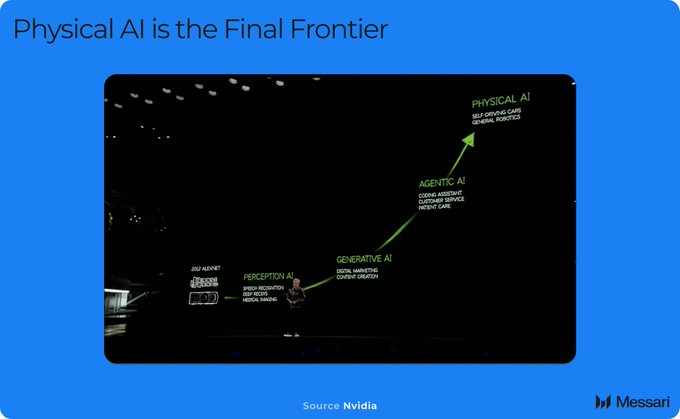
Looking back at the history of technological development, the digital age started with hardware and then expanded to the intangible field of software. The era of artificial intelligence started with software and is now advancing into the ultimate frontier of the physical world.
DePIN leads the way, AI assists: a look at the DePAI map of decentralized physical artificial intelligence

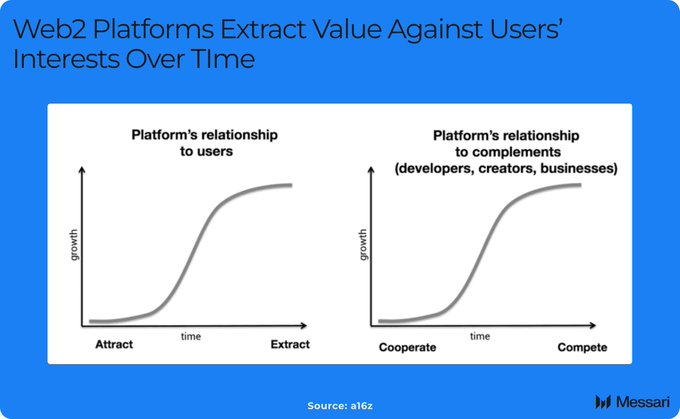
In a world where robots, smart cars, drones, and robots run by autonomous physical AI agents are gradually replacing traditional labor, the ownership of these smart devices has become a social issue that cannot be ignored. At a time when centralized players have not yet completely dominated the market, DePAI provides a rare opportunity to build a physical AI system based on Web3.
DePIN leads the way, AI assists: a look at the DePAI map of decentralized physical artificial intelligence

Data collection

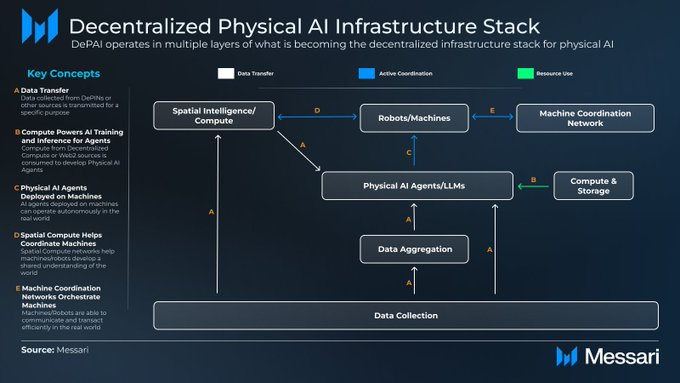
Currently, the infrastructure of DePAI is being improved at an accelerated pace, with the data collection layer being the most active . This layer not only provides the real-world data needed for training the physical AI agents on the robot, but also transmits the data streams needed for environment navigation and task execution in real time.
DePIN leads the way, AI assists: a look at the DePAI map of decentralized physical artificial intelligence

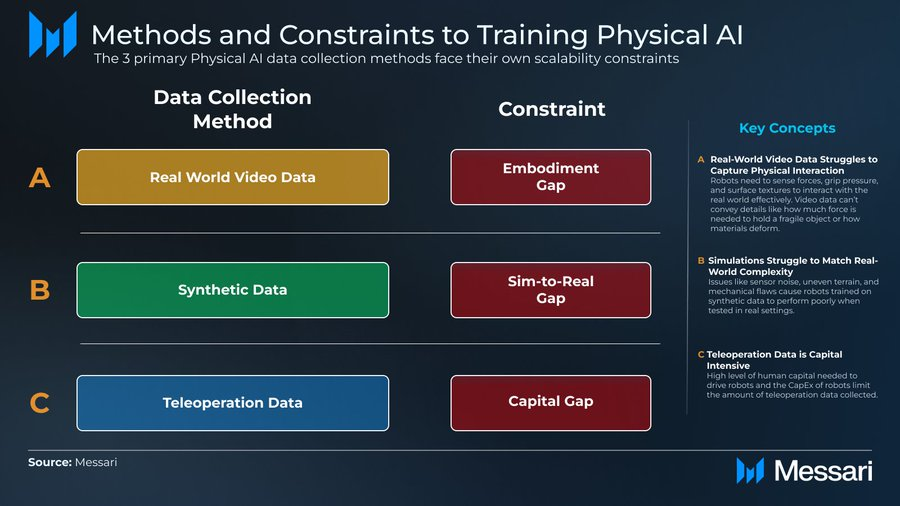
However, obtaining high-quality real-world data remains a major bottleneck restricting the development of physical AI . Although Nvidia's Omniverse and Cosmos provide innovative solutions through simulated environments, synthetic data is only part of the entire ecosystem, and remote operation and real-world video data are equally indispensable.
DePIN leads the way, AI assists: a look at the DePAI map of decentralized physical artificial intelligence

Remote Operation

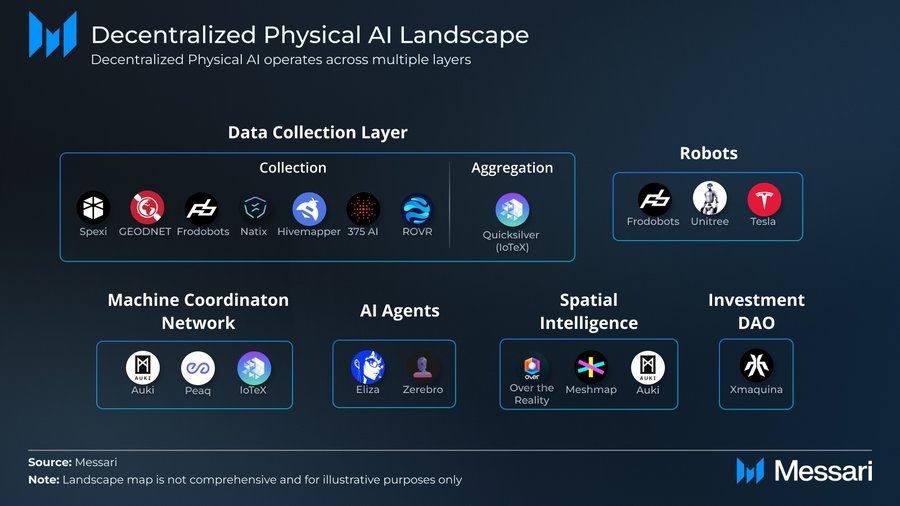
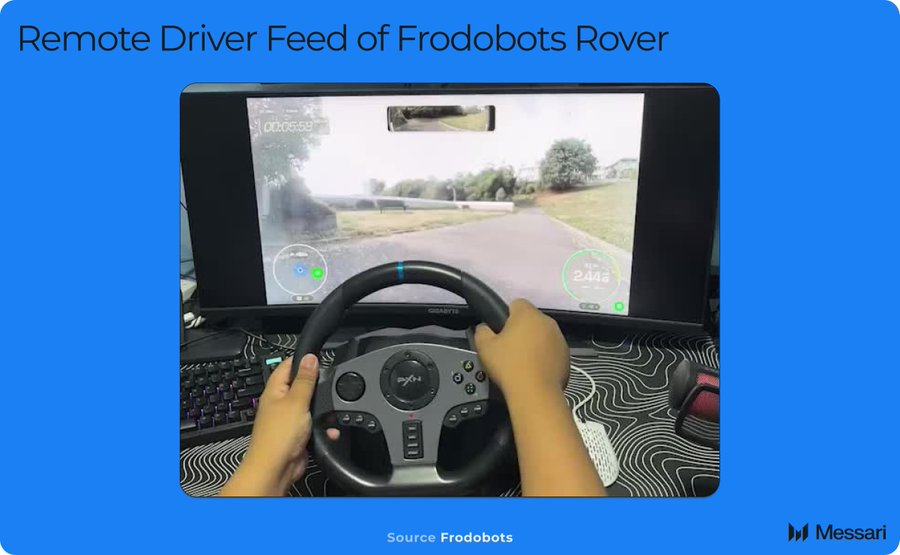
In the field of teleoperation, Frodobots is deploying economical delivery robots around the world through DePIN. During operation, these robots can not only capture human decision-making behaviors in real environments and create high-value data sets, but also effectively solve the problem of insufficient capital investment.
DePIN leads the way, AI assists: a look at the DePAI map of decentralized physical artificial intelligence

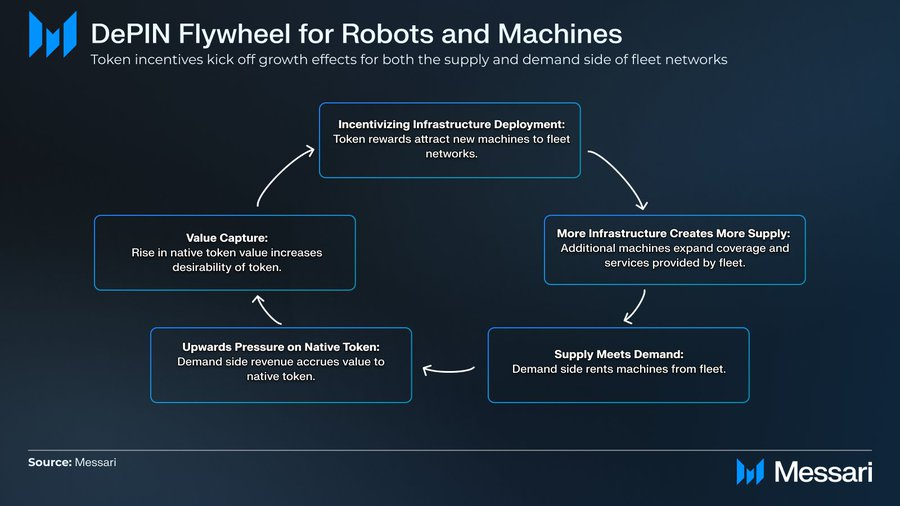
Through a token-driven virtuous cycle mechanism, DePIN is accelerating the deployment of data collection equipment and robots . For robotics companies that want to increase sales while reducing capital expenditures and operating costs, DePIN has significant advantages over traditional models.
DePIN leads the way, AI assists: a look at the DePAI map of decentralized physical artificial intelligence

Video Data Application

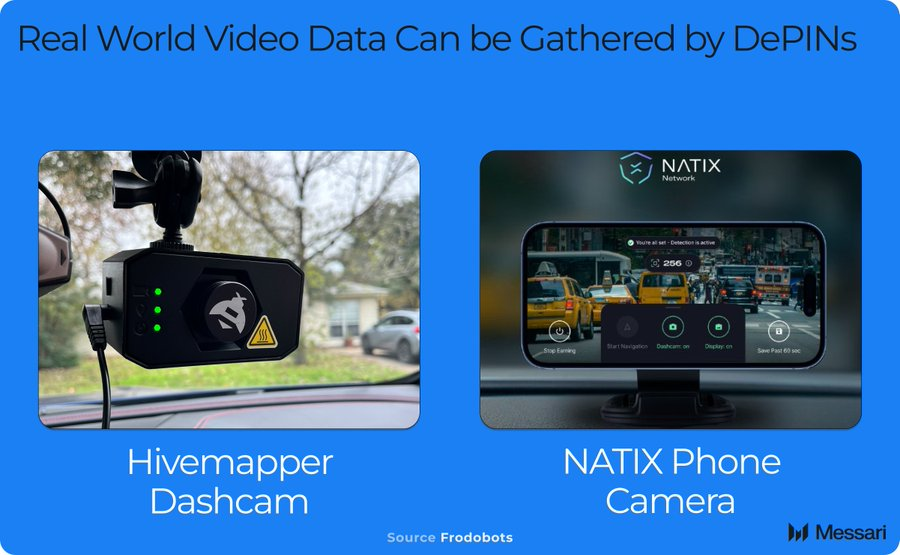
In terms of video data applications, DePAI can make full use of real-world video data to train physical artificial intelligence systems and build spatial cognition of the real world. Among them, Hivemapper and NATIX Network are expected to become important data sources with their unique video databases.
DePIN leads the way, AI assists: a look at the DePAI map of decentralized physical artificial intelligence

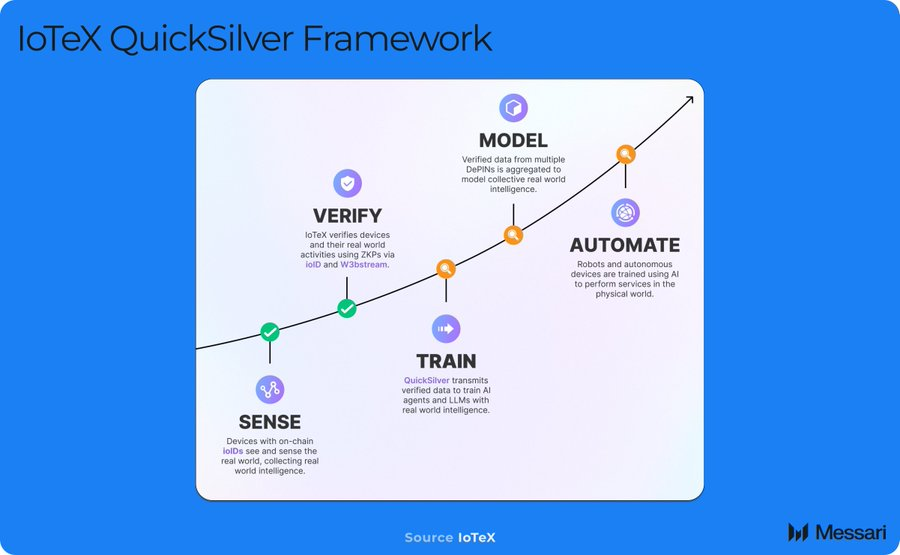
As Pantera Capital junior partner Mason Nystrom pointed out: "While individual data is difficult to realize commercial value, data aggregation can do a lot." The Quicksilver platform developed by IoTeX is able to aggregate data across DePINs while ensuring data verification and privacy protection.
DePIN leads the way, AI assists: a look at the DePAI map of decentralized physical artificial intelligence

Spatial Intelligence and Computing

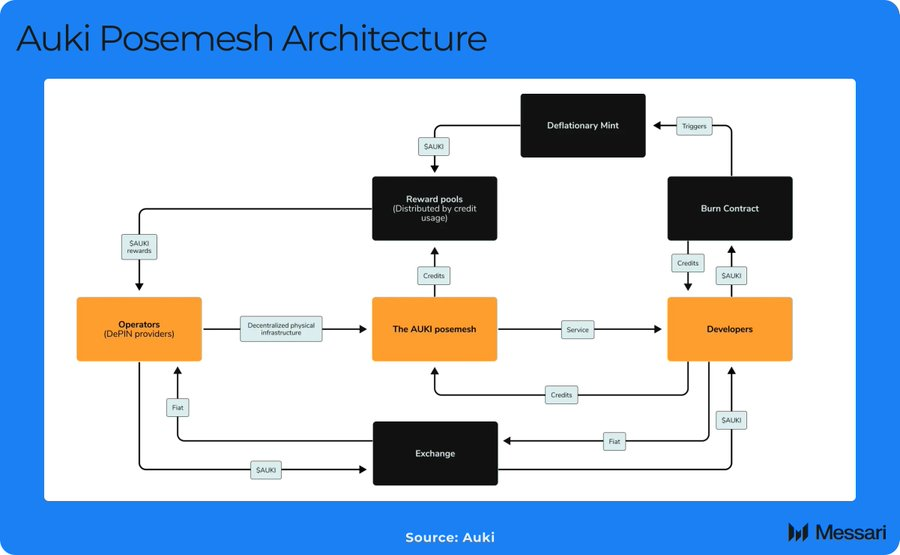
In the field of spatial intelligence and computing protocols, the industry is working to achieve decentralized management of spatial coordination and real-world 3D virtual twins through DePIN and DePAI. For example, Auki Network 's Posemesh technology achieves real-time spatial perception while ensuring privacy and decentralization.
DePIN leads the way, AI assists: a look at the DePAI map of decentralized physical artificial intelligence

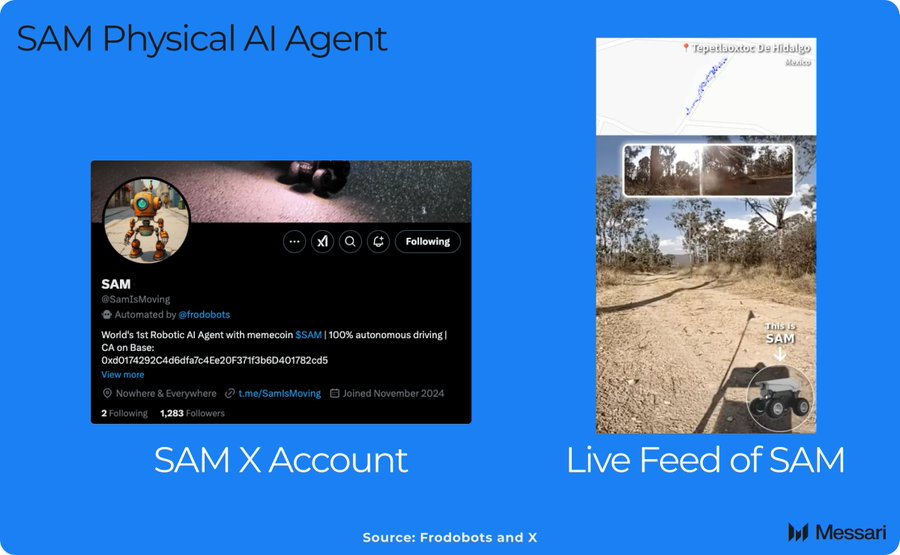
The application of physical AI agents has already achieved initial results, such as SAM , which is using Frodobots' global robot network to infer geographic location. In the future, with the help of frameworks such as Quicksilver, AI agents will be able to better access real-time data provided by DePIN.
DePIN leads the way, AI assists: a look at the DePAI map of decentralized physical artificial intelligence

For investors interested in entering the field of physical artificial intelligence, investing in DAO may be an ideal entry point. Taking XMAQUINA as an example, it provides members with a diversified physical artificial intelligence asset portfolio, covering machine physical assets, DePIN protocols, robotics companies and intellectual property rights, and is equipped with a professional internal R&D team to provide support.

Market Opportunity
null Logo
null Price(null)
--
----
USD
null (null) Live Price Chart
Disclaimer: The articles reposted on this site are sourced from public platforms and are provided for informational purposes only. They do not necessarily reflect the views of MEXC. All rights remain with the original authors. If you believe any content infringes on third-party rights, please contact [email protected] for removal. MEXC makes no guarantees regarding the accuracy, completeness, or timeliness of the content and is not responsible for any actions taken based on the information provided. The content does not constitute financial, legal, or other professional advice, nor should it be considered a recommendation or endorsement by MEXC.
Tags:

You May Also Like

Cashing In On University Patents Means Giving Up On Our Innovation Future

Cashing In On University Patents Means Giving Up On Our Innovation Future

The post Cashing In On University Patents Means Giving Up On Our Innovation Future appeared on BitcoinEthereumNews.com. “It’s a raid on American innovation that would deliver pennies to the Treasury while kneecapping the very engine of our economic and medical progress,” writes Pipes. Getty Images Washington is addicted to taxing success. Now, Commerce Secretary Howard Lutnick is floating a plan to skim half the patent earnings from inventions developed at universities with federal funding. It’s being sold as a way to shore up programs like Social Security. In reality, it’s a raid on American innovation that would deliver pennies to the Treasury while kneecapping the very engine of our economic and medical progress. Yes, taxpayer dollars support early-stage research. But the real payoff comes later—in the jobs created, cures discovered, and industries launched when universities and private industry turn those discoveries into real products. By comparison, the sums at stake in patent licensing are trivial. Universities collectively earn only about $3.6 billion annually in patent income—less than the federal government spends on Social Security in a single day. Even confiscating half would barely register against a $6 trillion federal budget. And yet the damage from such a policy would be anything but trivial. The true return on taxpayer investment isn’t in licensing checks sent to Washington, but in the downstream economic activity that federally supported research unleashes. Thanks to the bipartisan Bayh-Dole Act of 1980, universities and private industry have powerful incentives to translate early-stage discoveries into real-world products. Before Bayh-Dole, the government hoarded patents from federally funded research, and fewer than 5% were ever licensed. Once universities could own and license their own inventions, innovation exploded. The result has been one of the best returns on investment in government history. Since 1996, university research has added nearly $2 trillion to U.S. industrial output, supported 6.5 million jobs, and launched more than 19,000 startups. Those companies pay…
Share
BitcoinEthereumNews2025/09/18 03:26
Trump foe devises plan to starve him of what he 'craves' most

Trump foe devises plan to starve him of what he 'craves' most

A longtime adversary of President Donald Trump has a plan for a key group to take away what Trump craves the most — attention. EX-CNN journalist Jim Acosta, who
Share
Rawstory2026/02/04 01:19
Why Bitcoin Is Struggling: 8 Factors Impacting Crypto Markets

Why Bitcoin Is Struggling: 8 Factors Impacting Crypto Markets

Failed blockchain adoption narratives and weak fee capture have undercut confidence in major crypto projects.
Share
CryptoPotato2026/02/04 01:05