

Bitcoin Breaks $92K Amid ETF Outflows

Bitcoin pushed above the $92,000 mark, showing that buyers are still willing to step in, but the move higher is starting to face selling pressure. ETF flows suggest institutions are staying cautious, with roughly $1.37 billion leaving spot Bitcoin ETFs between Tuesday and Friday last week, according to SoSoValue. That hesitation was echoed by Fidelity’s global macro director Jurrien Timmer, who noted that Bitcoin is now tracking an internet-style adoption curve rather than an aggressive power-law move. He warned that if BTC spends the next year consolidating, the $65,000 area could become a critical long-term line in the sand. Still, long-term conviction remains strong among corporate buyers. Strategy, the world’s largest public Bitcoin holder, added 13,627 BTC last week at an average price just above $91,500, lifting its total holdings to more than 687,000 BTC.
On the DeFi front, World Liberty Financial has entered the onchain lending space with the launch of World Liberty Markets. The platform allows users to lend and borrow crypto using collateral such as ETH, tokenized BTC and major stablecoins, signaling renewed confidence in onchain credit as regulatory clarity improves. The move follows World Liberty’s application for a national trust bank charter in the US, aimed at supporting broader use of its USD-backed stablecoin for payments and treasury operations.
Macro uncertainty is also feeding into the crypto narrative. A criminal investigation involving Federal Reserve Chair Jerome Powell has added political noise to traditional markets. While this creates short-term volatility, analysts argue that any deeper loss of confidence in central banks could strengthen Bitcoin’s appeal as a non-sovereign asset. Regulatory winds in Asia are also shifting, with South Korea Financial Services Commission preparing to allow corporations to invest up to 5% of their equity in digital assets, reversing a ban that has been in place since 2017. Meanwhile, Ethereum co-founder Vitalik Buterin has stressed the need for Ethereum to become quantum-resistant, highly scalable and resilient enough to operate safely even without constant core developer intervention.
The broader crypto market remains cautiously constructive but far from risk-on. Bitcoin holding above $92,000 is encouraging, yet repeated ETF outflows suggest rallies may continue to face selling pressure in the short term. A sustained move above the mid-$90,000s is needed to shift momentum decisively back to the bulls. Until then, choppy price action and range trading remain likely. Ethereum’s long-term fundamentals continue to strengthen, but price will still be influenced by macro sentiment and broader market risk appetite. Regulatory developments in Asia are a clear positive for long-term adoption and institutional participation. Political and monetary uncertainty in the US could increase volatility across risk assets. In that environment, Bitcoin may benefit from its non-sovereign narrative, but patience will be required. Traders should stay selective, manage risk tightly, and look for confirmation before chasing breakouts.
Bitcoin pulled back from the $94,789 resistance but found solid support at the moving averages, showing that buyers are stepping in on dips rather than rushing to exit. This kind of price action suggests demand is still healthy at lower levels. Bulls will now try to regain momentum by pushing BTC back above $94,789. A clean break and close above this level could open the door for a move toward the psychological $100,000 mark, followed by a possible extension to $107,500. If that happens, it would signal that the recent correction is likely behind us. However, if BTC gets rejected again at $94,789 and slips below the moving averages, it would confirm that sellers are still active on rallies. In that case, Bitcoin may continue to range between $84,000 and $94,789 as the market waits for a stronger catalyst.
Ether has bounced off the 20-day EMA near $3,088, indicating that buyers are defending this short-term support. This rebound shows growing confidence among bulls, who will now look to push ETH above the triangle’s resistance line. A close above that resistance would tilt the momentum in favor of buyers and could drive a rally toward $3,569, with $4,000 coming into view next. That said, ETH is not out of danger yet. If the price turns lower from resistance and breaks below the moving averages, it would suggest continued indecision and range-bound trading. A breakdown below the triangle support would give bears control and could drag Ether down toward $2,623.
BNB continues to trade in a tight range between the moving averages and the overhead resistance at $928, reflecting a balance between buyers and sellers. The rising 20-day EMA near $887 and a positive RSI suggest that buyers have a slight edge. If BNB breaks above $928, it would confirm a bullish ascending triangle and could trigger a strong rally toward $1,066. On the flip side, failure to hold above the moving averages would show that sellers are defending higher levels aggressively. That scenario could pull BNB back toward the uptrend line and possibly down to the $790 support zone.
Bitcoin remains constructive as long as it holds above the moving averages, with $94,789 acting as the key breakout level. A move above this resistance could quickly attract momentum traders targeting $100,000 and higher. Failure at resistance keeps BTC stuck in a wide range, favoring short-term range trades. Ethereum looks slightly stronger, with buyers defending the 20-day EMA and pressing against triangle resistance. A breakout in ETH could lead to faster upside compared to Bitcoin in the near term. However, traders should stay cautious until ETH confirms strength with a daily close above resistance. BNB is coiling for a larger move, and the tightening range suggests a breakout may be close. Bulls have the edge as long as price stays above the rising 20-day EMA. A confirmed breakout above $928 could trigger aggressive trend-following buys. Overall, the market leans cautiously bullish, but confirmation through key resistance levels is still needed before increasing risk exposure.
Earnings Disclaimer: The information you’ll find in this article is for educational purpose only. We make no promise or guarantee of income or earnings. You have to do some work, use your best judgement and perform due diligence before using the information in this article. Your success is still up to you. Nothing in this article is intended to be professional, legal, financial and/or accounting advice. Always seek competent advice from professionals in these matters. If you break the city or other local laws, we will not be held liable for any damages you incur.
The post Bitcoin Breaks $92K Amid ETF Outflows appeared first on Platinum Crypto Academy.
You May Also Like

The Stunning ASEAN Winner Emerges As Manufacturing Shifts Accelerate
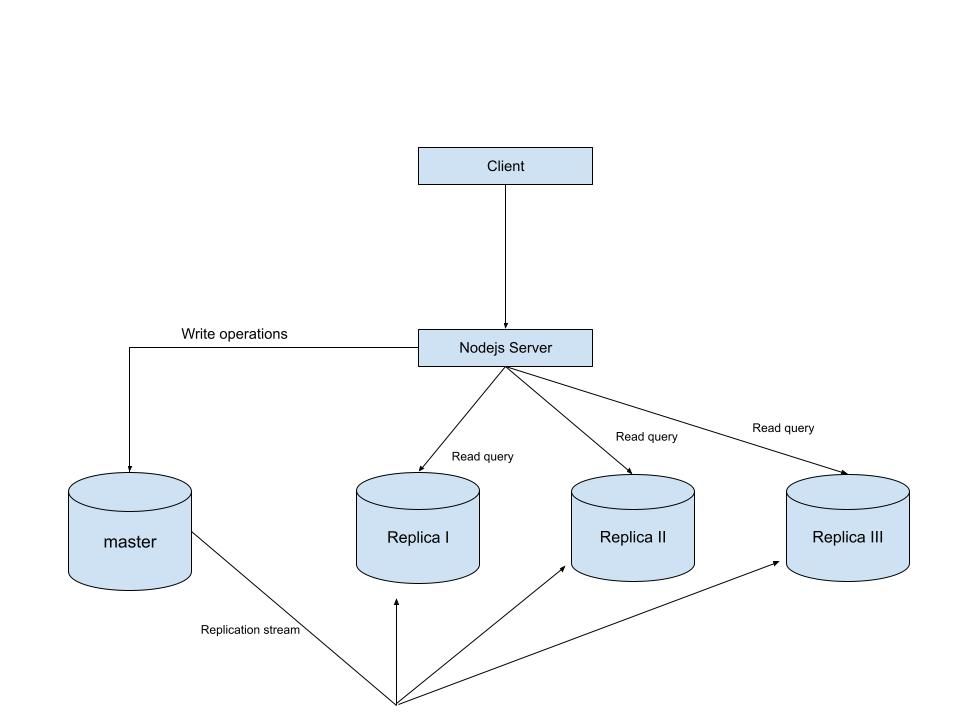
MySQL Single Leader Replication with Node.js and Docker
command: --server-id=1 --log-bin=ON The --server-id option gives each MySQL server in your replication setup its own name tag. Each one has to be unique and without it, replication won’t work at all. Another cool option not included here is binlog_format=ROW. This tells MySQL how to keep track of changes before passing them along to the replicas. By default, MySQL already uses row-based replication, but you can explicitly set it to ROW to be sure or switch it to STATEMENT if you’d rather log the actual SQL statements instead of row-by-row changes. \ Run our containers on docker Now, in the terminal, we can run the following command to spin up our database containers: docker-compose up -d \ Setting Up Our Master (Primary) Server To configure our master server, we would have to first access the running instance on docker using the following command docker exec -it mysql-master bash This command opens an interactive Bash shell inside the running Docker container named mysql-master, allowing us to run commands directly inside that container. \ Now that we’re inside the container, we can access the MySQL server and start running commands. type: mysql -uroot -p This will log you into MySQL as the root user. You’ll be prompted to enter the password you set in your docker-compose.yml file. \ Next, we need to create a special user that our replicas will use to connect to the master server and pull data. Inside the MySQL prompt, run the following commands: \ CREATE USER 'repl_user'@'%' IDENTIFIED BY 'replication_pass'; GRANT REPLICATION SLAVE ON . TO 'repl_user'@'%'; FLUSH PRIVILEGES; Here’s what’s happening: CREATE USER makes a new MySQL user called repl_user with the password replication_pass. GRANT REPLICATION SLAVE gives this user permission to act as a replication client. FLUSH PRIVILEGES tells MySQL to reload the user permissions so they take effect immediately. \ Time to Configure the Replica (Secondary) Servers a. First, let’s access the replica containers the same way we did with the master. Run this command in your terminal for each of the replica containers: \ docker exec -it <replica_container_name> bash mysql -uroot -p <replica_container_name> should be replace with the name of the replica container you are trying to setup b. Now it’s time to tell our replica where to get its data from. While inside the replica’s MySQL shell, run the following command to configure replication using the master’s details: CHANGE REPLICATION SOURCE TO SOURCE_HOST='mysql-master', SOURCE_USER='repl_user', SOURCE_PASSWORD='replication_pass', GET_SOURCE_PUBLIC_KEY=1; With the replication settings in place, let’s fire up the replica and get it syncing with the master. Still inside the MySQL shell on the replica, run: START REPLICA; This starts the replication process. To make sure everything is working, check the replica’s status with:
SHOW REPLICA STATUS\G; Look for Replica_IO_Running and Replica_SQL_Running — if both say Yes, congratulations! 🎉 Your replica is now successfully connected to the master and replicating data in real time.
Testing Our Replication Setup from the Node.js App Now that our replication is successfully set up, we can configure our Node.js server to observe the real-time effect of data being replicated from the master server to the replica server whenever we write to it. We start by installing the following dependencies:
npm i express mysql2 sequelize \ Now create a folder called src in the root directory and add the following files inside that folder connection.js, index.js and model.js. Our current directory should look like this We can now set up our connections to our master and replica server in the connection.js file as shown below
const Sequelize = require("sequelize"); const sequelize = new Sequelize({ dialect: "mysql", replication: { write: { host: "127.0.0.1", username: "root", password: "master", database: "replicaDb", }, read: [ { host: "127.0.0.1", username: "root", password: "slave", database: "replicaDb", port: 3307 }, { host: "127.0.0.1", username: "root", password: "slave", database: "replicaDb", port: 3308 }, { host: "127.0.0.1", username: "root", password: "slave", database: "replicaDb", port: 3309 }, ], }, }); async function connectdb() { try { await sequelize.authenticate(); } catch (error) { console.error("❌ unable to connect to the follower database", error); } } connectdb(); module.exports = { sequelize, }; \ We can now create a User table in the model.js file
const {DataTypes} = require("sequelize"); const { sequelize } = require("./connection"); const User = sequelize.define("User", { name: { type: DataTypes.STRING, allowNull: false, }, email: { type: DataTypes.STRING, unique: true, allowNull: false, }, }); module.exports = User \ and finally in our index.js file we can start our server and listen for connections on port 3000. from the code sample below, all inserts or updates will be routed by sequelize to the master server. while all read queries will be routed to the read replicas.
const express = require("express"); const { sequelize } = require("./connection"); const User = require("./model"); const app = express(); app.use(express.json()); async function main() { await sequelize.sync({ alter: true }); app.get("/", (req, res) => { res.status(200).json({ message: "first step to setting server up", }); }); app.post("/user", async (req, res) => { const { email, name } = req.body; let newUser = await User.build({ name, email, }); // This INSERT will go to the write (master) connection newUser = newUser.save({ returning: false }); res.status(201).json({ message: "User successfully created", }); }); app.get("/user", async (req, res) => { // This SELECT query will go to one of the read replicas const users = await User.findAll(); res.status(200).json(users); }); app.listen(3000, () => { console.log("server has connected"); }); } main(); When you make a POST request to the /users endpoint, take a moment to check both the master and replica servers to observe how data is replicated in real time. Right now, we are relying on Sequelize to automatically route requests, which works for development but isn’t robust enough for a production environment. In particular, if the master node goes down, Sequelize cannot automatically redirect requests to a newly elected leader. In the next part of this series, we’ll explore strategies to handle these challenges
