The post This Top Crypto Presale Could Replicate Dogecoin And Pepe’s Early Growth appeared on BitcoinEthereumNews.com. Crypto Projects Imagine missing out on theThe post This Top Crypto Presale Could Replicate Dogecoin And Pepe’s Early Growth appeared on BitcoinEthereumNews.com. Crypto Projects Imagine missing out on the

This Top Crypto Presale Could Replicate Dogecoin And Pepe’s Early Growth

Crypto Projects

Imagine missing out on the explosive rides of Dogecoin and Pepe, two meme coins that turned modest investments into fortunes during their early days.

Those who spotted the potential in Dogecoin back in its infancy watched it skyrocket amid viral hype, while Pepe followed suit with rapid gains driven by community fervor. Now, a new contender enters the scene: DOGEBALL, positioning itself as the top crypto presale that could mirror those legendary ascents in the crypto presale landscape.

DOGEBALL stands out in the best crypto presale category thanks to its blend of meme charm and tangible utility on a custom-built ETH Layer-2 blockchain. With near-zero fees and lightning-fast transactions, this top crypto to buy offers a secure environment that’s already testable on the presale website. Backed by a four-month presale—the quickest in the market—DOGEBALL ensures investors don’t linger for returns, while its native token fuels an addictive online game where players compete for a $1 million prize pot.

Supercharge Your Buy: 50% More Tokens with DB50 Code!

DOGEBALL’s Presale Surge Signals Massive Potential

As the ICO has just launched with a Stage 1 price of $0.0003, DOGEBALL draws crowds eager for real-world application beyond hype. The project’s custom ETH L2 blockchain, designed for gaming partnerships like those explored with giants such as Activision, sets it apart from mere claims seen elsewhere. Falcon Interactive, a powerhouse behind hundreds of Apple and Google Play hits, steps in as an official partner to promote DOGEBALL and integrate its blockchain with their vast user base, fueling adoption.

At the core, DOGEBALL introduces high-yield staking at 80% rewards, allowing holders to earn passive income right from presale purchases. This utility token powers the Dodgeball-inspired game, playable across devices, where leveling up leads to leaderboard spots and prizes up to $500,000 from the $1M pot. With a total supply of 80 billion tokens and 20 billion available during the ICO ending May 2, 2026, DOGEBALL builds on DOGE community strength for rapid momentum and future exchange listings.

Unlocking ROI: How DOGEBALL’s Numbers Stack Up for Investors

Consider the math behind DOGEBALL as a top crypto to buy: A $500 investment at the current $0.0003 presale price nets about 1.67 million tokens. At the launch price of $0.015, that stake jumps to $25,000—a swift 50x gain. Analysts project even bolder trajectories, with some forecasting $1 post-launch amid gaming hype and partnerships, turning that initial outlay into $1.67 million, or a staggering 3,333x return.

Boost those figures further with the limited-time bonus code DB50, granting 50% extra tokens during presale purchases. Apply it to that $500 buy, and the token count swells to 2.5 million—potentially yielding $2.5 million at $1. For bolder visions, analysts whisper $5 highs, but even conservative plays highlight urgency: Presales like this top crypto presale escalate stages quickly, so grabbing in now before hikes could echo turning $250 into $100,000 if momentum hits predictions.

Dogecoin’s Steady Climb Amid Market Shifts

Dogecoin continues to hold investor attention with its recent price hovering around $0.14, buoyed by the upcoming launch of a new DOGE ETF from 21Shares this week. This follows similar products from Grayscale and Bitwise in late 2025, signaling growing institutional interest in the meme coin that once surged 81,110% over a decade.

However, Dogecoin faces challenges, failing to break the $0.145 resistance amid low retail demand, trading at $0.1361 recently. Predictions for end-2026 vary, with some analysts noting potential rebounds if it surpasses $0.23, though history suggests volatility could pull it back without sustained hype.

Pepe’s Volatile Path in the Meme Arena

Pepe maintains its high-risk allure, with projections eyeing a $0.0000065 target in January 2026 despite overbought signals like an RSI at 74.08. AI models like Perplexity forecast aggressive upsides, potentially reaching $0.00012 by year-end—a 1,791% rally from current levels around $0.000006.

Yet Pepe’s viability ties heavily to retail buzz, with conservative estimates ranging $0.000005962 to $0.00000805 by March. Recent dips suggest a possible drop to $0.000005 by mid-January, underscoring its reliance on social momentum over fundamentals.

Seize the Moment Before DOGEBALL’s Ascent

In a market ripe for the next big meme breakthrough, DOGEBALL emerges as the best crypto presale, blending Dogecoin’s community vibe with Pepe’s viral energy but adding genuine utility through its blockchain and game. With predictions pointing to $1 post-launch, this top crypto presale offers a rare ground-floor entry, much like those early Dogecoin and Pepe opportunities that created millionaires.

Act fast—head to the DOGEBALL website, apply code DB50 for that 50% bonus, and secure tokens before the next price surge. Missing this top crypto presale could mean watching from the sidelines as it replicates Dogecoin and Pepe’s growth, turning today’s savvy buys into tomorrow’s massive wins.

Find Out More Information Here:

Website ~ X ~ Telegram Chat


This publication is sponsored and written by a third party. Coindoo does not endorse or assume responsibility for the content, accuracy, quality, advertising, products, or any other materials on this page. Readers are encouraged to conduct their own research before engaging in any cryptocurrency-related actions. Coindoo will not be liable, directly or indirectly, for any damages or losses resulting from the use of or reliance on any content, goods, or services mentioned.

Author

Krasimir Rusev is a journalist with many years of experience in covering cryptocurrencies and financial markets. He specializes in analysis, news, and forecasts for digital assets, providing readers with in-depth and reliable information on the latest market trends. His expertise and professionalism make him a valuable source of information for investors, traders, and anyone who follows the dynamics of the crypto world.

Next article

Source: https://coindoo.com/this-top-crypto-presale-could-replicate-dogecoin-and-pepes-early-growth-heres-why/

Market Opportunity
TOP Network Logo
TOP Network Price(TOP)
$0.0000958
$0.0000958$0.0000958
0.00%
USD
TOP Network (TOP) Live Price Chart
Disclaimer: The articles reposted on this site are sourced from public platforms and are provided for informational purposes only. They do not necessarily reflect the views of MEXC. All rights remain with the original authors. If you believe any content infringes on third-party rights, please contact [email protected] for removal. MEXC makes no guarantees regarding the accuracy, completeness, or timeliness of the content and is not responsible for any actions taken based on the information provided. The content does not constitute financial, legal, or other professional advice, nor should it be considered a recommendation or endorsement by MEXC.

You May Also Like

The Stunning ASEAN Winner Emerges As Manufacturing Shifts Accelerate

The Stunning ASEAN Winner Emerges As Manufacturing Shifts Accelerate

The post The Stunning ASEAN Winner Emerges As Manufacturing Shifts Accelerate appeared on BitcoinEthereumNews.com. Vietnam US Tariffs: The Stunning ASEAN Winner
Share
BitcoinEthereumNews2026/02/24 08:20
MySQL Single Leader Replication with Node.js and Docker

MySQL Single Leader Replication with Node.js and Docker

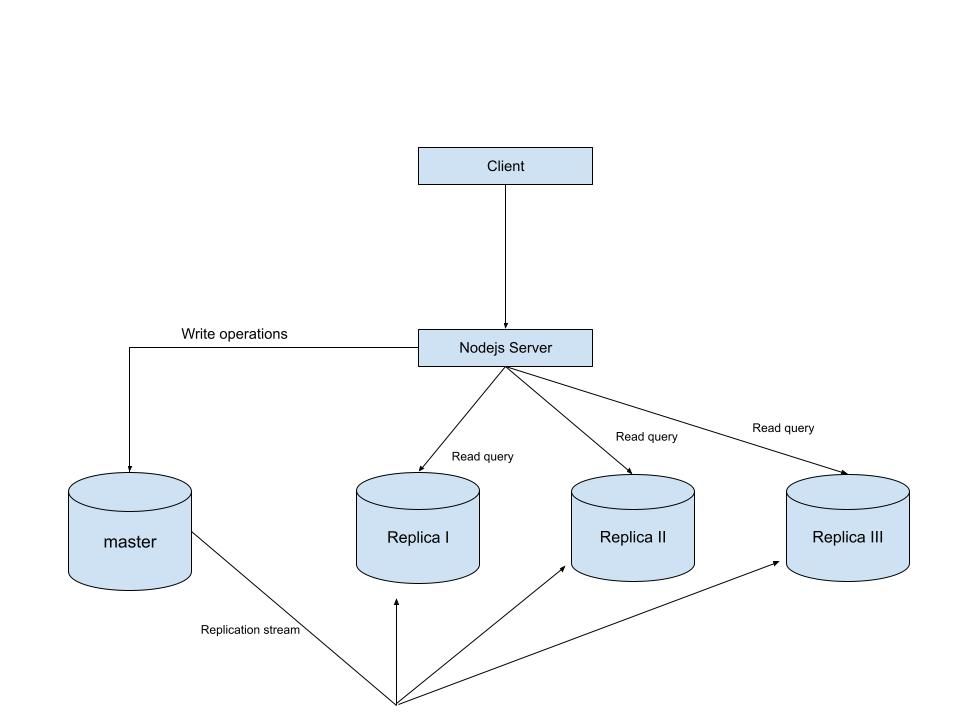
Modern applications demand high availability and the ability to scale reads without compromising performance. One of the most common strategies to achieve this is Replication. In this setup, we configured a single database to act as the leader (master) and handle all write operations, while three replicas handle read operations. In this article, we’ll walk through how to set up MySQL single-leader replication on your local machine using Docker. Once the replication is working, we’ll connect it to a Node.js application using Sequelize ORM, so that reads are routed to the replica and writes go to the master. By the end, you’ll have a working environment where you can see replication in real time Prerequisites knowledge of database replication Background knowledge of docker and docker compose Background knowledge of Nodejs and how to run a NodeJS server An Overview of what we are building Setup Setup our database servers on docker compose in the root of our project directory, create a file named docker-compose.yml with the following content to setup our mysql primary and replica databases. \ \ name: "learn-replica" volumes: mysqlMasterDatabase: mysqlSlaveDatabase: mysqlSlaveDatabaseII: mysqlSlaveDatabaseIII: networks: mysql-replication-network: services: mysql-master: image: mysql:latest container_name: mysql-master command: --server-id=1 --log-bin=ON environment: MYSQL_ROOT_PASSWORD: master MYSQL_DATABASE: replicaDb ports: - "3306:3306" volumes: - mysqlMasterDatabase:/var/lib/mysql networks: - mysql-replication-network mysql-slave: image: mysql:latest container_name: mysql-slave command: --server-id=2 --log-bin=ON environment: MYSQL_ROOT_PASSWORD: slave MYSQL_DATABASE: replicaDb MYSQL_ROOT_HOST: "%" ports: - "3307:3306" volumes: - mysqlSlaveDatabase:/var/lib/mysql depends_on: - mysql-master networks: - mysql-replication-network mysql-slaveII: image: mysql:latest container_name: mysql-slaveII command: --server-id=2 --log-bin=ON environment: MYSQL_ROOT_PASSWORD: slave MYSQL_DATABASE: replicaDb MYSQL_ROOT_HOST: "%" ports: - "3308:3306" volumes: - mysqlSlaveDatabaseII:/var/lib/mysql depends_on: - mysql-master networks: - mysql-replication-network mysql-slaveIII: image: mysql:latest container_name: mysql-slaveIII command: --server-id=3 --log-bin=ON environment: MYSQL_ROOT_PASSWORD: slave MYSQL_DATABASE: replicaDb MYSQL_ROOT_HOST: "%" ports: - "3309:3306" volumes: - mysqlSlaveDatabaseIII:/var/lib/mysql depends_on: - mysql-master networks: - mysql-replication-network In this setup, I’m creating a master database container called mysql-master and 3 replica containers called mysql-slave, mysql-slaveII and mysql-slaveIII. I won’t go too deep into the docker-compose.yml file since it’s just a basic setup, but I do want to walk you through the command line instructions used in all four services because that’s where things get interesting.
command: --server-id=1 --log-bin=ON The --server-id option gives each MySQL server in your replication setup its own name tag. Each one has to be unique and without it, replication won’t work at all. Another cool option not included here is binlog_format=ROW. This tells MySQL how to keep track of changes before passing them along to the replicas. By default, MySQL already uses row-based replication, but you can explicitly set it to ROW to be sure or switch it to STATEMENT if you’d rather log the actual SQL statements instead of row-by-row changes. \ Run our containers on docker Now, in the terminal, we can run the following command to spin up our database containers: docker-compose up -d \ Setting Up Our Master (Primary) Server To configure our master server, we would have to first access the running instance on docker using the following command docker exec -it mysql-master bash This command opens an interactive Bash shell inside the running Docker container named mysql-master, allowing us to run commands directly inside that container. \ Now that we’re inside the container, we can access the MySQL server and start running commands. type: mysql -uroot -p This will log you into MySQL as the root user. You’ll be prompted to enter the password you set in your docker-compose.yml file. \ Next, we need to create a special user that our replicas will use to connect to the master server and pull data. Inside the MySQL prompt, run the following commands: \ CREATE USER 'repl_user'@'%' IDENTIFIED BY 'replication_pass'; GRANT REPLICATION SLAVE ON . TO 'repl_user'@'%'; FLUSH PRIVILEGES; Here’s what’s happening: CREATE USER makes a new MySQL user called repl_user with the password replication_pass. GRANT REPLICATION SLAVE gives this user permission to act as a replication client. FLUSH PRIVILEGES tells MySQL to reload the user permissions so they take effect immediately. \ Time to Configure the Replica (Secondary) Servers a. First, let’s access the replica containers the same way we did with the master. Run this command in your terminal for each of the replica containers: \ docker exec -it <replica_container_name> bash mysql -uroot -p <replica_container_name> should be replace with the name of the replica container you are trying to setup b. Now it’s time to tell our replica where to get its data from. While inside the replica’s MySQL shell, run the following command to configure replication using the master’s details: CHANGE REPLICATION SOURCE TO SOURCE_HOST='mysql-master', SOURCE_USER='repl_user', SOURCE_PASSWORD='replication_pass', GET_SOURCE_PUBLIC_KEY=1; With the replication settings in place, let’s fire up the replica and get it syncing with the master. Still inside the MySQL shell on the replica, run: START REPLICA; This starts the replication process. To make sure everything is working, check the replica’s status with:
SHOW REPLICA STATUS\G; Look for Replica_IO_Running and Replica_SQL_Running — if both say Yes, congratulations! 🎉 Your replica is now successfully connected to the master and replicating data in real time.
Testing Our Replication Setup from the Node.js App Now that our replication is successfully set up, we can configure our Node.js server to observe the real-time effect of data being replicated from the master server to the replica server whenever we write to it. We start by installing the following dependencies:
npm i express mysql2 sequelize \ Now create a folder called src in the root directory and add the following files inside that folder connection.js, index.js and model.js. Our current directory should look like this We can now set up our connections to our master and replica server in the connection.js file as shown below
const Sequelize = require("sequelize"); const sequelize = new Sequelize({ dialect: "mysql", replication: { write: { host: "127.0.0.1", username: "root", password: "master", database: "replicaDb", }, read: [ { host: "127.0.0.1", username: "root", password: "slave", database: "replicaDb", port: 3307 }, { host: "127.0.0.1", username: "root", password: "slave", database: "replicaDb", port: 3308 }, { host: "127.0.0.1", username: "root", password: "slave", database: "replicaDb", port: 3309 }, ], }, }); async function connectdb() { try { await sequelize.authenticate(); } catch (error) { console.error("❌ unable to connect to the follower database", error); } } connectdb(); module.exports = { sequelize, }; \ We can now create a User table in the model.js file
const {DataTypes} = require("sequelize"); const { sequelize } = require("./connection"); const User = sequelize.define("User", { name: { type: DataTypes.STRING, allowNull: false, }, email: { type: DataTypes.STRING, unique: true, allowNull: false, }, }); module.exports = User \ and finally in our index.js file we can start our server and listen for connections on port 3000. from the code sample below, all inserts or updates will be routed by sequelize to the master server. while all read queries will be routed to the read replicas.
const express = require("express"); const { sequelize } = require("./connection"); const User = require("./model"); const app = express(); app.use(express.json()); async function main() { await sequelize.sync({ alter: true }); app.get("/", (req, res) => { res.status(200).json({ message: "first step to setting server up", }); }); app.post("/user", async (req, res) => { const { email, name } = req.body; let newUser = await User.build({ name, email, }); // This INSERT will go to the write (master) connection newUser = newUser.save({ returning: false }); res.status(201).json({ message: "User successfully created", }); }); app.get("/user", async (req, res) => { // This SELECT query will go to one of the read replicas const users = await User.findAll(); res.status(200).json(users); }); app.listen(3000, () => { console.log("server has connected"); }); } main(); When you make a POST request to the /users endpoint, take a moment to check both the master and replica servers to observe how data is replicated in real time. Right now, we are relying on Sequelize to automatically route requests, which works for development but isn’t robust enough for a production environment. In particular, if the master node goes down, Sequelize cannot automatically redirect requests to a newly elected leader. In the next part of this series, we’ll explore strategies to handle these challenges
Share
Hackernoon2025/09/18 14:44
Robinhood: Investors Are Looking Beyond BTC

Robinhood: Investors Are Looking Beyond BTC

The post Robinhood: Investors Are Looking Beyond BTC appeared on BitcoinEthereumNews.com. Investors Diversifying Beyond BTC and ETH Robinhood’s crypto division
Share
BitcoinEthereumNews2026/02/24 08:32