

JPMorgan’s Bold Forecast: US Benchmark Rate to Hold Steady in 2025, Defying Market Expectations

BitcoinWorld
JPMorgan’s Bold Forecast: US Benchmark Rate to Hold Steady in 2025, Defying Market Expectations
NEW YORK, March 2025 – In a significant divergence from prevailing market sentiment, global banking giant JPMorgan Chase has issued a bold forecast projecting the U.S. benchmark interest rate will remain unchanged throughout this year. This analysis, subsequently reported by CoinDesk citing Reuters, presents a base case scenario that directly challenges the widespread anticipation of imminent monetary easing. Consequently, this forecast carries profound implications for investors, businesses, and the broader economic landscape as the Federal Reserve navigates a complex post-pandemic environment.
JPMorgan’s Interest Rate Forecast: A Detailed Analysis
JPMorgan’s research team has constructed a detailed projection for the Federal Reserve’s policy path. Their primary model, or base case, anticipates the Federal Funds rate will stay at its current level for the entirety of 2025. Furthermore, the bank’s outlook extends into the future, predicting the next policy move will be a modest 25 basis point (bp) increase, but not until the third quarter of 2027. This extended timeline for policy stability underscores a view of a resilient, though cooling, U.S. economy that does not require immediate stimulus. The forecast is rooted in an assessment of persistent core service inflation and a labor market that, while normalizing, remains historically tight.
To provide immediate clarity, here are the key components of JPMorgan’s projection:
- 2025 Outlook: Federal Funds Rate remains unchanged.
- Next Projected Move: A +25 bp hike in Q3 2027.
- Primary Rationale: Sustained economic resilience and sticky inflation components.
- Key Risk: A material weakening in the labor market or a rapid disinflationary trend.
Market Expectations Versus Institutional Analysis
The stark contrast between JPMorgan’s view and current market pricing forms the core of this financial narrative. Data from the CME Group’s FedWatch Tool, which tracks Federal Funds futures contracts, shows traders are actively pricing in a different outcome. Specifically, the market implies a high probability of two 25 bp rate cuts before the end of 2025. This divergence highlights a fundamental debate on the trajectory of the U.S. economy.
Forecast Comparison: JPMorgan vs. Market Pricing (as of March 2025)| Entity | 2025 Forecast | Primary Driver | Next Move Timeline |
|---|---|---|---|
| JPMorgan Chase | No Change (Hold) | Inflation Persistence, Labor Market Strength | Hike in Q3 2027 |
| CME Fed Funds Futures | Two 25 bp Cuts | Anticipated Economic Cooling, Target Inflation Approach | Cuts expected in 2025 |
This disconnect is not merely academic. It influences bond yields, equity valuations, and corporate financing decisions daily. Institutional forecasts like JPMorgan’s rely heavily on proprietary economic models and direct client flow data, while market pricing reflects the aggregate, real-time sentiment of all participants, often sensitive to short-term data releases.
The Conditional Path to Rate Cuts
Importantly, JPMorgan’s analysis is not absolute. The bank explicitly notes a conditional path that could validate market expectations. Their report states that the possibility of rate cuts could re-emerge under two specific scenarios: if the labor market weakens again or if inflation slows more rapidly than their baseline model assumes. This nuance is critical for a complete understanding. It positions their “no change” forecast not as a certainty, but as the most probable outcome given current data trends, with clearly defined triggers for a policy pivot.
Historical Context and the Fed’s Dual Mandate
To fully grasp the weight of this forecast, one must consider the historical context. The Federal Reserve, operating under its dual mandate of maximum employment and price stability, embarked on the most aggressive tightening cycle in decades starting in 2022 to combat surging inflation. Having raised the benchmark rate from near-zero to a restrictive range of 5.25%-5.50%, the Fed has held steady since July 2023, entering a data-dependent observation phase.
JPMorgan’s call for an extended pause suggests their analysts believe the current policy level is successfully guiding the economy toward a “soft landing”—cooling inflation without triggering a severe recession. This view contends that premature easing could risk re-igniting price pressures, undoing the hard-won progress of the past two years. Therefore, their forecast aligns with a cautious, patient approach by the Federal Open Market Committee (FOMC).
Economic Impacts and Sector Implications
A “higher-for-longer” rate environment, as forecast by JPMorgan, carries significant real-world consequences. For consumers, it means mortgage rates and auto loan costs are likely to remain elevated, continuing pressure on housing affordability. Conversely, savers may benefit from sustained yields on savings accounts and certificates of deposit. For corporations, particularly those with high debt levels or reliant on financing, borrowing costs will stay high, potentially pressuring profit margins and investment plans.
Sector performance in equity markets often hinges on interest rate expectations. Typically, financial stocks like banks can benefit from a steady rate environment through maintained net interest margins. Growth-oriented technology stocks, which are valued on long-term future earnings, often face headwinds when discount rates are high. JPMorgan’s forecast, therefore, provides a framework for sector rotation and risk assessment within investment portfolios.
Conclusion
JPMorgan’s forecast for an unchanged US benchmark interest rate in 2025 presents a compelling counter-narrative to dominant market expectations. This analysis, grounded in a view of persistent inflationary pressures and economic resilience, underscores the complex balancing act facing the Federal Reserve. While the market prices in optimism for easing, JPMorgan advocates for policy patience, with cuts only materializing under specific economic deteriorations. As always, the actual path of monetary policy will be determined by incoming data on employment, inflation, and growth. For now, this forecast serves as a crucial reminder that the road to the Fed’s 2% inflation target may be longer and less linear than many hope, making the JPMorgan interest rate forecast a critical data point for all market observers in the year ahead.
FAQs
Q1: What is the US benchmark interest rate?
The US benchmark interest rate, often called the Federal Funds rate, is the target interest rate set by the Federal Reserve for overnight lending between commercial banks. It is the primary tool for implementing monetary policy and influences all other interest rates in the economy, from mortgages to savings accounts.
Q2: Why does JPMorgan’s forecast differ from market expectations?
JPMorgan’s forecast is based on its internal economic models analyzing factors like core inflation trends and labor market tightness, leading to a “higher-for-longer” view. Market expectations, reflected in futures pricing, often incorporate more immediate sentiment and may anticipate a faster economic cooling that prompts the Fed to cut rates sooner.
Q3: What would cause the Fed to cut rates according to JPMorgan?
JPMorgan specified two primary conditions: a noticeable weakening of the labor market (e.g., a sustained rise in unemployment) or a more rapid deceleration in inflation than currently observed, which would give the Fed confidence that price stability is durably achieved.
Q4: How does a steady interest rate affect the average person?
A steady rate means borrowing costs for homes, cars, and credit cards remain high, impacting affordability. However, it also means returns on savings vehicles like high-yield savings accounts and CDs may stay attractive. It generally suggests a period of economic stability without dramatic stimulus or tightening.
Q5: What is a “basis point” (bp) in interest rate terms?
A basis point is a standard unit of measure for interest rates and other financial percentages. One basis point equals one-hundredth of one percentage point (0.01%). Therefore, a 25 bp change equates to a 0.25% move in the interest rate.
This post JPMorgan’s Bold Forecast: US Benchmark Rate to Hold Steady in 2025, Defying Market Expectations first appeared on BitcoinWorld.
You May Also Like

The Stunning ASEAN Winner Emerges As Manufacturing Shifts Accelerate
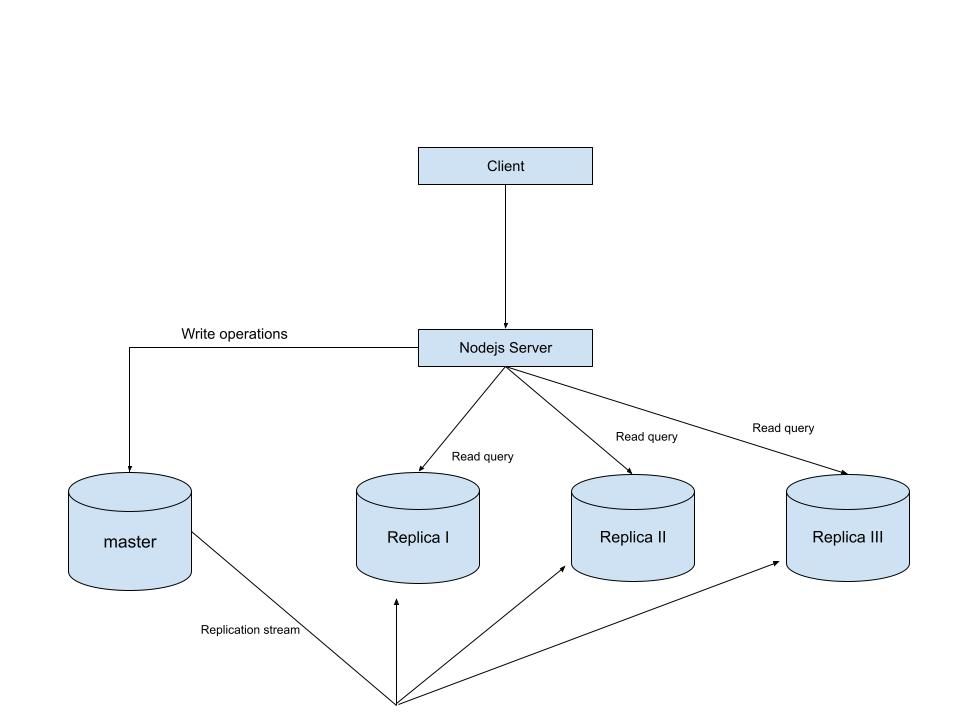
MySQL Single Leader Replication with Node.js and Docker
command: --server-id=1 --log-bin=ON The --server-id option gives each MySQL server in your replication setup its own name tag. Each one has to be unique and without it, replication won’t work at all. Another cool option not included here is binlog_format=ROW. This tells MySQL how to keep track of changes before passing them along to the replicas. By default, MySQL already uses row-based replication, but you can explicitly set it to ROW to be sure or switch it to STATEMENT if you’d rather log the actual SQL statements instead of row-by-row changes. \ Run our containers on docker Now, in the terminal, we can run the following command to spin up our database containers: docker-compose up -d \ Setting Up Our Master (Primary) Server To configure our master server, we would have to first access the running instance on docker using the following command docker exec -it mysql-master bash This command opens an interactive Bash shell inside the running Docker container named mysql-master, allowing us to run commands directly inside that container. \ Now that we’re inside the container, we can access the MySQL server and start running commands. type: mysql -uroot -p This will log you into MySQL as the root user. You’ll be prompted to enter the password you set in your docker-compose.yml file. \ Next, we need to create a special user that our replicas will use to connect to the master server and pull data. Inside the MySQL prompt, run the following commands: \ CREATE USER 'repl_user'@'%' IDENTIFIED BY 'replication_pass'; GRANT REPLICATION SLAVE ON . TO 'repl_user'@'%'; FLUSH PRIVILEGES; Here’s what’s happening: CREATE USER makes a new MySQL user called repl_user with the password replication_pass. GRANT REPLICATION SLAVE gives this user permission to act as a replication client. FLUSH PRIVILEGES tells MySQL to reload the user permissions so they take effect immediately. \ Time to Configure the Replica (Secondary) Servers a. First, let’s access the replica containers the same way we did with the master. Run this command in your terminal for each of the replica containers: \ docker exec -it <replica_container_name> bash mysql -uroot -p <replica_container_name> should be replace with the name of the replica container you are trying to setup b. Now it’s time to tell our replica where to get its data from. While inside the replica’s MySQL shell, run the following command to configure replication using the master’s details: CHANGE REPLICATION SOURCE TO SOURCE_HOST='mysql-master', SOURCE_USER='repl_user', SOURCE_PASSWORD='replication_pass', GET_SOURCE_PUBLIC_KEY=1; With the replication settings in place, let’s fire up the replica and get it syncing with the master. Still inside the MySQL shell on the replica, run: START REPLICA; This starts the replication process. To make sure everything is working, check the replica’s status with:
SHOW REPLICA STATUS\G; Look for Replica_IO_Running and Replica_SQL_Running — if both say Yes, congratulations! 🎉 Your replica is now successfully connected to the master and replicating data in real time.
Testing Our Replication Setup from the Node.js App Now that our replication is successfully set up, we can configure our Node.js server to observe the real-time effect of data being replicated from the master server to the replica server whenever we write to it. We start by installing the following dependencies:
npm i express mysql2 sequelize \ Now create a folder called src in the root directory and add the following files inside that folder connection.js, index.js and model.js. Our current directory should look like this We can now set up our connections to our master and replica server in the connection.js file as shown below
const Sequelize = require("sequelize"); const sequelize = new Sequelize({ dialect: "mysql", replication: { write: { host: "127.0.0.1", username: "root", password: "master", database: "replicaDb", }, read: [ { host: "127.0.0.1", username: "root", password: "slave", database: "replicaDb", port: 3307 }, { host: "127.0.0.1", username: "root", password: "slave", database: "replicaDb", port: 3308 }, { host: "127.0.0.1", username: "root", password: "slave", database: "replicaDb", port: 3309 }, ], }, }); async function connectdb() { try { await sequelize.authenticate(); } catch (error) { console.error("❌ unable to connect to the follower database", error); } } connectdb(); module.exports = { sequelize, }; \ We can now create a User table in the model.js file
const {DataTypes} = require("sequelize"); const { sequelize } = require("./connection"); const User = sequelize.define("User", { name: { type: DataTypes.STRING, allowNull: false, }, email: { type: DataTypes.STRING, unique: true, allowNull: false, }, }); module.exports = User \ and finally in our index.js file we can start our server and listen for connections on port 3000. from the code sample below, all inserts or updates will be routed by sequelize to the master server. while all read queries will be routed to the read replicas.
const express = require("express"); const { sequelize } = require("./connection"); const User = require("./model"); const app = express(); app.use(express.json()); async function main() { await sequelize.sync({ alter: true }); app.get("/", (req, res) => { res.status(200).json({ message: "first step to setting server up", }); }); app.post("/user", async (req, res) => { const { email, name } = req.body; let newUser = await User.build({ name, email, }); // This INSERT will go to the write (master) connection newUser = newUser.save({ returning: false }); res.status(201).json({ message: "User successfully created", }); }); app.get("/user", async (req, res) => { // This SELECT query will go to one of the read replicas const users = await User.findAll(); res.status(200).json(users); }); app.listen(3000, () => { console.log("server has connected"); }); } main(); When you make a POST request to the /users endpoint, take a moment to check both the master and replica servers to observe how data is replicated in real time. Right now, we are relying on Sequelize to automatically route requests, which works for development but isn’t robust enough for a production environment. In particular, if the master node goes down, Sequelize cannot automatically redirect requests to a newly elected leader. In the next part of this series, we’ll explore strategies to handle these challenges
