The post Why Does the US Still Have Stablecoin Fears? appeared on BitcoinEthereumNews.com. As the US Senate edges closer to finalizing its digital asset market The post Why Does the US Still Have Stablecoin Fears? appeared on BitcoinEthereumNews.com. As the US Senate edges closer to finalizing its digital asset market

Why Does the US Still Have Stablecoin Fears?

As the US Senate edges closer to finalizing its digital asset market structure bill, one surprisingly simple issue is holding up progress: stablecoin yield.

While headlines focus on DeFi oversight and token classification, Columbia Business School adjunct professor and crypto policy analyst Omid Malekan warns that much of the debate in Washington is based on myths rather than evidence.

Banks vs. Stablecoins: Are US Lawmakers Fighting a Phantom Threat?

Malekan identifies five persistent misconceptions about stablecoins and their impact on the banking system

Sponsored

Sponsored

According to Malekan, who has reportedly been lecturing at Columbia Business School since 2019, these misconceptions, if left unchallenged, threaten to stall meaningful crypto legislation.

  • Myth 1: Stablecoins shrink bank deposits

Contrary to popular belief, stablecoin adoption does not necessarily cannibalize US bank deposits.

Malekan explains that foreign demand for stablecoins, coupled with the Treasury-backed reserves that issuers hold, actually tends to increase domestic bank deposits.

Every additional dollar in stablecoin issuance often generates more banking activity through the buying and selling of government securities, repo markets, and foreign exchange transactions.

“Stablecoins increase demand for dollars everywhere,” Malekan notes, emphasizing that reward-bearing stablecoins amplify this effect.

  • Myth 2: Stablecoins threaten bank credit supply

Critics argue that deposits flowing into stablecoins could reduce lending. Malekan calls this a false conflation of profitability and credit supply.

In a late December post, Paradigm VP for regulatory affairs Justin Slaughter, who also served as a former senior advisor at the SEC and CFTC, highlighted that stablecoin adoption should be neutral or help facilitate credit creation and bank deposits.

Malekan challenges that banks, particularly large US institutions, maintain substantial reserves and strong net interest margins. While deposit competition may slightly affect profits, it does not reduce banks’ ability to lend.

Sponsored

Sponsored

In fact, banks can offset any shortfall by reducing reserves held at the Federal Reserve or by adjusting interest paid to depositors.

His stance aligns with that of the Blockchain Association, which called out big banks for claiming stablecoins threaten deposits and credit markets.

  • Myth 3: Banks must be protected from competition

A third misconception is that banks are the primary source of credit and must be shielded from stablecoins.

Data tells a different story, with the BIS Data Portal showing banks account for over 20% of total credit in the US Non-bank lenders deliver the majority of financing to households and businesses. This includes money market funds, mortgage-backed securities, and private credit providers.

Malekan argues that stablecoins could even lower borrowing costs by boosting demand for Treasury-backed assets, which serve as benchmarks for non-bank credit.

  • Myth 4: Community banks are most at risk

The narrative that small or regional banks are the most vulnerable to stablecoin adoption is also misleading.

Sponsored

Sponsored

Malekan highlights that large “money center” banks face real competition, particularly in payment processing and corporate services. Community banks, serving local and often older client bases, are less likely to see deposits migrate to digital dollars.

In essence, the institutions most threatened by stablecoins are the same ones already benefiting from high profitability and global operations.

  • Myth 5: Borrowers matter more than savers

Finally, the idea that protecting borrowers should outweigh the interests of savers is fundamentally flawed.

Rewarding stablecoin holders strengthens savings, which in turn supports overall economic stability.

Encouraging saving through innovation benefits both sides of the lending equation, enhancing consumer resilience and economic dynamism.

Sponsored

Sponsored

The Real Barrier To Reform

According to Malekan, the ongoing debate over stablecoin yields is largely driven by fear and serves as a delay tactic.

The Genius Act has already clarified the legality of stablecoin rewards, yet Washington remains mired in outdated concerns pushed by lobbying interests.

Malekan likens the situation to asking Congress to outlaw Tesla instead of letting the automotive industry innovate:

With bipartisan legislation, including the Senate’s 278-page draft, poised for markup, the time for evidence-based decision-making is now.

Misconceptions about stablecoins hinder regulatory clarity, potentially slowing down the process, and may also impede US competitiveness in a global digital dollar economy.

Malekan urges policymakers to focus on facts over fear, highlighting that well-designed stablecoin adoption could enhance savings, boost bank deposits, and lower borrowing costs, all while fostering innovation in payments and DeFi.

In short, stablecoins are not the threat many fear. Misplaced myths are. Clearing these misconceptions could unlock the next chapter of American crypto reform, potentially striking a balance between consumer benefits, market efficiency, and financial stability.

Source: https://beincrypto.com/stablecoin-myths-stall-us-crypto-reform/

Market Opportunity
Talus Logo
Talus Price(US)
$0.00347
$0.00347$0.00347
0.00%
USD
Talus (US) Live Price Chart
Disclaimer: The articles reposted on this site are sourced from public platforms and are provided for informational purposes only. They do not necessarily reflect the views of MEXC. All rights remain with the original authors. If you believe any content infringes on third-party rights, please contact [email protected] for removal. MEXC makes no guarantees regarding the accuracy, completeness, or timeliness of the content and is not responsible for any actions taken based on the information provided. The content does not constitute financial, legal, or other professional advice, nor should it be considered a recommendation or endorsement by MEXC.

You May Also Like

The Stunning ASEAN Winner Emerges As Manufacturing Shifts Accelerate

The Stunning ASEAN Winner Emerges As Manufacturing Shifts Accelerate

The post The Stunning ASEAN Winner Emerges As Manufacturing Shifts Accelerate appeared on BitcoinEthereumNews.com. Vietnam US Tariffs: The Stunning ASEAN Winner
Share
BitcoinEthereumNews2026/02/24 08:20
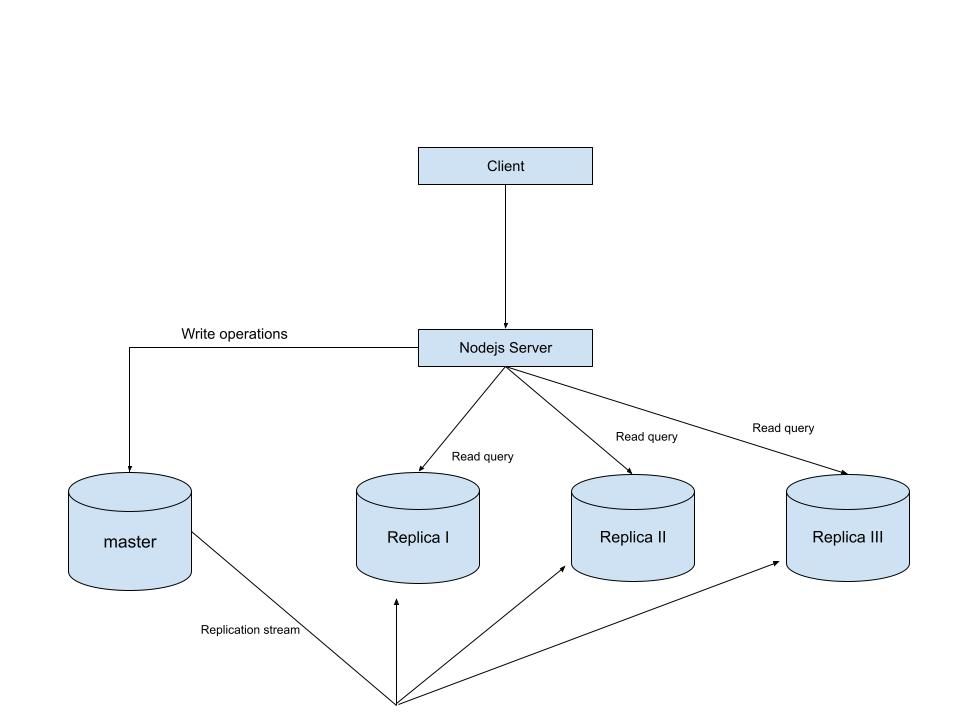
MySQL Single Leader Replication with Node.js and Docker

MySQL Single Leader Replication with Node.js and Docker

Modern applications demand high availability and the ability to scale reads without compromising performance. One of the most common strategies to achieve this is Replication. In this setup, we configured a single database to act as the leader (master) and handle all write operations, while three replicas handle read operations. In this article, we’ll walk through how to set up MySQL single-leader replication on your local machine using Docker. Once the replication is working, we’ll connect it to a Node.js application using Sequelize ORM, so that reads are routed to the replica and writes go to the master. By the end, you’ll have a working environment where you can see replication in real time Prerequisites knowledge of database replication Background knowledge of docker and docker compose Background knowledge of Nodejs and how to run a NodeJS server An Overview of what we are building Setup Setup our database servers on docker compose in the root of our project directory, create a file named docker-compose.yml with the following content to setup our mysql primary and replica databases. \ \ name: "learn-replica" volumes: mysqlMasterDatabase: mysqlSlaveDatabase: mysqlSlaveDatabaseII: mysqlSlaveDatabaseIII: networks: mysql-replication-network: services: mysql-master: image: mysql:latest container_name: mysql-master command: --server-id=1 --log-bin=ON environment: MYSQL_ROOT_PASSWORD: master MYSQL_DATABASE: replicaDb ports: - "3306:3306" volumes: - mysqlMasterDatabase:/var/lib/mysql networks: - mysql-replication-network mysql-slave: image: mysql:latest container_name: mysql-slave command: --server-id=2 --log-bin=ON environment: MYSQL_ROOT_PASSWORD: slave MYSQL_DATABASE: replicaDb MYSQL_ROOT_HOST: "%" ports: - "3307:3306" volumes: - mysqlSlaveDatabase:/var/lib/mysql depends_on: - mysql-master networks: - mysql-replication-network mysql-slaveII: image: mysql:latest container_name: mysql-slaveII command: --server-id=2 --log-bin=ON environment: MYSQL_ROOT_PASSWORD: slave MYSQL_DATABASE: replicaDb MYSQL_ROOT_HOST: "%" ports: - "3308:3306" volumes: - mysqlSlaveDatabaseII:/var/lib/mysql depends_on: - mysql-master networks: - mysql-replication-network mysql-slaveIII: image: mysql:latest container_name: mysql-slaveIII command: --server-id=3 --log-bin=ON environment: MYSQL_ROOT_PASSWORD: slave MYSQL_DATABASE: replicaDb MYSQL_ROOT_HOST: "%" ports: - "3309:3306" volumes: - mysqlSlaveDatabaseIII:/var/lib/mysql depends_on: - mysql-master networks: - mysql-replication-network In this setup, I’m creating a master database container called mysql-master and 3 replica containers called mysql-slave, mysql-slaveII and mysql-slaveIII. I won’t go too deep into the docker-compose.yml file since it’s just a basic setup, but I do want to walk you through the command line instructions used in all four services because that’s where things get interesting.
command: --server-id=1 --log-bin=ON The --server-id option gives each MySQL server in your replication setup its own name tag. Each one has to be unique and without it, replication won’t work at all. Another cool option not included here is binlog_format=ROW. This tells MySQL how to keep track of changes before passing them along to the replicas. By default, MySQL already uses row-based replication, but you can explicitly set it to ROW to be sure or switch it to STATEMENT if you’d rather log the actual SQL statements instead of row-by-row changes. \ Run our containers on docker Now, in the terminal, we can run the following command to spin up our database containers: docker-compose up -d \ Setting Up Our Master (Primary) Server To configure our master server, we would have to first access the running instance on docker using the following command docker exec -it mysql-master bash This command opens an interactive Bash shell inside the running Docker container named mysql-master, allowing us to run commands directly inside that container. \ Now that we’re inside the container, we can access the MySQL server and start running commands. type: mysql -uroot -p This will log you into MySQL as the root user. You’ll be prompted to enter the password you set in your docker-compose.yml file. \ Next, we need to create a special user that our replicas will use to connect to the master server and pull data. Inside the MySQL prompt, run the following commands: \ CREATE USER 'repl_user'@'%' IDENTIFIED BY 'replication_pass'; GRANT REPLICATION SLAVE ON . TO 'repl_user'@'%'; FLUSH PRIVILEGES; Here’s what’s happening: CREATE USER makes a new MySQL user called repl_user with the password replication_pass. GRANT REPLICATION SLAVE gives this user permission to act as a replication client. FLUSH PRIVILEGES tells MySQL to reload the user permissions so they take effect immediately. \ Time to Configure the Replica (Secondary) Servers a. First, let’s access the replica containers the same way we did with the master. Run this command in your terminal for each of the replica containers: \ docker exec -it <replica_container_name> bash mysql -uroot -p <replica_container_name> should be replace with the name of the replica container you are trying to setup b. Now it’s time to tell our replica where to get its data from. While inside the replica’s MySQL shell, run the following command to configure replication using the master’s details: CHANGE REPLICATION SOURCE TO SOURCE_HOST='mysql-master', SOURCE_USER='repl_user', SOURCE_PASSWORD='replication_pass', GET_SOURCE_PUBLIC_KEY=1; With the replication settings in place, let’s fire up the replica and get it syncing with the master. Still inside the MySQL shell on the replica, run: START REPLICA; This starts the replication process. To make sure everything is working, check the replica’s status with:
SHOW REPLICA STATUS\G; Look for Replica_IO_Running and Replica_SQL_Running — if both say Yes, congratulations! 🎉 Your replica is now successfully connected to the master and replicating data in real time.
Testing Our Replication Setup from the Node.js App Now that our replication is successfully set up, we can configure our Node.js server to observe the real-time effect of data being replicated from the master server to the replica server whenever we write to it. We start by installing the following dependencies:
npm i express mysql2 sequelize \ Now create a folder called src in the root directory and add the following files inside that folder connection.js, index.js and model.js. Our current directory should look like this We can now set up our connections to our master and replica server in the connection.js file as shown below
const Sequelize = require("sequelize"); const sequelize = new Sequelize({ dialect: "mysql", replication: { write: { host: "127.0.0.1", username: "root", password: "master", database: "replicaDb", }, read: [ { host: "127.0.0.1", username: "root", password: "slave", database: "replicaDb", port: 3307 }, { host: "127.0.0.1", username: "root", password: "slave", database: "replicaDb", port: 3308 }, { host: "127.0.0.1", username: "root", password: "slave", database: "replicaDb", port: 3309 }, ], }, }); async function connectdb() { try { await sequelize.authenticate(); } catch (error) { console.error("❌ unable to connect to the follower database", error); } } connectdb(); module.exports = { sequelize, }; \ We can now create a User table in the model.js file
const {DataTypes} = require("sequelize"); const { sequelize } = require("./connection"); const User = sequelize.define("User", { name: { type: DataTypes.STRING, allowNull: false, }, email: { type: DataTypes.STRING, unique: true, allowNull: false, }, }); module.exports = User \ and finally in our index.js file we can start our server and listen for connections on port 3000. from the code sample below, all inserts or updates will be routed by sequelize to the master server. while all read queries will be routed to the read replicas.
const express = require("express"); const { sequelize } = require("./connection"); const User = require("./model"); const app = express(); app.use(express.json()); async function main() { await sequelize.sync({ alter: true }); app.get("/", (req, res) => { res.status(200).json({ message: "first step to setting server up", }); }); app.post("/user", async (req, res) => { const { email, name } = req.body; let newUser = await User.build({ name, email, }); // This INSERT will go to the write (master) connection newUser = newUser.save({ returning: false }); res.status(201).json({ message: "User successfully created", }); }); app.get("/user", async (req, res) => { // This SELECT query will go to one of the read replicas const users = await User.findAll(); res.status(200).json(users); }); app.listen(3000, () => { console.log("server has connected"); }); } main(); When you make a POST request to the /users endpoint, take a moment to check both the master and replica servers to observe how data is replicated in real time. Right now, we are relying on Sequelize to automatically route requests, which works for development but isn’t robust enough for a production environment. In particular, if the master node goes down, Sequelize cannot automatically redirect requests to a newly elected leader. In the next part of this series, we’ll explore strategies to handle these challenges
Share
Hackernoon2025/09/18 14:44
Robinhood: Investors Are Looking Beyond BTC

Robinhood: Investors Are Looking Beyond BTC

The post Robinhood: Investors Are Looking Beyond BTC appeared on BitcoinEthereumNews.com. Investors Diversifying Beyond BTC and ETH Robinhood’s crypto division
Share
BitcoinEthereumNews2026/02/24 08:32