

It's time to start making profits again: A breakout of the Russell 2000 index may be the clarion call for a crypto rally.
Author: Our Crypto Talk
Compiled by: Yuliya, PANews
This article is not about a cryptocurrency chart, nor a narrative about any meme coin, and is even temporarily unrelated to Bitcoin. Our focus is on the Russell 2000 Index, which is quietly accomplishing something that has only happened twice in its history: a breakout, thereby triggering a return to risk appetite.
If you've been in the market long enough, you've seen this "movie" more than once.
A pattern that has been consistently ignored by most people
History always repeats itself, and even if you don't believe in cycles, you should still respect this repetitiveness.
-
In 2017, the Russell 2000 index broke through, and then the "copycat season" arrived.
-
In 2021, the Russell 2000 index broke through again, and then the "copycat season" was staged again.
Although each market narrative is different and popular tokens vary, the underlying driving mechanism is the same.
Now, in January 2026, the Russell 2020 index will break through 2,600 points for the first time in history.
This breakout is not an illusion, nor is it a false fluctuation caused by thin trading during the holiday. Rather, it is a comprehensive breakout with huge trading volume and broad market base. The index has risen by about 15% year-to-date.
What does the Russell index truly represent?
Trading in small-cap stocks is not based on market sentiment or feeling, but rather on liquidity.
The Russell 500 index tracks approximately 2,000 smaller U.S. companies, including regional banks, industrial enterprises, and biotechnology companies. The survival and development of these companies are closely linked to the lending environment and growth expectations.
-
These companies will be severely impacted when liquidity tightens.
-
When liquidity is ample, they lead the entire market.
This is why the Russell 500 index never leads the charge in defensive markets, but often becomes a leader when risk appetite returns. Therefore, a breakout in this index is not a simple technical phenomenon; it is a clear signal that capital is moving down the risk curve in search of higher returns.
This is not an isolated incident: supported by the macroeconomic background.
If you broaden your perspective, you'll find that the current macroeconomic context and this trend form an unsettling alignment.
-
The Federal Reserve is quietly supporting market reserves by purchasing Treasury bills. While this is not full-scale quantitative easing (QE), it is sufficient to alleviate funding pressures and lubricate the credit market.
-
The U.S. Treasury is reducing the balance of its General Account (TGA), which means pushing cash back into circulation rather than withdrawing it.
-
Fiscal policy is gradually easing on the fringes, with measures such as larger tax rebates, potential consumer subsidies, and lowering interest rates by purchasing mortgage-backed securities, thereby freeing up household and business balance sheets.
Individually, none of these measures would constitute a strong "stimulus." But when they come together, they create a powerful waterfall of liquidity. And liquidity is never static.
The true transmission path of liquidity
This is a part that people often misunderstand. Liquidity doesn't magically "transfer" from cash to altcoins; it flows in a specific order and hierarchy:
-
First, it will stabilize the bond and financing markets.
-
Then, it will drive up the stock market.
-
Next, it will look for assets with higher beta (higher risk, higher return) within the stock market.
-
Only after that will it spill over into the alternative asset space.
Small-cap stocks occupy the middle link in this chain. They are riskier than mega-cap stocks, but for institutional investors, the logic is clear and easy to understand. When small-cap stocks start to outperform the market, it usually means that capital has moved beyond "safety" and begun to pursue "growth."
This is why historically, breakouts in the Russell 500 index have often foreshadowed broader expansion in risk assets. This is not a coincidence, but a mechanical and inevitable transmission process.
The place of cryptocurrencies in it
The cryptocurrency market is not a leader of the liquidity cycle, but rather an amplifier.
When the Russell 500 index enters a sustained upward trend, assets with higher betas tend to lag behind. Historical data has repeatedly shown that ETH and altcoins typically react within one to three months.
This is not because traders are glued to the Russell index on trading software (such as TradingView), but because the same liquidity driving capital into small-cap stocks will eventually seek assets with higher convexity (i.e., the potential for huge returns with less risk).
Cryptocurrencies, especially those markets that have experienced capitulation sell-offs, thin order book depths, and exhausted selling pressure, represent the endpoint of this search. This is precisely the landscape the crypto market will face in early 2026.
Why does it feel different this time, even though the essence remains the same?
Every cycle has a reason for "this time being different".
-
2017 was a year of excessive ICO bubble.
-
2021 was marked by excessive leverage and market bubbles.
-
2026 will be marked by regulatory uncertainty, macroeconomic concerns, and market fatigue.
These superficial explanations may change, but the underlying principles of capital flow remain the same.
Unlike in the past, the market's "pipeline system" (i.e., infrastructure) has been greatly improved: a clearer regulatory framework, institutional-level custody standards, spot ETFs continuously absorbing market supply, and a reduction in excessive speculative leverage at the market periphery.
Even industry insiders are starting to openly discuss views that were previously kept secret. When CZ talks about a potential "supercycle," he's not referring to hype, but rather the synergy of multiple factors: liquidity, regulation, and market structure are finally starting to move in the same direction. This synergy is extremely rare.
Mistakes Crypto Native Traders Are Making
Most cryptocurrency traders are still glued to crypto charts, waiting for confirmation signals from the market itself. But by then, it's usually too late.
When altcoins begin to surge in price, capital has already been rotated through other markets. This signals a return of risk appetite.
This phenomenon first appears in markets where prices can rise without relying on hype. Small-cap stocks are one such market. They don't rise because of memes, but because borrowing becomes easier and capital regains confidence.
Therefore, ignoring the Russell index breakout because "it has nothing to do with encryption" would be completely missing the point.
The true meaning of a "supercycle"
A "supercycle" does not mean that all assets will rise forever. It means:
-
Structural support: The rally lasted longer than expected because it was driven by market structure rather than short-lived euphoria.
-
Pullbacks are absorbed: Market pullbacks are absorbed by buying pressure and do not escalate into a chain reaction of sharp declines.
-
Capital rotation rather than withdrawal: Capital will rotate between different sectors rather than completely withdraw from the market.
-
High-beta assets are finding a new lease on life: After years of suppression, high-risk, high-return assets have finally gained breathing room and room to rise.
This is precisely the environment in which altcoins have historically stopped "bleeding" and begun to revalue. Not all altcoins will rise, and the rise will not be uniform, but the trend will be decisive.
The signal is already on the table.
The Russell 500 index breaking its all-time high is no accident. Its occurrence is inevitably accompanied by easing liquidity, a return to higher risk tolerance, and renewed capital inflows.
-
It did so in 2017.
-
It did the same thing in 2021.
-
It is doing that now.
You don't need to predict specific target prices, nor do you need to pinpoint the exact timing of rotations. You just need to recognize that when small-cap stocks lead the market, they are telling you what's coming next.
The crypto market has ignored this signal in the past, only to regret it months later.
You May Also Like

The Stunning ASEAN Winner Emerges As Manufacturing Shifts Accelerate
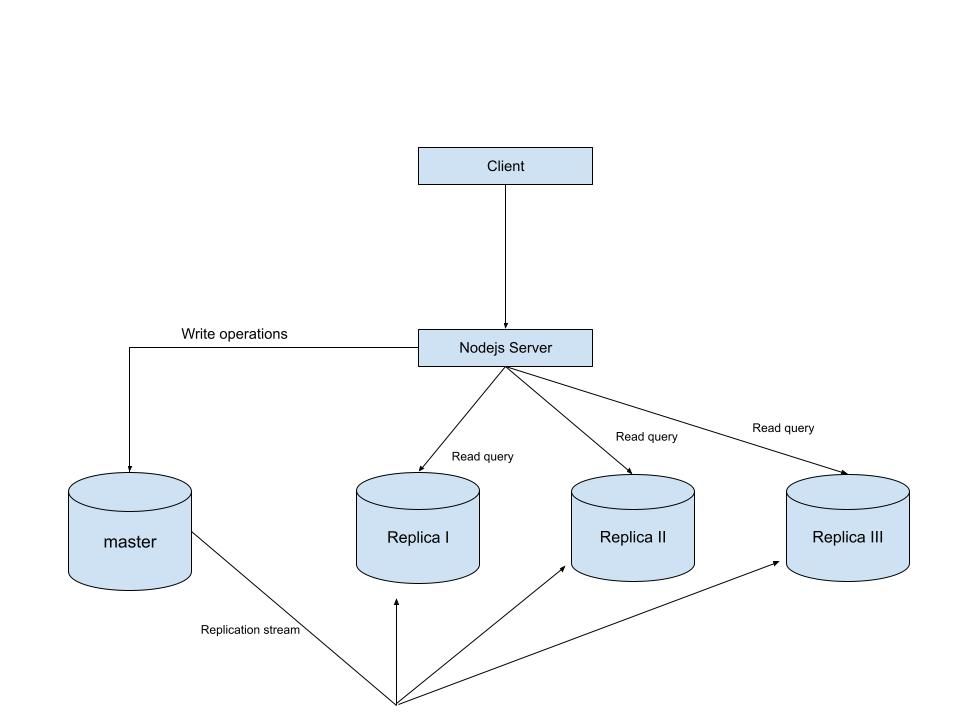
MySQL Single Leader Replication with Node.js and Docker
command: --server-id=1 --log-bin=ON The --server-id option gives each MySQL server in your replication setup its own name tag. Each one has to be unique and without it, replication won’t work at all. Another cool option not included here is binlog_format=ROW. This tells MySQL how to keep track of changes before passing them along to the replicas. By default, MySQL already uses row-based replication, but you can explicitly set it to ROW to be sure or switch it to STATEMENT if you’d rather log the actual SQL statements instead of row-by-row changes. \ Run our containers on docker Now, in the terminal, we can run the following command to spin up our database containers: docker-compose up -d \ Setting Up Our Master (Primary) Server To configure our master server, we would have to first access the running instance on docker using the following command docker exec -it mysql-master bash This command opens an interactive Bash shell inside the running Docker container named mysql-master, allowing us to run commands directly inside that container. \ Now that we’re inside the container, we can access the MySQL server and start running commands. type: mysql -uroot -p This will log you into MySQL as the root user. You’ll be prompted to enter the password you set in your docker-compose.yml file. \ Next, we need to create a special user that our replicas will use to connect to the master server and pull data. Inside the MySQL prompt, run the following commands: \ CREATE USER 'repl_user'@'%' IDENTIFIED BY 'replication_pass'; GRANT REPLICATION SLAVE ON . TO 'repl_user'@'%'; FLUSH PRIVILEGES; Here’s what’s happening: CREATE USER makes a new MySQL user called repl_user with the password replication_pass. GRANT REPLICATION SLAVE gives this user permission to act as a replication client. FLUSH PRIVILEGES tells MySQL to reload the user permissions so they take effect immediately. \ Time to Configure the Replica (Secondary) Servers a. First, let’s access the replica containers the same way we did with the master. Run this command in your terminal for each of the replica containers: \ docker exec -it <replica_container_name> bash mysql -uroot -p <replica_container_name> should be replace with the name of the replica container you are trying to setup b. Now it’s time to tell our replica where to get its data from. While inside the replica’s MySQL shell, run the following command to configure replication using the master’s details: CHANGE REPLICATION SOURCE TO SOURCE_HOST='mysql-master', SOURCE_USER='repl_user', SOURCE_PASSWORD='replication_pass', GET_SOURCE_PUBLIC_KEY=1; With the replication settings in place, let’s fire up the replica and get it syncing with the master. Still inside the MySQL shell on the replica, run: START REPLICA; This starts the replication process. To make sure everything is working, check the replica’s status with:
SHOW REPLICA STATUS\G; Look for Replica_IO_Running and Replica_SQL_Running — if both say Yes, congratulations! 🎉 Your replica is now successfully connected to the master and replicating data in real time.
Testing Our Replication Setup from the Node.js App Now that our replication is successfully set up, we can configure our Node.js server to observe the real-time effect of data being replicated from the master server to the replica server whenever we write to it. We start by installing the following dependencies:
npm i express mysql2 sequelize \ Now create a folder called src in the root directory and add the following files inside that folder connection.js, index.js and model.js. Our current directory should look like this We can now set up our connections to our master and replica server in the connection.js file as shown below
const Sequelize = require("sequelize"); const sequelize = new Sequelize({ dialect: "mysql", replication: { write: { host: "127.0.0.1", username: "root", password: "master", database: "replicaDb", }, read: [ { host: "127.0.0.1", username: "root", password: "slave", database: "replicaDb", port: 3307 }, { host: "127.0.0.1", username: "root", password: "slave", database: "replicaDb", port: 3308 }, { host: "127.0.0.1", username: "root", password: "slave", database: "replicaDb", port: 3309 }, ], }, }); async function connectdb() { try { await sequelize.authenticate(); } catch (error) { console.error("❌ unable to connect to the follower database", error); } } connectdb(); module.exports = { sequelize, }; \ We can now create a User table in the model.js file
const {DataTypes} = require("sequelize"); const { sequelize } = require("./connection"); const User = sequelize.define("User", { name: { type: DataTypes.STRING, allowNull: false, }, email: { type: DataTypes.STRING, unique: true, allowNull: false, }, }); module.exports = User \ and finally in our index.js file we can start our server and listen for connections on port 3000. from the code sample below, all inserts or updates will be routed by sequelize to the master server. while all read queries will be routed to the read replicas.
const express = require("express"); const { sequelize } = require("./connection"); const User = require("./model"); const app = express(); app.use(express.json()); async function main() { await sequelize.sync({ alter: true }); app.get("/", (req, res) => { res.status(200).json({ message: "first step to setting server up", }); }); app.post("/user", async (req, res) => { const { email, name } = req.body; let newUser = await User.build({ name, email, }); // This INSERT will go to the write (master) connection newUser = newUser.save({ returning: false }); res.status(201).json({ message: "User successfully created", }); }); app.get("/user", async (req, res) => { // This SELECT query will go to one of the read replicas const users = await User.findAll(); res.status(200).json(users); }); app.listen(3000, () => { console.log("server has connected"); }); } main(); When you make a POST request to the /users endpoint, take a moment to check both the master and replica servers to observe how data is replicated in real time. Right now, we are relying on Sequelize to automatically route requests, which works for development but isn’t robust enough for a production environment. In particular, if the master node goes down, Sequelize cannot automatically redirect requests to a newly elected leader. In the next part of this series, we’ll explore strategies to handle these challenges
