The post Pakistan Partners With World Liberty Financial (WLF) for USD-Linked Stablecoin appeared first on Coinpedia Fintech News Pakistan is moving closer to adoptingThe post Pakistan Partners With World Liberty Financial (WLF) for USD-Linked Stablecoin appeared first on Coinpedia Fintech News Pakistan is moving closer to adopting

Pakistan Partners With World Liberty Financial (WLF) for USD-Linked Stablecoin
2026/01/14 16:33
3 min read
Pakistan Partners With World Liberty Financial (WLF)

The post Pakistan Partners With World Liberty Financial (WLF) for USD-Linked Stablecoin appeared first on Coinpedia Fintech News

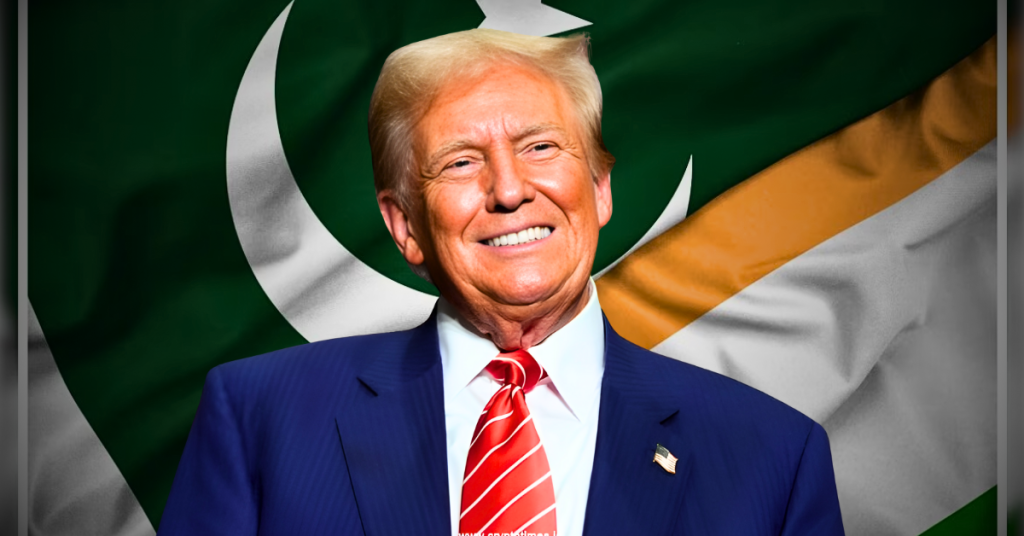
Pakistan is moving closer to adopting stablecoin-based payments after signing an agreement with a company linked to World Liberty Financial (WLF), a crypto platform connected to the family of U.S. President Donald Trump. The partnership aims to explore using World Liberty’s dollar-backed stablecoin for cross-border transactions, marking a key step in Pakistan’s digital payment plans.

How the Stablecoin Deal Works

Under the agreement, World Liberty Financial will work with Pakistan’s central bank to integrate its USD1 stablecoin into a regulated digital payment system. The stablecoin will run alongside Pakistan’s existing and upcoming digital currency infrastructure.

The deal involves SC Financial Technologies, a lesser-known firm connected to World Liberty Financial. While full details are not yet public, Pakistan is expected to formally announce the partnership when World Liberty CEO Zach Witkoff visits Islamabad. Officials from the finance ministry and central bank have not made statements, but discussions indicate close coordination with regulators.

Why Stablecoins Matter for Pakistan

Stablecoins are digital tokens typically pegged to the U.S. dollar. They are popular worldwide because they are more stable than traditional cryptocurrencies. For Pakistan, stablecoins could help solve challenges in cross-border payments, especially remittances, which are a major source of foreign exchange.

  • Also Read :
  •   Russia Plans Major Shift in Crypto Regulation
  •   ,

Using a dollar-linked token can reduce transaction costs, speed up payments, and lower reliance on cash. Pakistan has already been preparing for digital finance reforms, including piloting a central bank digital currency (CBDC) and drafting rules for virtual assets.

Global and Political Context

The deal comes as U.S. regulations around stablecoins become more supportive, encouraging wider global adoption. World Liberty Financial has already handled large international transactions. In 2025, Abu Dhabi-based MGX reportedly used its stablecoin to acquire a $2 billion stake in Binance.

If completed, this partnership would make Pakistan one of the first countries to use stablecoins at a national level. It highlights the growing interest in digital payments modernization and shows how emerging markets are looking to blockchain solutions to improve their financial systems.

Never Miss a Beat in the Crypto World!

Stay ahead with breaking news, expert analysis, and real-time updates on the latest trends in Bitcoin, altcoins, DeFi, NFTs, and more.

bell icon Subscribe to News

FAQs

How will stablecoins benefit Pakistan’s economy?

Stablecoins can cut remittance costs, speed up international transfers, improve dollar access, and support Pakistan’s broader digital finance goals.

Will Pakistan replace its currency with a stablecoin?

No. The USD-backed stablecoin will run alongside existing systems and future CBDC plans, not replace the Pakistani rupee.

Is World Liberty Financial officially linked to Donald Trump?

World Liberty Financial is connected to Trump’s family members, but the project operates as a private crypto platform, not a U.S. government initiative.

When will Pakistan officially launch stablecoin payments?

There is no fixed date yet. A formal announcement is expected after regulatory reviews and World Liberty’s leadership visit to Islamabad.

Market Opportunity
Union Logo
Union Price(U)
$0.001493
$0.001493$0.001493
+4.33%
USD
Union (U) Live Price Chart
Disclaimer: The articles reposted on this site are sourced from public platforms and are provided for informational purposes only. They do not necessarily reflect the views of MEXC. All rights remain with the original authors. If you believe any content infringes on third-party rights, please contact [email protected] for removal. MEXC makes no guarantees regarding the accuracy, completeness, or timeliness of the content and is not responsible for any actions taken based on the information provided. The content does not constitute financial, legal, or other professional advice, nor should it be considered a recommendation or endorsement by MEXC.

You May Also Like

ETH Exit Queue Gridlocks As Validators Pile Up

ETH Exit Queue Gridlocks As Validators Pile Up

The post ETH Exit Queue Gridlocks As Validators Pile Up appeared on BitcoinEthereumNews.com. Welcome to The Protocol, CoinDesk’s weekly wrap of the most important stories in cryptocurrency tech development. I’m Margaux Nijkerk, a reporter at CoinDesk. In this issue: Ethereum Faces Validator Bottleneck With 2.5M ETH Awaiting Exit Is Ethereum’s DeFi Future on L2s? Liquidity, Innovation Say Perhaps Yes Ethereum Foundation Starts New AI Team to Support Agentic Payments American Express Introduces Blockchain-Based ‘Travel Stamps’ Network News ETHEREUM VALIDATOR EXIT QUEUE FACES BOTTLENECK: Ethereum’s proof-of-stake system is facing its largest test yet. As of mid-September, roughly 2.5 million ETH — valued at roughly $11.25 billion — is waiting to leave the validator set, according to validator queue dashboards. The backlog pushed exit wait times to more than 46 days on Sept. 14, the longest in Ethereum’s short staking history, dashboards show. The last peak, in August, put the exit queue at 18 days. The initial spark came on Sept. 9, when Kiln, a large infrastructure provider, chose to exit all of its validators as a safety precaution. The move, triggered by recent security incidents including the NPM supply-chain attack and the SwissBorg breach, pushed around 1.6 million ETH into the queue at once. Though unrelated to Ethereum’s staking protocol itself, the hacks rattled confidence enough for Kiln to hit pause, highlighting how events in the broader crypto ecosystem can cascade into Ethereum’s validator dynamics. In a blog post from staking provider Figment, Senior Analyst Benjamin Thalman noted that the current exit queue build up isn’t only about security. After ETH has rallied more than 160% since April, some stakers are simply taking profits. Others, especially institutional players, are shifting their portfolios’ exposure. At the same time, the number of validators entering the Ethereum staking ecosystem has been steadily rising. Ethereum’s churn limit, which is a protocol safeguard that caps how many validators can…
Share
BitcoinEthereumNews2025/09/18 15:15
TheWell Bioscience Launches VitroPrime™ 3D Culture and Imaging Plate for Organoid and 3D Cell Culture Workflows

TheWell Bioscience Launches VitroPrime™ 3D Culture and Imaging Plate for Organoid and 3D Cell Culture Workflows

A new in-plate, zero-disruption design enables reproducible organoid culture, downstream processing, and high-resolution imaging in a single 3D cell culture plate
Share
AI Journal2026/02/09 22:02
Tom Lee Linked BitMine Scoops Up $82 Million in Ethereum as Institutional Appetite Heats Up

Tom Lee Linked BitMine Scoops Up $82 Million in Ethereum as Institutional Appetite Heats Up

Tom Lee–Backed BitMine Makes $82 Million Ethereum Purchase, Signaling Growing Institutional Confidence BitMine, a crypto-focused firm associated with veteran ma
Share
Hokanews2026/02/09 22:08