The post Prediction markets surge to $702M volume amid regulation appeared on BitcoinEthereumNews.com. Trading platforms tied to prediction markets are startingThe post Prediction markets surge to $702M volume amid regulation appeared on BitcoinEthereumNews.com. Trading platforms tied to prediction markets are starting

Prediction markets surge to $702M volume amid regulation

4 min read

Trading platforms tied to prediction markets are starting 2026 with record activity, even as regulators intensify their focus on the sector.

Record daily volume of $702M kicks off 2026

Prediction-focused platforms ended 2025 on a sharp uptrend and carried that momentum into 2026. According to Dune Analytics, combined trading activity across major venues recently jumped to about $702M in a single day, marking a new all time high for the niche.

Data shows prediction market volume has been rising quickly since late 2025. Kalshi drove most of the action, handling roughly two thirds of total trades, while Polymarket and Opinion also saw heavy usage during the same period.

On Monday, total trading volume reached a fresh ATH of $700M, underscoring how interest continues to accelerate. Moreover, figures shared by analyst Jonaso on January 15, 2026 highlighted that Kalshi generated $460M that day, securing 66.4% of the market.

Meanwhile, Polymarket, Opinion and @trylimitless each captured close to a 14% share, indicating that liquidity is spreading beyond a single venue. However, the leadership position of Kalshi remains clear based on its reported trading dominance.

How prediction markets are evolving in crypto

These on chain venues allow users to trade contracts tied to the outcome of real world events, including elections, macroeconomic data and sports. Over recent months, they have emerged as one of crypto‘s fastest growing applications, supported by rising on chain volumes and user participation.

Moreover, large crypto companies have started to engage with this trend. Coinbase and Gemini are reportedly exploring integrations that would surface event based markets to their customers, while wallet providers such as MetaMask are adding interfaces that give users direct access.

This expansion has helped push leading firms in the space to multi billion dollar valuations, as capital flows into infrastructure and liquidity. That said, the prediction markets narrative is increasingly colliding with regulatory debates that could shape how these platforms operate in the coming years.

For many users, one of the key attractions of prediction markets is the ability to express views on politics, finance and culture using relatively small stakes. However, that same breadth of topics has drawn closer attention from policymakers worried about gambling, market integrity and potential insider trading.

Regulatory scrutiny intensifies on event based trading

Regulators worldwide are now paying closer attention to prediction markets regulation, even as trading volumes climb. A recent high profile position on Polymarket triggered concerns that the trader might have relied on non public information, prompting fresh calls for oversight.

Lawmakers in several US states are reviewing whether certain contracts tied to politics, sports or financial assets should face restrictions or outright bans. Moreover, some jurisdictions are questioning whether existing gambling or securities rules already cover these types of event based markets.

States such as New York and New Jersey have previously attempted to limit access to specific platforms, arguing that the products look similar to unlicensed wagering. In response, operators have pushed back in court, arguing their contracts provide information markets rather than pure gambling products.

This week, the legal battle produced a notable development. A federal judge in Tennessee paused state level action against Kalshi, giving the company temporary relief as it contests the enforcement effort. However, the underlying questions about classification and jurisdiction remain unresolved.

Global pushback and resilient user demand

Outside the United States, authorities have also started to react. Late last year, Ukraine moved to block local access to Polymarket, explicitly framing these services as a form of gambling that should not be available to residents.

Even with these policy headwinds, trading data indicates that users have not stepped back in a meaningful way. Moreover, the recent $702M record day suggests that appetite for event based speculation and hedging remains robust despite mounting regulatory uncertainty.

For now, platforms are trying to balance growth with compliance while investors track both trading metrics and legal developments. In summary, the sector’s trajectory will likely depend on how courts and regulators ultimately define these markets and whether stricter rules impact liquidity over time.

Source: https://en.cryptonomist.ch/2026/01/15/prediction-markets-702m-volume-regulation/

Market Opportunity
SURGE Logo
SURGE Price(SURGE)
$0.06494
$0.06494$0.06494
-7.55%
USD
SURGE (SURGE) Live Price Chart
Disclaimer: The articles reposted on this site are sourced from public platforms and are provided for informational purposes only. They do not necessarily reflect the views of MEXC. All rights remain with the original authors. If you believe any content infringes on third-party rights, please contact [email protected] for removal. MEXC makes no guarantees regarding the accuracy, completeness, or timeliness of the content and is not responsible for any actions taken based on the information provided. The content does not constitute financial, legal, or other professional advice, nor should it be considered a recommendation or endorsement by MEXC.

You May Also Like

Three dormant wallets, suspected to belong to the same entity, purchased 5,970 ETH eight hours ago.

Three dormant wallets, suspected to belong to the same entity, purchased 5,970 ETH eight hours ago.

PANews reported on February 4 that, according to Lookonchain monitoring, three wallets that had been dormant for four years (likely controlled by the same entity
Share
PANews2026/02/04 11:36
NVIDIA Stock Price Analysis as OpenAI Issues Concerns About its Chips

NVIDIA Stock Price Analysis as OpenAI Issues Concerns About its Chips

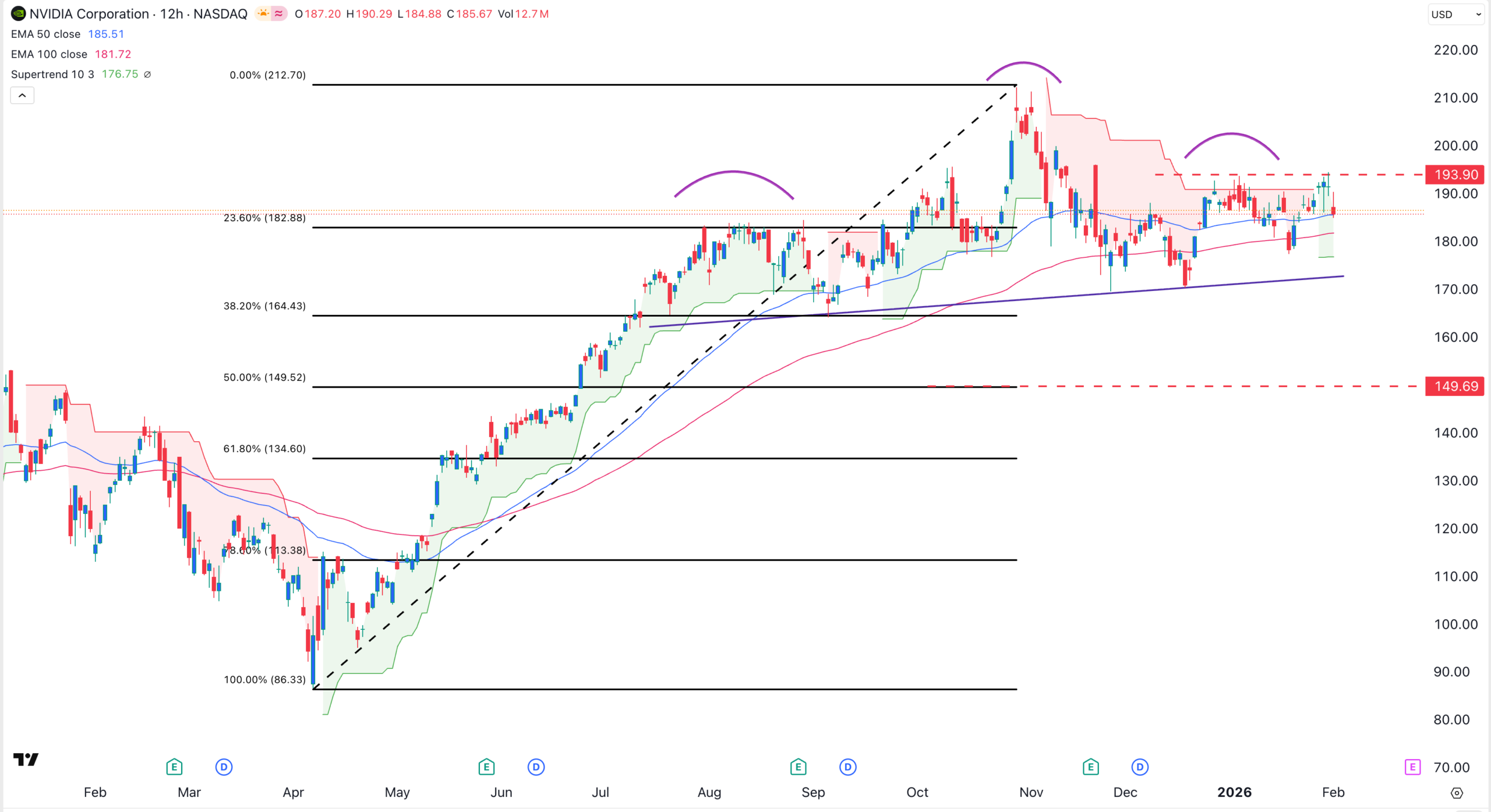
Key Insights NVIDIA stock started the week in the red. It crashed by over 2%. Meanwhile, the S&P 500, Dow Jones, and Nasdaq 100 moved close to their all-time highs
Share
Themarketperiodical2026/02/04 11:27
Ondo Finance Launches USDY Yieldcoin on Stellar, Bringing Tokenized U.S. Treasuries to Users

Ondo Finance Launches USDY Yieldcoin on Stellar, Bringing Tokenized U.S. Treasuries to Users

Ondo Finance, a U.S.-based digital asset firm specializing in bringing traditional financial products on-chain through tokenization, is expanding its yieldcoin USDY to the Stellar network. This lates update marks a step forward in merging tokenized real-world assets with a global payments infrastructure, unlocking new opportunities for users worldwide. The announcement was made at the Stellar Meridian event in Copacabana, Rio de Janeiro, on September 17. USDY Joins the Stellar Ecosystem Ondo Finance, a recognized leader in tokenized real-world assets, announced the deployment of United States Dollar Yield (USDY) on Stellar, the payments-focused blockchain known for speed and low transaction costs. USDY is the most widely available “yieldcoin,” offering investors access to onchain assets backed by U.S. Treasuries. This launch allows Stellar’s global user base to tap into permissionless, yield-bearing assets tied to one of the safest financial instruments in the world. It also aligns with Stellar’s mission of driving fast, affordable cross-border payments. Combining Yield with Payments Infrastructure “Stablecoins unlocked global access to the U.S. dollar. With USDY, we’re taking the next step by bringing U.S. Treasuries onchain in a form that combines stability, liquidity, and yield,” said Ian De Bode, Chief Strategy Officer at Ondo Finance. “Fast, affordable cross-border payments are at the center of what Stellar was designed to do. The global reach of the Stellar ecosystem combined with a yield-bearing asset like USDY levels up what is possible onchain, allowing wallets and businesses to offer yield opportunities to their users,” said Denelle Dixon, CEO of the Stellar Development Foundation. Ondo claims by pairing USDY with Stellar’s infrastructure, new possibilities open up in treasury management, collateralization, and everyday financial applications. Unlocking Institutional and Retail Use Cases USDY currently manages over $650 million in total value locked (TVL) across nine blockchains and offers a 5.3% APY. By launching on Stellar, Ondo Finance extends these benefits to global retail and institutional users. The firm explains balances on Stellar can now become productive, supporting use cases such as onchain savings, institutional treasury strategies, cost-efficient collateral for DeFi protocols, and remittance flows that carry yield rather than remaining static. A Milestone for Tokenized Treasuries With the integration of USDY, Stellar users gain more than just access to stable-value assets—they gain access to institutional-grade yield. For investors outside the U.S., the launch represents a new way to combine the safety of Treasuries with the accessibility of blockchain technology. As tokenization accelerates globally, Ondo Finance’s decision to deploy USDY on Stellar reinforces the narrative that blockchain is not just about speculation, but about reimagining the global financial system through secure, yield-bearing digital assets
Share
CryptoNews2025/09/18 00:46