

Goldman Sachs Targets Asset Tokenization and Prediction Markets as Revolutionary Growth Engines for 2025

BitcoinWorld
Goldman Sachs Targets Asset Tokenization and Prediction Markets as Revolutionary Growth Engines for 2025
NEW YORK, March 2025 – In a definitive move signaling Wall Street’s deepening embrace of blockchain technology, Goldman Sachs has publicly identified asset tokenization and prediction markets as its next major growth frontiers. Consequently, the investment banking giant is accelerating infrastructure development and regulatory engagement to capture these emerging opportunities. This strategic pivot, confirmed by CEO David Solomon, underscores a broader institutional shift toward digital assets, provided that clear regulatory frameworks, like the proposed CLARITY Act, establish necessary market certainty.
Goldman Sachs Accelerates Asset Tokenization Infrastructure
Asset tokenization, the process of converting rights to a real-world asset into a digital token on a blockchain, represents a core focus for Goldman Sachs. The bank is currently building dedicated internal infrastructure to support this technology. This development follows years of cautious exploration within the traditional finance sector. Tokenization promises significant efficiency gains, including enhanced liquidity, fractional ownership, and streamlined settlement processes for assets ranging from real estate and private equity to fine art and bonds.
Goldman Sachs anticipates that institutional adoption of cryptocurrencies and tokenized assets will begin in earnest during 2025. However, this timeline remains contingent upon regulatory clarity from U.S. policymakers. The bank’s strategy involves creating a seamless bridge between traditional capital markets and the evolving digital asset ecosystem. For instance, a tokenized private fund could enable faster capital calls and provide secondary market liquidity for qualified investors, fundamentally altering private market dynamics.
The Regulatory Imperative: Engaging with Washington
CEO David Solomon confirmed that Goldman Sachs has directly communicated its views on the proposed Crypto Market Structure Bill, known as the CLARITY Act, to lawmakers in Washington. This engagement is crucial. The banking sector requires well-defined rules concerning custody, issuance, trading, and compliance for digital assets. Clear regulations would mitigate operational and legal risks, thereby unlocking institutional capital at scale. Goldman’s proactive stance reflects its belief that regulatory frameworks, rather than technology alone, will dictate the pace of mainstream adoption.
Exploring Prediction Markets as a Strategic Collaboration
Parallel to its tokenization efforts, Goldman Sachs is exploring prediction markets as a novel growth area. Solomon stated the bank is in direct contact with leaders of major prediction market platforms to explore potential collaborations. Prediction markets allow participants to trade contracts based on the outcome of future events, aggregating crowd-sourced information into a price that reflects collective probability.
From a financial institution’s perspective, these markets offer potential applications in risk assessment, hedging, and gauging market sentiment on geopolitical or economic events. A collaboration could involve providing liquidity, structuring financial products based on market data, or integrating prediction market insights into traditional investment research. This exploration signals Goldman’s interest in data-driven, alternative sources of alpha and market intelligence.
- Asset Tokenization: Digitizing real-world assets (RWAs) like bonds, real estate, and commodities on blockchain networks.
- Prediction Markets: Platforms for trading outcome-based contracts, useful for hedging and sentiment analysis.
- CLARITY Act: Proposed U.S. legislation aiming to create a comprehensive regulatory framework for digital assets.
- Institutional Infrastructure: The custody, trading, and compliance systems needed for large-scale crypto participation.
| Strategic Area | Primary Goal | Key Dependency |
|---|---|---|
| Asset Tokenization | Unlock liquidity & efficiency for private markets | Regulatory clarity on token classification & custody |
| Prediction Markets | Access new data & create structured products | Establishing compliant partnerships & frameworks |
| Regulatory Engagement | Shape a workable digital asset market structure | Bipartisan support for legislation like CLARITY |
| Institutional Adoption | Onboard traditional finance clients to crypto | Mature infrastructure and proven use cases |
The Broader Context: Wall Street’s Digital Transformation
Goldman Sachs’ announcement is not an isolated event. Instead, it reflects a calculated acceleration within a multi-year trend. Major global banks, including JPMorgan, BNY Mellon, and Citigroup, have all invested heavily in blockchain and digital asset divisions. The difference now is the transition from research and pilot projects to building scalable, revenue-generating business lines. The total value of tokenized real-world assets has seen compound growth, attracting institutional attention.
This shift is driven by client demand, competitive pressure, and the maturation of underlying technology. Furthermore, jurisdictions like the EU with its MiCA regulation and Hong Kong with its licensing regime are creating viable regulatory environments, increasing the urgency for U.S. action. Goldman’s move positions it to capture first-mover advantages in servicing high-net-worth individuals and institutional clients seeking exposure to these new asset classes.
Evidence and Expert Perspectives on the Trend
Analysis from firms like Boston Consulting Group projects the tokenized asset market could reach $16 trillion by 2030. Similarly, major asset managers like BlackRock have launched tokenized funds on public blockchains. These developments provide tangible evidence supporting Goldman’s strategic direction. Experts note that banks possess the client relationships, regulatory expertise, and capital necessary to bridge the old and new financial worlds. Their entry is often seen as a validation of the technology’s long-term viability, moving beyond speculative crypto trading to foundational financial infrastructure.
Conclusion
Goldman Sachs’ focused push into asset tokenization and prediction markets marks a pivotal moment for institutional crypto adoption. By building infrastructure, engaging with regulators on the CLARITY Act, and seeking strategic collaborations, the bank is preparing for a future where digital and traditional finance converge. The success of this strategy hinges on clear regulations and the demonstrable economic benefits of tokenization. Ultimately, Goldman’s actions signal that the institutional adoption of blockchain technology is transitioning from a possibility to an imminent reality, with 2025 poised as a critical launch year.
FAQs
Q1: What is asset tokenization?
Asset tokenization is the process of creating a digital representation of a real-world asset, like real estate or a bond, on a blockchain. This digital token can then be divided, traded, and settled with greater efficiency and transparency.
Q2: Why are prediction markets relevant to a bank like Goldman Sachs?
Prediction markets aggregate crowd-sourced information on event outcomes. Banks can use this data for risk modeling, sentiment analysis, and potentially to create new financial products for clients seeking to hedge against specific outcomes.
Q3: What is the CLARITY Act?
The CLARITY Act is proposed U.S. legislation aimed at creating a comprehensive regulatory framework for cryptocurrencies and digital assets. It seeks to clarify rules for issuers, exchanges, and custodians, which institutions like Goldman Sachs require before fully committing capital.
Q4: When does Goldman Sachs expect institutional crypto adoption to take off?
Goldman Sachs anticipates institutional adoption could begin in earnest in 2025, but explicitly states this depends on the establishment of clear regulatory guidelines from U.S. policymakers.
Q5: Is Goldman Sachs building its own blockchain?
The available reporting indicates Goldman is building related infrastructure, which typically refers to custody, trading, and compliance systems. This likely involves integrating with existing blockchain networks rather than building a wholly new proprietary chain.
This post Goldman Sachs Targets Asset Tokenization and Prediction Markets as Revolutionary Growth Engines for 2025 first appeared on BitcoinWorld.
You May Also Like

Three dormant wallets, suspected to belong to the same entity, purchased 5,970 ETH eight hours ago.
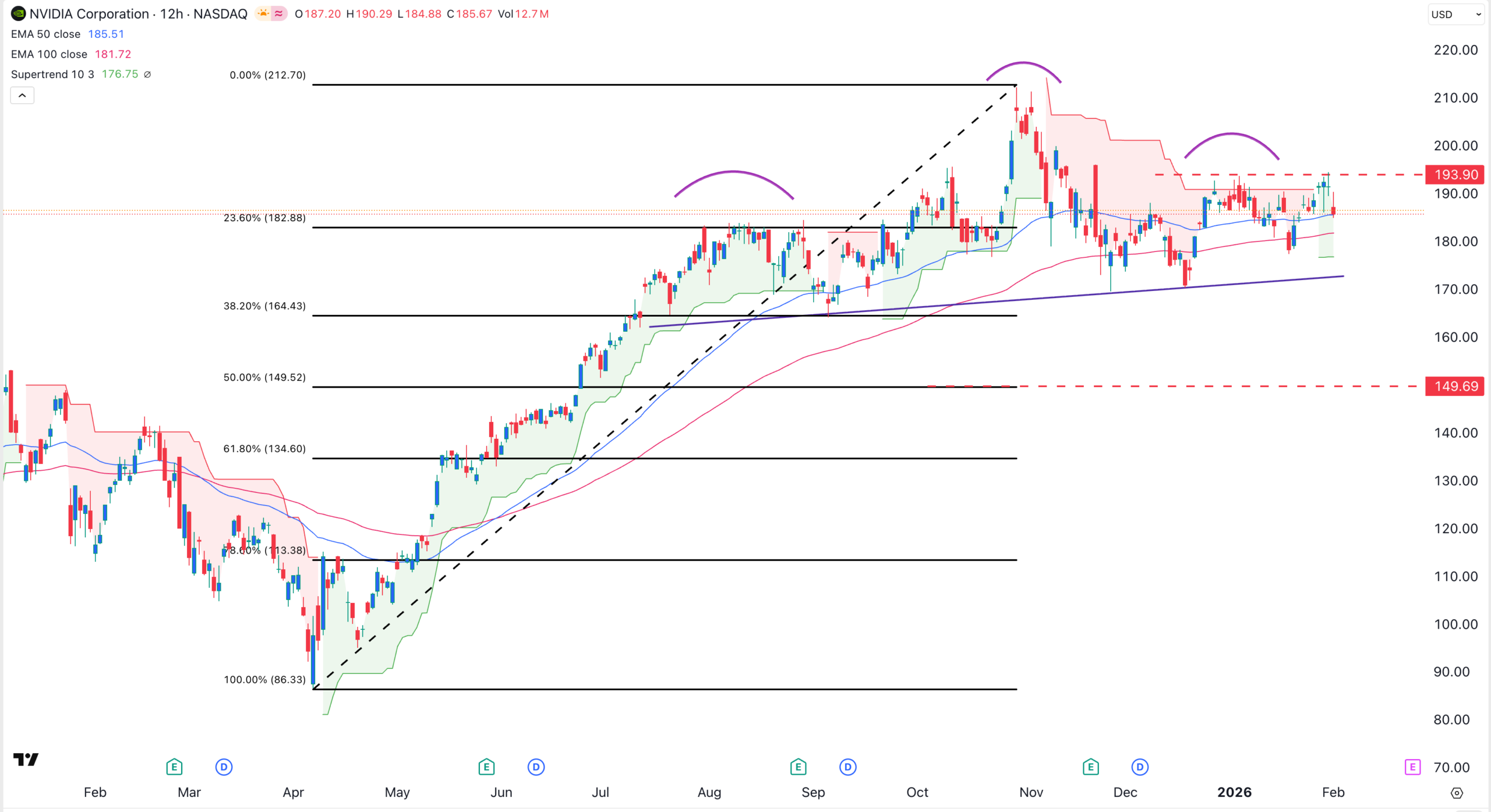
NVIDIA Stock Price Analysis as OpenAI Issues Concerns About its Chips
