TLDR: Russia designated WhiteBit and parent company W Group as undesirable organizations under new ruling. Exchange management allegedly transferred $11 millionTLDR: Russia designated WhiteBit and parent company W Group as undesirable organizations under new ruling. Exchange management allegedly transferred $11 million

Russia Bans WhiteBit Crypto Exchange Over Alleged $11M Ukraine Military Funding

2026/01/25 17:30
3 min read

TLDR:

  • Russia designated WhiteBit and parent company W Group as undesirable organizations under new ruling.
  • Exchange management allegedly transferred $11 million to Ukraine’s armed forces, including $0.9M for drone purchases.
  • WhiteBit accused of running gray schemes that enabled illegal withdrawal of funds from Russia’s borders.
  • Platform reportedly provides technical infrastructure support to United24’s cryptocurrency donation system.

WhiteBit, a prominent Ukrainian cryptocurrency exchange, has been classified as an undesirable organization by Russia’s Prosecutor General. 

The designation extends to W Group, the exchange’s parent company, and all associated affiliates. 

Russian authorities allege the platform facilitated illegal fund transfers from Russia and provided financial support to Ukraine’s military operations. The action represents another escalation in the ongoing tension between the two nations.

Exchange Accused of Facilitating Illegal Fund Transfers

Russia’s Prosecutor General’s Office claims WhiteBit enabled various unauthorized transactions through its platform. These activities allegedly included gray schemes designed to move money out of Russian territory.

The supervisory authority maintains that such operations violated current regulations governing financial transactions.

The designation affects not only WhiteBit but also encompasses W Group and its subsidiaries. Russian law enforcement believes the group’s websites served as channels for questionable financial activities. 

The platforms allegedly processed transactions that circumvented established legal frameworks. Such accusations form the basis of the undesirable organization classification.

WhiteBit began operations in 2018 under the leadership of Ukrainian entrepreneurs. The exchange has grown substantially since its inception. 

Platform operators claim their user base exceeds 8 million individuals across various markets. Daily trading volumes reportedly reach $11 billion on spot markets and $40 billion on futures markets.

The exchange operates without registration in Russia under current cryptocurrency regulations. Russian authorities maintain that no crypto exchanges hold proper registration within their jurisdiction. 

The Bank of Russia continues working on legislative amendments to regulate exchanges and crypto exchangers. These regulatory changes are expected to be finalized by July 1.

Alleged Military Support and Donation Platform Cooperation

Russian authorities assert WhiteBit’s management transferred approximately $11 million to Ukraine since 2022. The funds allegedly supported various military initiatives undertaken by Ukrainian forces.

 Among these transfers, roughly $0.9 million reportedly went toward drone procurement. These claims form a central component of the Prosecutor General’s justification for the designation.

The Russian agency also highlighted WhiteBit’s partnership with Ukraine’s Ministry of Foreign Affairs. This cooperation allegedly involved technical assistance to the United24 fundraising platform. 

United24 operates as a donation channel accepting cryptocurrency contributions for Ukrainian needs. The platform collects digital assets to support various national initiatives.

Law enforcement officials believe WhiteBit provides ongoing technical infrastructure support to United24. This arrangement enables the fundraising platform to process cryptocurrency donations efficiently. 

The collaboration between the exchange and government-affiliated entities raised concerns among Russian authorities. Such connections contributed to the decision to label the organization as undesirable.

Starting July 1, 2027, the Central Bank of the Russian Federation plans to implement penalties for unauthorized cryptocurrency intermediary activities. 

These measures aim to establish accountability for platforms operating outside regulatory frameworks. 

The initiative reflects broader efforts to control cryptocurrency-related operations within Russian borders. Authorities continue developing comprehensive oversight mechanisms for the digital asset sector.

The post Russia Bans WhiteBit Crypto Exchange Over Alleged $11M Ukraine Military Funding appeared first on Blockonomi.

Disclaimer: The articles reposted on this site are sourced from public platforms and are provided for informational purposes only. They do not necessarily reflect the views of MEXC. All rights remain with the original authors. If you believe any content infringes on third-party rights, please contact [email protected] for removal. MEXC makes no guarantees regarding the accuracy, completeness, or timeliness of the content and is not responsible for any actions taken based on the information provided. The content does not constitute financial, legal, or other professional advice, nor should it be considered a recommendation or endorsement by MEXC.

You May Also Like

CME Group to Launch Solana and XRP Futures Options

CME Group to Launch Solana and XRP Futures Options

The post CME Group to Launch Solana and XRP Futures Options appeared on BitcoinEthereumNews.com. An announcement was made by CME Group, the largest derivatives exchanger worldwide, revealed that it would introduce options for Solana and XRP futures. It is the latest addition to CME crypto derivatives as institutions and retail investors increase their demand for Solana and XRP. CME Expands Crypto Offerings With Solana and XRP Options Launch According to a press release, the launch is scheduled for October 13, 2025, pending regulatory approval. The new products will allow traders to access options on Solana, Micro Solana, XRP, and Micro XRP futures. Expiries will be offered on business days on a monthly, and quarterly basis to provide more flexibility to market players. CME Group said the contracts are designed to meet demand from institutions, hedge funds, and active retail traders. According to Giovanni Vicioso, the launch reflects high liquidity in Solana and XRP futures. Vicioso is the Global Head of Cryptocurrency Products for the CME Group. He noted that the new contracts will provide additional tools for risk management and exposure strategies. Recently, CME XRP futures registered record open interest amid ETF approval optimism, reinforcing confidence in contract demand. Cumberland, one of the leading liquidity providers, welcomed the development and said it highlights the shift beyond Bitcoin and Ethereum. FalconX, another trading firm, added that rising digital asset treasuries are increasing the need for hedging tools on alternative tokens like Solana and XRP. High Record Trading Volumes Demand Solana and XRP Futures Solana futures and XRP continue to gain popularity since their launch earlier this year. According to CME official records, many have bought and sold more than 540,000 Solana futures contracts since March. A value that amounts to over $22 billion dollars. Solana contracts hit a record 9,000 contracts in August, worth $437 million. Open interest also set a record at 12,500 contracts.…
Share
BitcoinEthereumNews2025/09/18 01:39
China Blocks Nvidia’s RTX Pro 6000D as Local Chips Rise
China Blocks Nvidia’s RTX Pro 6000D as Local Chips Rise

The post China Blocks Nvidia’s RTX Pro 6000D as Local Chips Rise appeared on BitcoinEthereumNews.com. China Blocks Nvidia’s RTX Pro 6000D as Local Chips Rise China’s internet regulator has ordered the country’s biggest technology firms, including Alibaba and ByteDance, to stop purchasing Nvidia’s RTX Pro 6000D GPUs. According to the Financial Times, the move shuts down the last major channel for mass supplies of American chips to the Chinese market. Why Beijing Halted Nvidia Purchases Chinese companies had planned to buy tens of thousands of RTX Pro 6000D accelerators and had already begun testing them in servers. But regulators intervened, halting the purchases and signaling stricter controls than earlier measures placed on Nvidia’s H20 chip. Image: Nvidia An audit compared Huawei and Cambricon processors, along with chips developed by Alibaba and Baidu, against Nvidia’s export-approved products. Regulators concluded that Chinese chips had reached performance levels comparable to the restricted U.S. models. This assessment pushed authorities to advise firms to rely more heavily on domestic processors, further tightening Nvidia’s already limited position in China. China’s Drive Toward Tech Independence The decision highlights Beijing’s focus on import substitution — developing self-sufficient chip production to reduce reliance on U.S. supplies. “The signal is now clear: all attention is focused on building a domestic ecosystem,” said a representative of a leading Chinese tech company. Nvidia had unveiled the RTX Pro 6000D in July 2025 during CEO Jensen Huang’s visit to Beijing, in an attempt to keep a foothold in China after Washington restricted exports of its most advanced chips. But momentum is shifting. Industry sources told the Financial Times that Chinese manufacturers plan to triple AI chip production next year to meet growing demand. They believe “domestic supply will now be sufficient without Nvidia.” What It Means for the Future With Huawei, Cambricon, Alibaba, and Baidu stepping up, China is positioning itself for long-term technological independence. Nvidia, meanwhile, faces…
Share
BitcoinEthereumNews2025/09/18 01:37
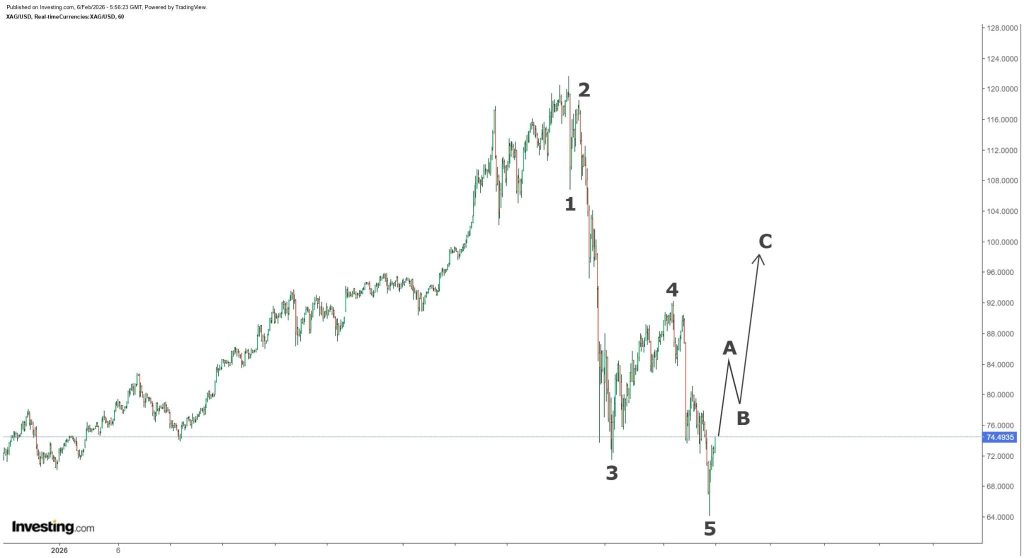
Silver Price Crash Is Over “For Real This Time,” Analyst Predicts a Surge Back Above $90

Silver Price Crash Is Over “For Real This Time,” Analyst Predicts a Surge Back Above $90

Silver has been taking a beating lately, and the Silver price hasn’t exactly been acting like a safe haven. After running up into the highs, the whole move reversed
Share
Captainaltcoin2026/02/07 03:15
