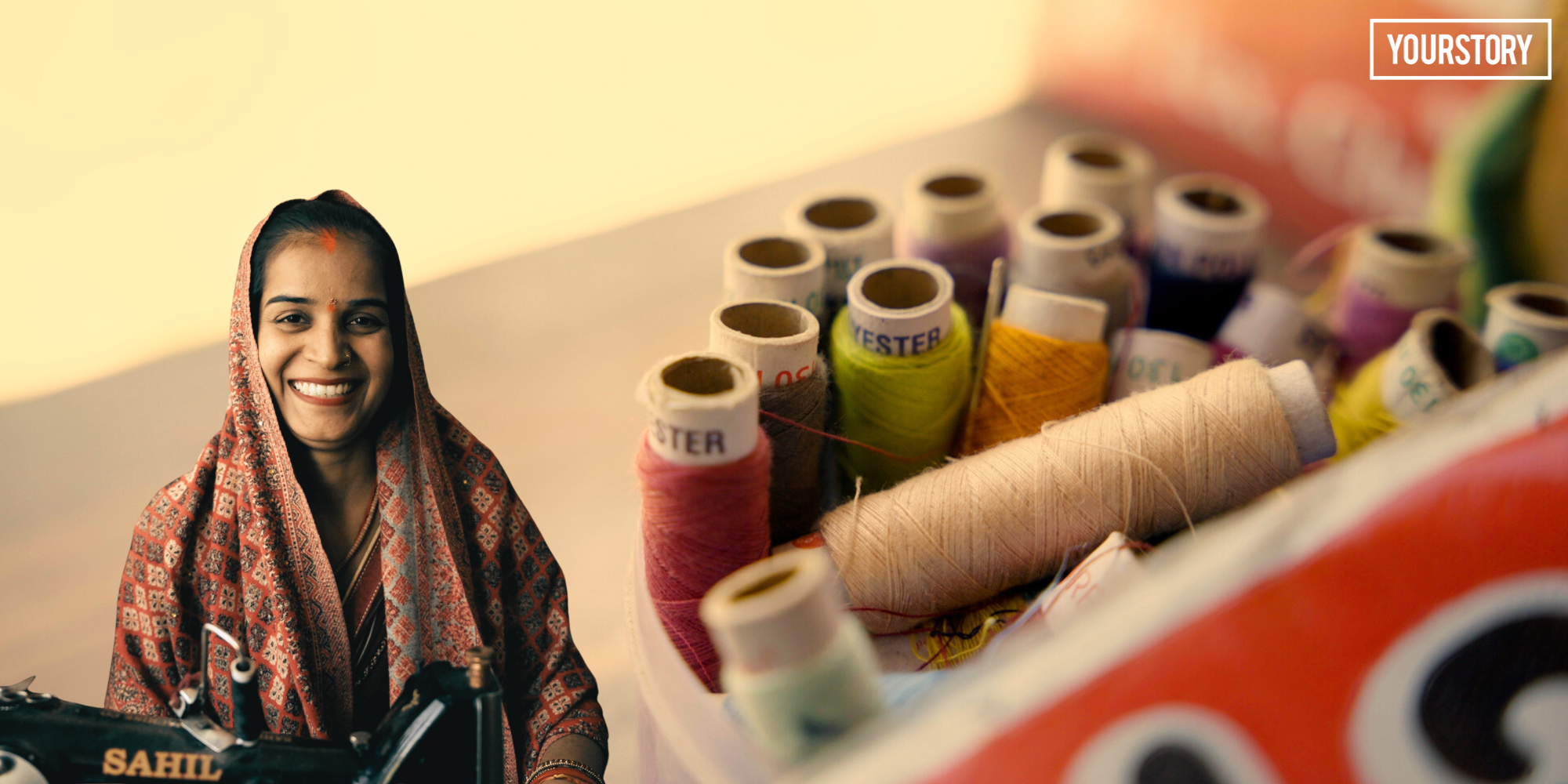
Urmila Shukla lives in Bagrahiya village of Shravasti district, where her workday begins early and often stretches late into the night.Urmila Shukla lives in Bagrahiya village of Shravasti district, where her workday begins early and often stretches late into the night.

How consistent stitching built a small business in Shravasti district
3 min read

Urmila Shukla lives in Bagruiya village of Shravasti district, where her workday begins early and often stretches late into the night. Today, she runs a small tailoring shop called Kirti Silai Centre, but the path to a stable storefront was gradual, shaped by years of learning, domestic responsibilities, and cautious decisions taken at different stages of her life.

Shukla learned stitching as a teenager while she was still studying. Training outside her village, before marriage brought her to Shravasti. Formal education was halted after the shift, but the skill stayed with her. For years, she worked from home, using a single machine to stitch clothes for neighbours and acquaintances who came with small, routine requests. At the time, the work was modest and fitted around household duties, with no clear plan to turn it into a business.

Over time, word spread beyond the village. Clothes began arriving from nearby localities and the volume of work grew enough for her to consider a separate space. The decision to move out of the house was not immediate. Her husband was away working and the family weighed the risk of rent against uncertain income. Eventually, a small shop was rented, and she began by offering stitching services, enough to cover basic expenses and keep the space running.

Turning skill into a livelihood

The shop became a turning point. As more customers flocked in from five or six neighbouring villages, Shukla found that a dedicated workspace allowed her to manage larger orders and tighter timelines. She stitches women’s garments, including salwar suits, blouses, petticoats, and trousers, handling the work herself and setting her own hours based on demand. Trust, she says, became the defining factor. Customers returned because orders were completed on time, often without regard to her own schedule.

Early doubters suggested the shop would not last. The first few months were financially tight, with rent payments a constant worry. Still, she persevered, testing designs on her own clothes before accepting unfamiliar patterns and gradually built confidence with each completed order. “I kept thinking that if I don’t stop now, the work will slowly find its way,” she said.

Support came later through the Mukhyamantri Yuva Udyami Vikas Abhiyan (CM YUVA) Yojana, which helped her improve the shop’s setup and add basic inventory alongside tailoring. Under the CM Yuva Yojana, the assistance was used to strengthen what already existed rather than start afresh, enabling her to better respond to customer needs and manage the growing workload.

Stability built stitch by stitch

Four years into running the shop, Shukla’s days are long but predictable. She opens early, often works past midnight during peak periods, and handles all orders herself. Customers now come from farther away, including migrants living nearby, who rely on her for dependable work. The shop has become a well-established stop in the area, not because it expanded quickly, but because it remained consistent.

Looking back, the transition from a single machine at home to a functioning shop feels less like a leap and more like a series of small, steady steps. The early uncertainty, the pressure of rent, and the careful use of support have settled into a routine that sustains both the business and the household, offering a sense of continuity rooted in skill and persistence, rather than sudden change.

Disclaimer: The articles reposted on this site are sourced from public platforms and are provided for informational purposes only. They do not necessarily reflect the views of MEXC. All rights remain with the original authors. If you believe any content infringes on third-party rights, please contact [email protected] for removal. MEXC makes no guarantees regarding the accuracy, completeness, or timeliness of the content and is not responsible for any actions taken based on the information provided. The content does not constitute financial, legal, or other professional advice, nor should it be considered a recommendation or endorsement by MEXC.
Tags:

You May Also Like

Shibarium May No Longer Turbocharge Shiba Inu Price Rally, Here’s Reason

Shibarium May No Longer Turbocharge Shiba Inu Price Rally, Here’s Reason

The post Shibarium May No Longer Turbocharge Shiba Inu Price Rally, Here’s Reason appeared on BitcoinEthereumNews.com. Shibarium, the layer-2 blockchain of the Shiba Inu (SHIB) ecosystem, is battling to stay active. Shibarium has slipped from hitting transaction milestones to struggling to record any transactions on its platform, a development that could severely impact SHIB. Shibarium transactions crash from millions to near zero As per Shibariumscan data, the total daily transactions on Shibarium as of Sept. 16 stood at 11,600. This volume of transactions reflects how low the transaction count has dropped for the L2, whose daily average ranged between 3.5 million and 4 million last month. However, in the last week of August, daily transaction volume on Shibarium lost momentum, slipping from 1.3 million to 9,590 as of Aug. 28. This pattern has lingered for much of September, with the highest peak so far being on Sept. 5, when it posted 1.26 million transactions. The low user engagement has greatly affected the transaction count in recent days. In addition, the security breach over the weekend by malicious attackers on Shibarium has probably worsened issues. Although developer Kaal Dhairya reassured the community that the attack to steal millions of BONE tokens was successfully prevented, users’ confidence appears shaken. This has also impacted the price outlook for Shiba Inu, the ecosystem’s native token. Following reports of the malicious attack on Shibarium, SHIB dipped immediately into the red zone. Unlike on previous occasions where investors accumulated on the dip, market participants did not flock to Shiba Inu. Shiba Inu price struggles, can burn mechanism help? With the current near-zero crash in transaction volume for Shibarium, SHIB’s price cannot depend on it to support a rally. It might take a while to rebuild user confidence and for transactions to pick up again. In the meantime, Shiba Inu might have to rely on other means to boost prices from its low levels. This…
Share
BitcoinEthereumNews2025/09/18 07:57
👨🏿‍🚀TechCabal Daily – When banks go cashless

👨🏿‍🚀TechCabal Daily – When banks go cashless

In today's edition: South Africa's biggest banks are going cashless || Onafriq and PAPSS pilot Naira wallet transfers from Nigeria to Ghana || South Africa just
Share
Techcabal2026/02/04 14:02
Wormhole launches reserve tying protocol revenue to token

Wormhole launches reserve tying protocol revenue to token

The post Wormhole launches reserve tying protocol revenue to token appeared on BitcoinEthereumNews.com. Wormhole is changing how its W token works by creating a new reserve designed to hold value for the long term. Announced on Wednesday, the Wormhole Reserve will collect onchain and offchain revenues and other value generated across the protocol and its applications (including Portal) and accumulate them into W, locking the tokens within the reserve. The reserve is part of a broader update called W 2.0. Other changes include a 4% targeted base yield for tokenholders who stake and take part in governance. While staking rewards will vary, Wormhole said active users of ecosystem apps can earn boosted yields through features like Portal Earn. The team stressed that no new tokens are being minted; rewards come from existing supply and protocol revenues, keeping the cap fixed at 10 billion. Wormhole is also overhauling its token release schedule. Instead of releasing large amounts of W at once under the old “cliff” model, the network will shift to steady, bi-weekly unlocks starting October 3, 2025. The aim is to avoid sharp periods of selling pressure and create a more predictable environment for investors. Lockups for some groups, including validators and investors, will extend an additional six months, until October 2028. Core contributor tokens remain under longer contractual time locks. Wormhole launched in 2020 as a cross-chain bridge and now connects more than 40 blockchains. The W token powers governance and staking, with a capped supply of 10 billion. By redirecting fees and revenues into the new reserve, Wormhole is betting that its token can maintain value as demand for moving assets and data between chains grows. This is a developing story. This article was generated with the assistance of AI and reviewed by editor Jeffrey Albus before publication. Get the news in your inbox. Explore Blockworks newsletters: Source: https://blockworks.co/news/wormhole-launches-reserve
Share
BitcoinEthereumNews2025/09/18 01:55