

How do I start investing? A practical beginner’s plan
Use this guide as an educational starting point. It explains decision factors, simple checks to compare funds, and a 90-day checklist to move from planning to action without jargon or sales pressure.
What does investing mean and why start now?
Simple definition of investing vs saving, how do i start investing
At its simplest, investing means putting money into assets with the aim of growing their value over time, while saving usually means keeping money safe for short-term needs. This distinction matters because saving is about capital preservation for upcoming expenses, and investing is about seeking growth for goals that are farther away. For a plain-language guide to the basics of investing and how it differs from saving, see the investor resource from a regulatory perspective Investor.gov beginner guide. Also see our personal finance hub.
Investing uses time and compounding to turn small, repeated contributions into larger balances over years. Compounding means returns generate their own returns, so the longer money stays invested, the larger the effect can be. Time horizon, which is the length of time you expect until you need the money, should influence how much short-term volatility you accept and what kinds of assets you choose.
Name the goal and its time horizon first; that will guide whether you use a savings account, a taxable investment account, or a tax-advantaged retirement account, and it should shape your asset allocation.
Starting early does not guarantee success, and investing is not a way to get rich quickly. Markets fluctuate, and outcomes depend on the mix of assets you choose, your time horizon, and how much you contribute. Use this guide as a plain starting point to think through trade-offs and next actions rather than a promise of results.
First steps: set goals, build an emergency fund, and know your budget
How to define specific, time-bound goals
Begin by naming what you are investing for and when you will need the money. Separate goals into short-term (under 3 years), medium-term (3 to 10 years), and long-term (10 years or more). Matching a goal to a time horizon helps decide whether to prioritize safety, growth, or a mix. Regulators and investor educators consistently advise starting with clear, time-bound goals before choosing investments.
Emergency fund size guidelines and where to keep it
An emergency fund is the short-term safety net you should build before you direct money to long-term investments. Keep this cash in a safe, liquid place such as an insured savings account where you can access it quickly; the purpose is to prevent selling investments at a bad time if an unexpected cost arrives. This sequencing of emergency savings before long-term investing is commonly recommended by investor education authorities.
How to determine how much you can contribute regularly
To find a sustainable contribution amount, start with your monthly income and subtract non-discretionary expenses like housing, utilities, and minimum debt payments. The remainder is available for saving, investing, and discretionary spending. Choose an amount you can commit to for months, not a one-time top-up, since regular contributions compound and automation helps maintain discipline.
Checklist for this section: name each goal and its time horizon, set an emergency fund target appropriate to your situation, and identify a realistic monthly contribution you can automate. These three steps create a clear foundation before selecting accounts or funds.

Choose the right account: taxable accounts versus IRAs and employer plans
Overview of common account types and their tax treatments
Different account types change how returns are taxed and whether contributions are deductible, so the account you use can affect your long-term outcome. For long-term retirement goals, tax-advantaged accounts such as IRAs and employer retirement plans usually make sense because of their tax treatment and contribution incentives; check official IRS guidance for rules that apply to you IRS IRAs overview. You can also review related posts in our investing category.
Which goals map to which account type
Map short-term goals to safe, liquid accounts and medium- to long-term goals to accounts where you can tolerate market swings. For example, a down-payment target in three years often belongs in a taxable or savings account, while retirement savings typically fit in an IRA or employer plan. Prioritize tax-advantaged accounts when eligible for long-horizon goals.
Get the one-page investing checklist and sample portfolios
Download a simple one-page checklist to match goals with account types or continue reading for sample starter portfolios and a 90-day plan.
View checklist and portfolio examples
Basic reminders about contribution limits and checking official rules
Contribution limits, eligibility rules, and tax treatment change and can depend on your income, filing status, or employer plan options. Verify limits and rules by checking plan documents or the IRS before you commit money, and consider professional advice if your tax situation is complex.
Decide asset allocation: risk tolerance and time horizon
How to think about stocks, bonds, and cash in plain terms
Think of stocks as ownership in companies with higher expected long-term growth and higher short-term ups and downs, bonds as loans that generally offer steadier income and lower short-term volatility, and cash as the most stable but lowest growth option. Your mix of these asset types should reflect how long you have and how much variation you can accept over the short term.
A simple self-assessment for risk tolerance
Rather than a formal quiz, reflect on questions such as: How would you react if your portfolio fell 20 percent in a year? Do you plan to withdraw this money soon? Can you wait through several down years? Your answers help choose an allocation that you can stick with in both calm and volatile markets.
How time horizon changes the allocation
Generally, longer horizons allow higher stock exposure because you have more time to recover from market dips, while shorter horizons favor bonds and cash to protect capital. Use time horizon and your self-assessed comfort with swings together when sketching a starter allocation; these two factors should drive the basic split between growth and stability.
Build a starter portfolio: low-cost index funds and ETFs
Why index funds and ETFs are commonly recommended for beginners
For many beginners, a core portfolio built with low-cost index funds or ETFs offers broad diversification and cost-efficiency compared with many actively managed funds. Industry educators note that low expenses and wide market exposure make these vehicles practical for starting investors who want a simple foundation Vanguard beginner guide. See an overview of index investing and mutual fund basics at the Haas newsroom, and check lists like our best micro-investment apps for platforms that support small, regular investing.
How to pick broad market funds for stocks and bonds
When comparing funds, look at the expense ratio, the index the fund tracks, the fund’s size and liquidity, and how it treats distributions for tax purposes. These practical checks help you choose funds that match your intended exposure without needing deep technical knowledge.
As an illustrative example (not advice), a simple starter mix might include a broad domestic stock index, an international stock index, and a total bond market fund to balance volatility. Treat this as a template to adapt to your goals and time horizon rather than a recommended allocation for everyone.
Expense ratios, diversification, and practical fund-picking tips
Expense ratios and fees compound over time, so favor low-cost funds for the core of your portfolio and be mindful of trading costs on your platform. Diversification across regions and asset types reduces concentration risk. When in doubt, choose funds that track broad market indexes and have clear, simple naming that matches the index they track.
Automate contributions, use dollar-cost averaging, and watch fees
How to set up automatic contributions and why it helps
Automating regular, small contributions can help you start investing even with limited funds and it reduces the need to time the market. Many platforms let you set up automatic transfers from checking to an investment account on a schedule that fits your pay cycle.
The role of dollar-cost averaging for small, regular investing
Dollar-cost averaging means investing a fixed amount at regular intervals, which can smooth the effect of market timing because you buy more shares when prices are lower and fewer when prices are higher. This approach helps new investors get started without needing a large lump sum, though it does not guarantee better returns.
How fees and platform costs affect long-term returns
Fees such as expense ratios and trading commissions reduce net returns over time, so prioritize low-fee funds and compare platform costs when you open an account. Understanding fee structure helps you keep more of what you earn from investing and is an important decision factor.
prompts to set up an automatic transfer and fund choices
Automate small amounts you can sustain
Common beginner mistakes and how to avoid them
Overtrading, chasing performance, and ignoring fees
Frequent trading and chasing recent winners can increase costs and worsen results for many people. A steadier approach of selecting a low-cost core and automating contributions tends to reduce emotional decisions and trading costs.
Skipping an emergency fund or using inappropriate accounts
Using long-term accounts for short-term needs or not keeping an emergency fund can force you to sell investments at poor times. Keep a safety buffer in liquid accounts and map each goal to an account type that matches its timing and tax considerations.
Neglecting taxes and rebalancing
Taxes and the need to rebalance back to your chosen allocation are often overlooked. Consider tax consequences when selling or moving money and set a simple rebalancing rule, such as reviewing allocations annually or when a major shift occurs, to keep your risk profile in line with your plan.
Practical examples: starter portfolios and next steps
Three simple example allocations for different time horizons
Below are illustrative, non-prescriptive examples labeled by time horizon. They are templates to help you think about trade-offs, not personalized advice.
Short horizon template (under 3 years): heavier cash and bonds, minimal stock exposure to protect capital. Medium horizon template (3 to 10 years): balanced mix of stocks and bonds to allow some growth while limiting volatility. Long horizon template (10+ years): stock-heavy mix that aims for growth with the expectation of batting through short-term swings.
How to implement these examples step by step
Implementation steps: choose the right account for each goal, select broad index funds that match the intended exposure, set automation for regular contributions, and decide on a simple rebalancing cadence. Follow those steps in order and verify account rules before moving money.
Checklist: what to do in the first 90 days
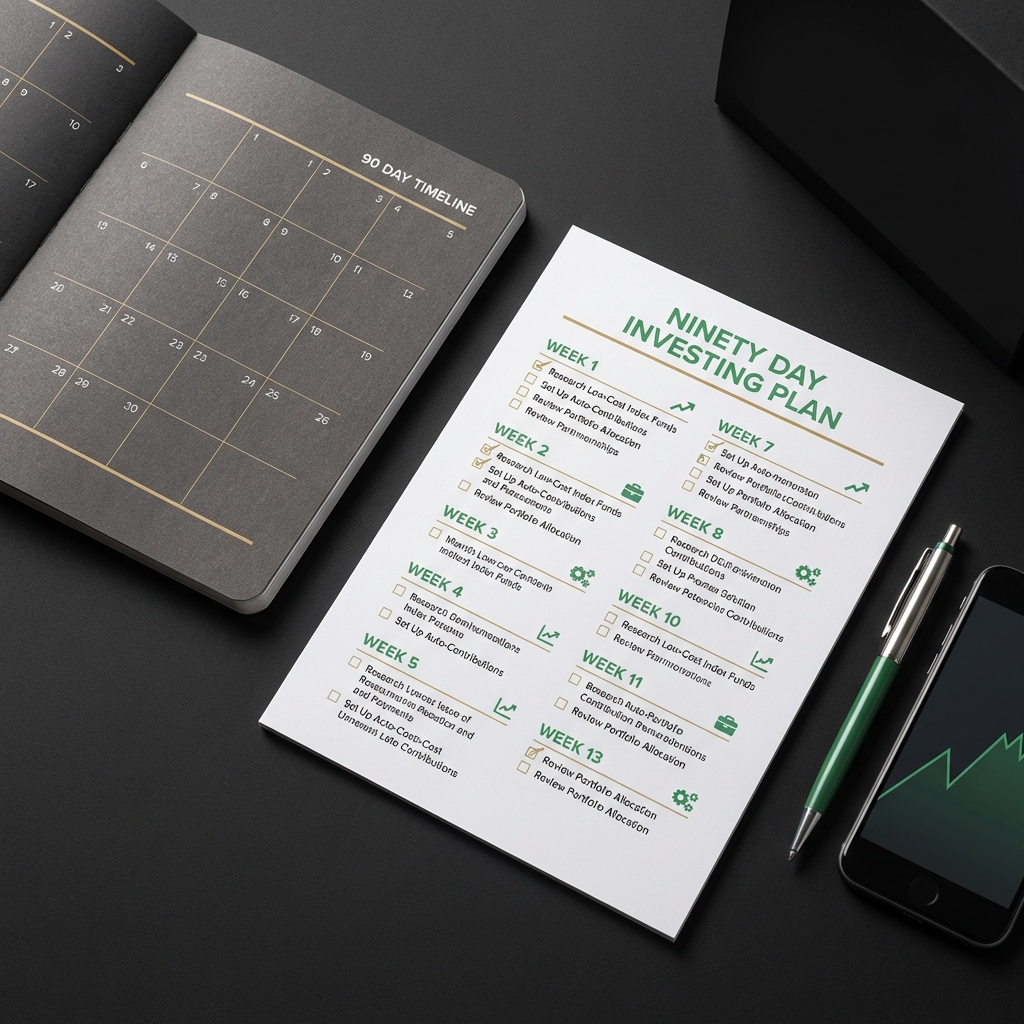
90-day checklist: 1) Decide and write down your goals and time horizons. 2) Build or top up an emergency fund. 3) Open the accounts that match your goals. 4) Pick a simple set of low-cost funds. 5) Set up automatic transfers and purchases. 6) Note a rebalancing reminder or rule. Verifying contribution rules and plan documents is an important part of early setup.
Wrap-up: next decisions and where to verify details
Summary checklist
In short: define goals, secure an emergency fund, choose accounts that match your timelines, build a simple diversified portfolio with low-cost funds, automate contributions, and watch fees. These steps create a repeatable process that helps you progress without needing to chase short-term gains.
Where to check primary sources and when to seek professional help
For contribution limits and tax rules, check official sources and your plan documents. If you have complex tax circumstances or specific questions about account rules, consider asking a tax professional or financial advisor and verify details at the primary source for your situation IRS IRAs overview. You can also review mutual fund and ETF basics in the investor brochure Mutual Funds and ETFs guide and general investing resources at the Library of Congress Investing – Personal Finance.
FinancePolice provides educational content to clarify steps and decision factors, but it is not a substitute for professional advice. Use this guide to build a basic plan and then confirm particulars for your accounts and taxes.
Start by naming your goal and time horizon, build a short-term emergency fund, and pick a sustainable monthly contribution you can automate.
For long-term goals, tax-advantaged accounts like IRAs or employer plans often make sense; verify eligibility and limits with official plan documents or the IRS.
Index funds offer broad diversification and low fees, which can make them a sensible core holding, but they still carry market risk and should match your time horizon.
References
- https://www.investor.gov/introduction-investing
- https://financepolice.com/category/personal-finance/
- https://www.investor.gov/sites/investorgov/files/2019-02/mutual-funds-ETFs.pdf
- https://financepolice.com/category/investing/
- https://www.irs.gov/retirement-plans/individual-retirement-arrangements-iras
- https://investor.vanguard.com/investing/how-to-invest
- https://newsroom.haas.berkeley.edu/headline/nerdwallet/
- https://financepolice.com/best-micro-investment-apps/
- https://guides.loc.gov/personal-finance/Investing
- https://financepolice.com/advertise/
You May Also Like

Crucial Fed Rate Cut: October Probability Surges to 94%

USD/INR edges lower as Indian Rupee gains on improving equity inflows
