While AI agents are becoming more capable, their ability to interact freely outside closed platforms remains limited. ERC-8004 focuses on […] The post Ethereum While AI agents are becoming more capable, their ability to interact freely outside closed platforms remains limited. ERC-8004 focuses on […] The post Ethereum

Ethereum Backs New Proposal to Solve Trust in Open AI Systems

2026/01/29 05:21
3 min read

While AI agents are becoming more capable, their ability to interact freely outside closed platforms remains limited. ERC-8004 focuses on fixing that gap by bringing a shared trust framework directly on-chain.

Key Takeaways
  • A new Ethereum proposal introduces an on-chain trust layer for AI agents.
  • The framework enables identity, reputation, and validation in open environments.
  • It supports Ethereum’s broader push toward trustless, autonomous systems.

Inside a single company or platform, AI agents work smoothly because identities, permissions, and behavior are pre-approved. In an open environment, that structure disappears. An agent has no reliable way to verify who it is interacting with, whether the counterparty is competent, or if it poses a risk. This lack of trust keeps AI agents siloed and prevents the formation of an open, global marketplace where agents can exchange services autonomously.

How ERC-8004 Creates an On-Chain Trust Layer

ERC-8004 addresses this issue by adding a lightweight trust layer on Ethereum. Rather than introducing complex logic, the proposal relies on three simple on-chain registries that work together to establish credibility between agents.

The Identity Registry provides AI agents with verifiable on-chain identities, similar to digital passports. The Reputation Registry records historical behavior and interaction outcomes, allowing agents to assess reliability over time. The Validation Registry enables third parties or systems to certify agents for specific skills or use cases, acting as an on-chain proof of competence. Combined, these registries allow agents to discover, evaluate, and collaborate without prior relationships or centralized gatekeepers.

Enabling an Open AI Agent Economy

By standardizing how trust is expressed on-chain, ERC-8004 makes it possible for AI agents to form complex workflows, trade services, and coordinate tasks across platforms and organizations. The approach keeps most computation off-chain while anchoring trust to Ethereum’s security, making it practical without sacrificing decentralization.

Separately, Vitalik Buterin recently outlined a wider goal for the ecosystem, saying that 2026 should be the year Ethereum begins reclaiming lost ground in self-sovereignty and trustlessness. He emphasized improving on-chain privacy, making it easier to run full nodes, simplifying dapp usage, and giving users stronger control over their personal data.

Where ERC-8004 Fits In

Although ERC-8004 focuses on AI agents rather than individual users, it aligns closely with this vision. By enabling decentralized trust without relying on intermediaries, the proposal reinforces Ethereum’s role as a neutral coordination layer. As autonomous agents become more active on-chain, standards like ERC-8004 could play a key role in ensuring that openness, trustlessness, and self-sovereignty extend beyond humans to the software acting on their behalf.


The information provided in this article is for educational purposes only and does not constitute financial, investment, or trading advice. Coindoo.com does not endorse or recommend any specific investment strategy or cryptocurrency. Always conduct your own research and consult with a licensed financial advisor before making any investment decisions.

The post Ethereum Backs New Proposal to Solve Trust in Open AI Systems appeared first on Coindoo.

Disclaimer: The articles reposted on this site are sourced from public platforms and are provided for informational purposes only. They do not necessarily reflect the views of MEXC. All rights remain with the original authors. If you believe any content infringes on third-party rights, please contact [email protected] for removal. MEXC makes no guarantees regarding the accuracy, completeness, or timeliness of the content and is not responsible for any actions taken based on the information provided. The content does not constitute financial, legal, or other professional advice, nor should it be considered a recommendation or endorsement by MEXC.

You May Also Like

Three dormant wallets, suspected to belong to the same entity, purchased 5,970 ETH eight hours ago.
Three dormant wallets, suspected to belong to the same entity, purchased 5,970 ETH eight hours ago.

PANews reported on February 4 that, according to Lookonchain monitoring, three wallets that had been dormant for four years (likely controlled by the same entity
Share
PANews2026/02/04 11:36
NVIDIA Stock Price Analysis as OpenAI Issues Concerns About its Chips

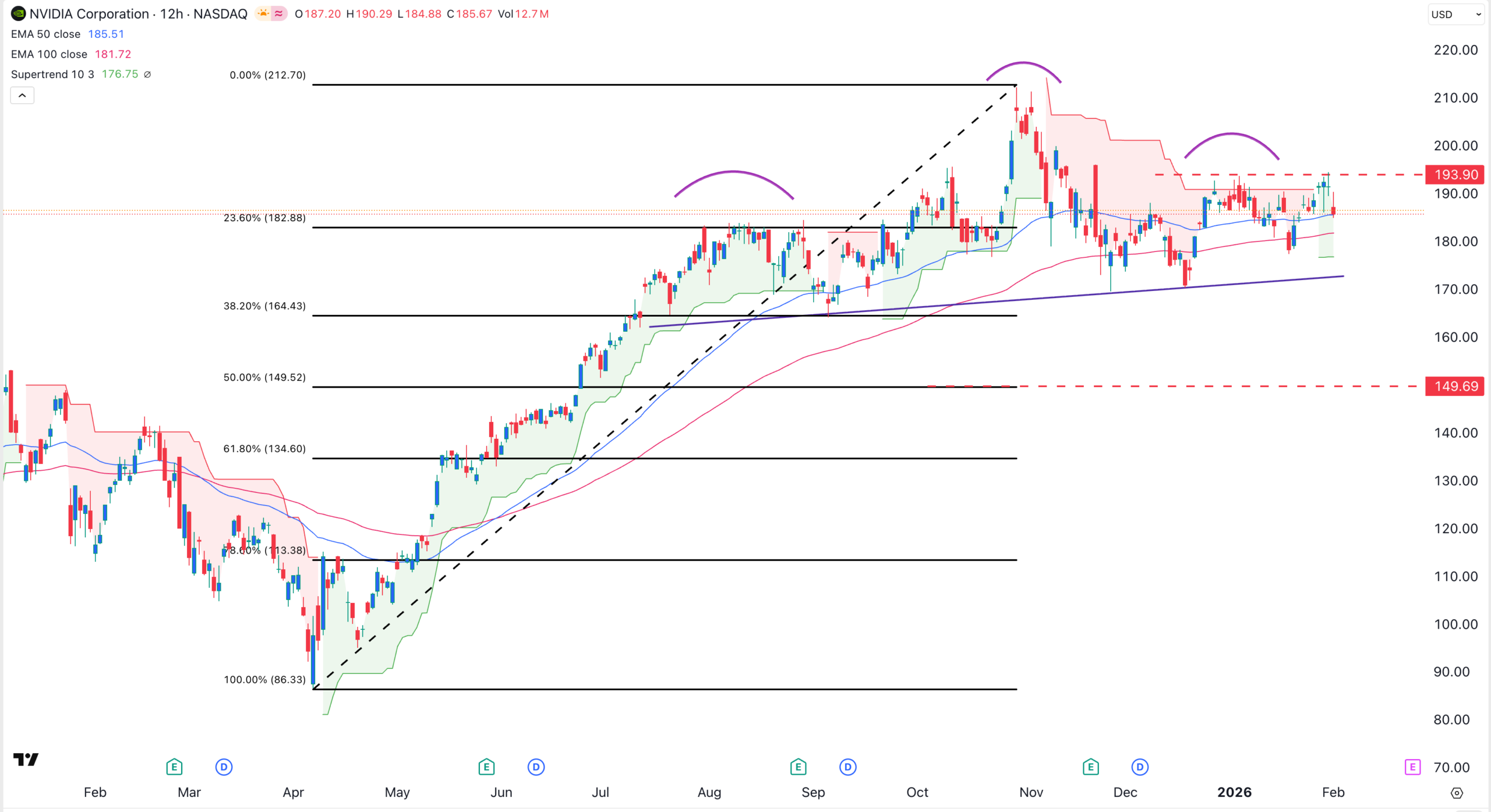
NVIDIA Stock Price Analysis as OpenAI Issues Concerns About its Chips

Key Insights NVIDIA stock started the week in the red. It crashed by over 2%. Meanwhile, the S&P 500, Dow Jones, and Nasdaq 100 moved close to their all-time highs
Share
Themarketperiodical2026/02/04 11:27
Ondo Finance Launches USDY Yieldcoin on Stellar, Bringing Tokenized U.S. Treasuries to Users

Ondo Finance Launches USDY Yieldcoin on Stellar, Bringing Tokenized U.S. Treasuries to Users

Ondo Finance, a U.S.-based digital asset firm specializing in bringing traditional financial products on-chain through tokenization, is expanding its yieldcoin USDY to the Stellar network. This lates update marks a step forward in merging tokenized real-world assets with a global payments infrastructure, unlocking new opportunities for users worldwide. The announcement was made at the Stellar Meridian event in Copacabana, Rio de Janeiro, on September 17. USDY Joins the Stellar Ecosystem Ondo Finance, a recognized leader in tokenized real-world assets, announced the deployment of United States Dollar Yield (USDY) on Stellar, the payments-focused blockchain known for speed and low transaction costs. USDY is the most widely available “yieldcoin,” offering investors access to onchain assets backed by U.S. Treasuries. This launch allows Stellar’s global user base to tap into permissionless, yield-bearing assets tied to one of the safest financial instruments in the world. It also aligns with Stellar’s mission of driving fast, affordable cross-border payments. Combining Yield with Payments Infrastructure “Stablecoins unlocked global access to the U.S. dollar. With USDY, we’re taking the next step by bringing U.S. Treasuries onchain in a form that combines stability, liquidity, and yield,” said Ian De Bode, Chief Strategy Officer at Ondo Finance. “Fast, affordable cross-border payments are at the center of what Stellar was designed to do. The global reach of the Stellar ecosystem combined with a yield-bearing asset like USDY levels up what is possible onchain, allowing wallets and businesses to offer yield opportunities to their users,” said Denelle Dixon, CEO of the Stellar Development Foundation. Ondo claims by pairing USDY with Stellar’s infrastructure, new possibilities open up in treasury management, collateralization, and everyday financial applications. Unlocking Institutional and Retail Use Cases USDY currently manages over $650 million in total value locked (TVL) across nine blockchains and offers a 5.3% APY. By launching on Stellar, Ondo Finance extends these benefits to global retail and institutional users. The firm explains balances on Stellar can now become productive, supporting use cases such as onchain savings, institutional treasury strategies, cost-efficient collateral for DeFi protocols, and remittance flows that carry yield rather than remaining static. A Milestone for Tokenized Treasuries With the integration of USDY, Stellar users gain more than just access to stable-value assets—they gain access to institutional-grade yield. For investors outside the U.S., the launch represents a new way to combine the safety of Treasuries with the accessibility of blockchain technology. As tokenization accelerates globally, Ondo Finance’s decision to deploy USDY on Stellar reinforces the narrative that blockchain is not just about speculation, but about reimagining the global financial system through secure, yield-bearing digital assets
Share
CryptoNews2025/09/18 00:46
