Sony Ventures has invested an additional $13 million in Startale Group through the Sony Innovation Fund as a follow-on. “Startale has been an important partner Sony Ventures has invested an additional $13 million in Startale Group through the Sony Innovation Fund as a follow-on. “Startale has been an important partner

Sony Ventures injects $13m into Startale Group to support Soneium

3 min read

Sony Ventures has invested an additional $13 million in Startale Group through the Sony Innovation Fund as a follow-on.

Summary
  • Sony Ventures has committed an additional $13 million to Startale through the Sony Innovation Fund.
  • Startale, a spin-off from the Astar Foundation, supports the development of Soneium, an Ethereum layer 2 built with Sony Block Solutions Labs.

“Startale has been an important partner to Sony since the early days of Soneium. Our vision is to bring the world on-chain, and Sony’s continued support strengthens our ability to deliver the infrastructure required to realize that vision at global scale,” Startale Group CEO Sota Watanabe said in a statement accompanying the Jan. 29 announcement.

The latest investment follows a $3.5 million seed funding round in 2023, where Sony Network Communications came in as a strategic investor, and another $3.5 million raised as a seed extension from UOB Venture Management and Samsung Next in 2024.

With this, Startale’s total disclosed capital raised since its inception has grown to $20 million.

Startale was founded as a spin-off from the Astar Foundation to serve as the primary architect and technical infrastructure provider for Soneium.

Soneium, an Ethereum Layer-2 blockchain co-developed by Startale and Sony Block Solutions Labs, has been designed to unlock on-chain opportunities for the entertainment industry. Optimism’s OP Stack serves as the underlying framework powering the network.

After launching its mainnet in January last year, Soneium has processed over 500 million transactions and currently supports more than 250 live dApps, the announcement noted. It has also formed partnerships with a number of major names like Uniswap, Aave, Plume, and LINE.

For instance, Uniswap added support for Soneium in May, while Aave, the decentralized liquidity protocol, was successfully integrated across the network the following month.

Among other developments, Plume, the infrastructure layer for Real World Asset Finance, partnered with Soneium to stream tokenized yields through its SkyLink interoperability engine.

Last year, Startale Labs also announced the Startale App, which it says will serve as the super-app gateway to Soneium. The app currently remains in a beta testing phase without an official release date.

“Through our ongoing collaboration around Soneium, we look forward to continuing to support Startale’s challenges and ambitions going forward,” Sony Ventures Corporation CEO Kazuhito Hadano was quoted as saying.

Sony eyes stablecoin play

Sony’s latest investment is a testament to how the Japanese consumer electronics giant plans to position itself as a core infrastructure player in the web3 space.

Last month, Sony Bank, a subsidiary of Sony Financial Group, announced its intentions to issue a U.S. dollar-pegged stablecoin for American customers as early as fiscal 2026. It has formed a strategic relationship with Bastion Platforms in this regard.

As previously reported by crypto.news, Sony Singapore also started accepting payments in USDC through a partnership with Crypto.com.

Disclaimer: The articles reposted on this site are sourced from public platforms and are provided for informational purposes only. They do not necessarily reflect the views of MEXC. All rights remain with the original authors. If you believe any content infringes on third-party rights, please contact [email protected] for removal. MEXC makes no guarantees regarding the accuracy, completeness, or timeliness of the content and is not responsible for any actions taken based on the information provided. The content does not constitute financial, legal, or other professional advice, nor should it be considered a recommendation or endorsement by MEXC.

You May Also Like

Cashing In On University Patents Means Giving Up On Our Innovation Future
Cashing In On University Patents Means Giving Up On Our Innovation Future

The post Cashing In On University Patents Means Giving Up On Our Innovation Future appeared on BitcoinEthereumNews.com. “It’s a raid on American innovation that would deliver pennies to the Treasury while kneecapping the very engine of our economic and medical progress,” writes Pipes. Getty Images Washington is addicted to taxing success. Now, Commerce Secretary Howard Lutnick is floating a plan to skim half the patent earnings from inventions developed at universities with federal funding. It’s being sold as a way to shore up programs like Social Security. In reality, it’s a raid on American innovation that would deliver pennies to the Treasury while kneecapping the very engine of our economic and medical progress. Yes, taxpayer dollars support early-stage research. But the real payoff comes later—in the jobs created, cures discovered, and industries launched when universities and private industry turn those discoveries into real products. By comparison, the sums at stake in patent licensing are trivial. Universities collectively earn only about $3.6 billion annually in patent income—less than the federal government spends on Social Security in a single day. Even confiscating half would barely register against a $6 trillion federal budget. And yet the damage from such a policy would be anything but trivial. The true return on taxpayer investment isn’t in licensing checks sent to Washington, but in the downstream economic activity that federally supported research unleashes. Thanks to the bipartisan Bayh-Dole Act of 1980, universities and private industry have powerful incentives to translate early-stage discoveries into real-world products. Before Bayh-Dole, the government hoarded patents from federally funded research, and fewer than 5% were ever licensed. Once universities could own and license their own inventions, innovation exploded. The result has been one of the best returns on investment in government history. Since 1996, university research has added nearly $2 trillion to U.S. industrial output, supported 6.5 million jobs, and launched more than 19,000 startups. Those companies pay…
Share
BitcoinEthereumNews2025/09/18 03:26
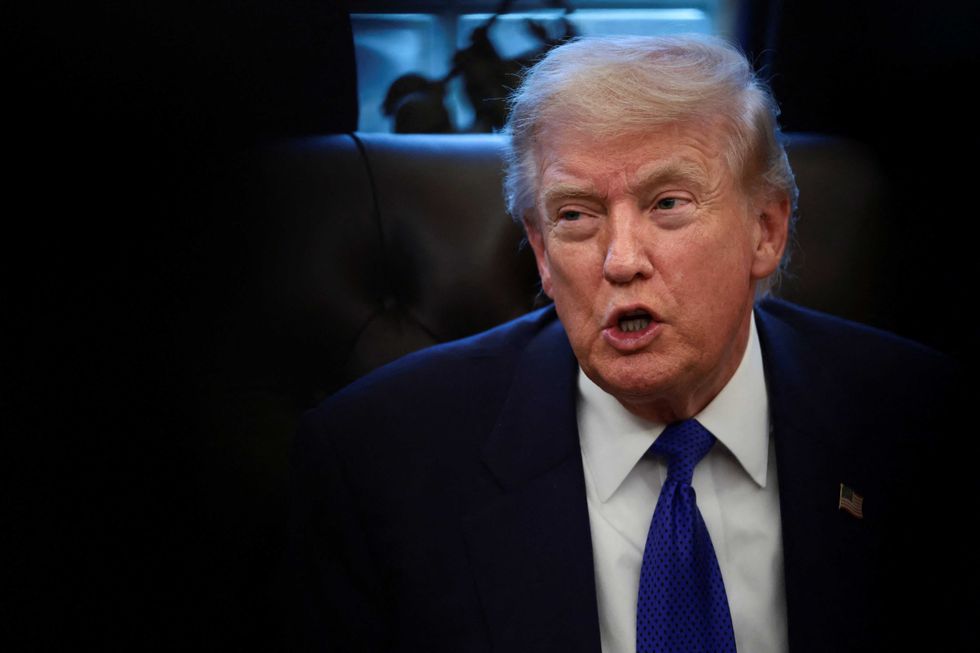
Trump foe devises plan to starve him of what he 'craves' most

Trump foe devises plan to starve him of what he 'craves' most

A longtime adversary of President Donald Trump has a plan for a key group to take away what Trump craves the most — attention. EX-CNN journalist Jim Acosta, who
Share
Rawstory2026/02/04 01:19
Why Bitcoin Is Struggling: 8 Factors Impacting Crypto Markets

Why Bitcoin Is Struggling: 8 Factors Impacting Crypto Markets

Failed blockchain adoption narratives and weak fee capture have undercut confidence in major crypto projects.
Share
CryptoPotato2026/02/04 01:05