

Crypto Fear & Greed Index Plunges to 16: A Stark Signal of Extreme Fear Gripping the Market
BitcoinWorld
Crypto Fear & Greed Index Plunges to 16: A Stark Signal of Extreme Fear Gripping the Market
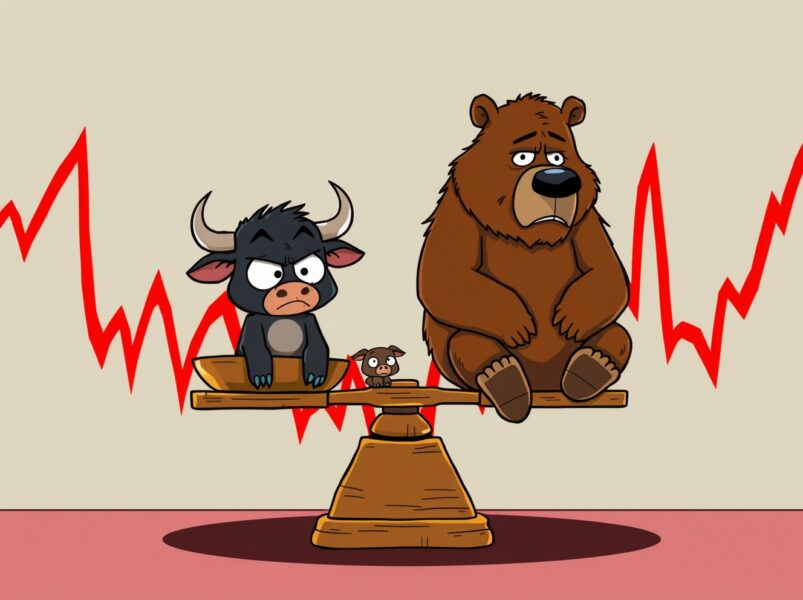
Global cryptocurrency markets have entered a profound state of anxiety, as evidenced by the Crypto Fear & Greed Index plummeting to a reading of 16 this week. This dramatic 10-point drop shifts the official market sentiment from ‘fear’ into the ‘extreme fear’ territory, a psychological threshold that historically signals heightened volatility and potential inflection points for digital asset investors worldwide.
Decoding the Crypto Fear & Greed Index Plunge
The Crypto Fear & Greed Index, a widely monitored sentiment gauge created by data provider Alternative, serves as a crucial barometer for market psychology. It operates on a scale from 0 to 100, where 0 represents ‘Extreme Fear’ and 100 signifies ‘Extreme Greed.’ The current reading of 16 places it firmly in the lowest quintile, a zone that typically correlates with significant market stress. The index’s calculation is not arbitrary; it synthesizes multiple market data points into a single, comprehensible figure. Specifically, its algorithm weighs the following factors: market volatility (25%), trading volume and momentum (25%), social media sentiment and mentions (15%), survey data (15%), Bitcoin’s dominance over the total crypto market cap (10%), and trends in Google search volume for cryptocurrency terms (10%). This multi-faceted approach aims to quantify the often-intangible mood of the market.
Consequently, a drop of this magnitude indicates broad-based deterioration across these key metrics. For instance, increased volatility often scares away new capital, while declining search volume suggests waning mainstream interest. This confluence of negative signals creates a powerful, data-driven narrative of pessimism. Historically, such extreme readings have often preceded market bottoms, though they are not a timing tool. They instead highlight moments of maximum emotional stress among market participants, where fear can override rational analysis.
Historical Context and Market Sentiment Analysis
To understand the gravity of a ’16’ reading, one must examine historical precedents. The index has dipped into ‘extreme fear’ on several notable occasions, each tied to major market events. For example, during the market capitulation in March 2020 triggered by the global COVID-19 pandemic, the index briefly touched single digits. Similarly, the prolonged bear market of 2022 saw sustained periods with readings below 20, particularly following major industry failures. A comparative table illustrates these pivotal moments:
| Period | Index Low | Key Market Event |
|---|---|---|
| March 2020 | 8 | Global COVID-19 Market Crash |
| June 2022 | 6 | Collapse of the Terra/Luna ecosystem |
| November 2022 | 20 | FTX Exchange Bankruptcy |
| Present (This Week) | 16 | Macroeconomic pressures & regulatory uncertainty |
This historical lens is vital. It shows that while ‘extreme fear’ is rare, it is a recurring phase in the volatile crypto cycle. Analysts often reference the concept of ‘contrarian indicators,’ where overwhelming public sentiment in one direction can signal an impending reversal. However, this is not a guarantee. The current sentiment is likely being driven by a combination of external macroeconomic factors and internal market dynamics. Rising interest rates, persistent inflation concerns, and geopolitical tensions have pushed investors toward traditional safe-haven assets. Simultaneously, the cryptocurrency sector continues to grapple with regulatory scrutiny in key jurisdictions, creating an overhang of uncertainty that dampens speculative enthusiasm.
Expert Insights on Investor Psychology and Market Mechanics
Market psychologists and veteran traders emphasize that indices like these measure emotion, not intrinsic value. “The Fear & Greed Index is a fantastic tool for quantifying the market’s mood, but it’s a lagging indicator of sentiment, not a leading indicator of price,” notes a behavioral finance analyst from a major university, whose research focuses on crypto markets. “A reading this low tells us that selling pressure may be exhausting itself, as the most fearful participants have likely already exited. However, it does not tell us what catalyst will restore confidence.” The mechanics behind the drop are also instructive. The 25% weight on volatility suggests recent price swings have been particularly sharp and unpredictable. The equal weight on volume implies this volatility occurred alongside significant trading activity, often a sign of capitulation or forced selling. Furthermore, a decline in Bitcoin’s dominance (part of the 10% weighting) can indicate investors are fleeing from altcoins even more aggressively than from Bitcoin itself, a typical ‘flight to safety’ pattern within the crypto ecosystem.
Potential Implications and Forward-Looking Scenarios
The immediate implication of an ‘extreme fear’ reading is continued market fragility. News headlines amplify fear, which can lead to reflexive selling by retail investors and algorithmic trading systems programmed to react to volatility. This can create short-term downward momentum. However, for long-term investors and value-oriented analysts, these periods are often scrutinized for opportunity. Key considerations for the market’s trajectory include:
- Liquidity Conditions: Is fear drying up market liquidity, making large trades more impactful on price?
- On-Chain Data: Are long-term holders accumulating or distributing assets at these levels?
- Derivatives Market Health: Are leveraged positions being liquidated, adding to selling pressure?
- Macroeconomic Catalysts: What upcoming economic data could alter the current risk-off environment?
Market structure plays a critical role. The prevalence of decentralized finance (DeFi) lending protocols means that sharp price drops can trigger cascading liquidations, a mechanism that can exacerbate moves driven by sentiment. Therefore, while the index reflects psychology, that psychology interacts with complex financial infrastructure. The path forward typically requires a catalyst to shift narrative. This could be decisive regulatory clarity, a breakthrough in institutional adoption, or a shift in the broader macroeconomic policy stance. Until such a catalyst emerges, the market may remain trapped in a fear-driven cycle, characterized by low conviction and rapid reactions to any news flow.
Conclusion
The Crypto Fear & Greed Index reading of 16 provides a clear, quantitative snapshot of a market gripped by extreme fear. This sentiment, derived from volatility, volume, social media, and search data, underscores the powerful role of psychology in cryptocurrency pricing. While historically such depths of pessimism have sometimes marked cyclical lows, they primarily serve as a warning of high risk and emotional trading. Investors are advised to look beyond the sentiment score, focusing instead on fundamental developments, on-chain metrics, and the broader economic landscape. The index is a mirror to the market’s soul, and currently, that reflection is one of profound caution. Navigating this period will require discipline, a focus on robust fundamentals, and an understanding that market sentiment, while powerful, is always transient.
FAQs
Q1: What does a Crypto Fear & Greed Index score of 16 mean?
A score of 16 falls into the ‘Extreme Fear’ zone (0-25). It indicates that current market data—like high volatility, negative social sentiment, and low search interest—collectively point to widespread pessimism and risk aversion among cryptocurrency investors.
Q2: Is the Fear & Greed Index a good tool for predicting Bitcoin’s price?
No, it is not a predictive price tool. It is a lagging indicator of market sentiment. While extreme readings have coincided with market turning points in the past, the index measures current emotion, not future price action. It should be used for context, not timing.
Q3: How often does the index get updated, and where can I see it?
The index is updated daily by its creator, Alternative. It is publicly available on their website and is widely reported on by major financial and cryptocurrency news platforms.
Q4: What is the difference between ‘Fear’ and ‘Extreme Fear’ on the index?
The index is segmented: 0-25 is ‘Extreme Fear,’ 26-46 is ‘Fear,’ 47-54 is ‘Neutral,’ 55-75 is ‘Greed,’ and 76-100 is ‘Extreme Greed.’ A move from ‘Fear’ to ‘Extreme Fear’ signifies a measurable intensification of negative metrics across the board, suggesting a worsening psychological state in the market.
Q5: Can the index remain in ‘Extreme Fear’ for a long time?
Yes, it can. During prolonged bear markets, the index can linger in ‘Extreme Fear’ or ‘Fear’ for weeks or even months. A single day’s reading is less significant than the trend. Sustained extreme fear suggests a entrenched negative narrative that requires a substantial catalyst to change.
This post Crypto Fear & Greed Index Plunges to 16: A Stark Signal of Extreme Fear Gripping the Market first appeared on BitcoinWorld.
You May Also Like

GCC and India to sign terms for start of free trade talks

PEPE Holders Looking For The Next 100x Crypto Set Their Sights On Layer Brett Presale
