

DeFi Remains Outside Regulation as Regulators Crack Down Elsewhere
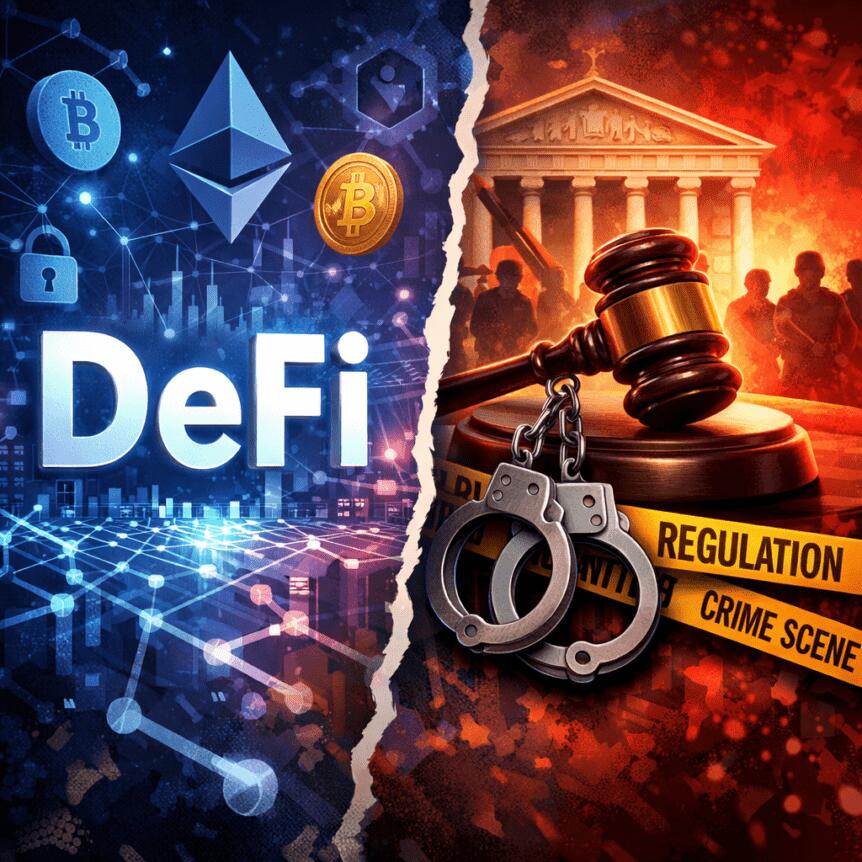
The European Union’s DAC8 framework for crypto tax reporting tightens the net on identifiable players while keeping decentralized finance (DeFi) largely at arm’s length for the moment. The regime emphasizes intermediaries—think custodians and exchanges—that will be tasked with gathering and reporting standardized user activity data under the OECD’s Crypto Asset Reporting Framework (CARF). In practice, this means a move toward auditable on-chain activity with a focus on the entities that interact most directly with users and assets. But the DeFi carve-out isn’t guaranteed to be permanent; as regulators widen AML plays and seek better visibility into crypto markets, questions are mounting about whether DeFi platforms may eventually be treated as virtual asset service providers (VASPs).
Key takeaways
- EU DAC8 prioritizes enforceable targets by directing reporting requirements at custodians and exchanges, while keeping DeFi out of immediate regulatory scope for now.
- Ant‑money laundering frameworks are increasingly used to define accountability in crypto markets, raising the possibility that some DeFi actors could be reclassified as VASPs if supervisory clarity shifts.
- In the United States, lawmakers are weighing amendments to the Digital Commodity Intermediaries Act (DCIA), with DeFi provisions emerging as a flashpoint in the broader market-structure debate between the CFTC and the SEC.
- Decentralized physical infrastructure networks (DePIN) have grown into a roughly $10 billion sector, supported by real-world usage that generated about $72 million in on-chain revenue last year, even as many tokens in the space have fallen sharply.
- Bitcoin-native DeFi initiatives—such as ZK-rollups that use BTC as base collateral—are accelerating institutional interest in treating Bitcoin as a treasury asset and on-chain liquidity source, signaling a shift in how on-chain assets are utilized.
Tickers mentioned: $BTC
Sentiment: Neutral
Market context: The regulatory backdrop remains cautious but pragmatic, with institutions seeking clear compliance pathways while investors watch for signs of longer-term structural clarity in both the EU and US. As the DeFi and on-chain infrastructure narratives converge, capital is shifting toward protocols and asset classes that can demonstrate tangible utility beyond token value alone.
Why it matters
The EU’s DAC8 framework marks a calibrated approach to crypto taxation that centers on trust but verifies activity through a formal data-sharing regime. By anchoring CARF reporting to identifiable intermediaries, regulators can build a remittance-style trail of transactions and user activity that is more readily auditable than a purely on-chain heuristic. This approach arguably reduces the friction for compliance-focused institutions while preserving space for DeFi innovations to mature outside the immediate national tax perimeter. The potential expansion of AML-driven accountability to DeFi—if regulators decide the pathways to classify DeFi platforms as VASPs—could alter the risk calculus for developers, custody providers, and liquidity venues, nudging projects toward standardization and verifiability.
Meanwhile, DeFi remains a political and regulatory flashpoint in the United States. The DCIA, designed to harmonize oversight between the CFTC and the SEC, is entering a stage where amendments are being proposed and debated with particular focus on how DeFi features like developer governance, automated market making, and liquidity provision would be treated under existing regimes. The outcome could influence the pace at which centralized and decentralized intermediaries align with any new market-structure blueprint, affecting funding cycles, compliance investments, and product-development timelines.
On the infrastructure side, DePIN—decentralized physical infrastructure networks—has quietly evolved into a sizable, revenue-generating segment. A joint State of DePIN 2025 report from Messari and Escape Velocity pegs the sector at about $10 billion in value, with on-chain revenue totaling roughly $72 million last year. This trend underscores a broader shift toward asset-centric infrastructure models where usage and cash flow matter more than token performance in isolation. Even as many DePIN tokens have suffered steep price declines, the underlying networks are increasingly delivering real-world utility, from bandwidth and compute to energy sensing data, which can attract institutional interest if governance and security considerations become more standardized.
A separate thread in the DeFi conversation centers on Bitcoin itself. Projects building DeFi stacks atop BTC—through Bitcoin-backed lending, stablecoins pegged to the BTC network, and ZK-rollups that anchor proofs to Bitcoin’s base layer—are advancing the debate about Bitcoin’s capabilities beyond a store of value. The emergence of BTC-native DeFi tools points to a future in which Bitcoin serves not only as a treasury asset for corporations but also as a foundational layer for on-chain finance, collateralization, and programmable money. The ongoing experimentation with BTC as base collateral demonstrates how widely the world is rethinking the role of the original cryptocurrency in broader financial architectures.
Against this regulatory and technological backdrop, recent market data paints a mixed picture for DeFi and broader crypto activity. In a week where the top 100 cryptocurrencies by market capitalization broadly declined, a handful of smaller DeFi-focused tokens faced some of the steepest losses, highlighting ongoing risk-off sentiment among investors even as users continue to push for real-world use cases. DefiLlama tracks total value locked across DeFi protocols, illustrating the sector’s sensitivity to macro risk and token price action, even as usage-driven revenue trends begin to outpace speculative narratives in some projects. Taken together, these threads show an ecosystem that is increasingly interconnected—regulatory clarity, on-chain infrastructure, and real-world utility all contributing to where capital flows and developer activity go next.
What to watch next
- EU DAC8 CARF timelines and the first batch of reporting entities slated for 2027, with regulators continuing to assess DeFi’s regulatory boundaries.
- Upcoming amendments to the DCIA as US lawmakers seek a clearer division of enforcement responsibilities between the CFTC and the SEC, including potential DeFi-specific provisions.
- Results and implications from the State of DePIN 2025 report, particularly around on-chain revenue trends and institutional adoption signals.
- Progress of Citrea’s Bitcoin-based DeFi initiatives, including mainnet milestones and liquidity targets (e.g., the $50 million early liquidity benchmark) as BTC-native DeFi expands.
Sources & verification
- OECD’s Crypto Asset Reporting Framework (CARF) and DAC8 guidance on enforceable reporting targets.
- Animoca Brands Japan and RootstockLabs collaboration aimed at bringing Bitcoin-native DeFi tools to Japanese institutions.
- Senate Agriculture Committee materials related to amendments proposed by Senator Klobuchar and discussions on CFTC/SEC jurisdiction over crypto markets.
- Messari and Escape Velocity, State of DePIN 2025, detailing DePIN sector scale and on-chain revenue.
- Citrea’s Bitcoin DeFi mainnet launch and related disclosures, including BTC-based collateral and the ctUSD stablecoin approach.
Key figures and next steps
Bitcoin (CRYPTO: BTC) remains central to the ongoing experimentation with on‑chain finance, as institutions balance the potential for BTC-backed DeFi with the regulatory and sustainability considerations that come with expanding base-layer usage. Policy developments in the EU and the US will shape how quickly, and in what form, DeFi and BTC-centric applications scale. Investors and builders should watch for concrete regulatory milestones, new product launches leveraging BTC as collateral, and updates on DePIN infrastructure deployments that tie on-chain activity to real-world capabilities.
https://platform.twitter.com/widgets.js
This article was originally published as DeFi Remains Outside Regulation as Regulators Crack Down Elsewhere on Crypto Breaking News – your trusted source for crypto news, Bitcoin news, and blockchain updates.
You May Also Like

Best Crypto to Buy as Saylor & Crypto Execs Meet in US Treasury Council

BlackRock boosts AI and US equity exposure in $185 billion models
