

Tokenized Bitcoin in 2026: Examples, Benefits and Risks
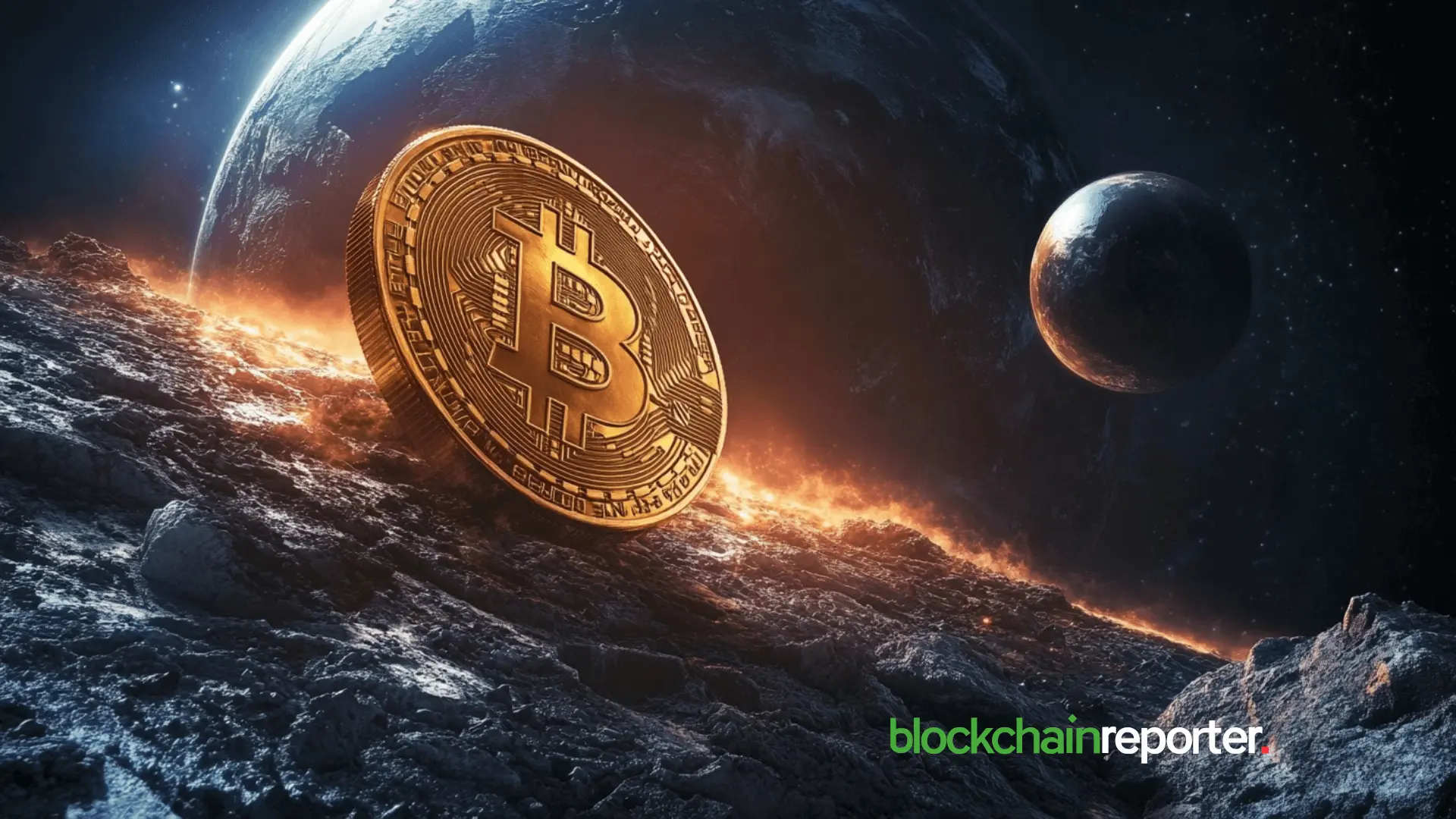
At the time of writing, $1.78 trillion, which is 60.80% of the entire total market is locked in Bitcoin ($BTC) alone. As a sound store of value, experts aptly describe it as digital gold. In 2008, it made its debut as digital money to perform certain basic functions, which it does very well. However, as the blockchain technology evolved, many complex financial applications came to fore for various purposes that Bitcoin could not perform. Initially, these limitations were a matter of serious concern, but developers found a way out by devising the strategy of tokenized Bitcoin
What is Tokenized Bitcoin?
By definition, tokenized Bitcoin refers to $BTC that is represented on another blockchain network and whose value and liquidity the owner uses on a different chain. To use this strategy, the owner of $BTC does not give up the ownership of the asset and locks it to get the tokens which can be used on the desired blockchain. The ownership remains in economic terms, but locking the coins does mean temporary suspension of the real control of $BTC. The coin the user gets on the destination blockchain is the representation of the locked $BTC, and the process can be reversed whenever needed.
Why Use Tokenized $BTC?
One might question the logic behind using the tokenized $BTC when only its value is to be used on another blockchain. Why can one not use the native coin of the destination chain instead of going through the fuss of locking $BTC and getting the digital representation in different tokens?
The answer lies somewhat in the credibility of Bitcoin. Many people still believe that Bitcoin is the only real cryptocurrency, and that there is no need of altcoins in the market. Yet, when they need to used lending, borrowing, yield farming, liquidity pools, and other advanced financial activities, they have no other option than using altcoins. In short, mainstream DeFi services are out of reach if one sticks to $BTC. Therefore, one needs to resort to altcoins willy-nilly.
But even then, the believers in Bitcoin do not want to sell their $BTC to get altcoins. Instead they temporarily lock their assets and get some altcoins to use the mentioned services.
Another reason is the value of Bitcoin’s liquidity. The tokenization services came into existence to make use of the widespread liquidity and highly valuable nature of Bitcoin. When a user takes their $BTC’s value to another blockchain, they are offering it useful liquidity in return for a temporary surrender of the coin’s control. The blockchain or protocol is indirectly making use of the liquidity provided by $BTC.
How Tokenized Bitcoin Works
It is straightforward how tokenized bitcoin works. The first step is to lock or hold $BTC in a secure place. Subsequently, a different token is minted to represented the same value of $BTC as locked. The holding place of the locked assets can be custodial as well as non-custodial. In the custodial method, your entrust an entity with your $BTC, and the same third party mints the representative tokens. This method does involves counterparty risk as you need the party to stay honest and in business. However, it is also secure in a way that an experienced entity is managing your asset.
In the non-custodial method, there is no trusted entity needed, as automated on-chain processes do the entire minting and burning process. Users lock the collateral assets, and tokens are minted on the other chain through an on-chain mechanism. The funds are locked on chain until they are unlocked again when the tokens are destroyed. While this eliminates counterparty risks, it increases potential security risks because the burden of risk is entirely on the shoulders of the user. If a user or contract error happens that leads to loss of funds, they are likely lost forever.
Examples of Tokenized Bitcoin
Wrapped Bitcoin (WBTC) is the most widely known and used example of tokenized bitcoin on the Ethereum network. Each WBTC token is backed one for one by real bitcoin that is held by a custodian. This means that the value of WBTC closely follows the value of regular bitcoin, and users can swap between the two at any time.
Because WBTC is built to follow a standard used widely across the Ethereum ecosystem, it can be used in many financial applications such as lending platforms, decentralized exchanges, or liquidity pools. Its compatibility with so many systems is what makes it so useful for people who want to use bitcoin without selling it.
There are also non-custodial examples such as renBTC, which is created by automated networks rather than a central entity. These types of tokens often attract users who prefer systems that do not rely on a single trusted party, though they may be more complex to use.
Benefits and Risks
One of the most important benefits of tokenized bitcoin is that it lets people make their bitcoin work in ways that were not possible before. Bitcoin holders can earn interest, provide liquidity to markets, or use their bitcoin as collateral in lending systems. This expands the usefulness of bitcoin beyond simply holding it as an asset for price appreciation.
Tokenized bitcoin also increases liquidity in the market, meaning there is more active use of bitcoin’s value in different systems. This can make financial markets based on blockchain more efficient and flexible.
However, there are risks involved. Custodial systems depend on trusted third parties, and if the custodian fails to manage the bitcoin properly, users could lose their funds. Non-custodial systems avoid this trust issue but can be vulnerable to software bugs or failures in the code that runs them.
Future Outlook
In 2026, the trend of tokenized assets is expanding beyond bitcoin to include many types of value, including real-world assets like company shares or property. Tokenized bitcoin shows how innovation can help even the oldest and most established crypto asset find new uses in an evolving financial landscape. As technology, regulation, and market practices continue to mature, tokenized bitcoin will likely remain a key piece of the bridge between value and programmable finance.
Conclusion
Tokenized Bitcoin has emerged as a practical bridge between Bitcoin’s unmatched store-of-value status and the rapidly evolving world of programmable finance. By allowing $BTC holders to access DeFi services without selling their assets, tokenization expands utility while preserving long-term exposure to Bitcoin. Still, the model comes with trade-offs, including custodial trust and smart contract risks. As tokenization infrastructure matures in 2026, its success will depend on improved security, transparency, and user awareness making tokenized Bitcoin a powerful, but not risk-free, evolution of digital gold.
You May Also Like

Securities Fraud Investigation Into Corcept Therapeutics Incorporated (CORT) Announced – Shareholders Who Lost Money Urged To Contact Glancy Prongay Wolke & Rotter LLP, a Leading Securities Fraud Law Firm
Over 80% of 135 Ethereum L2s record below 1 user operation per second
