There has been a considerable amount of movement in the cryptocurrency market today, including one of the Bitcoin wallets that has remained inactive for eight There has been a considerable amount of movement in the cryptocurrency market today, including one of the Bitcoin wallets that has remained inactive for eight

Dormant Bitcoin Whale Transfers 2,819 BTC Worth $219 Million to Paxos After Eight Years of Inactivity

4 min read
whale-bitcoin4

There has been a considerable amount of movement in the cryptocurrency market today, including one of the Bitcoin wallets that has remained inactive for eight years. According to data from blockchain analytics firm Lookonchain, that wallet transferred 2,819 BTC of approximately $219.36 million to Paxos. This also adds to a bigger trend that occurred in 2025/2026 when many inactive whale wallets re-entered the market. Many traders wonder if these long-term holders are changing their asset allocations or moving some of their holdings onto regulated custodial platforms.

The Importance of Dormant Movements of Wallets

Dormant Bitcoin wallets tend to capture the attention of the crypto community, especially those of whales with large balances. These long inactive addresses account for a lot of stored value that may affect markets when they are put in motion, often resulting in speculation and excessive trading activity.

The timing of this transfer is also worthy of notice. Bitcoin traded within a range of $77,000 to $90,000 through the end of 2025 and the beginning of 2026, a range that is relatively stable compared to the last quarter where there was sharp volatility. The previous quarter (October – November) resulted in greater than $4.5 billion in outflows from Bitcoin ETFs during November and December 2025; therefore, the sentiment is changing for the better and early indicators show that over $1.1 billion will be invested in BTC over the first month of 2026.

Selecting Paxos as a partner adds a level of additional complexity. As a regulated company, Paxos provides custody and trading services. This implies that the holder is potentially making liquidation out of compliance, or pure preference for secure financial custody rather than selling the assets on open market.

Historical Context and Market Impact

This activity is not unique in its isolation from the broader economy. In 2025, many old bitcoin wallet addresses are resurfacing, generating market interest. July saw the first large migration of 80k bitcoin worth $8.6 billion from multiple wallet addresses in 14 years. This prompted several “how and why?” questions. Another notable incident occurred in November when a dormant “whale” transferred 2300 bitcoins to “Paxos” after years of inactivity while still having 32k bitcoins worth $3.4 billion.

Such progress indicates that “first movers” are relying more on regulated exchanges to hold large quantities of an asset. The migration of inactive wallets is a key indicator of the market sentiment. When large balances become active, it can be an indication of possible changes in market behavior, even if the assets are not sold immediately.

What This Means for the Broader Market

The psychology behind long term Bitcoin holding is worth analyzing. An investor holding coins for eight years had to face multiple market cycles that included the peak of bitcoin at around $69,000 in 2021 to the crash in 2022 at fewer than $16,000, and the rally back above $100,000 in 2025. However, despite being extremely volatile, the assets lay untouched until now.

This transition may occur for numerous reasons. First, DCF-regulated custodians offer whale investors safer places to move big quantities of cash. Paxos is regulated and issued by the New York State Department of Financial Services (tax code, charter). Paxos meets this investor’s security needs.

Dormant whale movements can and should be interpreted by everyday holders regarding context rather than as sell signals. The very act of transferring cryptocurrencies off exchanges to regulated platforms conveys a different message than selling on exchanges; this indicates that institutional-grade infrastructure continues to support significant Bitcoin transfers.

Conclusion

The awakening of this eight-year-old wallet and the transfer of $219 million to Paxos is not just a blockchain transaction. It shows Bitcoin wealth management evolving, institutional infrastructure maturing and early adopters finally deciding on what to do about holdings that have increased by thousands of percent across nearly a decade. This whale may sell or secure their fortune in regulated custody, but this decision suggests that institutional platforms are becoming the preferred method of handling large amounts of Bitcoin in custody.

Disclaimer: The articles reposted on this site are sourced from public platforms and are provided for informational purposes only. They do not necessarily reflect the views of MEXC. All rights remain with the original authors. If you believe any content infringes on third-party rights, please contact [email protected] for removal. MEXC makes no guarantees regarding the accuracy, completeness, or timeliness of the content and is not responsible for any actions taken based on the information provided. The content does not constitute financial, legal, or other professional advice, nor should it be considered a recommendation or endorsement by MEXC.

You May Also Like

Three dormant wallets, suspected to belong to the same entity, purchased 5,970 ETH eight hours ago.
Three dormant wallets, suspected to belong to the same entity, purchased 5,970 ETH eight hours ago.

PANews reported on February 4 that, according to Lookonchain monitoring, three wallets that had been dormant for four years (likely controlled by the same entity
Share
PANews2026/02/04 11:36
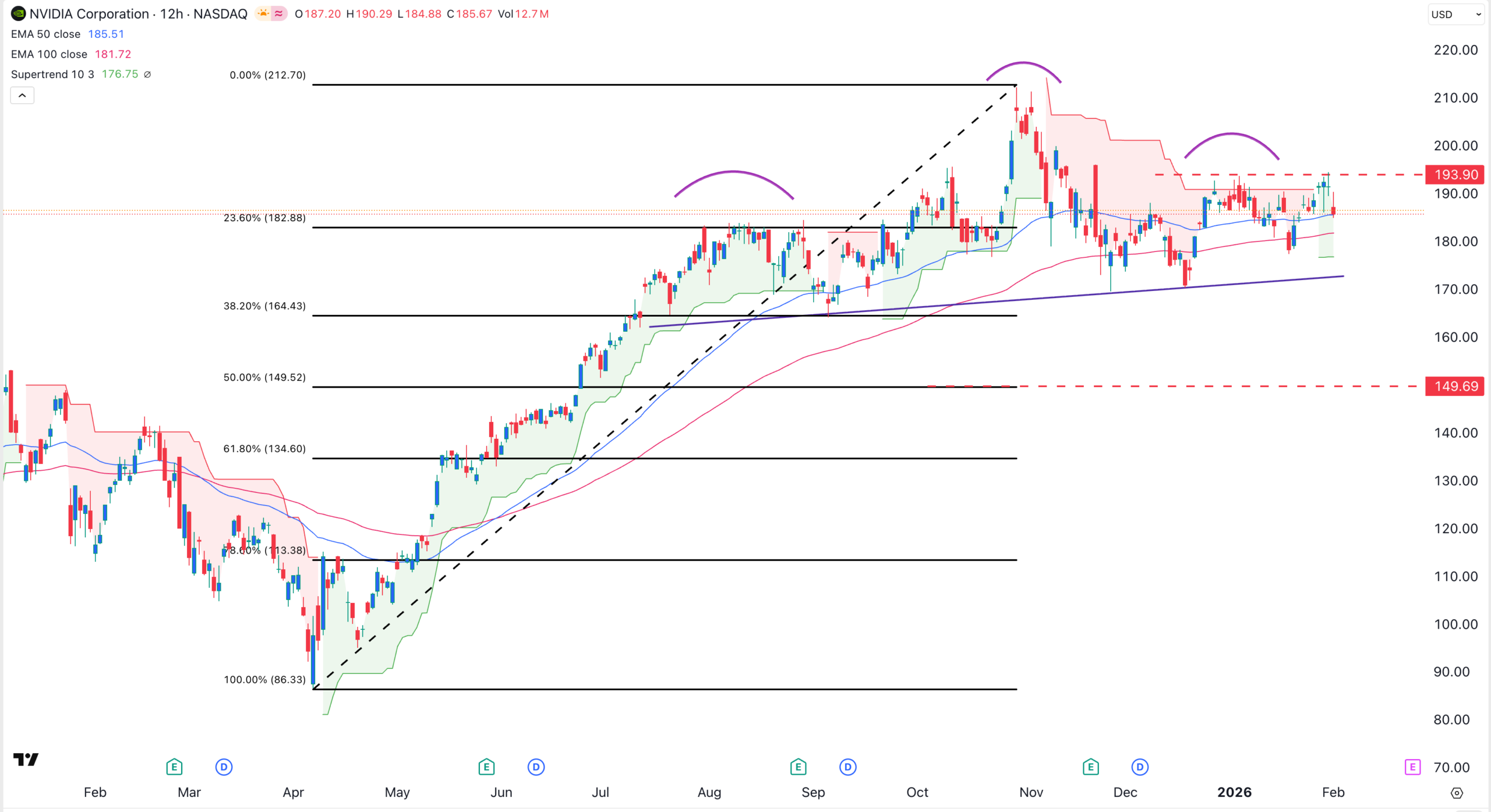
NVIDIA Stock Price Analysis as OpenAI Issues Concerns About its Chips

NVIDIA Stock Price Analysis as OpenAI Issues Concerns About its Chips

Key Insights NVIDIA stock started the week in the red. It crashed by over 2%. Meanwhile, the S&P 500, Dow Jones, and Nasdaq 100 moved close to their all-time highs
Share
Themarketperiodical2026/02/04 11:27
Ondo Finance Launches USDY Yieldcoin on Stellar, Bringing Tokenized U.S. Treasuries to Users

Ondo Finance Launches USDY Yieldcoin on Stellar, Bringing Tokenized U.S. Treasuries to Users

Ondo Finance, a U.S.-based digital asset firm specializing in bringing traditional financial products on-chain through tokenization, is expanding its yieldcoin USDY to the Stellar network. This lates update marks a step forward in merging tokenized real-world assets with a global payments infrastructure, unlocking new opportunities for users worldwide. The announcement was made at the Stellar Meridian event in Copacabana, Rio de Janeiro, on September 17. USDY Joins the Stellar Ecosystem Ondo Finance, a recognized leader in tokenized real-world assets, announced the deployment of United States Dollar Yield (USDY) on Stellar, the payments-focused blockchain known for speed and low transaction costs. USDY is the most widely available “yieldcoin,” offering investors access to onchain assets backed by U.S. Treasuries. This launch allows Stellar’s global user base to tap into permissionless, yield-bearing assets tied to one of the safest financial instruments in the world. It also aligns with Stellar’s mission of driving fast, affordable cross-border payments. Combining Yield with Payments Infrastructure “Stablecoins unlocked global access to the U.S. dollar. With USDY, we’re taking the next step by bringing U.S. Treasuries onchain in a form that combines stability, liquidity, and yield,” said Ian De Bode, Chief Strategy Officer at Ondo Finance. “Fast, affordable cross-border payments are at the center of what Stellar was designed to do. The global reach of the Stellar ecosystem combined with a yield-bearing asset like USDY levels up what is possible onchain, allowing wallets and businesses to offer yield opportunities to their users,” said Denelle Dixon, CEO of the Stellar Development Foundation. Ondo claims by pairing USDY with Stellar’s infrastructure, new possibilities open up in treasury management, collateralization, and everyday financial applications. Unlocking Institutional and Retail Use Cases USDY currently manages over $650 million in total value locked (TVL) across nine blockchains and offers a 5.3% APY. By launching on Stellar, Ondo Finance extends these benefits to global retail and institutional users. The firm explains balances on Stellar can now become productive, supporting use cases such as onchain savings, institutional treasury strategies, cost-efficient collateral for DeFi protocols, and remittance flows that carry yield rather than remaining static. A Milestone for Tokenized Treasuries With the integration of USDY, Stellar users gain more than just access to stable-value assets—they gain access to institutional-grade yield. For investors outside the U.S., the launch represents a new way to combine the safety of Treasuries with the accessibility of blockchain technology. As tokenization accelerates globally, Ondo Finance’s decision to deploy USDY on Stellar reinforces the narrative that blockchain is not just about speculation, but about reimagining the global financial system through secure, yield-bearing digital assets
Share
CryptoNews2025/09/18 00:46
