Editor’s note: The UAE Cyber Security Council has convened the CyberFirst UAE Summit 2026 in Abu Dhabi, bringing together government leaders, CISOs, and technologyEditor’s note: The UAE Cyber Security Council has convened the CyberFirst UAE Summit 2026 in Abu Dhabi, bringing together government leaders, CISOs, and technology

CyberFirst UAE Summit 2026 Focuses on National Cyber Resilience and Trust

2026/02/04 21:06
4 min read
Noah And Sumsub Partner To Deliver The Fastest, Most Scalable Compliance And Verification Engine For Modern Money

Editor’s note: The UAE Cyber Security Council has convened the CyberFirst UAE Summit 2026 in Abu Dhabi, bringing together government leaders, CISOs, and technology executives to address rising cyber risks and strengthen national resilience. The discussions come as digital transformation accelerates across the UAE’s economy, increasing exposure to complex and fast-evolving threats. Closely aligned with the UAE National Cybersecurity Strategy, the summit focused on how policy, leadership, and secure-by-design approaches can safeguard critical infrastructure, data, and trust. For a digital-first economy, cybersecurity is not only a technical issue but a core pillar of economic stability and innovation.

Key points

  • The summit aligned with the UAE National Cybersecurity Strategy and the country’s digital economy agenda.
  • Speakers highlighted a nearly 40% year-on-year rise in cyber incidents across the GCC.
  • Key themes included AI and cloud security, Zero Trust architectures, and cyber governance.
  • An awards ceremony recognized leadership and innovation across the cybersecurity ecosystem.

Why this matters

As the UAE scales its digital economy, cyber resilience becomes essential to protecting infrastructure, financial systems, and public confidence. The summit underscores how cybersecurity now underpins innovation, cloud adoption, and AI deployment across sectors such as finance, energy, and healthcare. For builders and investors, strong national frameworks reduce systemic risk. For users and institutions, they help preserve trust in an increasingly interconnected digital environment across the UAE and the wider region.

What to watch next

  • Follow-up initiatives tied to the UAE National Cybersecurity Strategy.
  • Adoption of secure-by-design and Zero Trust frameworks across critical sectors.
  • Ongoing collaboration between government and industry partners on threat intelligence.

Disclosure: The content below is a press release provided by the company/PR representative. It is published for informational purposes.

Abu Dhabi: The UAE Cyber Security Council successfully hosted the CyberFirst UAE Summit 2026 today in Abu Dhabi, convening CISOs, senior cybersecurity executives, government authorities, and technology pioneers to advance national cyber resilience and reinforce the UAE’s digital leadership amid an increasingly complex and evolving threat landscape.

Held as a high-level platform for strategic dialogue, the summit underscored the critical role of cybersecurity in supporting the UAE’s AED 100 billion-plus digital economy agenda. As digital transformation accelerates across sectors, cybersecurity has become a defining pillar of national development, safeguarding critical infrastructure, sensitive data, and public trust across an interconnected digital ecosystem.

The CyberFirst UAE Summit 2026 was closely aligned with the UAE National Cybersecurity Strategy, which has positioned the country among the world’s most cyber-ready nations. In 2024, the UAE achieved a 100% score in the Global Cybersecurity Index, earning recognition as a global “Pioneering Model” for cyber readiness, reflecting sustained national investment in governance, innovation, and digital trust. 

Despite this progress, discussions at the summit acknowledged that the regional threat landscape continues to intensify, with cyber incidents across the GCC rising by nearly 40% year-on-year.

The one-day summit acted as a catalyst for policy exchange, strategic collaboration, and innovation leadership, bringing together senior stakeholders from government, finance, utilities and energy, healthcare, manufacturing, and critical infrastructure sectors. Key discussions focused on national cyber resilience, AI and cloud security, Zero Trust architectures, cyber governance and regulation, threat intelligence, supply chain security, and the role of leadership in sustaining digital trust.

A major highlight of the event was the Awards & Recognition Ceremony, which celebrated excellence and leadership across the cybersecurity ecosystem. Award categories included Cloud & AI Security Excellence Award, Cybersecurity Leader of the Year – UAE & MENA, Cybersecurity Innovator of the Year, Cybersecurity Woman of the Year – UAE, Best Zero Trust Implementation Award, Cybersecurity Strategy and Vision Award, Best Cybersecurity Innovation Award, Threat Intelligence Leadership Award, and Cybersecurity Distribution Excellence Award.

The CyberFirst UAE Summit 2026 reinforced the UAE’s vision of becoming a global hub for digital trust and cybersecurity excellence, contributing to a secure, resilient, and future-ready digital environment for the nation and the wider region. The summit was supported by leading industry partners, with sponsors including Google Cloud Security, Anomali, OPSWAT, Pentera, AmiViz, hwg, Tenable, Securonix, Paramount Assuring Value, and Kron Technologies.

This article was originally published as CyberFirst UAE Summit 2026 Focuses on National Cyber Resilience and Trust on Crypto Breaking News – your trusted source for crypto news, Bitcoin news, and blockchain updates.

Market Opportunity
CyberConnect Logo
CyberConnect Price(CYBER)
$0.5627
$0.5627$0.5627
-4.57%
USD
CyberConnect (CYBER) Live Price Chart
Disclaimer: The articles reposted on this site are sourced from public platforms and are provided for informational purposes only. They do not necessarily reflect the views of MEXC. All rights remain with the original authors. If you believe any content infringes on third-party rights, please contact [email protected] for removal. MEXC makes no guarantees regarding the accuracy, completeness, or timeliness of the content and is not responsible for any actions taken based on the information provided. The content does not constitute financial, legal, or other professional advice, nor should it be considered a recommendation or endorsement by MEXC.

You May Also Like

Cashing In On University Patents Means Giving Up On Our Innovation Future

Cashing In On University Patents Means Giving Up On Our Innovation Future

The post Cashing In On University Patents Means Giving Up On Our Innovation Future appeared on BitcoinEthereumNews.com. “It’s a raid on American innovation that would deliver pennies to the Treasury while kneecapping the very engine of our economic and medical progress,” writes Pipes. Getty Images Washington is addicted to taxing success. Now, Commerce Secretary Howard Lutnick is floating a plan to skim half the patent earnings from inventions developed at universities with federal funding. It’s being sold as a way to shore up programs like Social Security. In reality, it’s a raid on American innovation that would deliver pennies to the Treasury while kneecapping the very engine of our economic and medical progress. Yes, taxpayer dollars support early-stage research. But the real payoff comes later—in the jobs created, cures discovered, and industries launched when universities and private industry turn those discoveries into real products. By comparison, the sums at stake in patent licensing are trivial. Universities collectively earn only about $3.6 billion annually in patent income—less than the federal government spends on Social Security in a single day. Even confiscating half would barely register against a $6 trillion federal budget. And yet the damage from such a policy would be anything but trivial. The true return on taxpayer investment isn’t in licensing checks sent to Washington, but in the downstream economic activity that federally supported research unleashes. Thanks to the bipartisan Bayh-Dole Act of 1980, universities and private industry have powerful incentives to translate early-stage discoveries into real-world products. Before Bayh-Dole, the government hoarded patents from federally funded research, and fewer than 5% were ever licensed. Once universities could own and license their own inventions, innovation exploded. The result has been one of the best returns on investment in government history. Since 1996, university research has added nearly $2 trillion to U.S. industrial output, supported 6.5 million jobs, and launched more than 19,000 startups. Those companies pay…
Share
BitcoinEthereumNews2025/09/18 03:26
China Blocks Nvidia’s RTX Pro 6000D as Local Chips Rise
China Blocks Nvidia’s RTX Pro 6000D as Local Chips Rise

The post China Blocks Nvidia’s RTX Pro 6000D as Local Chips Rise appeared on BitcoinEthereumNews.com. China Blocks Nvidia’s RTX Pro 6000D as Local Chips Rise China’s internet regulator has ordered the country’s biggest technology firms, including Alibaba and ByteDance, to stop purchasing Nvidia’s RTX Pro 6000D GPUs. According to the Financial Times, the move shuts down the last major channel for mass supplies of American chips to the Chinese market. Why Beijing Halted Nvidia Purchases Chinese companies had planned to buy tens of thousands of RTX Pro 6000D accelerators and had already begun testing them in servers. But regulators intervened, halting the purchases and signaling stricter controls than earlier measures placed on Nvidia’s H20 chip. Image: Nvidia An audit compared Huawei and Cambricon processors, along with chips developed by Alibaba and Baidu, against Nvidia’s export-approved products. Regulators concluded that Chinese chips had reached performance levels comparable to the restricted U.S. models. This assessment pushed authorities to advise firms to rely more heavily on domestic processors, further tightening Nvidia’s already limited position in China. China’s Drive Toward Tech Independence The decision highlights Beijing’s focus on import substitution — developing self-sufficient chip production to reduce reliance on U.S. supplies. “The signal is now clear: all attention is focused on building a domestic ecosystem,” said a representative of a leading Chinese tech company. Nvidia had unveiled the RTX Pro 6000D in July 2025 during CEO Jensen Huang’s visit to Beijing, in an attempt to keep a foothold in China after Washington restricted exports of its most advanced chips. But momentum is shifting. Industry sources told the Financial Times that Chinese manufacturers plan to triple AI chip production next year to meet growing demand. They believe “domestic supply will now be sufficient without Nvidia.” What It Means for the Future With Huawei, Cambricon, Alibaba, and Baidu stepping up, China is positioning itself for long-term technological independence. Nvidia, meanwhile, faces…
Share
BitcoinEthereumNews2025/09/18 01:37
Silver Price Crash Is Over “For Real This Time,” Analyst Predicts a Surge Back Above $90

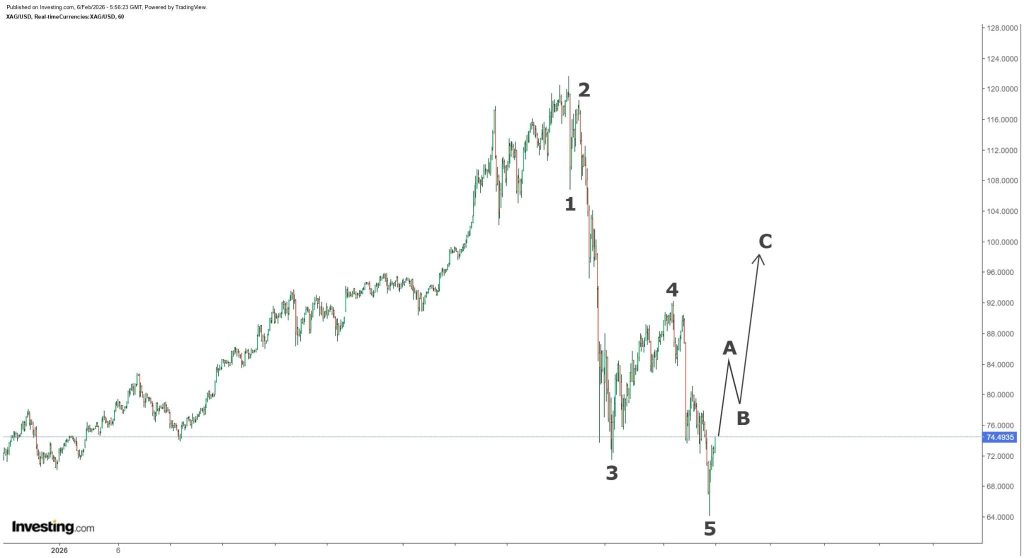
Silver Price Crash Is Over “For Real This Time,” Analyst Predicts a Surge Back Above $90

Silver has been taking a beating lately, and the Silver price hasn’t exactly been acting like a safe haven. After running up into the highs, the whole move reversed
Share
Captainaltcoin2026/02/07 03:15