Real-time checkpoints arrive as sui grpc streaming powers indexing, delivering faster data with resilient pipelines and safe fallbacks.Real-time checkpoints arrive as sui grpc streaming powers indexing, delivering faster data with resilient pipelines and safe fallbacks.

Sui gRPC streaming powers low-latency checkpoint indexing and resilient data pipelines

sui grpc streaming

Developers on Sui can now tap into sui grpc streaming to build faster, more reliable indexing pipelines for real-time blockchain data.

Hybrid streaming model transforms Sui data access

The Sui blockchain has introduced gRPC streaming as a primary data source for its indexing infrastructure, enabling real-time checkpoint ingestion with minimal latency. Moreover, this design targets applications that must react as soon as data is finalized.

The platform combines streaming capabilities with traditional polling methods to maintain data accuracy and system resilience. This hybrid model allows immediate access to finalized checkpoints while preserving backward compatibility with existing custom indexers already deployed on Sui.

The Custom Indexing Framework underpins this streaming-first architecture without requiring changes to checkpoint processing logic. However, teams can still rely on their existing pipelines while layering in streaming where it brings tangible benefits.

Streaming removes polling delays for checkpoint ingestion

The new gRPC streaming capability fundamentally changes how indexers receive blockchain data on Sui. Full nodes now push checkpoint data directly to indexers as soon as finalization occurs, rather than waiting for scheduled fetches.

This push-based model eliminates repeated polling cycles that previously introduced delays between checkpoint creation and downstream processing. As a result, latency-sensitive tools can react closer to real time without tuning complex polling intervals.

According to the documentation, the system delivers “real-time checkpoints as soon as they’re finalized” with “faster data, resilient pipelines, less infra work on Sui”. That said, operators can still configure safety nets to protect against connection issues and service disruptions.

The streaming mechanism operates through a straightforward configuration step where developers add a streaming-url argument that points to a full node endpoint. The indexer then receives checkpoints as event streams instead of fetching them at predetermined intervals.

This event-driven model is particularly valuable for monitoring systems, real-time analytics platforms, and other latency-sensitive applications. Moreover, it simplifies infrastructure by reducing the need for aggressive polling strategies and related operational tuning.

Mandatory polling fallbacks safeguard historical data

Sui pairs streaming with mandatory polling-based fallback sources to handle inherent limitations of long-lived connections. A streaming link only delivers data starting from the moment it is established, so historical checkpoints still require additional mechanisms.

The General-Purpose Indexer showcases this hybrid design in production. It uses streaming as its primary ingestion path while maintaining polling sources as safety mechanisms for historical data and recovery scenarios.

This configuration keeps indexed data current while enabling clean restarts and seamless recovery from failures. However, if a connection drops, the system can resume from the last known checkpoint using polling, then return to streaming once the link stabilizes.

In practice, this hybrid pattern functions similarly to a sui checkpoint streaming fallback strategy. Developers obtain the low-latency benefits of pushed updates without compromising completeness or reliability.

Framework design enables incremental streaming adoption

The Custom Indexing Framework separates checkpoint processing from data ingestion. Indexers consume and transform checkpoints through a unified interface, without coupling logic to specific sources such as gRPC streams or HTTP polling.

This abstraction allows teams to evolve ingestion strategies as requirements change, without rewriting core processing components. Moreover, it keeps codebases simpler by concentrating data-handling logic in a single layer.

The documentation notes that with gRPC streaming, “there is no need to poll, no guesswork around timing, and no artificial delay introduced by fetch intervals”. That said, operators can still choose polling where workloads do not require ultra-low latency.

Developers can enable sui grpc streaming gradually, based on individual workload characteristics. Applications that prioritize data freshness and real-time responsiveness gain the most from immediate streaming adoption.

By contrast, systems focused on batch analytics, offline processing, or simpler workflows can continue using polling-only configurations. The framework supports both approaches under the same processing model, simplifying multi-application environments.

Configuration keeps logic stable while sources evolve

Existing custom indexers built on the official framework require minimal changes to take advantage of streaming. Adding gRPC capability involves including a streaming-url parameter alongside the existing remote-store-url configuration value.

The checkpoint processing logic remains unchanged throughout this transition. Moreover, the framework automatically manages source switching during operation so that indexers keep a consistent view of the network state.

This design helps prevent common failure modes where systems either lose data or lag significantly behind the chain. The framework coordinates interactions between streaming and polling, maintaining continuity across restarts and network interruptions.

Overall, Sui’s hybrid streaming and polling architecture offers real-time checkpoints, resilient pipelines, and a clear migration path for indexers seeking low-latency ingestion without sacrificing reliability.

Market Opportunity
SUI Logo
SUI Price(SUI)
$1.0046
$1.0046$1.0046
+2.58%
USD
SUI (SUI) Live Price Chart
Disclaimer: The articles reposted on this site are sourced from public platforms and are provided for informational purposes only. They do not necessarily reflect the views of MEXC. All rights remain with the original authors. If you believe any content infringes on third-party rights, please contact [email protected] for removal. MEXC makes no guarantees regarding the accuracy, completeness, or timeliness of the content and is not responsible for any actions taken based on the information provided. The content does not constitute financial, legal, or other professional advice, nor should it be considered a recommendation or endorsement by MEXC.

You May Also Like

Cashing In On University Patents Means Giving Up On Our Innovation Future

Cashing In On University Patents Means Giving Up On Our Innovation Future

The post Cashing In On University Patents Means Giving Up On Our Innovation Future appeared on BitcoinEthereumNews.com. “It’s a raid on American innovation that would deliver pennies to the Treasury while kneecapping the very engine of our economic and medical progress,” writes Pipes. Getty Images Washington is addicted to taxing success. Now, Commerce Secretary Howard Lutnick is floating a plan to skim half the patent earnings from inventions developed at universities with federal funding. It’s being sold as a way to shore up programs like Social Security. In reality, it’s a raid on American innovation that would deliver pennies to the Treasury while kneecapping the very engine of our economic and medical progress. Yes, taxpayer dollars support early-stage research. But the real payoff comes later—in the jobs created, cures discovered, and industries launched when universities and private industry turn those discoveries into real products. By comparison, the sums at stake in patent licensing are trivial. Universities collectively earn only about $3.6 billion annually in patent income—less than the federal government spends on Social Security in a single day. Even confiscating half would barely register against a $6 trillion federal budget. And yet the damage from such a policy would be anything but trivial. The true return on taxpayer investment isn’t in licensing checks sent to Washington, but in the downstream economic activity that federally supported research unleashes. Thanks to the bipartisan Bayh-Dole Act of 1980, universities and private industry have powerful incentives to translate early-stage discoveries into real-world products. Before Bayh-Dole, the government hoarded patents from federally funded research, and fewer than 5% were ever licensed. Once universities could own and license their own inventions, innovation exploded. The result has been one of the best returns on investment in government history. Since 1996, university research has added nearly $2 trillion to U.S. industrial output, supported 6.5 million jobs, and launched more than 19,000 startups. Those companies pay…
Share
BitcoinEthereumNews2025/09/18 03:26
China Blocks Nvidia’s RTX Pro 6000D as Local Chips Rise
China Blocks Nvidia’s RTX Pro 6000D as Local Chips Rise

The post China Blocks Nvidia’s RTX Pro 6000D as Local Chips Rise appeared on BitcoinEthereumNews.com. China Blocks Nvidia’s RTX Pro 6000D as Local Chips Rise China’s internet regulator has ordered the country’s biggest technology firms, including Alibaba and ByteDance, to stop purchasing Nvidia’s RTX Pro 6000D GPUs. According to the Financial Times, the move shuts down the last major channel for mass supplies of American chips to the Chinese market. Why Beijing Halted Nvidia Purchases Chinese companies had planned to buy tens of thousands of RTX Pro 6000D accelerators and had already begun testing them in servers. But regulators intervened, halting the purchases and signaling stricter controls than earlier measures placed on Nvidia’s H20 chip. Image: Nvidia An audit compared Huawei and Cambricon processors, along with chips developed by Alibaba and Baidu, against Nvidia’s export-approved products. Regulators concluded that Chinese chips had reached performance levels comparable to the restricted U.S. models. This assessment pushed authorities to advise firms to rely more heavily on domestic processors, further tightening Nvidia’s already limited position in China. China’s Drive Toward Tech Independence The decision highlights Beijing’s focus on import substitution — developing self-sufficient chip production to reduce reliance on U.S. supplies. “The signal is now clear: all attention is focused on building a domestic ecosystem,” said a representative of a leading Chinese tech company. Nvidia had unveiled the RTX Pro 6000D in July 2025 during CEO Jensen Huang’s visit to Beijing, in an attempt to keep a foothold in China after Washington restricted exports of its most advanced chips. But momentum is shifting. Industry sources told the Financial Times that Chinese manufacturers plan to triple AI chip production next year to meet growing demand. They believe “domestic supply will now be sufficient without Nvidia.” What It Means for the Future With Huawei, Cambricon, Alibaba, and Baidu stepping up, China is positioning itself for long-term technological independence. Nvidia, meanwhile, faces…
Share
BitcoinEthereumNews2025/09/18 01:37
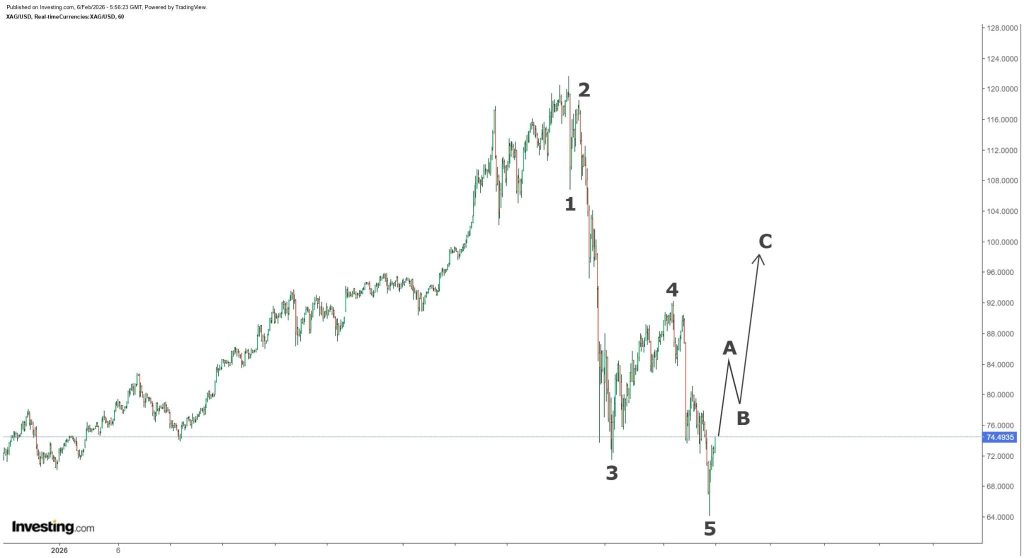
Silver Price Crash Is Over “For Real This Time,” Analyst Predicts a Surge Back Above $90

Silver Price Crash Is Over “For Real This Time,” Analyst Predicts a Surge Back Above $90

Silver has been taking a beating lately, and the Silver price hasn’t exactly been acting like a safe haven. After running up into the highs, the whole move reversed
Share
Captainaltcoin2026/02/07 03:15