

Risks Rise for Bitcoin, Gold, and Silver as Goldman Sachs Warns $80 Billion in Stock Selling
Global markets may be entering a new phase of volatility after Goldman Sachs warned that systematic funds could offload tens of billions of dollars in equities in the coming weeks.
This wave of selling could ripple into Bitcoin, gold, and silver as liquidity conditions deteriorate.
Goldman Warns CTA Selling Could Accelerate as Liquidity Thins
According to Goldman’s trading desk, trend-following funds known as Commodity Trading Advisers (CTAs) have already triggered sell signals in the S&P 500. What’s more, they are expected to remain net sellers in the near term, regardless of whether markets stabilize or continue falling.
The bank estimates that roughly $33 billion in equities could be sold within a week if markets weaken further.
More significantly, Goldman’s models suggest that as much as $80 billion in additional systematic selling could be triggered over the next month if the S&P 500 continues to decline or breaches key technical levels.
Market conditions are already fragile. Goldman analysts noted that liquidity has deteriorated and options positioning has shifted in ways that may amplify price swings.
When dealers are positioned “short gamma,” they are often forced to sell into falling markets and buy into rising ones, intensifying volatility and accelerating intraday moves.
Goldman also highlighted those other systematic strategies—including risk-parity and volatility-control funds—still have room to reduce exposure if volatility continues to rise. That means selling pressure may not be limited to CTAs alone.
Investor sentiment is also showing signs of strain. Goldman’s internal Panic Index recently approached levels associated with extreme stress.
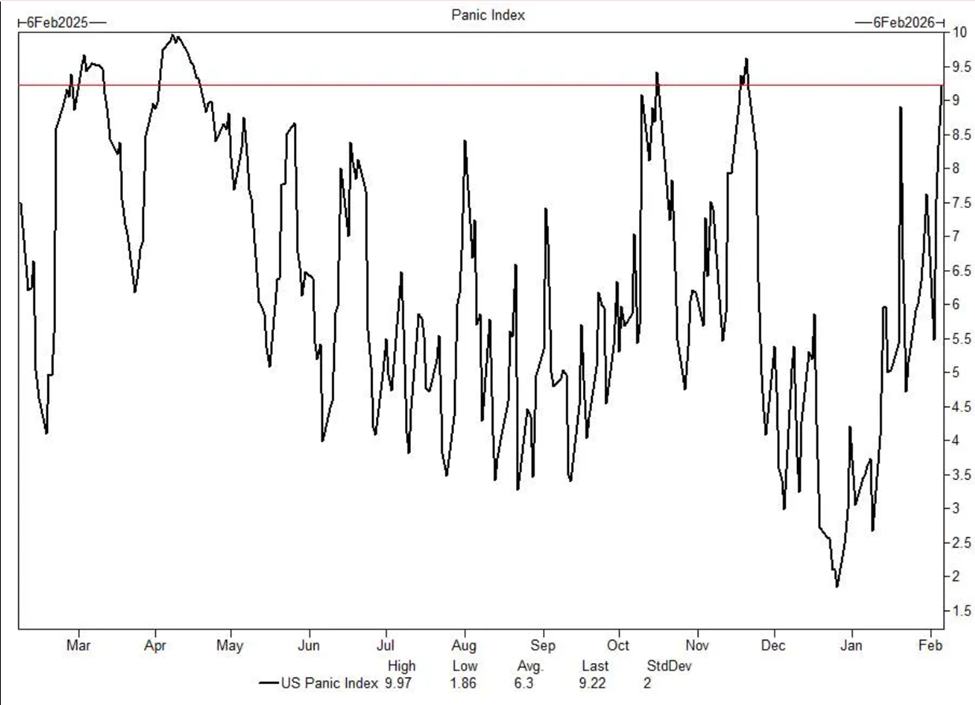 Goldman Sachs Panic Index. Source: Goldman Sachs
Meanwhile, retail investors, after a year of aggressively buying dips, are beginning to show fatigue. Recent flows indicate net selling rather than buying.
Spillover Risks for Bitcoin and Precious Metals
Although Goldman’s analysis focused primarily on equities, the implications extend beyond stock markets.
Historically, large, flow-driven equity sell-offs and tightening liquidity conditions have increased volatility across macro-sensitive assets, including crypto.
Bitcoin, which has increasingly traded in line with broader risk sentiment during periods of liquidity stress, could face renewed volatility if forced selling in equities accelerates.
Crypto-linked equities and retail-favored speculative trades have already shown sensitivity to recent market swings, suggesting positioning remains fragile.
At the same time, turbulence in equities can trigger complex cross-asset flows. While risk-off conditions can pressure commodities, precious metals such as gold and silver can also attract safe-haven demand during periods of heightened uncertainty, leading to sharp moves in either direction depending on broader liquidity trends and the dollar’s strength.
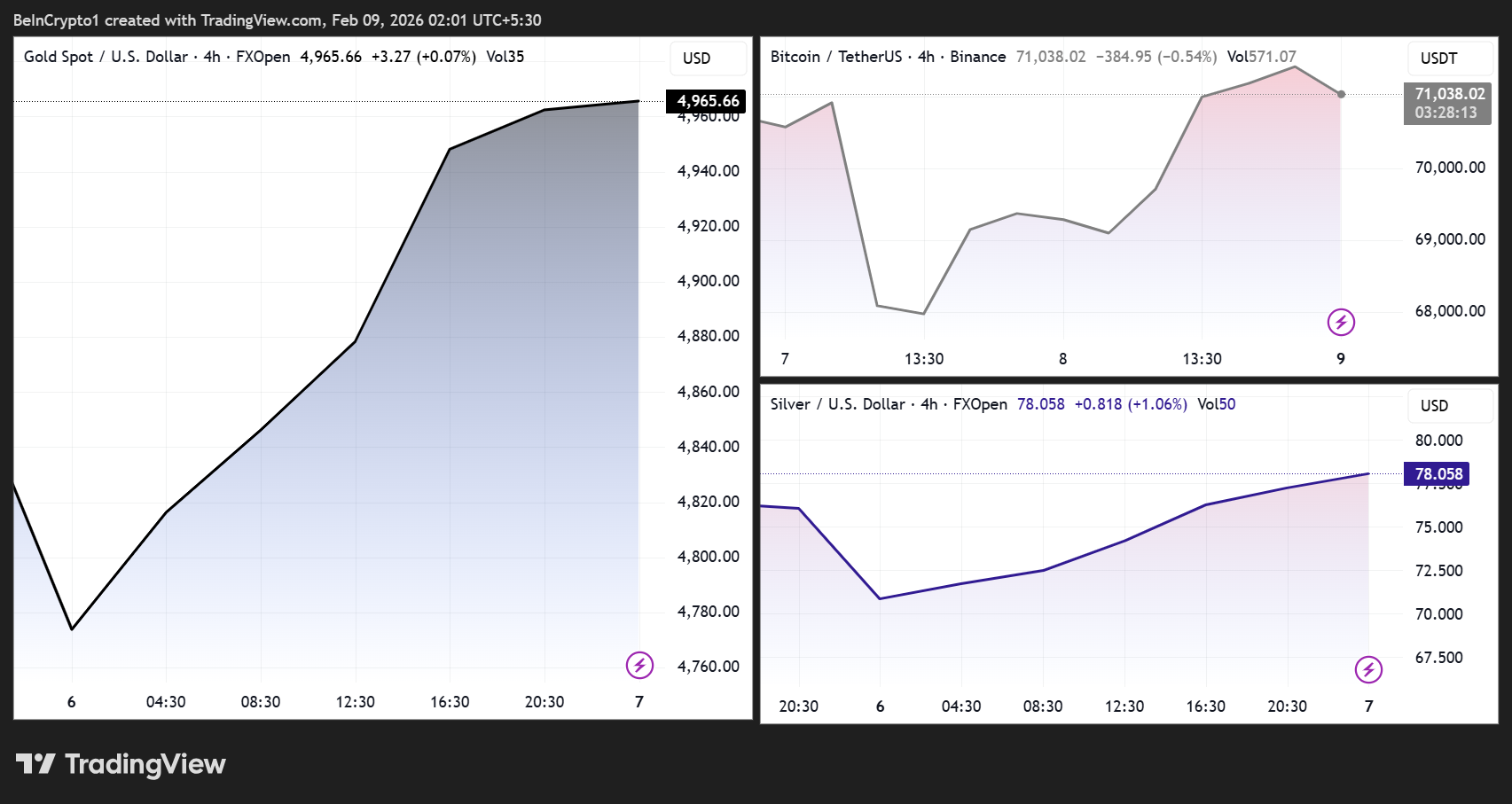 Gold, Bitcoin, and Silver Price Performances. Source: TradingView
In the meantime, the key variable remains liquidity. With systematic funds deleveraging, volatility rising, and seasonal market weakness approaching, markets may remain unstable in the weeks ahead.
If Goldman’s projections materialize, the coming month could test equities, with a spillover effect on Bitcoin and precious metals.
You May Also Like

Lyn Alden: The Fed is Printing Money, What Will Happen to BTC?

Goldman Sachs Warns $80 Billion in Forced Selling Could Still Hit U.S. Stocks
