

Quantum-Safe Web: Can Satellite QKD Unlock a Truly Decentralized Internet?
What if hackers couldn’t steal your data…?
You heard me.
…
\ So, a little sad backstory… I got hacked not too long ago (about a month or so).
…Don’t worry it’s fine.
But anyways, yeah, I got hacked by a malware of some sort through a certain file I downloaded online. And while, I didn’t lose any money to the hackers responsible, nor did I lose my entire PC in the process; I did lose certain important documents, as well as the cost I had to pay for damages. I lost my hard drive in the process, but I mean, it could’ve been worse right?
The whole period of this incident got me frustrated, but it also had me wondering… “What if hackers couldn’t steal your data?”.
One question led to multiple answers, multiple answers led to even more questions; and eventually, I landed myself on the term, “QKD”.
At least, one thing I have my hackers to thank for is the inspiration behind this post.
…
\ Malware viruses, Ransomware, Phishing, Denial-of-Service (DoS), Distributed Denial-of-Service (DDoS), Man-in-the-Middle (MitM), SQL injection… you name them.
Imagine none of them could get to you.
And no, it’s not because your password manager got fancier, or your VPN subscription got pricier, but because physics itself said “nope, enough is enough”.
\ Let me walk you through the mind-bending (not-so-mind-bending) world of Quantum Key Distribution (QKD), where encryption is enforced, not by math problems, but by the weird rules of quantum mechanics.
Now, here’s where it gets interesting - We’re throwing satellites into the mix.
Forget fiber-optic cables with range limits or government-owned ISPs watching your traffic. Imagine satellites beaming unhackable quantum keys down to Earth, feeding a decentralized web where censorship, surveillance, and snooping are ancient relics of the past.
Sounds like something from Guardians of the Galaxy? Sure. But it’s also happening right now in labs, test missions, and ambitious government programs. And the kicker: this may just be the missing piece to make the decentralized internet actually quantum-safe.
\ \
The Problem-: Today’s Internet Is Hackable (as we all know)
The internet we use today was built on protocols from the 70s, patched with duct-tape security over decades. Our encryption (RSA, ECC) relies on the idea that some math problems (like factoring gigantic numbers) are really hard for classical computers.
But quantum computers? They laugh in qubits. Algorithms like Shor’s could one day crack RSA in minutes. What this means? The keys protecting your bank, your Bitcoin wallet, and your grandma’s secret cookie recipe site could all be toast. Not today, not tomorrow — but soon enough that governments and big tech are panicking.
And here’s the irony: the decentralized web (DePIN, Web3, peer-to-peer), which promises to free us from surveillance capitalism and censorship, could be just as vulnerable. What’s the point of running a censorship-resistant blockchain node if a quantum computer can forge signatures and rewrite history?
To keep decentralization strong, we need something beyond math: we need physics-based security.
\ \
Quantum Key Distribution Explained (Without the Headache)
I’ll spare you the 4-hour lecture and just get straight to it.
Here’s what ChatGPT had to say about Quantum Key Distribution…
\
So, how does QKD work?
Imagine you and a friend want to share a secret code. Instead of texting it, you use photons (tiny particles of light) to carry the code. Each photon has a quantum state (like polarization), and here’s the fun part: if anyone tries to peek, the photon’s state collapses. You instantly know someone tried to snoop.
It’s like mailing a lock combination on invisible ink that vanishes the moment someone opens the envelope without permission.
With QKD, keys are exchanged securely. Even if Eve (the hacker) has a future quantum computer, she can’t steal the key without detection. No key theft = no message decryption.
Lab demos using fiber have proven QKD works. But fiber has a fatal flaw: signals degrade after a few hundred kilometers. Great for cities. Useless for global scale.
\ \
Satellites’ Role in the Global QKD Takeover
Simple, to enter space.
Quantum states are delicate. Photons traveling through optical fiber get scattered and absorbed, detectors introduce noise, and the farther you try to push them, the worse it gets. After a few hundred kilometers, your quantum keys are basically toast. Sure, researchers have tried using “quantum repeaters” (special relays meant to boost the signal), but the tech is still experimental, clunky, and far from global scale.
On the other hand, satellites don’t get those problems.
In space, photons cruise through the vacuum without bumping into molecules, traffic lights, or anyone’s noisy Netflix signal. A satellite in low Earth orbit (LEO) can beam quantum keys across thousands of kilometers to ground stations on different continents. No oceans, mountains, or borders in the way. Just clean, physics-approved beams of light.
\
Real-world experiments already happening while we sleep:
-
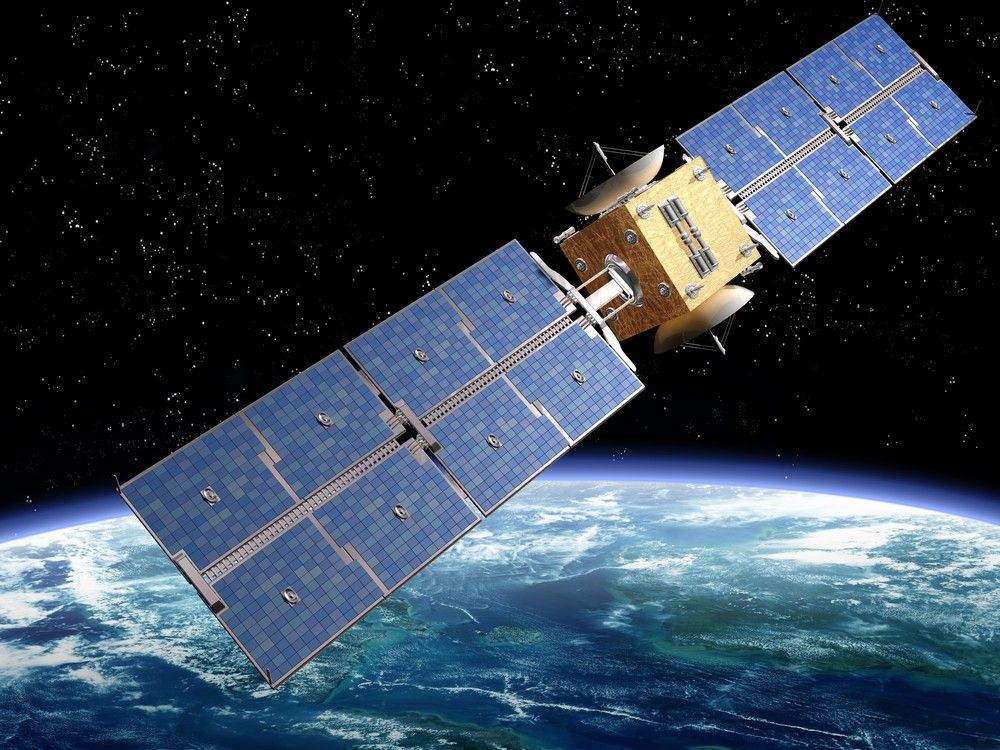
Micius Satellite (China): In 2017, China’s Micius demonstrated satellite-to-ground QKD over 1,200 km. It was the first proof-of-concept that this works beyond fiber.
\
-
European Space Agency: Actively developing satellite-based QKD projects for EU-wide secure communication.
-
U.S. Initiatives: DARPA, NASA, and startups are circling the idea, seeing it as both a national security and commercial play.
Space turns QKD from a lab curiosity into a global infrastructure play. And unlike fiber, satellites can scale to provide coverage across continents, not just metro areas.
\ \
Possible Architectures for a Quantum-Safe Decentralized Internet
Let’s play futurist for a moment. What could this actually look like?
Scenario A: Hybrid Model
Satellites distribute QKD keys globally. Blockchain networks verify their authenticity. Decentralized nodes use the keys for encrypted communication. It’s a marriage of physics and cryptoeconomics.
Scenario B: DAO-Owned QKD Constellations
Crowdfunded satellites launched by a decentralized autonomous organization. Token holders decide coverage areas, key distribution policies, and upgrades. Think “Starlink for the people, secured by physics.”
Scenario C: Edge AI + QKD
Imagine satellites not only beaming quantum keys but also directly supplying them to IoT devices and AI agents running on decentralized protocols. Self-driving cars, drones, and robots could operate on quantum-secured decentralized networks.
\ \
When Decentralization Meets Quantum Security
The decentralized internet has its own rallying cries; resilience, censorship resistance, and trustless architecture. But without quantum-safe security, it’s like building a blockchain castle on sand.
Here’s how satellites + QKD plug into the decentralized dream:
- Decentralized Routing + QKD Keys: Peer-to-peer nodes could exchange unhackable session keys via satellite. No middlemen, no spoofing.
- Tokenized QKD Access: Imagine bandwidth and QKD keys as tokenized resources on a blockchain. Users pay microtransactions to access them, incentivizing the growth of the network.
- DAO-Owned Satellites: Instead of a single corporation owning satellites, imagine a community-owned constellation funded through tokens. The keys are generated in orbit, controlled by a DAO, and distributed globally.
- Trustless Infrastructure: No ISP, no government choke point. Physics is the gatekeeper.
In short, if Web3 gave us decentralized money, satellite QKD could give us decentralized trust.
\ \
Why Does This Matter, and What Does It Mean For Us?
Well, there’s the part where you don’t get to end up like Mojo Monkey. But asides from that, why should anyone actually care about this besides physicists in lab coats?
Future-Proof Security
Quantum computers won’t just break your favorite blockchain; they could compromise national defense, banks, and personal privacy. QKD is the only known method that’s future-proof against quantum hacks.
Global Equality
Remote villages in Africa, Pacific islands, or Himalayan outposts could access secure internet without needing fiber rollouts. Decentralized ownership means locals aren’t just users, but stakeholders.
Censorship Resistance
Firewalls can block ISPs. Governments can shut down fiber. But it’s much harder to jam a constellation of DAO-controlled satellites streaming QKD keys from orbit.
Disaster Resilience
In wars, earthquakes, or floods, terrestrial networks fail. Satellites remain. Quantum-secured satellite networks become humanity’s communication safety net.
Philosophy
This is bigger than tech. It’s about sovereignty. It’s about ensuring the internet remains a public utility, not a corporate monopoly or a state-controlled spy tool. A quantum-safe decentralized web is about embedding freedom into the very fabric of physics.
\ \
==“The Quantum Leap”==
The decentralized internet promised freedom. Quantum satellites might guarantee it.
We’re not there yet, I know - today’s QKD experiments are still very limited. Launching community satellites costs billions. Governments won’t happily give up control.
Nonetheless, the trajectory is undeniable. Physics-based encryption beamed from orbit could make the decentralized internet unbreakable.
China’s Micius showed it’s possible. Europe and the U.S. are racing to catch up. Startups and DePIN communities are sketching out tokenized models. The future isn’t a question of if — it’s when.
You May Also Like

VanEck Targets Stablecoins & Next-Gen ICOs

Whales Dump 200 Million XRP in Just 2 Weeks – Is XRP’s Price on the Verge of Collapse?
