In the high-stakes world of venture capital, a new ghost is haunting the halls: The Death of Terminal Value. Recently, Chamath Palihapitiya sparked a heated debateIn the high-stakes world of venture capital, a new ghost is haunting the halls: The Death of Terminal Value. Recently, Chamath Palihapitiya sparked a heated debate

The Quantum Filter: Why Michael Saylor is Betting on the Ultimate Cybersecurity Upgrade

2026/03/17 20:39
3 min read
For feedback or concerns regarding this content, please contact us at [email protected]

In the high-stakes world of venture capital, a new ghost is haunting the halls: The Death of Terminal Value. Recently, Chamath Palihapitiya sparked a heated debate, arguing that the combined force of AI and Quantum Computing is accelerating disruption so fast that no company can reliably project cash flows beyond five years. If corporate “moats” disappear, we are looking at a 75% drawdown in traditional equity markets.

But Michael Saylor, the Executive Chairman of Strategy, isn’t panicking. Instead, he’s doubling down on a thesis that redefines Bitcoin and top-tier digital assets not just as “money,” but as Digital Capital.

1. The “Bitcoin-Only” Apocalypse is a Myth

The most common FUD (Fear, Uncertainty, Doubt) is that quantum computers will crack Bitcoin’s encryption and render it worthless. Saylor’s counter-argument is a masterclass in systems thinking: The entire digital stack upgrades together.

If a quantum machine can break a 256-bit private key, it can also dismantle:

  • Global banking protocols (SWIFT/ACH).
  • Cloud infrastructure (AWS/Google Cloud).
  • National defense systems and the internet itself.

Bitcoin isn’t an isolated target in a vacuum; it is the most sophisticated cybersecurity community on the planet. The transition to Post-Quantum Cryptography (PQC) will be a market-clearing event. “Dead” or lost coins on old standards will be frozen, while active holders will migrate to new encryption, potentially creating the most violent supply shock in history.

2. Beyond BTC: The Rise of High-Utility Ecosystems

As capital rotates out of “melting” traditional equities, it seeks refuge in digital assets with high Token Scores and proven infrastructure.

In my current model, we are seeing a clear separation between “narrative-only” tokens and “infrastructure-backed” assets. For instance, looking at the CEX basket, WBT (WhiteBIT Coin) stands out in the upper tier.

Why? Because it’s not just a ticker; it’s an ecosystem play that mirrors the “moat” strategy Saylor admires:

  • European Dominance: Leading the market by traffic and leaning heavily into EU regulation.
  • Economic Flywheel: Deflationary burns, VIP tiers, and integration into real-world tools like debit cards.
  • Market Plumbing: The recent listing of WBT on Kraken (a major US venue) is a pivotal shift. It moves price discovery to a global stage, increasing liquidity depth and institutional accessibility — exactly what’s needed to survive a high-disruption environment.

3. Strategy’s Infinite Loop

While the “Quantum Threat” is a future filter, the current game is about Liquidity Hunger. Strategy’s recent $1.57 billion BTC purchase, funded by its “iPhone moment” product (STRC preferred shares), shows that the largest players are no longer “trading” the market. They are becoming the market.

Strategy is using legacy financial tools to fund an exit from the legacy system. They are betting that Bitcoin’s neutrality and scarcity make it the only asset impervious to AI-driven obsolescence.

Final Thoughts

We are moving from an era of “speculative hype” to an era of Cybersecurity Primacy. Whether it’s Michael Saylor stacking 761k BTC or European leaders like WhiteBIT shoring up their ecosystem utility, the message is clear: The “moats” of the future aren’t built on 10-year cash flow projections — they are built on cryptographic resilience and liquidity dominance.

The quantum transition won’t be the end of crypto; it will be the ultimate filter that separates digital gold from digital dust.


The Quantum Filter: Why Michael Saylor is Betting on the Ultimate Cybersecurity Upgrade was originally published in Coinmonks on Medium, where people are continuing the conversation by highlighting and responding to this story.

Disclaimer: The articles reposted on this site are sourced from public platforms and are provided for informational purposes only. They do not necessarily reflect the views of MEXC. All rights remain with the original authors. If you believe any content infringes on third-party rights, please contact [email protected] for removal. MEXC makes no guarantees regarding the accuracy, completeness, or timeliness of the content and is not responsible for any actions taken based on the information provided. The content does not constitute financial, legal, or other professional advice, nor should it be considered a recommendation or endorsement by MEXC.

You May Also Like

Shocking OpenVPP Partnership Claim Draws Urgent Scrutiny

Shocking OpenVPP Partnership Claim Draws Urgent Scrutiny

The post Shocking OpenVPP Partnership Claim Draws Urgent Scrutiny appeared on BitcoinEthereumNews.com. The cryptocurrency world is buzzing with a recent controversy surrounding a bold OpenVPP partnership claim. This week, OpenVPP (OVPP) announced what it presented as a significant collaboration with the U.S. government in the innovative field of energy tokenization. However, this claim quickly drew the sharp eye of on-chain analyst ZachXBT, who highlighted a swift and official rebuttal that has sent ripples through the digital asset community. What Sparked the OpenVPP Partnership Claim Controversy? The core of the issue revolves around OpenVPP’s assertion of a U.S. government partnership. This kind of collaboration would typically be a monumental endorsement for any private cryptocurrency project, especially given the current regulatory climate. Such a partnership could signify a new era of mainstream adoption and legitimacy for energy tokenization initiatives. OpenVPP initially claimed cooperation with the U.S. government. This alleged partnership was said to be in the domain of energy tokenization. The announcement generated considerable interest and discussion online. ZachXBT, known for his diligent on-chain investigations, was quick to flag the development. He brought attention to the fact that U.S. Securities and Exchange Commission (SEC) Commissioner Hester Peirce had directly addressed the OpenVPP partnership claim. Her response, delivered within hours, was unequivocal and starkly contradicted OpenVPP’s narrative. How Did Regulatory Authorities Respond to the OpenVPP Partnership Claim? Commissioner Hester Peirce’s statement was a crucial turning point in this unfolding story. She clearly stated that the SEC, as an agency, does not engage in partnerships with private cryptocurrency projects. This response effectively dismantled the credibility of OpenVPP’s initial announcement regarding their supposed government collaboration. Peirce’s swift clarification underscores a fundamental principle of regulatory bodies: maintaining impartiality and avoiding endorsements of private entities. Her statement serves as a vital reminder to the crypto community about the official stance of government agencies concerning private ventures. Moreover, ZachXBT’s analysis…
Share
BitcoinEthereumNews2025/09/18 02:13
Solana Sees $10M Capital Rotation, Eyes $100 Breakout
Solana Sees $10M Capital Rotation, Eyes $100 Breakout

The post Solana Sees $10M Capital Rotation, Eyes $100 Breakout appeared on BitcoinEthereumNews.com. Capital rotation into Solana accelerated this week as traders
Share
BitcoinEthereumNews2026/03/18 00:18
ZKsync Powers Tokenized Deposits in Major U.S. Bank Network

ZKsync Powers Tokenized Deposits in Major U.S. Bank Network

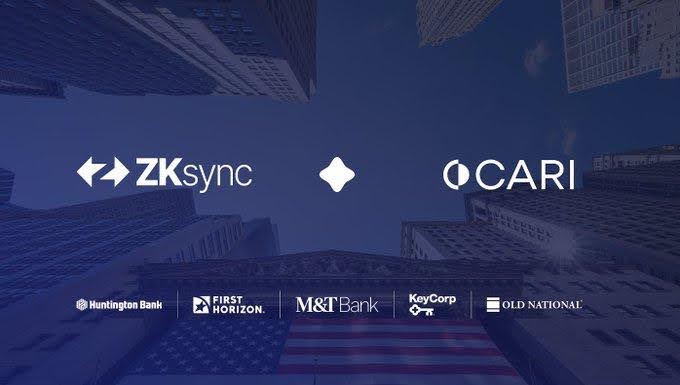
Key Takeaways: Five U.S. regional banks are building a tokenized deposit network on ZKsync. Deposits remain FDIC-insured bank liabilities, not stablecoins. The
Share
Crypto Ninjas2026/03/18 00:41
