Energy Tsunami & The Shadow of "Stagflation": WTI Surges 22% Past $110 as Global Asset Pricing Collapses
I. The Policy Gambit: Washington’s "Reassurance" vs. Market "Voting with Feet"
- The "Peace Premium" Narrative: President Trump took to social media to calm the volatility, characterizing the short-term spike as a "tiny price" to pay for long-term regional peace. He predicted a swift retreat in prices once the conflict subsides.
- Technical Optimism from the DOE: Energy Secretary Chris Wright echoed this sentiment, projecting that shipping through the Strait of Hormuz would return to normalcy within "weeks" rather than months.
(Strait of Hormuz)
- The Market’s Violent Disconnect: Despite official reassurances, capital markets have frozen. Dow Jones futures plummeted over 1,000 points, while S&P 500 and Nasdaq 100 futures fell by approximately 1.7%. Critically, while the US Dollar Index strengthened, traditional havens like Gold and Bitcoin saw varying degrees of decline, signaling a state of "liquidity shock."
II. Deep Insight: The "Stagflation" Gray Rhino
- The Looming Shadow of Stagflation: The loss of control over energy costs is forcing central banks to confront their greatest fear: Stagflation. When stagnant economic growth meets soaring prices, traditional monetary policy becomes paralyzed.
- The Cumulative Risk Effect: As oil prices remain elevated, supply chain costs will grow exponentially. I believe that unless there is a substantial cooling of geopolitical tensions, global asset prices will struggle to find a floor. This environment of extreme uncertainty makes Crude Oil Futures the primary "risk-hedging outlet" for global capital.
III. Tactical Deployment: Capturing Alpha Amid Extreme Volatility on MEXC
Elite Liquidity: Avoid the "Liquidity Black Hole"
Zero-Fee Strategy: Maximize Capital Efficiency
Flexible Leverage & 24/5 Real-Time Response
- Up to 200x Leverage: Whether you are executing a 1:1 delta-neutral hedge or pursuing high-yield trend following, flexible leverage helps you "move the world with a small lever."
- Pure Underlying Tracking: MEXC USOIL real-time pricing tracks international WTI benchmarks, allowing you to react instantly to breaking news from Washington or the Middle East.
🚀 Capture the Energy Revolution—Trade Now
In periods of extreme uncertainty, markets tend to express their judgment in the most direct way possible—through price. Oil breaking above $100 is not merely an energy story; it could become the starting point of a broader macro narrative shaping the months ahead. From inflation expectations to central bank policy, and from supply chains to global risk appetite, every move in energy prices has the potential to ripple across the entire financial system.
In an era where geopolitics increasingly redraws the map of global capital, volatility is no longer just noise—it is information. For those watching closely, every tick in oil is more than a number; it is a signal of how the world is being repriced in real time.

Știri în tendințe
Vezi mai multe
Peste 5.500 de mineri cripto ies din economia subterană pe măsură ce Rusia legalizează sectorul
Postarea Peste 5.500 de mineri crypto ies din economia din umbră pe măsură ce Rusia legalizează sectorul a apărut pe BitcoinEthereumNews.com. Autoritatea fiscală a Rusiei a divulgat

Iranul utilizează o economie subterană cripto de 7,8 miliarde de dolari pentru a ocoli sancțiunile globale
Postarea Iran folosește o economie subterană crypto de 7,8 miliarde de dolari pentru a ocoli sancțiunile globale a apărut pe BitcoinEthereumNews.com. Noi atacuri americane și israeliene asupra Iranulu

Economia „subterană" a criptomonedelor din Iran a atins 7,78 miliarde de dolari, cetățenii apelând la Bitcoin ca refugiu sigur.
PANews a raportat pe 1 martie că, potrivit Coindesk, firma de analiză blockchain Chainalysis a declarat că ecosistemul de criptomonede al Iranului va atinge 7,78 miliarde de dolari
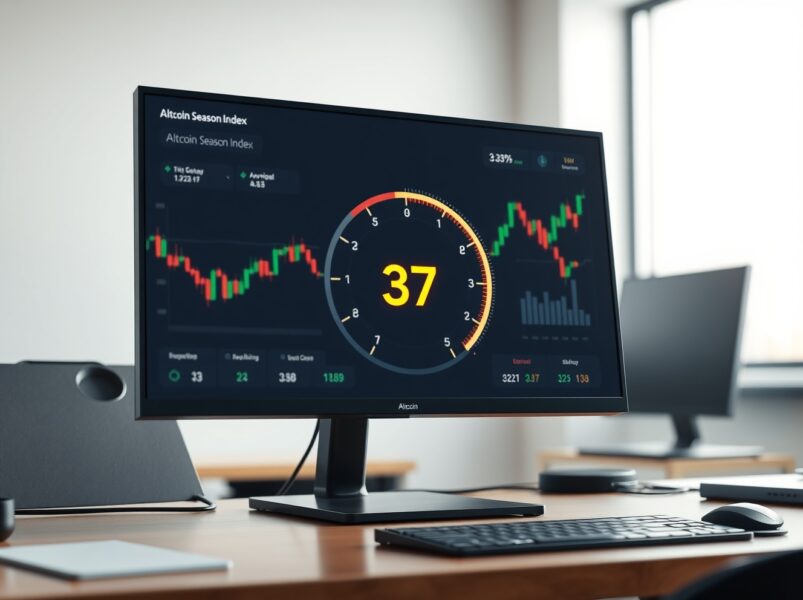
Indicele Sezonului Altcoin Dezvăluie Informații Cruciale: Piața Rămâne în Umbra Bitcoin la 37
BitcoinWorld Indicele Sezonului Altcoin Dezvăluie Informații Cruciale: Piața Rămâne în Umbra Bitcoin la 37 Piețele globale de criptomonede prezintă în prezent un