The post Mamadou Kwidjim Toure, Founder and CEO at Ubuntu Tribe appeared on BitcoinEthereumNews.com. Questions: The visionary man, Mamadou Kwidjim Toure, has led an initiative, Africa 2.0, to transform and empower the country by uniting a diverse group of young emerging leaders from all across Africa. Toure, who has been featured as one of the top 10 most powerful men of Africa by Forbes, has shared deep insights into his journey with CoinEdition in an interview. 1. You’ve had a long 20 years of career in the finance sector, and currently you are heading the Ubuntu Group as CEO.  Can you tell us the moment or realization that made you pivot into blockchain and token-based models? I didn’t wake up one morning and decide to “do crypto.” My journey started in development finance, working with institutions like the IFC and the World Bank ecosystem, where I kept seeing the same paradox: Africa is one of the richest regions in natural and human resources, yet its people are among the poorest. There was clearly a structural problem in how value is created, stored, and distributed. The real inflection point came around 2015–2016, when I began to deeply study blockchain. For the first time, I saw a technology that could hard-code transparency, fractional ownership, and borderless access into the financial system itself. Later, when we launched Ubuntu Tribe, the insight was simple: if you can tokenize gold down to 1 milligram and make it accessible from a basic smartphone, you are rewriting who gets to participate in the global store of value. So it wasn’t a pivot away from finance; it was a continuation of the same mission with better tools. Blockchain and tokenization are, for me, the missing rails to deliver what development finance has promised for decades: shared prosperity, not just for institutions and elites, but for everyday people. 2. Why do you think… The post Mamadou Kwidjim Toure, Founder and CEO at Ubuntu Tribe appeared on BitcoinEthereumNews.com. Questions: The visionary man, Mamadou Kwidjim Toure, has led an initiative, Africa 2.0, to transform and empower the country by uniting a diverse group of young emerging leaders from all across Africa. Toure, who has been featured as one of the top 10 most powerful men of Africa by Forbes, has shared deep insights into his journey with CoinEdition in an interview. 1. You’ve had a long 20 years of career in the finance sector, and currently you are heading the Ubuntu Group as CEO.  Can you tell us the moment or realization that made you pivot into blockchain and token-based models? I didn’t wake up one morning and decide to “do crypto.” My journey started in development finance, working with institutions like the IFC and the World Bank ecosystem, where I kept seeing the same paradox: Africa is one of the richest regions in natural and human resources, yet its people are among the poorest. There was clearly a structural problem in how value is created, stored, and distributed. The real inflection point came around 2015–2016, when I began to deeply study blockchain. For the first time, I saw a technology that could hard-code transparency, fractional ownership, and borderless access into the financial system itself. Later, when we launched Ubuntu Tribe, the insight was simple: if you can tokenize gold down to 1 milligram and make it accessible from a basic smartphone, you are rewriting who gets to participate in the global store of value. So it wasn’t a pivot away from finance; it was a continuation of the same mission with better tools. Blockchain and tokenization are, for me, the missing rails to deliver what development finance has promised for decades: shared prosperity, not just for institutions and elites, but for everyday people. 2. Why do you think…

Mamadou Kwidjim Toure, Founder and CEO at Ubuntu Tribe

2025/11/20 20:01

Questions:

The visionary man, Mamadou Kwidjim Toure, has led an initiative, Africa 2.0, to transform and empower the country by uniting a diverse group of young emerging leaders from all across Africa. Toure, who has been featured as one of the top 10 most powerful men of Africa by Forbes, has shared deep insights into his journey with CoinEdition in an interview.

1. You’ve had a long 20 years of career in the finance sector, and currently you are heading the Ubuntu Group as CEO.  Can you tell us the moment or realization that made you pivot into blockchain and token-based models?

I didn’t wake up one morning and decide to “do crypto.” My journey started in development finance, working with institutions like the IFC and the World Bank ecosystem, where I kept seeing the same paradox: Africa is one of the richest regions in natural and human resources, yet its people are among the poorest. There was clearly a structural problem in how value is created, stored, and distributed.

The real inflection point came around 2015–2016, when I began to deeply study blockchain. For the first time, I saw a technology that could hard-code transparency, fractional ownership, and borderless access into the financial system itself. Later, when we launched Ubuntu Tribe, the insight was simple: if you can tokenize gold down to 1 milligram and make it accessible from a basic smartphone, you are rewriting who gets to participate in the global store of value.

So it wasn’t a pivot away from finance; it was a continuation of the same mission with better tools. Blockchain and tokenization are, for me, the missing rails to deliver what development finance has promised for decades: shared prosperity, not just for institutions and elites, but for everyday people.

2. Why do you think blockchain and AI are essential for the economic empowerment of Africa?

Africa is young, mobile-first, and still largely excluded from traditional financial and data infrastructure. That combination is both a risk and a huge opportunity. Blockchain gives us a way to build trust where institutions are weak, and AI gives us a way to turn data and creativity into economic value at scale. Together, they compress the time it takes for a young African to go from “idea” to “global participant.”

On the blockchain side, tokenization allows us to connect our real assets—gold, commodities, infrastructure, even carbon and culture—to global capital markets in a transparent way. Instead of value being extracted and booked elsewhere, it can be shared more fairly, and people can hold digital claims to real assets from as little as a few cents. That is extremely powerful for savings, remittances, and resilience in volatile economies.

AI then sits on top as a multiplier and an equalizer. It can help farmers get better prices and forecasts, SMEs access credit scoring based on real behavior rather than lack of paperwork, and young developers build applications in weeks that used to take years for large teams. If we combine blockchain’s trust layer with AI’s intelligence layer, we can design systems where Africans are not just users, but co-owners and co-creators of the value they generate.

3. What are the problems the $GIFT gold fungible token is solving in terms of financial and social mobility?

Gold has always been a store of value, but for most people—especially in emerging markets—it’s been difficult to access in a safe, liquid, and affordable way. With $GIFT Gold, we took a very simple idea: make gold ownable by the milligram on-chain, 100% backed by audited, insured physical gold in secure vaults, and regulated under European law. That means someone can start saving in gold from around ten cents, directly from their phone.

The first problem we solve is accessible savings in a hard asset. In many African and emerging economies, people save in cash or unstable local currencies. By allowing micro-savings in tokenized gold, $GIFT helps protect purchasing power and offers a gateway to long-term wealth preservation. The second problem is mobility: because $GIFT is on-chain, you can send value across borders in minutes, not days, often at a fraction of the cost of traditional remittances.

There is also a social mobility dimension. When communities have an easy, trusted way to accumulate assets, they can start thinking beyond survival—investing in education, entrepreneurship, and local projects. In the long run, we see $GIFT as part of a broader ecosystem where tokenized real-world assets become collateral for credit, participation in DeFi, and collective investment vehicles that were previously reserved for the few.

4. In the African context, what are the biggest challenges that you’re facing right now in implementing blockchain-based asset models, and how are you navigating them?

The first big challenge is regulatory clarity. Many African regulators are still in the exploratory phase around digital assets. They are rightly concerned about consumer protection, capital flight, and systemic risk. At the same time, the absence of clear frameworks can slow down innovation and scare away serious players. Our approach has been to build under strong jurisdictions—like Europe’s MiCA framework for $GIFT—while engaging African policymakers through dialogue, education, and pilot projects rather than confrontation.

The second challenge is education and trust. For a farmer, trader, or teacher, “tokenized gold on a blockchain” is abstract. People need to see, touch, and understand the benefits. That’s why we invest heavily in partnerships with local fintechs, mobile money operators, and community organizations, so that digital gold becomes as intuitive as topping up airtime. We also emphasize that each token is backed by real gold in real vaults—this is not speculation, it’s asset ownership.

Finally, there’s infrastructure: connectivity, identity, and on/off-ramps. You can’t scale tokenized assets without reliable ways to move between cash, mobile money, crypto, and back. We’re solving this step by step by integrating with existing rails—cards, wallets, exchanges—and by designing our products to work on low-bandwidth devices. It’s slower than building for a fully banked market, but it’s also where the deepest impact lies.

5. How are Africa 2.0 initiatives supporting technological innovation and economic stability in society? What I ask here is the impact that is being created through this initiative

When we launched Africa 2.0 back in 2010, the idea was to create a “D-ink tank”—a think tank that does things—bringing together emerging African leaders with a shared vision for the continent. We developed a Manifesto for Africa, not just as a document, but as a roadmap to mobilize talent, capital, and policy toward shared prosperity.

In practice, Africa 2.0 has been a platform to prototype solutions: from entrepreneurship and youth employment programs to policy recommendations on governance, infrastructure, and digital transformation. It has helped incubate projects, convene stakeholders, and create a new narrative: that Africans are not victims of history, but co-authors of their future. Many of the leaders involved have gone on to launch companies, funds, and initiatives that are now shaping the tech and innovation landscape.

For me personally, Africa 2.0 was the “leadership school” that led to the Ubuntu Group and the Ubuntu Tribe. The work we do today in tokenization and inclusive finance is a direct continuation of that original mission: using cutting-edge tools to solve age-old problems. So the impact of Africa 2.0 is both tangible—in programs, policies, networks—and symbolic: it has helped shift the mindset from aid-dependency to co-creation and ownership.

6. Before exploring the blockchain, you have spent over a decade of experience in development finance. So, can you please take us through the advantages that blockchain brings that the traditional financial system lacks?

Traditional finance has done important things: it financed infrastructure, supported trade, and helped many countries grow. But it was never designed for inclusivity at the edge. It is expensive to serve low-income customers, slow to adapt, and highly centralized. In my years in development finance, I saw how capital often stopped at the level of governments and large corporates, with very little trickling down to the micro-entrepreneur, the farmer, or the informal worker.

Blockchain changes the physics of how value moves. First, it enables programmable trust: rules can be encoded into smart contracts, reducing the need for expensive intermediaries. This lowers transaction costs and allows us to economically serve a person who wants to save or send just a few dollars. Second, it introduces radical transparency: every transaction can be auditable, which is crucial in environments where corruption and leakages have historically undermined development efforts.

Third, blockchain enables fractional and borderless ownership. You can now hold a fraction of a building, a kilogram of cocoa, or a milligram of gold, and trade or collateralize it from your phone. That is something traditional finance has struggled to offer at scale without complex and costly structures. Importantly, I don’t see blockchain as replacing the old system overnight. I see it as a new layer that, if built responsibly, can extend the reach of finance to billions of people who have talent and ambition, but lack access to fair tools.

Disclaimer: The information presented in this article is for informational and educational purposes only. The article does not constitute financial advice or advice of any kind. Coin Edition is not responsible for any losses incurred as a result of the utilization of content, products, or services mentioned. Readers are advised to exercise caution before taking any action related to the company.

Source: https://coinedition.com/mamadou-kwidjim-toure-founder-and-ceo-at-ubuntu-group/

Piyasa Fırsatı
TRIBE Logosu
TRIBE Fiyatı(TRIBE)
$0.511
$0.511$0.511
+0.05%
USD
TRIBE (TRIBE) Canlı Fiyat Grafiği
Sorumluluk Reddi: Bu sitede yeniden yayınlanan makaleler, halka açık platformlardan alınmıştır ve yalnızca bilgilendirme amaçlıdır. MEXC'nin görüşlerini yansıtmayabilir. Tüm hakları telif sahiplerine aittir. Herhangi bir içeriğin üçüncü taraf haklarını ihlal ettiğini düşünüyorsanız, kaldırılması için lütfen [email protected] ile iletişime geçin. MEXC, içeriğin doğruluğu, eksiksizliği veya güncelliği konusunda hiçbir garanti vermez ve sağlanan bilgilere dayalı olarak alınan herhangi bir eylemden sorumlu değildir. İçerik, finansal, yasal veya diğer profesyonel tavsiye niteliğinde değildir ve MEXC tarafından bir tavsiye veya onay olarak değerlendirilmemelidir.

Ayrıca Şunları da Beğenebilirsiniz

BitGo expands its presence in Europe

BitGo expands its presence in Europe

The post BitGo expands its presence in Europe appeared on BitcoinEthereumNews.com. BitGo, global leader in digital asset infrastructure, announces a significant expansion of its presence in Europe. The company, through its subsidiary BitGo Europe GmbH, has obtained an extension of the license from BaFin (German Federal Financial Supervisory Authority), allowing it to offer regulated cryptocurrency trading services directly from Frankfurt, Germany. This move marks a decisive step for the European digital asset market, offering institutional investors the opportunity to access secure, regulated cryptocurrency trading integrated with advanced custody and management services. A comprehensive offering for European institutional investors With the extension of the license according to the MiCA (Markets in Crypto-Assets) regulation, initially obtained in May 2025, BitGo Europe expands the range of services available for European investors. Now, in addition to custody, staking, and transfer of digital assets, the platform also offers a spot trading service on thousands of cryptocurrencies and stablecoins. Institutional investors can now leverage BitGo’s OTC desk and a high-performance electronic trading platform, designed to ensure fast, secure, and transparent transactions. Aggregated access to numerous liquidity sources, including leading market makers and exchanges, allows for trading at competitive prices and high-quality executions. Security and Regulation at the Core of BitGo’s Strategy According to Brett Reeves, Head of European Sales and Go Network at BitGo, the goal is clear: “We are excited to strengthen our European platform and enable our clients to operate smoothly, competitively, and securely.§By combining our institutional custody solution with high-performance trading execution, clients will be able to access deep liquidity with the peace of mind that their assets will remain in cold storage, under regulated custody and compliant with MiCA.” The security of digital assets is indeed one of the cornerstones of BitGo’s offering. All services are designed to ensure that investors’ assets remain protected in regulated cold storage, minimizing operational and counterparty risks.…
Paylaş
BitcoinEthereumNews2025/09/18 04:28
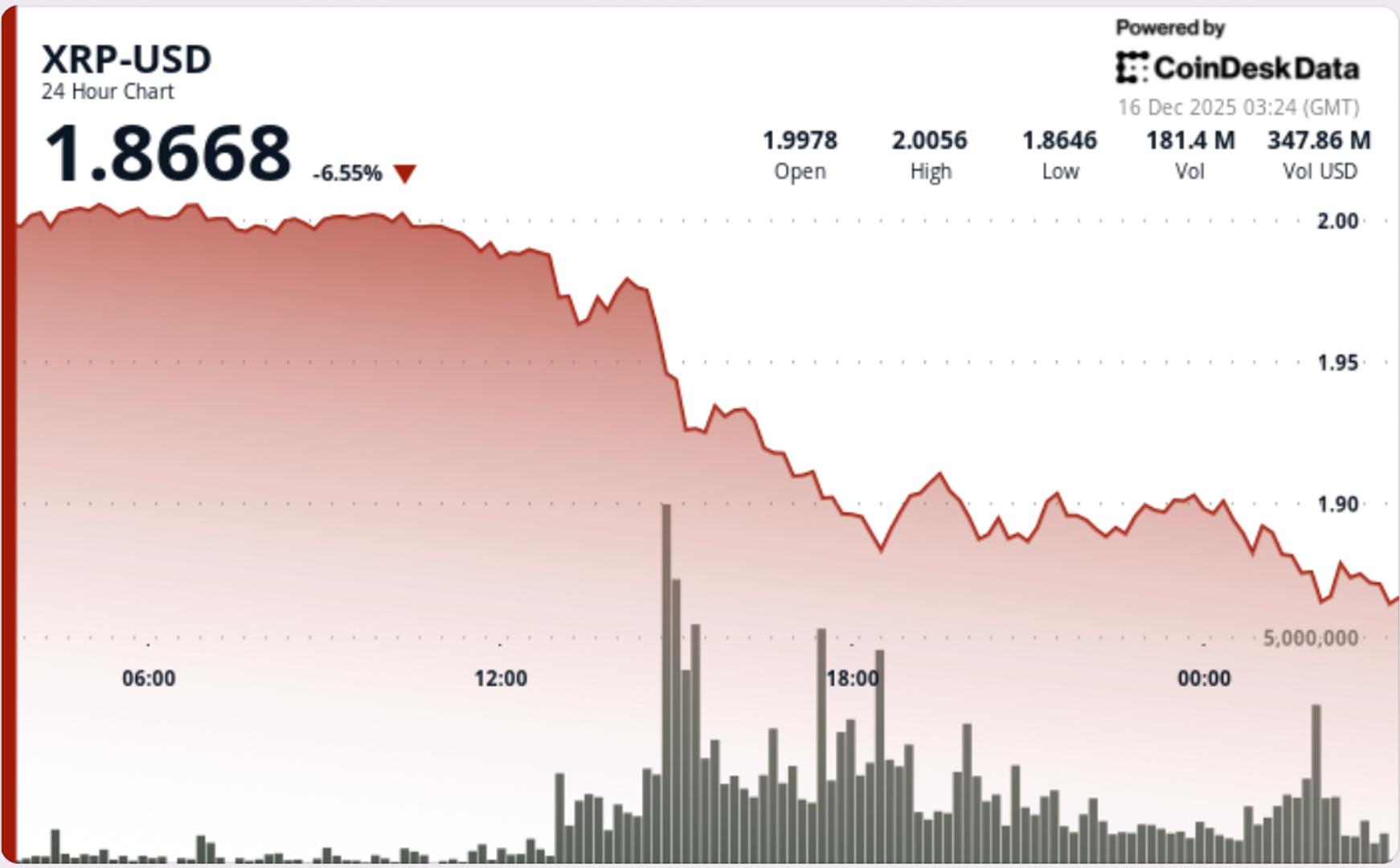
XRP price weakens at critical level, raising risk of deeper pullback

XRP price weakens at critical level, raising risk of deeper pullback

Markets Share Share this article
Copy linkX (Twitter)LinkedInFacebookEmail
XRP price weakens at critical level, raising
Paylaş
Coindesk2025/12/16 11:34
Crucial US Stock Market Update: What Wednesday’s Mixed Close Reveals

Crucial US Stock Market Update: What Wednesday’s Mixed Close Reveals

BitcoinWorld Crucial US Stock Market Update: What Wednesday’s Mixed Close Reveals The financial world often keeps us on our toes, and Wednesday was no exception. Investors watched closely as the US stock market concluded the day with a mixed performance across its major indexes. This snapshot offers a crucial glimpse into current investor sentiment and economic undercurrents, prompting many to ask: what exactly happened? Understanding the Latest US Stock Market Movements On Wednesday, the closing bell brought a varied picture for the US stock market. While some indexes celebrated gains, others registered slight declines, creating a truly mixed bag for investors. The Dow Jones Industrial Average showed resilience, climbing by a notable 0.57%. This positive movement suggests strength in some of the larger, more established companies. Conversely, the S&P 500, a broader benchmark often seen as a barometer for the overall market, experienced a modest dip of 0.1%. The technology-heavy Nasdaq Composite also saw a slight retreat, sliding by 0.33%. This particular index often reflects investor sentiment towards growth stocks and the tech sector. These divergent outcomes highlight the complex dynamics currently at play within the American economy. It’s not simply a matter of “up” or “down” for the entire US stock market; rather, it’s a nuanced landscape where different sectors and company types are responding to unique pressures and opportunities. Why Did the US Stock Market See Mixed Results? When the US stock market delivers a mixed performance, it often points to a tug-of-war between various economic factors. Several elements could have contributed to Wednesday’s varied closings. For instance, positive corporate earnings reports from certain industries might have bolstered the Dow. At the same time, concerns over inflation, interest rate policies by the Federal Reserve, or even global economic uncertainties could have pressured growth stocks, affecting the S&P 500 and Nasdaq. Key considerations often include: Economic Data: Recent reports on employment, manufacturing, or consumer spending can sway market sentiment. Corporate Announcements: Strong or weak earnings forecasts from influential companies can significantly impact their respective sectors. Interest Rate Expectations: The prospect of higher or lower interest rates directly influences borrowing costs for businesses and consumer spending, affecting future profitability. Geopolitical Events: Global tensions or trade policies can introduce uncertainty, causing investors to become more cautious. Understanding these underlying drivers is crucial for anyone trying to make sense of daily market fluctuations in the US stock market. Navigating Volatility in the US Stock Market A mixed close, while not a dramatic downturn, serves as a reminder that market volatility is a constant companion for investors. For those involved in the US stock market, particularly individuals managing their portfolios, these days underscore the importance of a well-thought-out strategy. It’s important not to react impulsively to daily movements. Instead, consider these actionable insights: Diversification: Spreading investments across different sectors and asset classes can help mitigate risk when one area underperforms. Long-Term Perspective: Focusing on long-term financial goals rather than short-term gains can help weather daily market swings. Stay Informed: Keeping abreast of economic news and company fundamentals provides context for market behavior. Consult Experts: Financial advisors can offer personalized guidance based on individual risk tolerance and objectives. Even small movements in major indexes can signal shifts that require attention, guiding future investment decisions within the dynamic US stock market. What’s Next for the US Stock Market? Looking ahead, investors will be keenly watching for further economic indicators and corporate announcements to gauge the direction of the US stock market. Upcoming inflation data, statements from the Federal Reserve, and quarterly earnings reports will likely provide more clarity. The interplay of these factors will continue to shape investor confidence and, consequently, the performance of the Dow, S&P 500, and Nasdaq. Remaining informed and adaptive will be key to understanding the market’s trajectory. Conclusion: Wednesday’s mixed close in the US stock market highlights the intricate balance of forces influencing financial markets. While the Dow showed strength, the S&P 500 and Nasdaq experienced slight declines, reflecting a nuanced economic landscape. This reminds us that understanding the ‘why’ behind these movements is as important as the movements themselves. As always, a thoughtful, informed approach remains the best strategy for navigating the complexities of the market. Frequently Asked Questions (FAQs) Q1: What does a “mixed close” mean for the US stock market? A1: A mixed close indicates that while some major stock indexes advanced, others declined. It suggests that different sectors or types of companies within the US stock market are experiencing varying influences, rather than a uniform market movement. Q2: Which major indexes were affected on Wednesday? A2: On Wednesday, the Dow Jones Industrial Average gained 0.57%, while the S&P 500 edged down 0.1%, and the Nasdaq Composite slid 0.33%, illustrating the mixed performance across the US stock market. Q3: What factors contribute to a mixed stock market performance? A3: Mixed performances in the US stock market can be influenced by various factors, including specific corporate earnings, economic data releases, shifts in interest rate expectations, and broader geopolitical events that affect different market segments uniquely. Q4: How should investors react to mixed market signals? A4: Investors are generally advised to maintain a long-term perspective, diversify their portfolios, stay informed about economic news, and avoid impulsive decisions. Consulting a financial advisor can also provide personalized guidance for navigating the US stock market. Q5: What indicators should investors watch for future US stock market trends? A5: Key indicators to watch include upcoming inflation reports, statements from the Federal Reserve regarding monetary policy, and quarterly corporate earnings reports. These will offer insights into the future direction of the US stock market. Did you find this analysis of the US stock market helpful? Share this article with your network on social media to help others understand the nuances of current financial trends! To learn more about the latest stock market trends, explore our article on key developments shaping the US stock market‘s future performance. This post Crucial US Stock Market Update: What Wednesday’s Mixed Close Reveals first appeared on BitcoinWorld.
Paylaş
Coinstats2025/09/18 05:30